Marvel’s Daredevil Season 2: 32 Easter Eggs You Probably Missed

Everything you need to see from Marvel's newest Netflix gem.

Daredevil Easter Eggs.jpg
Marvel Studios
Netflix are quickly making a name for themselves as a rival to HBO in terms of their success rates, and thankfully for superhero show fans, some of their best work has been held back for their work with Marvel. Few could legitimately have predicted that both Daredevil and Jessica Jones would be so universally adored, or that a blacklisted character like The Punisher would be introduced to anything other than disastrous results. If you sneered at his inclusion, you've got a lot of humble pie to eat. All-in-all, despite a slight dip after the explosive first few episodes (when Elektra takes a little too much of the limelight), it's another stunning Marvel Netflix show. And Jon Bernthal's Frank Castle is as brilliant as Vincent D'Onofrio's Wilson Fisk was in the first season. Obviously, Castle's inclusion (and that of Elektra and the Hand) opened up a world of new Easter Egg possibilities and while there have been suggestions that this season was less populated than the first, the references come hard and fast over the 13 episode run. WARNING: Inevitably, lots of spoilers for the entire series follow...

32. The Weird Wayne's World Reference (And Death Wish)

Paramount Pictures
Paramount Pictures
Starting out with a strange one, in the first episode when it is revealed that Nelson & Murdock are broke and are being paid in fruit and baked goods (or "pro banana" as it should be known), Foggy offers a nod to Mike Myer's SNL spin-off Wayne's World. He has been given a pie by a grateful client, and his response - "Strawberry/rhubarb... you will be mine..." - is a nice reference to Wayne's mantra for his guitar. There's also a reference in the first episode to Death Wish, the classic Charles Bronson, which was basically the Hollywood equivalent of Punisher. In both cases it followed a man driven to take on criminals after his family is attacked.

31. Grotto

Marvel Comics
Marvel Comics
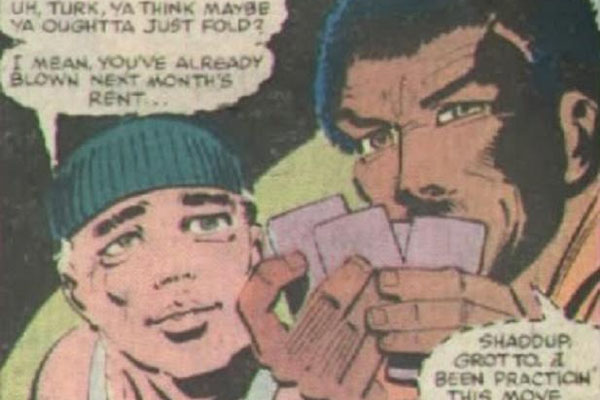
Surviving Irish mobster Grotto is a character lifted straight out of the comics. He first appeared in 1981 issue #168 of Frank Miller's Daredevil, though he was considerably less handsome on the page. Coincidentally, his first appearance was also in the same issue that saw Elektra debut. In the comics, he worked under Wilson Fisk, along with his partner Turk Barrett. Turk of course also reappeared (briefly a couple of times), and is set to return for Luke Cage. Presumably if he's going to be a bigger part of that he'll need to stay out of prison for more than a few weeks.

30. Punisher's Real Life Parallels

foxnews
foxnews
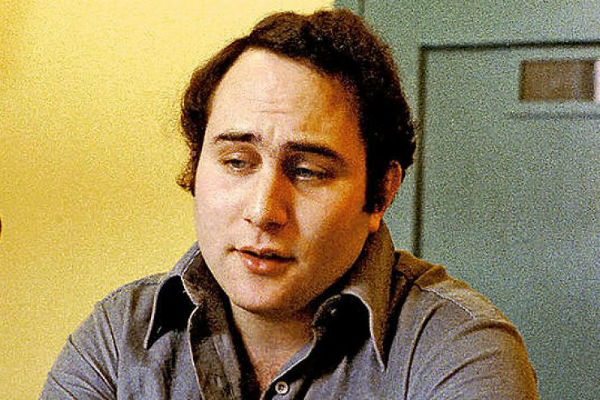
When the police are discussing Punisher's MO, they say it's like "Son Of Sam" or Bernie Goetz again. The split parallel isn't accidental, as it basically offers a distilled picture of the two ways Punisher has been seen as a character over the years. Son Of Sam killer David Berkowitz was a legitimate psycho, with 13 victims (six of whom he killed) in 1976 and '77. He claimed demons told him to murder and brag about his crimes. That's the "Punisher is mental side of the argument. Bernie Goetz meanwhile was more like an agent of vengeance with a particularly uncompromising approach. In 1984, he shot four men who had tried to mug him at a time when New York city was basically a real life Hell's Kitchen.

29. Elektra's Joyride

Marvel Comics
Marvel Comics
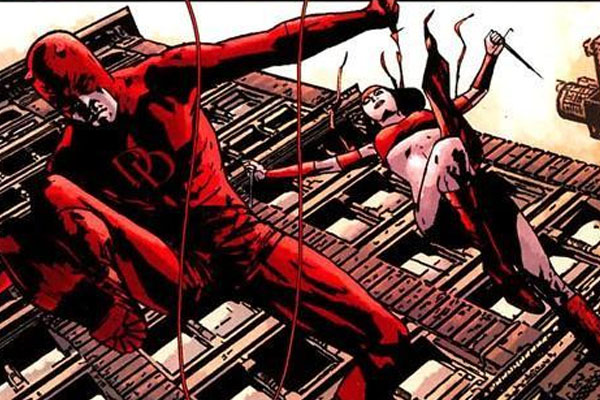
When Elektra appears and takes Daredevil for a joyride in her temporarily borrowed red supercar, it's a moment taken straight from the page. The moment comes from Frank Miller and John Romita Jr's origin story Daredevil: The Man Without Fear, which also inspired Daredevil's black suit from season one. Incidentally, Frank Miller has refused to accept that this version of Elektra is the real one. Having hated her resurrection in the comics after a decade of death, he offered a similarly delighted opinion on her television appearance: €œthey can call it whatever you want, but It will not be the real Elektra.€

28. Max The Dog

Marvel Comics
Marvel Comics
When Punisher acquires a pet dog after killing off the Irish mob, he's reuniting with a character from the comics, by the name of Max. He debuted in Punisher War Zone #37. Obviously the origin story is different: here the tale of him hunting down and killing the crooks who killed his owner and earning the respect of Frank is replaced with him being rescued himself. It's an unwritten suggestion that there's something about the creature - bred for violence - that Frank sees in himself. The changed origin also accounts for the fact that Max barks here. In the comics he doesn't make a sound, instead retaining the element of surprise in order to attack anyone who entered Frank's safe-house.

27. Punisher #3

Marvel Comics
Marvel Comics
Episode 3's rooftop sequence that sees Punisher insist that Daredevil makes a choice between killing Grotto or watching him be assassinated is also lifted straight off the page of Garth Ennis' The Punisher. In both cases, Daredevil ends up with a revolver attached to his hand, and in both cases Punisher uses the same line: "The one I make every time I pull the trigger." In the comics Daredevil actually chooses to shoot, only to find that Castle has removed the firing pin, but in the show Murdock gets a more heroic moment, even though it fails.

26. Finn Cooley

Marvel Comics
Marvel Comics
When the excellent Tony Curran turns up in the wake of the slaughter of his mob (and his son) to seek vengeance over Punisher, he's bringing to life a more substantial villain from the comics: Finn Cooley. Though he looks significantly different, there is a possibility that the way he dies is a reference to his "quirky" appearance in the comics. If the writers do choose to revive him, the shotgun blast to the chops that does him in would account for his mutilated face in the comics.

25. Gladiator, READY!

Netflix
Netflix
Matt Gerald's Melvin Potter returns, explaining some of Daredevil's new costume designs (including the bullet proof helmet - which is pointless when his mask can literally be punched off) and talking about some of his other clients. It's a shame we don't get to see more hints of who else he works with, but there is at least a hint to his own transition into his comic book alter-ego. In the comics, he obviously became Gladiator and episode four sees a parallel to the birth of the character. When Potter reveals his body armour, it's based on the design of his comic book costume, and there's a second nod to the get-up when he picks up a buzzsaw blade in anger. This season also saw the introduction of Daredevil's billy club folding up to double as a walking stick, as it was in the comics...
Marvel Comics

24. Punisher's Battle Van

Marvel
Marvel
The fact that Punisher drives a van links back to his battle tank-like anti-crime van in the comics (which has gone through several different designs). It's obviously toned down in the show, but hopefully his own series might mean we get to see a more A-Team like set-up. There's also a slightly more complex reference to the Punisher's role in the wider MCU. The Russos hinted that the Punisher (or a Punisher-like character) is operating in the comics out of a yellow truck that keeps turning up to save people at the last moment. That was all a bit tongue in cheek, but the fact that Punisher sends in a decoy yellow truck to interrupt the drug deal feels like a cheeky nod to it.


23. The Agents Of SHIELD References

Marvel
Marvel
As eagle-eyed viewers, the inclusion of the Dogs Of Hell isn't their first time in a Marvel TV show. They've previously featured in a single episode of Agents Of S.H.I.E.L.D. In 'Yes Men' - the 15th episode of season one, Agent Coulson is forced to fight some of the gang by Asgardian villainess Lorelei. There's also a second Agents Of S.H.I.E.L.D. reference later on: when Karen goes to the New York Bulletin office, there's a framed paper in the background that reads "Cybertek Settles", in reference to the HYDRA run organization introduced in the show who created Deathlok.

Contributor
Contributor

WhatCulture's former COO, veteran writer and editor.