Marvel's Daredevil Season 3 Review: 8 Ups & 2 Downs
It’s a return to form for the Netflix MCU.
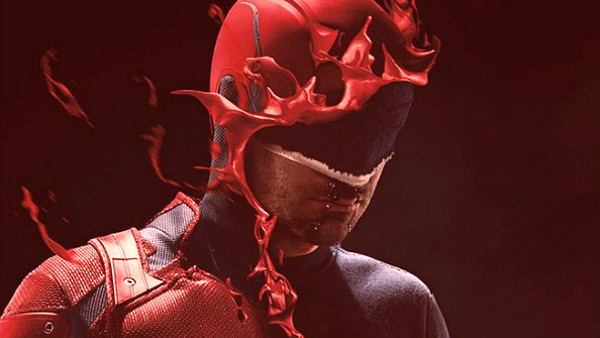
It’s time to stop worrying about Netflix’s corner of the Marvel Cinematic Universe, because The Man Without Fear is back.
Daredevil, which launched the NMCU back in 2015 and received a follow-up just 12 months later, has been off screens for two-and-half-years, save for a brief (and ultimately unsuccessful) team-up with The Defenders.
Now, with Iron Fist and Luke Cage both just cancelled, Netflix have once again let the devil out. The 13-episode third season, which picks up a few months after Midland Circle came crashing down on top of Daredevil and Elektra, finds Matt Murdock recovering at the same convent he spent time at as a child, once again in the care of a certain Sister Maggie.
Battered and broken, he decides to leave Matt behind and live as the Devil of Hell’s Kitchen, while Wilson Fisk negotiates his release from prison, putting the pair on another collision course, and a new threat emerges at the same time.
It’s been a long time coming, but after a binge of all 13 episodes of Daredevil Season 3 is an extremely welcome return, albeit with a couple of issues along the way.
Contains mild spoilers for Daredevil Season 3.
Ups...
8. The Supporting Characters Get Fleshed Out

One way Daredevil has perhaps lagged slightly behind some of its peers - especially Luke Cage - is with its use of the supporting players, who’ve been overlooked slightly for focus on the likes of Fisk, Punisher, and Elektra to take more central roles.
This time around, though, the two most important people in Matt’s life, Foggy and Karen, get much more to do. Foggy continues to step out of Matt’s shadow and has a few moments to shine all on his own, but even better is Karen. We delve right into the backstory we’ve been promised so much of, and she becomes one of the most fascinating characters in the whole series, with Deborah Ann Woll showing immense range and wringing genuine emotion.
The newcomers, too, complement the show nicely, with Jay Ali's Ray Nadeem and Joanne Whalley Sister Maggie both getting not just meaty parts, but properly fleshed out roles. All of these serve the individual characters, while contributing to the whole that is Matt Murdock/Daredevil. He likes to work alone, but this show works best when it allows all its characters to flourish.
7. The Visual Style
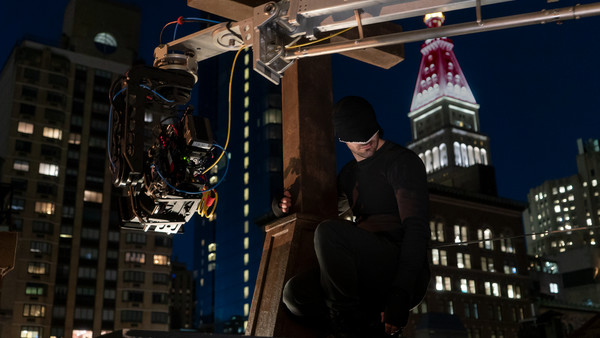
Daredevil’s never been exactly lacking in the looks department, but new showrunner Erik Oleson takes the show to new heights in Season 3.
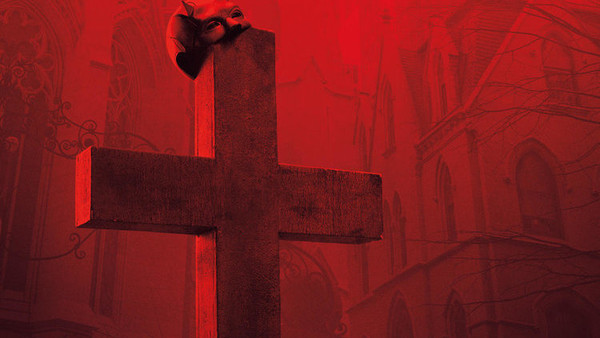
With faith playing such a big role, alongside the inspiration taken from Frank Miller’s Born Again, there’s a lot of religious iconographies that not only gives a visual link to the season’s themes, but helps it maintain a unique aesthetic with a gothic vibe and a heavy dose of noir.
That goes for the lighting too, which even more so than previous years makes evocative use of the colour red to light sequences, which is particularly striking when juxtaposed to the black of Daredevil’s rudimentary costume, but also works brilliantly for one key scene in a church. Matched with the framing of moments to visualise the way faith weighs heavy on Matt, or confines him, and, of course, the action, there’s some direction here that makes the show look and feel incredible.
6. Bullseye Hits The Mark

Bullseye is the Daredevil villain, and his journey to the small screen has been anticipated ever since the series was announced. Jason Statham was once rumoured to be in talks for the role and, while the casting of Wilson Bethel didn't generate the same headlines or hype, everyone should be thankful he landed the part, with the actor giving a performance The Stath, for all his talents, simply wouldn't have matched.
Marvel have been quite open with the character, so we know going in that he starts out as FBI Agent Benjamin Pointdexter, a name that belies what a wounded animal his character is. They go for the slow-burn approach to his turn to the dark side and, while pacing isn't something these shows often get right, it pays off here: we really get to go into his psyche and discover why he is the way he is, and even when he's doing terrible things there's a belief that he could be turned back if only the right person could get through to him.
Ultimately, though, he IS Bullseye, which means he's an adversary for Daredevil, and a worthy one at that. It's difficult to shine as a villain when the competition is Fisk, but Bethel's take on the character manages it by combining complex character work with being a walking ball of rage and intensity, but also a man clearly hurting too. It helps, as well, that the show utilises the character's skill for precision accuracy, in ways that are both deadly and quite simply a hell of a lot of fun.
5. Weighty Themes Combined With An Actual Story

One thing the Netflix Marvel shows have done well is create superhero dramas that go deeper than just crimefighting, instead tackling real-life issues and weighty themes, with Luke Cage and Jessica Jones the two best examples. However, while this has been great, it hasn't always matched up with an interesting, engaging plotline.
In Daredevil Season 3, we have themes around faith, sin & forgiveness, how our pasts do or do not define who we are, family and friendship, corruption - on each of these the series has a number of interesting things to say, from a variety of viewpoints.
That itself is all well and good, but what's much better, and integral to the success of this story, is that they don't exist in isolation, but rather these themes are underpinning character and narrative at every single turn. There's a proper story here, one that more or less fills the episode quota (although it does lean towards the latter there), that is as thematically rich as it is gripping.
4. Fisk V Murdock, Round II

Technically you could consider this round 3, after their brief but key encounter in Season 2, but regardless of what count we're up to, there's absolutely no doubt the show - and Matt - benefits from having Wilson Fisk back as a regular character.
That Vincent D'Onofrio gives one of the most nuanced villainous performances is well-known by now, and yet it continues to astonish in Season 3: in both performance and physicality he is such a phenomenal presence in every possible sense of the word, but with a fair amount of vulnerability too. He can turn on a dime, going from the charming businessman who wants to rule Hell's Kitchen one moment, to a man aching with sadness and loneliness the next, and a feral beast the one after that.
His return also gives the show much more focus. Matt and all of the other characters have a central force to move against, and it's in pushing back against Fisk that Charlie Cox delivers his strongest work, unleashing both rage and self-doubt. As far as superhero/supervillain battles go, theirs is one for the ages; surprising, emotional, and utterly brutal.
3. The Simmering Intensity And Sheer Unpredictability

As a 13-episode story that blends a crime drama with noirish mystery, and at its core is the tale of a rivalry between two men who'll stop at nothing to hurt the other, this season is constantly bubbling away with an intensity below the surface.
It's there in every moment of the show, keeping you glued to the screen not just from how good it is, but a sheer sense of worry about what's going to happen next. It has the kind of unpredictability that these shows have been lacking for some time, and not just in a twist for twist's sake kind of way, but where the story and characters simply mean it could go off in one of a number of different directions, and while it's not often the one you'd expect, it is always the right one.
That, too, means it's the kind of show to get your pulse-racing, both through the action and that aforementioned fear. It crafts genuine tension, whether it's in a fight scene or a sit-down conversation between two characters which is a lengthy, dialogue-heavy scene and one of the show's best.
2. The Jaw-Dropping Action

Back in 2015, Daredevil made such an immediate impact not because of its nuanced character work or engaging crime story, but because of the action. After a very solid first episode, it was the one-take fight sequence in episode 2 that announced this series to the world and set the bar for superhero action on the small screen.
And that’s a bar Season 3 clears. There’s a homage to that hallway fight sequence, but this season shows a number of new tricks to the show’s bow. One parking lot fight is more reminiscent of the Arkham games, with stealth rather than combat choreography being the key. The Daredevil v Daredevil clash from the trailers doesn’t disappoint either, offering intense, creative action that doubles up as Daredevil v Bullseye. That they go back to that well later is no surprise, and again it’s exciting, visceral, and better than anything else from the other Marvel shows
There’s also a one-take sequence that, frankly, demands to be seen, such is its breathless, claustrophobic ferocity. And that's to say nothing of when towards the end, which, well, you'll say (and if you have: oh my!). There are a number of reasons to watch this show, but you could come for the action alone and be satisfied.
Oh, and Muay Thai ropes? F**k. Yes.
1. The Best Netflix Marvel Series In 3 Years
The Netflix Marvel Series started stronger than anyone dared hope, with Daredevil and Jessica Jones both dark, powerful series that redefined what both the MCU and superhero TV shows could be. It was all part of a bigger plan, of course, which is where things started to fall apart.
Daredevil's second season, despite the all-guns-blazing start with The Punisher, started to lag with the Hand; Luke Cage's first season dipped after the Cottonmouth twist; and while there have been some high spots - the final few episodes of The Punisher are amazing - it's mostly been a case of diminishing returns.
Daredevil Season 3, the *fourth* Marvel show to hit Netflix this year, takes us right back to those first-year highs. There's no convoluted story, no mystical villain, nor lots of plodding; instead there's grounded action, weighty drama, and well-developed characters worth spending your time with. It might be a little too early to say it's better than Season 1 of either Daredevil or Jessica Jones - gut reaction says it is, but I'm aware of recency bias and not watching those for a little while - but at the very least, it's something on par with them, which for a long time looked impossible.
Downs...
2. Matt’s Character Gets A Little Too Emo At Times

To make something clear: Charlie Cox is great. Every year he manages to bring new layers to Matt Murdock, and the affectations in his performance - when pretending to be blind and powerful, blind and powerless, or not blind at all - are remarkable.
He’s also a character who is constantly struggling with his sense of self, his actions, and his faith. And it’s here, especially in the latter, Season 3’s Matt has some issues. Sure, Matt Murdock is a character with a lot of inner darkness, but he spends a lot of the season moping around, angry at God and angry at himself, while pushing away those closest to him.
It ties into the thematics of the season, but when he has to deliver lines with the angst of a 14-year-old who’s been growing out his hair and listening to his first Dashboard Confessional album, it becomes a bit much. And it certainly doesn’t help when he gets the worst of the dialogue this year, with comments on God, the Bible, and his parentage that come off more as ‘Dear Diary, mood: apathetic’ than the kind of crime epic the rest of the season suggests.
It’s not enough to derail the season by any means, and Cox is good enough in other areas that you still root for Matt (and in the last couple of episodes, he's ridiculously good), but coupled with so much darkness it does get a tiring.
1. The Pacing Is Still Slightly Off

It’s become such an issue over the last couple of years that you almost accept these Netflix Marvel shows will have some pacing issues.
Luckily, Daredevil Season 3 - like Season 1 and the first run of Jessica Jones - is so good that it largely covers for them, but not completely.
The first couple of episodes, which are largely concerned with table setting, are the kind of slow-burners the streaming service typically delivers, and there are a couple of brief lulls along the way, with one episode mostly devoted to a flashback that, while doing some good character work, runs on for far too long and deviates from the main storyline right at the point it’s really heating up. It’s far better than the other series have managed recently, but would nonetheless benefit from being tighter.
What did you think of Daredevil Season 3? Let us know down in the comments section.