Marvel's Jessica Jones: 33 Easter Eggs & References You Probably Missed

"Sweet Christmas!"
Just when you thought Netflix couldn't possibly follow up their astonishing success with Daredevil with a show rescued from development hell about an alcoholic Private Investigator and a villain with possibly the most ridiculous name of all time, they've only gone and bloody done it. Jessica Jones might not be as blisteringly violent as Daredevil, but it is a wonderfully written character story that focuses on yet another strand of the post-superhero narrative (what happens to real people when the Avengers "save" the city). And rather than being about capes and costumes, the show deals with the idea of a super-spectrum, and of reluctance to duty that doesn't fit Spider-Man's "great power, great responsibility" slogan. And it's smart, charming and brilliantly acted to boot, so there's not much to hate (aside from the weird 1980s action movie guitar). The show is also double-stuffed with Marvel references, just as Daredevil was, and there's a lot of lore and comic book culture to pour over to really appreciate how nerdy the show really got. Luckily, that's a personal speciality... WARNING: Inevitably, lots of spoilers for the entire series follow.

33. Obviously, There's This Little Guy...
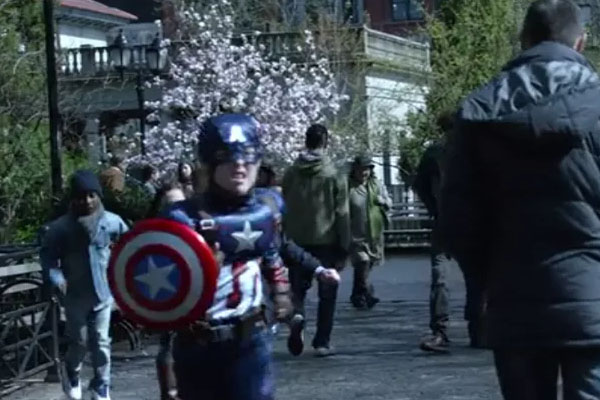
Clearly Captain America is still popular with some normal people, despite the growing suspicion over superheroes and the call to regulate their behaviour that will play such a big part of Civil War.

32. The Avengers Tower (And Daredevil?!)
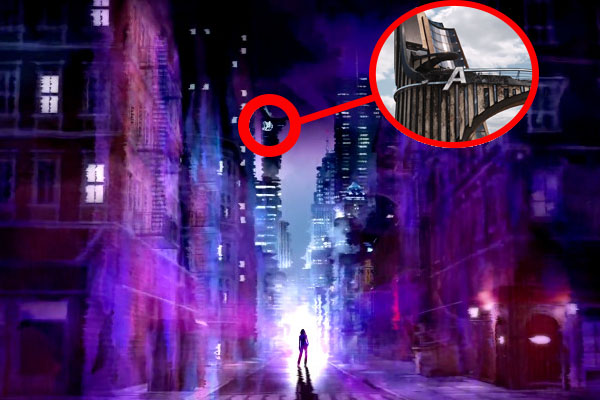
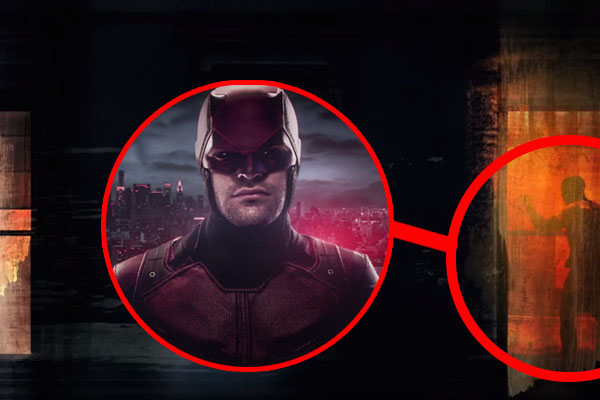
It's pretty much an honourable mention, but in the same vein as Daredevil's motion poster, Netflix's announcement teasers were dotted with Easter Eggs. The most immediate is the inclusion of the Avengers Tower in the background of the poster, despite the fact that it's conspicuously absent from the skyline throughout the show. It must have been an expense too far. Anyway, the poster (and indeed the first teaser) also heavily references the cover art of Jessica Jones artist David Mack, which also influences the aesthetic of the opening credits of the show. That watercolour style also feels like it bleeds into the show's entire moody, noirish look. And wait... who is that ripped figure bathed in red light shadow-boxing in one of the windows in the opening credits? Could it be...?

31. The Door's Big Moment

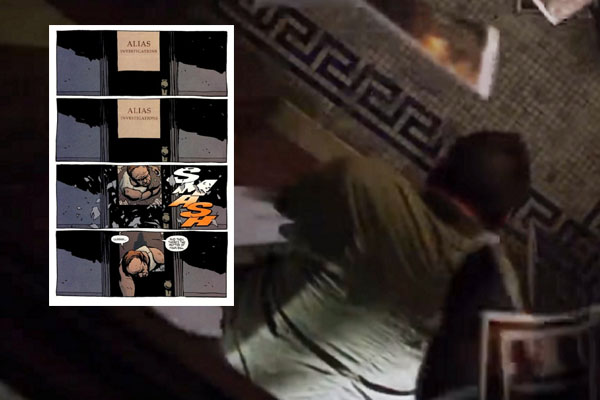
The first introduction we get to Jessica Jones is an almost exact mirror of what happens in some of the first panels in Jones' first comic - Alias #1. Obviously the Alias Investigations sign is also a ported over reference to the investigative operation she ran in the comics too. Jones' dealing with an overly aggressive client who doesn't like the information she's uncovered for him is a redo of a sequence in that first comic that sees her door bite the dust in a very similar way.

30. Jeri Hogarth

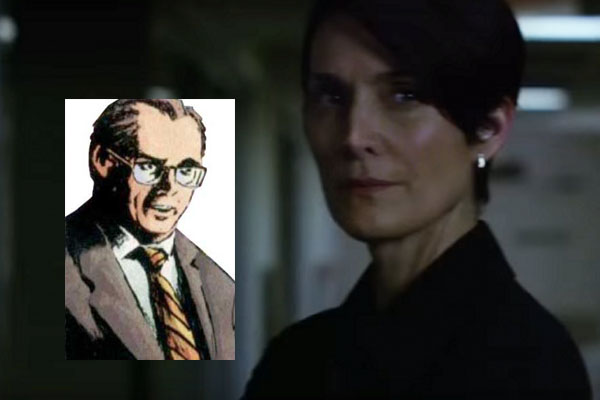
Carrie Ann Moss' casting as super lawyer Jeri Hogarth (it's no accident she's referred to as Madeleine Albright at one point) is important for a couple of reasons. Not only is the decision to gender-bend the original source's Jeryn Hogarth a positive response to the lack of powerful women in the MCU, but also having her be an out homosexual is also a watershed moment for the franchise. Interestingly, Jeryn offers a link to forthcoming Netflix show Iron Fist. In the comics Hogarth was the executor of Wendell Rand's (Daniel Rand - AKA Iron Fist's father) will, who investigated Rand to see if he truly was his father's son. Does his/her presence mean we might get to see the introduction of Heroes For Hire - the company run by Daniel Rand and Luke Cage - as a means to set up The Defenders? After all, he played the company's lawyer and business representative.

29. The Patsy Walker References

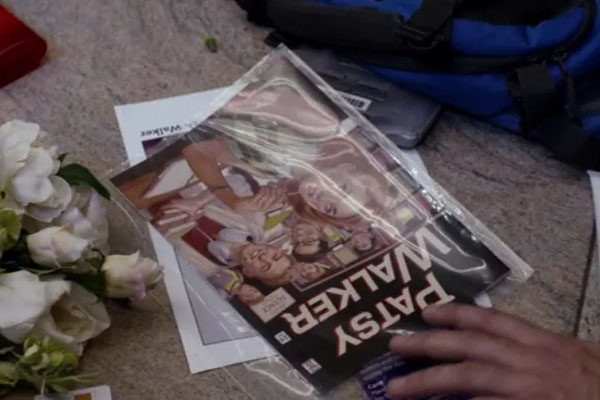
The show introduces Jessica Jones' best friend in the shape of Patricia "Trish" Walker, who Marvel fans will know is actually a superhero in her own right. She's a meta-character in essence: before her career as a talk-show host she had her own comics - under her other name Patsy Walker - which were released in the real world before a clever re-write saw those comics reimagined as fictional publications within the Marvel universe. Walker was then introduced as superhero Hellcat (having worked with Hank McCoy and picking up her powers from an augmented outfit), complete with red hair and a fetching yellow costume There are references in the show to her comics persona - like the creepy fan who appears and tells her he misses her red hair while carrying (and dropping one of her costumes). In both the comic and the show, Walker puts her past as a manufactured character behind her, and while she doesn't actually blossom into Hellcat in the show there's a chance she could in future seasons. It's certainly been foreshadowed, what with the presence of her red wig in a later episode, Jessica's challenge that she should wear a cape, and her taking the super soldier drugs in Ep 11 to fight.

28. Dorothy Walker: Horrible Mother

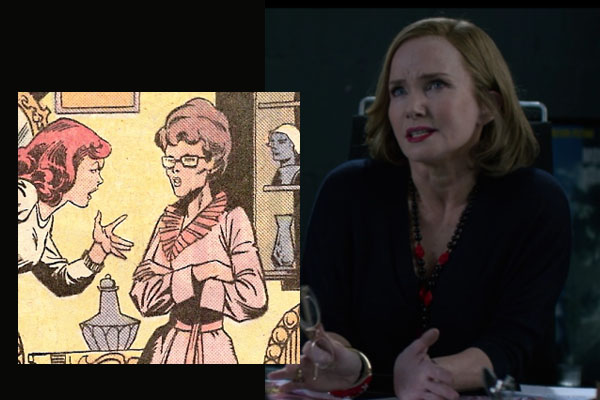
Just as in the comics, Patricia's mother Dorothy is presented as an over-bearing figure who exploited her daughter for financial gain through the publication of her eponymous comic. She's a little more malignant in the Netflix show, with suggestions of an abusive relationship underpinning the exploitation and the merchandising. And Patsy's discomfort at their odd relationship is reimagined in more stark terms, which is added to by the fact that Dorothy also adopted Jessica Jones as a publicity exercise. It's all clearly a call back to the comics, where she attempted to sell her soul to demons in exchange for extended life that she ultimately didn't get to see.

27. Kilgrave

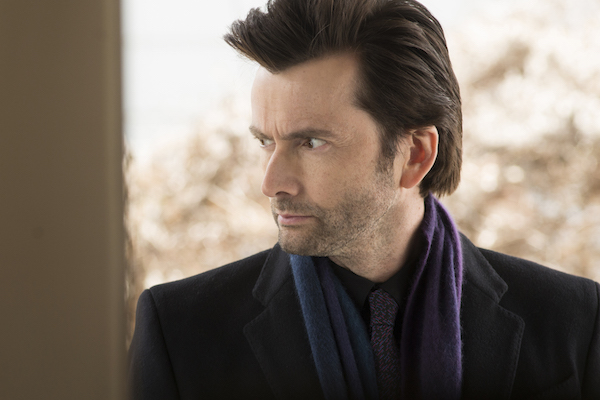
Kilgrave - renamed from Killgrave in the comics (there's even a gag about how ridiculous his name is when it's discovered that he named himself) - is of course a Daredevil villain who manipulated Jessica Jones in vengeance for Daredevil and Spider-Man's beatings of him. The way he exploits her - including, horribly, raping her repeatedly - is a step up from the comics (his torment there was more mental than physical), and there are definitely shades of a vampiric pull in his charms. Inevitably, it leaves scars in Jessica. Is there anything in Jessica's protective mantra - "Main Street, Birch Street, Higgins Drive, Cobalt Lane"? Well if you're really looking for something, JJ Birch and Michael Higgins were comic artists, and Neville Higgins (the British version of The Punisher) and Cobalt Man (a foe of the Defenders) could have been inspirations. That might explain why she doesn't appear to come from Forrest Hills, the community both she and Peter Parker were from in the comics. Because, as Google Maps will tell any nerd keen enough to check (yep), none of those streets are in the Queens community. Incidentally there are a couple of hints at Kilgrave fathering children in the show, and that fits with the existence of his daughter Kara Kilgrave in the comics, who was for a time a member of Alpha Flight. And tell me the way Tennant delivers "well..." isn't a homage to his own Doctor Who performance?

26. Malcolm

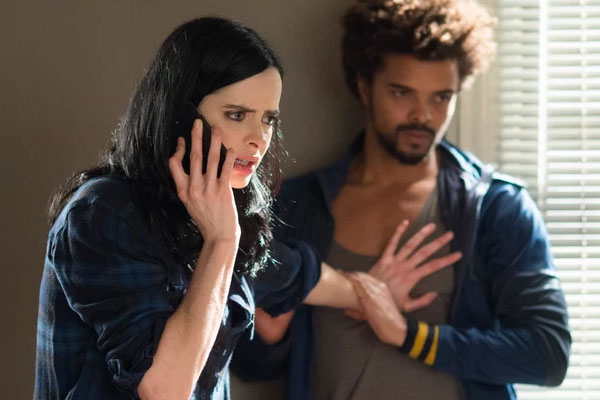
Malcolm might not be much like the character in the Jessica Jones comic books who shares his name, but the pair definitely have similarities - they're both seen as thorns in her side, though clearly in different terms. It's more like that Ruben, the annoying, infatuated upstairs neighbour is more closely based on that side of the comic version of Malcolm. Though he doesn't seem to be anything like this comics counterpart there is a final gag in the last episode that suggests a parallel. In the final episode, Malcolm answers Jessica's phone, a frequent source of irritation in the comics when the other Malcolm does it. That can't be an accident. It's interesting to see Malcolm used as a means to explore addiction. Jones herself in the comics struggles with near-alcoholism to cope with her depression, and while it's seen as a recreational coping measure in the show it isn't dealt with in the same terms. So Malcolm fills that agenda.

25. Luke Cage's First Appearance

When it's revealed that Jessica Jones is spying on Luke Cage he's seen wearing a mustard/gold tight T-shirt, which is precisely what he wears in the comics. It's a nice simple nod. Not only is he wearing an Easter Egg, there's also a delightful little gag when Cage and Jones hook up. When asking her why she's detached, he insistently asks her whether "it's a race thing". It's played as a joke, but it actually references Cage's origin in the comics. He was inspired by popular blaxploitation films - hence the name Power Man - and it feels like that gag is a loaded nod to those early days of the character in the '70s.

24. Det Oscar Clemons

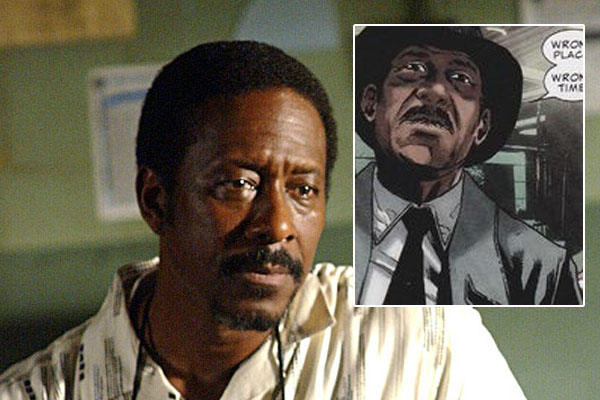
There's a link to Daredevil's second season in the appearance of Detective Oscar Clemons (played by The Wire's Clarke Peters). In the comics universe, Plemons is an NYPD detective who actively tries to stop Punisher's violent war on crime. That could mean we see him brought into Jessica Jones' companion show as a link to the vigilante. Another background Marvel character is also referenced later in the series. When it's revealed that Kilgrave's fetus is taken to storage, its location is said to be at Hammond Labs, an in-universe location that is the site for the origin of a key figure in Civil War. In the comics, Robbie Baldwin is accidentally given powers at the same lab, turning him into Speedball - the only surviving member of the New Warriors team in the disaster that kicks off Civil War.

Contributor
Contributor

WhatCulture's former COO, veteran writer and editor.