Marvel's Jessica Jones: 33 Easter Eggs & References You Probably Missed

14. Kilgrave's Star Wars Reference

It's inevitable that anyone watching Kilgrave's powers of suggestion play out on screen will immediately associate his evil with a grotesque reimagining of the Jedi mind trick. That much hasn't escaped the character himself who at one point uses the line "we can go about our business, move along" with Jessica picking up the reference. Interestingly, his insistence on free will at times - as with Jessica having to choose to be with him - shakes that power up and adds a nice extra dimension. And it's not the only odd, distracting reference: at one point there's also an odd reference to Grey's Anatomy when Jessica pretends to be Dr Carter (a character from ER) who transferred from Seattle Grace hospital. And of course the two dogs Luke Cage refuses to hurt are called Myers and Krueger after the horror icons. Plus there's a reference to Wayne's World ("If this is a severed body part of any kind, I'm going to be very upset."), and a sideways nod to Ed Wood when Kilgrave is referred to as "that limey c*cksucker" by a victim.

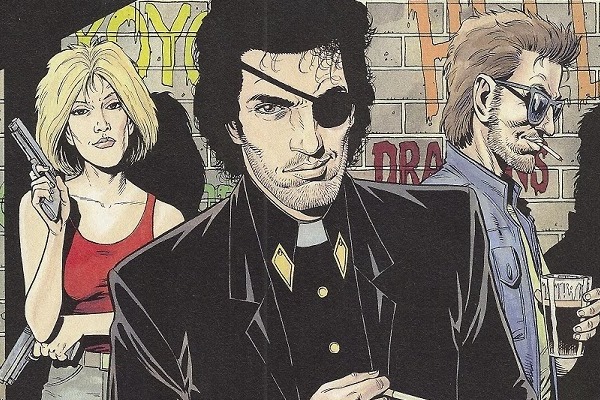
13. The Preacher Reference

As well as Obi-Wan and the Jedi's with their mind tricks, there's also a rights-busting reference to another comic book character with the power to make any character do what he says. When Kilgrave jokingly mentions that he "once told a man to go screw himself€€ he's replaying a gag made famous in Vertigo's Preacher comics, when Jesse Custer uses his Word Of God power to make a man go f*ck himself with hilariously awful results.

12. Jessica's Powers

All of Jessica's powers from the comics are brought in: she's super-strong and fast and she recovers from injury quickly obviously, but her other less well formed powers are also preserved as they were. In the comics, she can't actually fly properly, which is why she uses the very Toy Story like qualification "it's more like jumping and then falling well" when asked if she can fly. When she actually shows off the power, that's exactly what it is. And while she seems to make claims of being bulletproof when faced with the Eastmans, she's shot and injured just as a none-gifted person would be. That mirrors her powers in the comics, where she's not entirely sure if she's bulletproof, but knows that normal shots or stab wounds appear only superficially to affect her, just as Audrey's bullet does in the show.

11. The Experiments On Kids

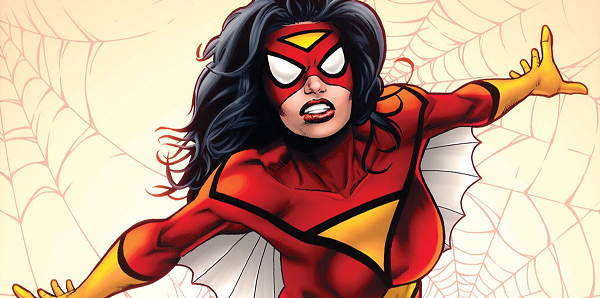
The revelation that there were secret evil schemes involving experimentation on kids is a fairly vague nod to Jessica Drew's origin story, and the fact that kids other than Kilgrave were shown suggests there may be other supers out there. The future Spider-Woman was experimented on by her father (like DC's cyborg) after becoming ill from uranium poisoning and injected with empowered spider blood. Obviously there's also a nod to the New Men in there too, as their origins tie in to Drew's. As pointed out by Reddit, that could also allow for the introduction of Marvel characters Cloak and Dagger, who are forcibly mutated as teenagers by Simon Marshall to gain their powers. This story element - and indeed what transpires with Officer Simpson - is clearly designed as a sort of anti-Captain America morality tale. In Marvel's world, the idea of intentionally mutating anyone to gain powers (unless their morality is as apple pie as Steve Rogers) will inevitably lead to bad consequences. Hence The Winter Soldier and the Abomination's issues.

10. Nuke Rising

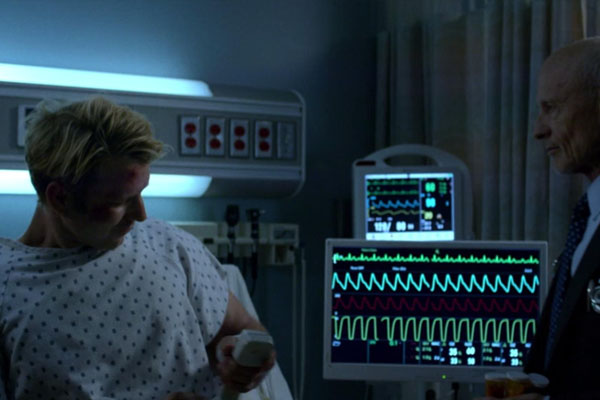
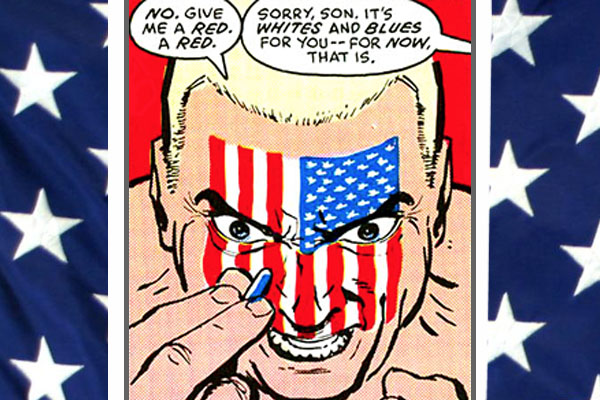
It takes a while to seed the fact that he's not exactly what he seems, but Officer Simpson is set up in the show to become Marvel and Daredevil supervillain Nuke. In the comics, Nuke is Frank Simpson, a failed candidate from the Weapons Plus programme that created Captain America with a crazed level of patriotism and some serious mental issues. The former black ops member also had a fetching American flag etched and tattooed on his face, had two hearts and used different coloured pills to produce different effects (red, for increased adrenaline; blue to bring him down; and white, to keep him balanced between missions.) Sound familiar? Simpson has two hearts, as revealed in Episode 9 when there are two different heart-rates on his monitors, and the pills Dr Koslov give him are also colour coded. And their dialogue is ripped straight out of the comic...
Will he become more recognisably Nuke for the next season of Daredevil? Let's hope so.

9. The Obscure Marvel References

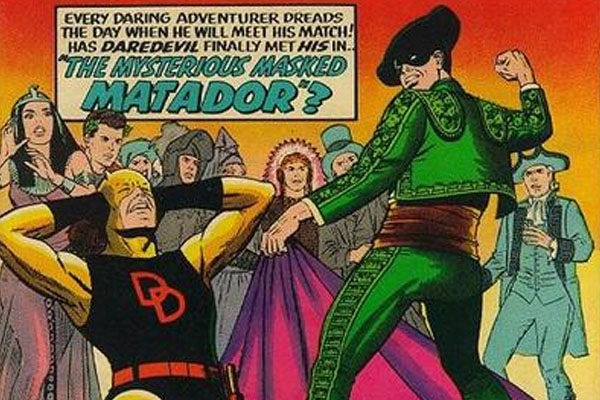
There are some more obscure name references dropped in to the background of the show. For instance, in the background of the sequence when Jessica attempts to follow Kilgrave there's a Yost Cafe. That could be a nod to Marvel writer Christopher Yost who also wrote Thor: The Dark World and Thor: Ragnarok. Likewise in the very first episode there's a neon sign in the background reading "Matador" - the name of a Marvel supervillain who debuted in Daredevil. And of course in Episode 6, Jessica Jones mentions Carl Icahn, a notable figure for two reasons. Firstly he tried to buy Marvel in the '90s In Episode 6, Jessica mentions Carl Icahn. This might just be because he's a fairly well known billionaire, but Icahn also tried (and ultimately failed) to fully takeover Marvel before Disney did so in 2010, after having a major stake in the company, and he also owned 10% of Netflix in 2012, before selling half of his stock on a year later or an $800m profit. Continuing the ownership references, Mickey Mouse also appears when Kilgrave buys Jessica's childhood home - that might also be a reference to the fact that Jones' parents are killed on their way to Disneyland in the comics, which is a bit more grim.

8. Jessica Jones' Origin

Netflix have reused the car crash element of Jessica Jones' story and the chemicals that gave her powers, but they swerved from that point on by not putting her into the care of a kindly old couple. The most interesting thing about that origin, and the presence of nefarious company IGH is that there is a parallel in the comics which might have necessitated change because of a rights issue. On the page, Dr Hank McCoy isolated the Mutant Growth Hormone (MGH) - just as he does in the newer X-Men films - and it goes on to be used as a superpower steroid, leading to the trigger event for Civil War when Nitro - a user of the drug - explodes and leaves a massive death-toll. The hormone was also used by the Owl - seen already in Daredevil's first season - to build his own criminal empire further. So what if IGH is the Netflix Universe's version of MGH, and with mutant being unavailable because of Fox's ownership of the X-Men rights, why not Inhuman Growth Hormone, to fit in with the idea of "gifted" powered people that has also been used to describe Inhumans in Agents Of SHIELD? It all comes together nicely.

6. Hero Vs Hero Fighting

Obviously with Civil War around the corner there are some nods towards the conflict there, and in more blatant fashion than with the IGH theory. When Jessica and Luke are forced to fight each other thanks to Kilgrave's control, it's very much a nod forward to what is going to happen when heroes throw down in the events of Civil War. And even more specifically, Jessica's past of having been made to kill Reva while under Kilgrave's control is almost an exact replica of Bucky's assassinations as The Winter Soldier that will come into play with Iron Man and Black Panther wanting revenge in Civil War.

5. Claire Temple's Cameo

As already established, the hospital Luke Cage ends up at is the same one featured in Daredevil, and indeed the locker that Jessica Jones breaks into belongs to Temple's friend, who she was cat-sitting for in that show. Unsurprisingly, Temple herself appears, sticking to the promise that she will tie all of the Netflix shows together in some way. She treats Luke Cage in the hospital and lightly references what happened during Daredevil without dropping in a concrete name-check. In a divergence from the comics, it seems we won't get to see her and Luke Cage date, unless it plays out in his own stand-alone somehow.


4. The Purple Man
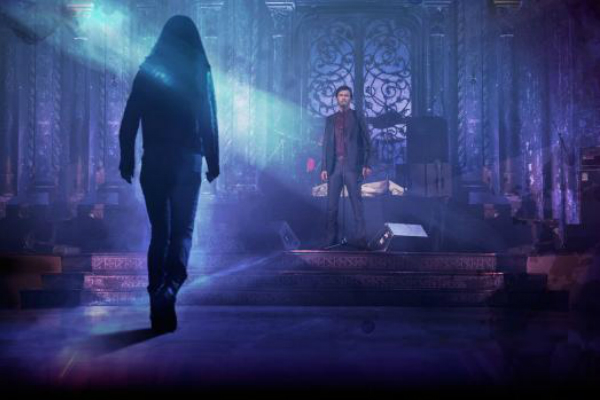
Kilgrave's "other" identity (even though he actually chose Kilgrave as his super-villain name) plays a huge part in the film. A good deal of the show is shot through a purple filter, and every time he's about to appear in the early episodes there's a flash of the colour, announcing his arrival. Additionally as a hint to his control, Hope pulls the gun that kills her parents out a purple bag, and later Kilgrave stamps on a purple RC car that is annoying him in one of his victim family homes. Obviously he's also increasingly dressed in purple as his evil grows, as his purple scarf gives way to a head to toe suit ensemble. And while he's not the purple monster he appears as in the comics (as a result of chemicals that dye him and give him powers), there is a moment when he turns purple. When he's attempting to boost his power, he does briefly turn purple as a nod to the comics design, but that's as far as it goes.

Contributor
Contributor

WhatCulture's former COO, veteran writer and editor.