10 Moments That Almost Killed Doctor Who
Like the lead character, Doctor Who has regenerated to avoid death SO many times...

Doctor Who has been a TV institution for more than 60 years, but despite being about a hero who can regenerate time and time again, it's nearly met its end on more than one occasion. The BBC has come close to cancelling Doctor Who more than once – not to mention that time it actually did!
The reasons for these brushes with death are numerous and often complex, whether it's related to viewing figures, or pure costs. It's also a series with a ton of fans, but it has a plethora of detractors too, and that can often work against it.
The following moments nearly tanked Doctor Who forever, but like the Doctor themselves, the series was able to regenerate, and move on to pastures new.
And that's the beauty of Doctor Who. No matter how bad things get, it can always reinvent itself and stride forward – and no doubt it will do that many more times in the future as well...
10. Doctor Who Almost Ends Before It Starts
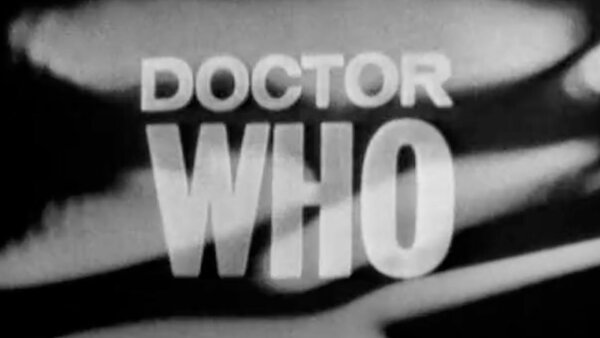
The earliest example of Doctor Who’s near-demise comes before the show had even aired a single episode.
Let’s all travel back to 1963. The Beatles are top of the music charts, Cleopatra is dominating the box-office and it feels like the universe is doing everything it can to stop Doctor Who getting made.
The show's first-ever episode was actually completely scrapped after being recorded, with co-creator Sydney Newman feeling that the Doctor was a bit too unlikeable and the overall pace was too slow.
Meanwhile, the Controller of BBC Television at the time, Donald Baverstock – the man who originally tasked Sydney Newman with creating the teatime family show that would become Doctor Who – was more than a little bit concerned about how much it would cost to bring all of time and space to life.
Initially he agreed that four episodes would be produced, later extending this to 13. That further committment didn't last long however as Baverstock had clearly punched the numbers into an abacus and come to the conclusion that the BBC simply couldn't afford to produce any more Doctor Who.
In October 1963 he sent a memo to the producers which read:
"Such a costly serial is not one that I can afford for this space in this financial year. You should not therefore proceed any further with the production of more than four episodes."
Fortunately after a few crisis meetings and a bit more number-crunching, Doctor Who was given the greenlight (again) when the producers figured out they could make the show a bit more cheaply.
Newman's famous description of Baverstock as "very keen" but "worried about money" certainly sounds accurate, doesn't it?
9. William Hartnell's Departure

Whenever an actor decides it's time to hand in their keys to the TARDIS and leave the show, they regenerate. It's an iconic aspect of Doctor Who and has made it possible for the series to continue with the same character (often played by a charming Scotsman) for well over six decades.
One actor leaves, another takes their place, and you have a brand-new Doctor! It's a perfect characteristic of Time Lord biology that makes it possible, but it wasn't always part of the show. In fact, before there was even any talk of a Second Doctor, there was a time when there wasn't actually a plan to keep the series going once original Doctor William Hartnell left.
As one of Hartnell's final companions Anneke Wills explained in 2016:
"We knew Bill [Hartnell] was going to finish, that he was gone, and then there were discussions... 'OK, is that the end of the show or shall we have another actor? Shall we have an actor who looks like Bill, or shall we have a completely different actor?'"
Fortunately the decision was of course made to continue the show with a new lead actor, which itself raised a whole new crop of concerns. Would the public accept a new Doctor once Hartnell left? Harnell was the Doctor, so it was anyone's guess.
Those concerns were swiftly put to rest when Patrick Troughton's amazing, charismatic take on the character gave Doctor Who new life, earning it a stay of execution for the next three years.
8. A Colourful Transition

After the concept of regeneration was introduced, Patrick Troughton played the role for a few wonderful years. Doctor Who had found a means of continuing even after the lead actor departed, so it seemed possible that it could keep going indefinitely.
Unfortunately, the reality of the situation made that less and less likely as Troughton got closer to leaving the show. With ratings dwindling towards the end of his tenure, the BBC seriously considered ending Doctor Who in 1969, with the possibility of replacing it with a revival of Nigel Kneale's Quatermass serials from the 1950s.
Soon though it was decided that Doctor Who would soldier on for at least another year, transitioning into colour television and casting a new Doctor in the form of Jon Pertwee – but even then, its troubles weren't over.
After Pertwee's first year in the role there was yet again talk of binning Doctor Who off, with producer Barry Letts even beginning work on a potential replacement show called Snowy Black, about a displaced Australian cowboy.
This period of uncertainty didn't last long however, with BBC higher-ups determining that Pertwee's first season had performed well enough for the show to continue.
7. Doctor Who In Distress

Doctor Who managed to continue through five regenerations of the Doctor before it ran into its most dangerous dance with cancellation. Colin Baker was brought on to play the Doctor in 1984, and he knocked out his first season with the belief he would return for a second.
But in 1985 – midway through the transmission of Season 22 – the BBC announced that Doctor Who would be going on hiatus. The reasons for this were numerous, from falling ratings to a perceived overly-violent tone for the series, but the biggest was simply that BBC higher-ups just didn't like the show.
This was the grimmest things had looked for Doctor Who in its 20-plus year history, and the creation of an infamously terrible charity single called Doctor In Distress, designed to plead for the show's return, did little to move the needle.
This hiatus resulted in the abandonment of several storylines, all of which were outlined for Baker's second season, and though the show did of course return in 1986, in some ways the damage had already been done.
Colin Baker was soon fired and public perception of Doctor Who was at an all-time low. The end of the show, though avoided here, felt more inevitable than ever.
6. Survival (Or Lack Thereof)

In November and December of 1989, Doctor Who aired a serial titled Survival, which is ironic, because this was the final story before the show was cancelled.
And yes, Doctor Who was actually cancelled this time, but seeing as it eventually returned, this cancellation still only stands as a moment that almost killed the series entirely. It's our list, we can count this if we like!
So... what happened?
Well, Doctor Who was competing with soap-opera juggernaut Coronation Street, which was pulling a ton of ratings away from the show. Battlefield Episode 1 – which aired earlier in the same season as Survival – only drew in 3.1 million viewers, a record low for Doctor Who at the time.
Coupled with the aforementioned disdain for Doctor Who from BBC higher-ups and the reasons to stop production of the show were more plentiful than reasons to carry on. And so, production was halted at the end of Season 26, with co-leads Sylvester McCoy and Sophie Aldred informed that their contracts for future seasons were not being renewed.
McCoy recorded the Doctor's closing monologue on 23 November 1989 – the 26th anniversary of when the show began. This effectively ended Doctor Who for good, and as far as anyone knew at the time, that was it. There wasn't a crystal ball, and certainly no TARDIS to tell the millions of fans of the series that the Doctor would eventually return, so as far as anyone was concerned... Doctor Who was done.
While this was obviously bleak at the time, Doctor Who wasn't actually away for too long in the grand scheme of things. Although when it did return, it wasn't exactly with a bang...
5. The Star-Spangled TARDIS

Doctor Who's cancellation in 1989 didn't sit well with a lot of people. It was an incredible show that had endured for a quarter-century, so there were a lot of fans who weren't happy to see it go. The show had also built up a decent fanbase in the United States, which ultimately worked in its favour.
A collaboration between Universal Studios, the FOX network and the BBC made it possible for the Doctor to return in 1996, in the form of a TV movie. Starring Paul McGann as the Eighth Doctor and continuing the story of the show, this movie served as a backdoor pilot for a potential American-funded series.
Essentially, if enough people watched the TV movie, then a new Doctor Who series would be greenlit.
Unfortunately, the movie didn't perform as well as the American companies involved would've liked, and it wasn't picked up for a full series. The TV Movie only drew around 5.5 million viewers in North America, falling short of internal targets, while even its nine million UK viewers was less than the BBC had anticipated.
The seven-year hiatus between the Seventh and Eighth Doctors apparently wasn't long enough. Doctor Who yet again entered a state of production limbo, with no firm signs of the show ever returning to our screens again.
4. The 2005 Revival That Almost Never Was

Today we know the 2005 revival of Doctor Who was a resounding success, so it's hard to imagine that it was almost squashed before it hit our screens. But it was!
In June 2004, less than a year before the Ninth Doctor would explode his way onto television, newly-appointed Director General of the BBC Mark Thompson – who clearly hates fun – made it one of his first ports of call to try and axe the first series of Doctor Who before it entered production.
It would appear that this request came down from Doctor Who's old nemesis Michael Grade. Grade, at this point, was Chairman of the BBC Board of Governors, and was one of the people involved in Doctor Who's hiatus and near-cancellation in the mid-1980s.
Luckily, it was quickly determined that things were simply too far along, and that cancelling Doctor Who at this stage would represent a significant waste of time and resources. But just think how different things could've turned out if Thompson had got the job a few months earlier, and had been able to put a stop to our favourite show about a mad man with a box.
There’d have been no Day of the Doctor, no Blink, no Heaven Sent, and no Love & Monsters! Actually, maybe Thompson had a point with that last one.
3. The End Of A Time Lord

When Doctor Who relaunched in 2005 with Christopher Eccleston as the Ninth Doctor, it managed to score big in terms of ratings, and the series was born again. Unfortunately, Eccleston only stuck around for one series, and was replaced by the inimitable David Tennant.
While Eccleston managed to build a great deal of buzz around the relaunch, Tennant's Tenth Doctor took the show to another level. His performance was amazing and struck an incredible chord with the public, becoming the face of the show for several years before deciding it was time to leave the TARDIS on 1 January 2010, in The End of Time Part 2.
At this time, the word "cancel" was being spoken a lot, because it wasn't just Tennant leaving. Russell T Davies, the showrunner who breathed new life into Doctor Who, was departing as well. With both of them departing at the same time, the BBC was concerned about the series' long-term prospects, as Steven Moffat explained in 2014:
"I think there were plans maybe to consider ending it. David owned that role in a spectacular way... so the idea that Doctor Who could go on at all in the absence of David was a huge question."
According to Moffat, it was RTD who actually saved the show by telling the BBC plain and simple, "You are not allowed to end it." And it seems they listened!
Clearly, Russell felt that there was lots more 'absolute content' to come...
2. Flux Nearly Wipes Out Doctor Who Itself

The Doctor is used to battling monsters and aliens week in, week out, but in 2020 they faced a new kind of enemy – a global pandemic.
With Doctor Who already contending with a frustratingly infrequent release schedule in the latter half of the 2010s, the last thing it needed was a huge-scale shutdown of production, but that’s exactly what it got when COVID-19 hit and made it impossible to film anything for a period of time.
Showrunner Chris Chiball has since revealed that the BBC had serious questions about whether or not the show could continue, saying "The BBC was just like, 'Where’s the money coming from? How are we going to do this? Is it too difficult?'"
As a result, there was a brief period of time where Doctor Who simply wasn't happening, and nobody involved knew what the future of the show would be.
Even after COVID hurdles were overcome with strict filming regulations and a shortened series of only six episodes, Doctor Who's problems weren't over. Jodie Whittaker had been offered other work which would clash with the filming of Flux, but like the true hero she is, she turned various job offers down so she could fully commit to Doctor Who.
And thank god that's the case too. Just imagine if the last thing we ever saw of Doctor Who was Ryan falling off his bike...
1. The Power Of The Doctor... And Then What?

Even with Jodie Whittaker and Chris Chibnall staying on for a third series and three specials, the uncertainty was far from over.
Going into The Power of the Doctor, it was still unknown what would come next after Thirteen regenerated on that cliffside in one of the most stunning regenerations we’ve ever seen. It was written and shot to be vague and open-ended, even ending with "To Be Continued" as at this point, it wasn’t known who would be taking over from Whittaker.
Similarly, with showrunner Chris Chibnall on his way out, there was a period where the BBC didn't have a succession plan for the show, and it was in a bit of a state of limbo.
But while COVID nearly killed the show before Flux, it was also responsible for saving it in a big way. The lockdown tweetalongs sparked something inside David Tennant, Catherine Tate, and Russell T Davies, that made all of them keen for one more ride in the TARDIS. And the rest, as they say, is history.
This down-to-the-wire last minute save was in stark contrast to the first NuWho showrunner transition, where Steven Moffat even spoke about taking on the head honcho role all the way back in the Silence in the Library commentary in early 2008.
While it may be a slight exaggeration to say that this moment almost "killed" Doctor Who, it's not certain what would've happened had Russell T Davies not participated in those tweetalongs, and not made contact with the BBC. At the very least, we were certainly facing a much more delayed wait for Doctor Who's return than the year between The Power of the Doctor and The Star Beast.