Netflix's Resident Evil Review: 5 Ups & 5 Downs
Fans will be massively divided by Netflix's bold new take on the franchise.

While genuinely good live-action adaptations of video games remain disappointingly few and far between - let alone great ones - it's impressive that Resident Evil has totted up seven theatrically released movies, the vast majority of which have even been commercially successful.
Yet reviews have ranged from mixed-to-negative across the board, with many feeling that the iconic survival horror series' wide canvas might be better-suited to the small screen.
And so, Netflix comes to the rescue, green-lighting an eight-episode Resident Evil TV series while promising big-budget thrills and a fresh new take on the well-trod story.
And while this new Resident Evil - which is more a reimagining than an outright reboot - gets points for stepping outside the series' comfort zone while dishing up quality production values and a solid cast, the creative aspect remains an abject mess.
Netflix's Resident Evil isn't a dumpster fire on the level of the later Paul W.S. Anderson movies, but nevertheless suffers from a debilitating identity crisis, at once trying to please franchise fans and establish itself as something markedly different. The results are frustratingly uneven, if certainly not worthless.
With that in mind, here's where the series stumbles most...
Downs...
5. It's An Incredibly Loose Adaptation

What's sure to be the most majorly divisive aspect of this new series is how shockingly different it feels, to the extent that at times it's barely identifiable as Resident Evil at all.
Yes, there are characters, names, and places that fans of the series will know - the Umbrella Corporation is still front and center raising hell, of course - but it'd be easy to believe that the episode's scripts were initially an original sci-fi series that was reworked into a Resident Evil show during the early stages of production.
Despite periodic Easter eggs and namedrops that will mean something to fans of the games, the bulk of the show feels like any other decently produced sci-fi action-horror series with a post-apocalyptic fringe.
While there is eventually an attempt to place the show within the context of the games, it ends up feeling half-baked and unsatisfying, as though showrunner Andrew Dabb (Supernatural) eventually realised he couldn't fully reconcile this story with the considerably sillier narrative of the games.
All in all any fans expecting numerous characters and iconic locations to get a thorough showing here will feel tremendously let down, because the series represents a rare case of a video game adaptation not indulging its fan-serving potential nearly enough.
4. The Frustratingly Fragmented Narrative Structure
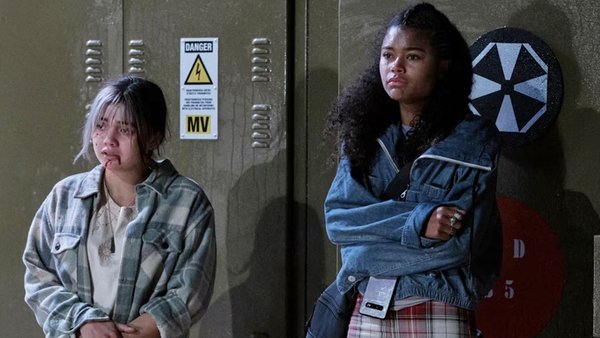
Resident Evil divides itself across two timelines, and like so many other TV shows ping-ponging viewers between casts and time periods, it ends up feeling all the more messy and incoherent as a result.
The 2022 story takes place in the town of New Raccoon City, following Umbrella's Dr. Albert Wesker (Lance Reddick) and his two teenage daughters Jade (Tamara Smart) and Billie (Siena Agudong) shortly before the T-virus begins its rampage across the world.
Then in 2036, we reconvene with an older Jade (Ella Balinska) as she attempts to survive in an increasingly hostile world where Umbrella is expending considerable resources to track her down.
Ultimately the 2022 story is much more interesting than the relatively bland, formulaic post-apocalyptic narrative of 2036, and being flung semi-randomly between the two timelines quickly proves frustrating.
One suspects it would've made more sense to focus on 2022 and keep the flash-forwards to 2036 fitful at best, because as it stands the balance is incredibly unwieldly, and ensures we're often ripped away from a story just when it starts getting interesting.
3. Some Fans Will HATE Wesker's Portrayal

Without giving too much away, let's just say that the Resident Evil fanbase is going to have a lot to say about Albert Wesker's portrayal in this series.
Though Lance Reddick gives an heroic performance in the role, the character as depicted here is such a far cry from his video game equivalent that he may as well be somebody else completely.
Here Wesker is largely reimagined as a more sympathetic scientist and loving father who had no intention of creating the T-virus and even attempts to stop the outbreak.
Now there's certainly more to him than that, and later episodes delve into Wesker's past in ways that will either highly amuse fans or make the entire series jump the shark, but overall this Wesker is Wesker in name and not much else.
Considering he's the only character from the games in the entire season, that will surely be further disappointing for fans.
2. The Tone Is A Complete Mess
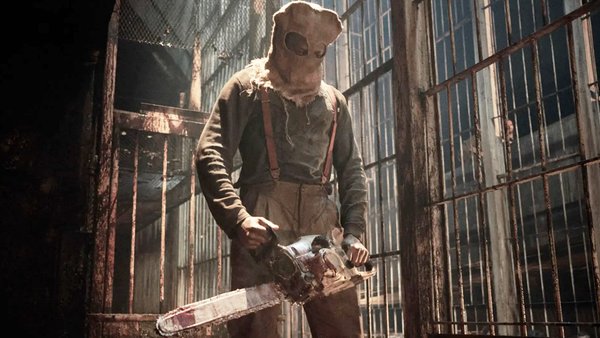
This truly is a TV show that doesn't really have a clear idea of what mood it wants to strike. The early going is an almost dead-serious sci-fi story with grungy post-apocalyptic visuals, enough that the interjections of goofy comic relief feel awkward and ill-fitting.
This all runs counter of course to the more campy vibe of the video games, and though the second half of the season does indulge its sillier side a little more willingly, there's still an overall lack of tonal consistency that viewers may find offputting.
It's important for any show to feel cut from the same cloth throughout its run, and in Resident Evil's case that's never really true - it feels more like a collage of ideas that don't adhere to a wholly consistent tonal throughline.
The video games themselves aren't entirely blameless in this regard either, but at least they almost always wore their horror B-movie inspirations on their sleeve, whereas this show almost acts like it's embarrassed to exist within the same wheelhouse at times.
1. The Totally Mediocre Villains

What is any Resident Evil IP without some entertainingly memorable villains? Sadly this is another area where this TV show falls down hard.
The primary villain is Umbrella's cunning CEO Evelyn Marcus, and though Paola Núñez does a solid job playing the sexy, feisty businesswoman impossibly committed to Umbrella's growth, she's ultimately a pretty one-note antagonist.
Rarely does Evelyn shade outside the lines of a generic Big Pharma mogul, which for a franchise that's prided itself on colourful and cartoonish bad guys seems positively banal by comparison.
Other supporting villains and foils largely don't touch the sides, sadly, and even the potentially crowd-pleasing appeal of seeing the series' menagerie of grotesque monsters on-screen feels half-heartedly fulfilled, given their only occasional presence throughout.
These gripes accepted, though, the show isn't all bad, and so here's what it actually gets right...
Ups...
5. Lance Reddick Steals The Show As Wesker
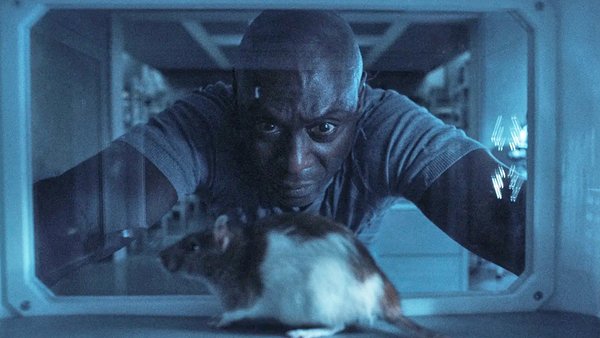
Lance Reddick is a phenomenal actor and, on paper, a terrific choice to play Albert Wesker. And though his work here is undermined by a script that seemingly wants him to play somebody almost entirely different, his performance is nevertheless the show's easy highlight.
Reddick gives a restrained, fully dramatic performance as the embattled Wesker - a man desperate to keep his two daughters safe while contesting with an Umbrella foolishly rushing into production of a new drug, Joy, which will ultimately cause the spread of the T-virus.
With a simple loaded glance, Reddick can convey a lot, though the show also gives him enough opportunities to emote and get volcanically angry, as well as other things that simply shouldn't be spoiled.
No matter the series' many problems, Reddick is the anchor holding it sturdy-ish, and if it manages to find a wider audience, he'll largely be the reason why.
4. The Rock Solid Production Values
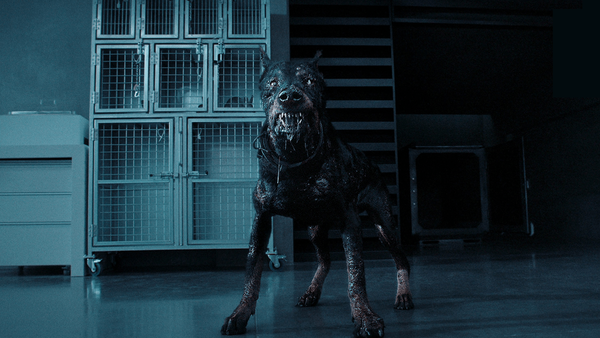
Second to Lance Reddick, Resident Evil's strongest asset is its surprisingly mighty production values.
While it would've shocked nobody if Netflix simply churned this series out cheaply in the hope of delivering a fast hit on brand identity alone, they've clearly spent a pretty penny delivering a visually stellar product that makes the previous movies look like student films.
Beyond the solid production design of the various sets, the real highlight is the visual effects, which ensure the periodic appearances of franchise monsters look pretty damn fantastic for the most part.
The janky CGI dog from last year's Resident Evil: Welcome to Raccoon City film is nowhere to be seen, and overall the effects and direction combine to convey a robust sense of scope and scale.
Were the show less appealing to look at, its storytelling stumbles would be considerably tougher to sit through.
3. The Strong Ensemble Cast
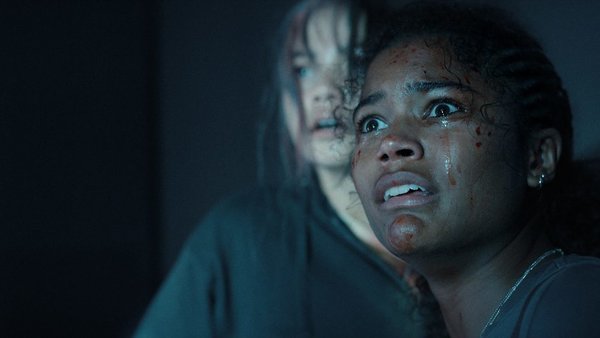
Though the show categorically belongs to Lance Reddick, the large ensemble cast generally does a bang-up job trying to sell the material as best they can.
First and foremost, rising Brit actress Ella Balinska gives a strong performance as the older Jade Wesker, even while stranded in the more underwhelming half of the story.
In the 2022 timeline meanwhile, Tamara Smart and Siena Agudong are compelling POV characters as Jade and Billie Wesker, their pulsing fear over seeing the beginnings of an apocalypse palpable in every moment.
And despite being saddled with a relatively mediocre character, Paola Núñez gives the role of Evelyn Marcus her all, imbuing her with an edgy sass that's as amusing as it is dangerous.
All in all the cast aren't to be blamed at all for the series' shortcomings: everybody's clearly doing the best they can under the circumstances.
2. The Compelling World-Building
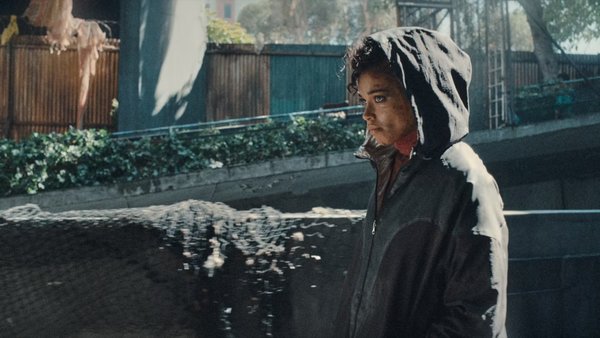
What Resident Evil achieves better than the vast majority of video game adaptations is a convincing sense of place, beyond merely giving fans of the games the hotspots they know and love.
2022's South African setting of New Raccoon City may look absolutely nothing like the Raccoon City of the video games, but the sharp, evocative production design - reimagining it as a pristine community built by Umbrella itself - effectively places us in this world.
Similarly, though the future UK narrative in 2036 isn't nearly as strong, we're rooted firmly in a country - a globe, even - torn apart by the ravages of the T-virus, and the effects-heavy production thoroughly convinces of that.
The run-down refugee settlements, the overgrown London streets, and everything in-between, sell a world on the brink of collapse and desperate to find a way back.
It's just a shame this lived-in world isn't matched by more worthy ideas in the scripting department.
1. It's One Of The Best Live-Action Resident Evil Adaptations
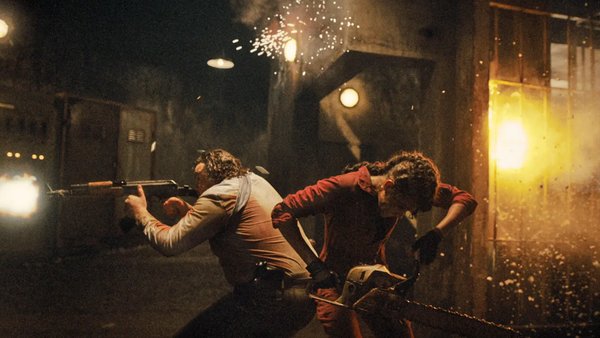
It will surely seem like damning the series with faint praise considering the overall mixed tenor of this review, but indeed, Netflix's Resident Evil is one of the franchise's most competent live-action adaptations to date.
The bar is admittedly incredibly low at this point, but beyond the extensive narrative issues, it's clear that due care has been put into the production and the cast, enough that with a stronger script this actually could've been a genuinely good show.
As it stands it's still a more impressive and ambitious take than most of the Paul W.S. Anderson movies or the recent Welcome to Raccoon City, even as it remains frustrating that Hollywood inexplicably can't seem to crack an adaptation of Resident Evil that's both faithful and worthwhile.
Hopefully if this show gets a second season, showrunner Dabb will take the inevitably vocal criticism onboard and pivot to deliver a more crowd-pleasing next volume. But as ever, it'll be entirely up to those early viewing figures as to whether or not Netflix keeps it on their books.