Sherlock: 5 Reasons Why Series 3 Was The Most Controversial

As Sherlock continues to divide opinion, we examine why series 3 was the most controversial yet.

Sherlock is undoubtedly at the peak of its popularity right now. Series 2's finale garnered so much hype that the entire online world seemed to be in meltdown, and the finale to the recent series 3 appears to have pulled off the same feat. Now that the series has ended, a lot of the fans have begun repeatedly re-watching the episodes and marvelling at their glory. On the flip-side, though, there are the fans who are re-watching the episodes to ascertain why, exactly, they were so darn disappointing. Because unlike the sublime first and second series, this one found its fair share of detractors. I definitely fall into the latter category as there was a lot of things in the series to be dismayed about. Whilst I wouldn't say I disliked all three episodes (His Last Vow ranks among my favourite episodes), this series in its entirety never truly reached the heights of the preceding ones. The biggest reason for this divide among the fandom was the controversial developments and changes made by the writers. Changes that we weren't ready for. But what, exactly, were they? Here is a list of 5 things which I believe made series 3 the most controversial series of Sherlock yet...

5. Humanising Sherlock

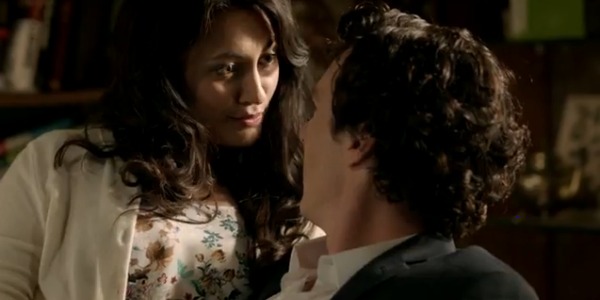
Like much of this series' narratives, the one about Sherlock becoming more human was mostly handled as a gimmick. Instead of focusing strongly on Sherlock's affection for those around him and adding real weight and depth to it - the writers seemed more intent on catering to the needs of the fan-girls. Sequences like John and Sherlock getting drunk together weren't relevant at all and, although I'm not saying the show should be completely bereft of fun moments, it took up far too much time and could have been replaced with something a lot more poignant. Sherlock was under the influence of heavy alcohol so it would only be natural for him to have a form of outburst of his deep affection for John (bear with me guys). Obviously it couldn't be a replica of his best-man speech in that exact same episode, but perhaps something like a confession of how lonely he used to be before John entered his life; something which hasn't been touched upon, but would only seem natural. My point is that there were lots of great opportunities surrounding the humanising of Sherlock, but the writers decided instead to focus on frivolous things (Sherlock being fond of dancing might make him a more human character, but it's also very silly). Which is why I believe the 'new' Sherlock caused an uproar and became a controversial development instead of a welcome change. I must mention though that they did get one part of it right and that was developing the relationship between Sherlock and his brother Mycroft. The brief scenes establishing their brotherly bond were major highlights for me and worked tremendously well. If you're going to portray the cold detective as a more grounded character then that was definitely the right way to go.

4. A Lack Of Intelligence

Sherlock is an inherently clever show and has always been widely recognised for some baffling and genius scenes. Be it Sherlock's brilliantly swift deductions or something like Moriarty's elaborate plan to frame his nemesis - the show is just genuinely clever. Imagine the disappointment then when Series 3 was shown to have such a distinct lack of intelligent moments. I cannot think of a single deduction made by Sherlock in this series that matches (or even comes close to) the first-sight assessment of John or his deduction at the deceased Van Coon's apartment. I'm not the only one who feels that way either as I've seen quite a few people voicing their concerns about the same. There's an obvious reason for this and that is that Series 3 was generally a lot less case-orientated. Obviously the cases are what bring forward the extremely intellectual side of the show and since the cases were generally put to the background then the show's wit also felt a little muted. The most prominent problem I had with the series's lowered intellect, though, was that Sherlock himself seemed to be a bit slow too. He failed to pick up on Mary's treacherous past, he left a case unresolved in "The Sign of Three" (only to have to confront it afterwards) and he was outwitted by Charles Augustus Magnussen. By lack of intelligence though I'm also referring to some dumb elements (or plot-holes) found in the series. To name a few: Magnussen's security staff not checking John and Sherlock for weapons before letting them into Appledore. Sherlock saving the day in "The Empty Hearse" by literally pressing the off-switch. None of Moriarty's folk seeing Sherlock faking his death even though it was an elaborate and exposed setup. The absurd explanation of the perpetrator in "The Sign of Three" using a fatal needle that the victims couldn't detect. The insinuation that John was drawn to Mary due to her dangerous past, even though he was entirely unaware of this side to her!

3. Cop-Out Resolution To Sherlock Faking His Death

Two years we waited. Almost two entire years! We were all left dumb-founded after witnessing one of the greatest cliff-hangers ever conceived and we couldn't stop speculating. Avid fans, regular fans, casual viewers - everyone was intrigued to find out exactly how Sherlock duped the world into thinking he had died. It was a frustrating process for many and one couldn't wait to receive an answer to the conundrum. Sure, the speculating was fun, but the focal point of speculating is to find out whether or not your pet theory was correct. It was therefore an incredibly provoking and controversial move by the writers to give us a hypothetical answer to the big mystery. I do realise that there is not much in the way of Sherlock's explanation to Anderson being the definite answer, but the writers themselves haven't confirmed nor unconfirmed its credibility. Meaning after all that time we're left with nothing but further guesses. From what I've seen there's a substantial number of people who have come to accept this and even support the concept of Sherlock not revealing his greatest magic trick, but then there are the naysayers. Like me, of course. No matter what way I look at it I just can't shake off the feeling that Moffat and Gatiss have been spineless regarding this. It seems to me that in order to avoid commotion from people who might not like the explanation they've simply left out exactly that. If not then perhaps it was because they didn't want anybody to have their theories crushed, as now even Anderson's bizarre hypothesis could be correct. Heck! With Moriarty back, even the theory regarding the two nemeses reconciling with a kiss could be true! Speaking of Moriarty...

2. Back To Life, Back To Moriarty

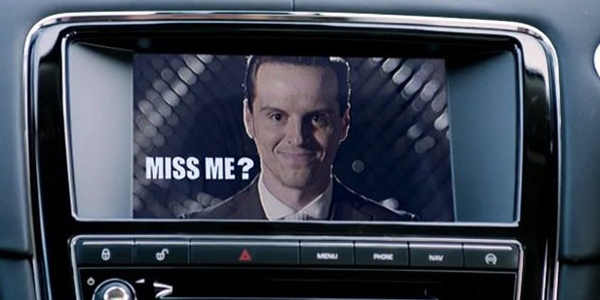
Yes, we missed you. Contrary to what the writers appear to believe though, not all of us missed you to the extent of wanting you to return. Yet again I'm putting an accusation on Moffat and Gatiss for being slightly spineless (despite my otherwise huge respect for them) because they couldn't go more than one series without bringing back their trump card. I understand that it would be tempting to bring him back since the character was so brilliant and Andrew Scott played him with profound adeptness, but it just doesn't sit well with me. The Conan Doyle stories are filled to the brim with villains so surely the writers could have found one that could be adapted in a winsome manner. If not then they could have extended Magnussen's appearance in the show. His menace felt far too short-lived anyways and he was developed meagrely throughout the course of Series 3. Perhaps if his storyline reached the same intense conclusion at the end of Series 4 it would have been better. What I'm attempting to convey is that Moriarty's return truly wasn't needed. Fans of the character and the actor got a great little moment with him in the "mind palace" so I'm sure they were appeased anyhow. I understand that the writers must have a better reason than fan-service to bring him back, but, nonetheless, the whole situation (from what information we have been given and can assume) renders the ending to "The Reichenbach Fall" almost completely pointless. It's really quite ironic how Moffat said a while back that it would be silly to bring Moriarty back as that would mean that Sherlock and him were "faking suicides at each other" and that would be a "waste of a scene". Well, that's exactly what has happened... as far as we know at least. There is an obscure theory among fans that the whole ordeal was orchestrated by someone else, but even then this would stand as a heavily controversial part. Imagine all those Moriarty fans having their heart-broken if he wasn't to return after all.

1. Look! We're Funny!

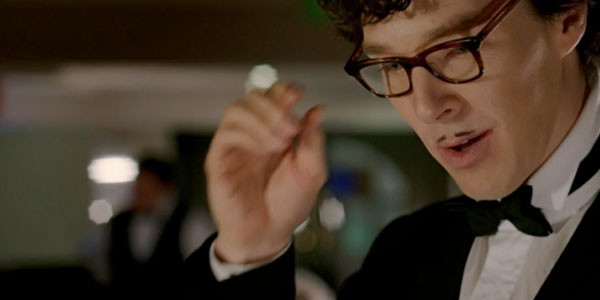
The most audacious and unwise thing the writers of Sherlock did in Series 3 was to put too much of an emphasis on the comedy angle of the show - something which has been clear from a lot of fan reactions. Prior to this series the show had been occasionally hilarious, but never had there been such an over-reliance on humour. The most prominent example of this is seen in the series' opener "The Empty Hearse." Not only was the explanation to Sherlock's fall very important to many, but his reveal to John in that episode was something to anticipate, too. John's immediate reaction was terrific and exactly the kind of dramatic scene I expected from a show of this caliber. Sadly, the writers reverting to comedy was not something I anticipated from the show, certainly not at such a crucial juncture. I don't know what everyone else was expecting, but I certainly wasn't expecting his reveal to be punctuated by a comedy reel. I still find it profoundly vexatious to comprehend why they would tarnish such a dramatic moment in that manner. Things only got worse though, with more GIF-able scenes being thrown in the series than you can point a stick at. Seriously, Tumblr must have been having a field day. The worst part about this was that the cases were shunned and more focus was put on unnecessary moments of humour and self-indulgence. Sherlock had always been first and foremost a crime drama with affable leads and occasional humour. Series 3 turned that around and made it into a comedy-drama with a hilarious ensemble cast and the crime aspect merely serving as a backdrop. "The Sign of Three" was the major example of this as it came across as an entire episode devoted to self-indulgence, with a cringe-worthy amount of in-jokes. I'm not going to pretend that some of it wasn't genuinely hilarious, but having such a hefty amount of time spent on gags is not the wisest thing to do when it comes to a crime show. And don't even get me started on how badly the case was thrust into the narrative. I think I may have been more lenient on it had it altogether done away with the detective aspect that the show brings along with it. The only episode in Series 3 that struck the correct balance was the excellent finale, which is why I found myself enjoying it so much. It's safe to say, I don't want series 4 to have such a great focus on humour. Sherlock is a crime-drama show and therefore the writers should never forget its primary audience in the midst of gags and fan-pleasing moments. Like this article? Let us know in the comments section below.

Contributor
Contributor

Tyler D hasn't written a bio just yet, but if they had... it would appear here.