It's been a few months now since series three of Sherlock aired, which means we're back to the waiting game for who knows how long. With the waiting game comes rewatches, and with rewatches comes noticing things you previously missed, such as all of the references to Conan Doyle's canon. Reference hunting (new drinking game maybe?) is one of the best things about Sherlock Holmes adaptations, and creators and Holmes fanboys, Steven Moffat and Mark Gatiss, do not disappoint as they cleverly weave in tons of references every episode. Just like the two previous series', series 3 had many references and allusions to Conan Doyle's work, including the introduction of characters such as Mary Morstan, Charles Augustus Magnussen, and Sherlock's new protégé Wiggins, based on the leader of the Baker Street irregulars in the canon. Besides the more obvious references such as the titles, there are tons of smaller references that often go unnoticed. Keep reading to see what you may have missed...
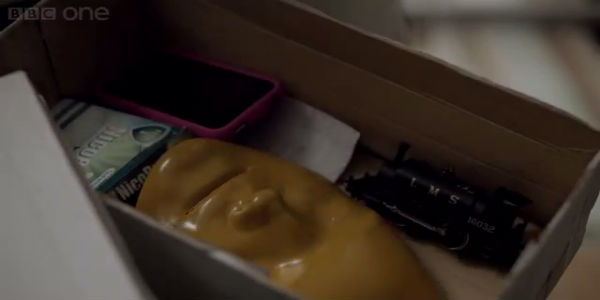
20. The Yellow Face
Let's start at the beginning with Mofftisses Christmas present to everyone, Many Happy Returns. The seven minute prequel was filled with references to the canon such as the Trepoff murder case from A Scandal In Bohemia, Sherlocks visit to Tibet from The Adventure of the Empty House, and the ice cream deduction based from The Six Napoleons when Sherlock noticed the depth by which the parsley had sunk into the butter. However, one you might have missed is the brief showing of a yellow mask in the box from Lestrade, which is a clear reference to The Adventure of the Yellow Face.
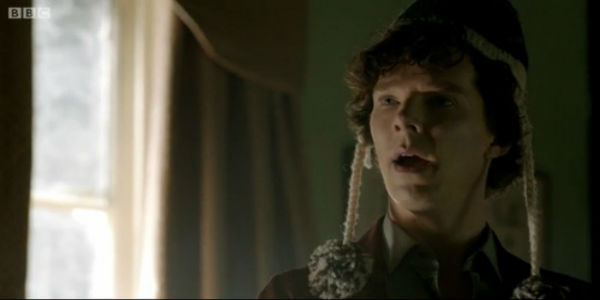
19. Hat Deduction
As we see in The Empty Hearse, Sherlock and Mycroft love to play games with each other such as operation and even a little game of deduction. The game of deduction that the Holmes brothers play using the hat is an allusion to two different stories. The first is The Adventure of the Greek Interpreter, which is Mycroft's first appearance and has the Holmes brothers dueling it out in a game of deduction at the Diogenes Club. The Second story alluded to, The Adventure of the Blue Carbuncle, has Holmes deduce several facts about a man just from his hat that he dropped.
18. "I Know Ash!"
During the pub crawl, thoughtfully constructed by Sherlock to include every street where they have found a dead body, there is scene where a drunken Sherlock gets into an argument with somebody and shouts "I know ash!" before being dragged away by John. Arguing with Sherlock Holmes about ash is probably not the smartest thing to do, seeing that he has stated in A Scandal In Belgravia that he can identify 243 different kinds of tobacco ash. Both are references to the canon, where Holmes has written a monograph and claims to be able to distinguish the difference between 140 different kinds of tobacco ash.
17. Arrest Of The Mayfly Man
The arrest of the mayfly man in The Sign of Three, Sherlock luring him back to the reception and then quickly handcuffing him, is almost exactly how he catches two different criminals in the canon. In A Study In Scarlet, Holmes tricks the culprit into coming into his flat and then abruptly handcuffs him. Holmes uses almost exactly the same method in The Adventure of Black Peter, first by posting a fake job listing and then quickly handcuffing the culprit upon arrival. The name of the mayfly man, Jonathan Small, is a reference to a villain of the same name in The Sign of Four.
16. The Sussex Cottage
In His Last Vow, Janine, fresh off of her lucrative relationship with Sherlock, visits him in the hospital and tells him that she is planning to buy a cottage in Sussex, though there are some beehives that she will need to remove. In Doyle's original story, His Last Bow, Sherlock Holmes has retired to a cottage in Sussex, and spends his time beekeeping and writing his definitive work on investigation.
15. DVD Salesman
The DVD salesman who John mistakenly thinks is Sherlock in disguise is a reference to The Adventure of the Empty House, where Sherlock surprises John by disguising himself as an elderly book dealer. The DVDs from The Empty Hearse also have the almost exact same titles of the books from The Adventure of the Empty House. John also asks the DVD salesman if his usual GP is named Dr. Verner, which is the name of Holmes' cousin who buys Watson's practice in The Adventure of the Norwood Builder.
14. Professor Presbury And Monkey Glands
While talking to some clients in The Empty Hearse, Sherlock quickly mentions monkey glands and an unseen character, Professor Presbury, both of which are references to The Adventure of the Creeping Man. Since you're probably wondering what monkey glands could mean, in The Adventure of the Creeping Man, Professor Presbury takes a drug that is an extract obtained from langurs, a type of monkey.
13. Mary Reading John's Blog
In the Empty Hearse, Mary reads one of John's blog posts aloud, which happens to be an almost verbatim excerpt from chapter six of The Sign of Four.
"So swift, silent, and furtive were his movements, like those of a trained blood-hound picking out a scent, that I could not but think what a terrible criminal he would have made had he turned his energy and sagacity against the law, instead of exerting them in its defence."
12. Jones
Most Holmes fans know who Lestrade is, and usually Gregson too, but there are also other police officers in the canon, such as Athelney Jones. In The Sign of Three, Lestrade is finally about to arrest the Waters family when Sherlock urgently requests his assistance, Donovan tells Lestrade that Jones will get all of the credit if he leaves now but Lestrade leaves anyway. That scene is a reference to the ending of The Sign of Four, Holmes solves the case but lets Jones have the credit, to which Watson responds, "You have done all the work in this business. I get a wife out of it, Jones gets the credit, pray what remains for you?"
11. John Or James?
The text message Mary receives in The Empty Hearse contains the phrase "John or James Watson", a reference to The Man With The Twisted Lip, in which Mary calls John "James". Mary calling him James is also what prompted many fans into speculating that John's middle name is Hamish, an Anglicisation of Sheumais, the vocative form of the Scottish Gaelic for James, Seumas. The skip code in the text message is also a reference to The Adventure of the Gloria Scott, where Holmes solves a similar code.
10. Drug Den
The opening of His Last Vow, which has John going to a drug den to pick up his neighbors son and then coincidentally finding Sherlock, almost exactly mirrors the beginning of The Man With the Twisted Lip.
9. The Poison Giant
While trying to pick a case to talk about during his best man speech (If only he chose the elephant in the room), Sherlock mentions the case of the poison giant, which shows John and Sherlock chasing a dwarf who is blows an air dart at them. The Poison Giant is a reference to The Sign of Four, as one of the main villains, a dwarf, tries to kill Holmes and Watson using a poison dart and blow-pipe.
8. Oscillation On The Pavement
Oscillation on the pavement, you may have seen those words before. During The Sign of Three, John describes a woman oscillating on the pavement, to which Sherlock claims to have seen those symptoms before and that oscillation on the pavement always means there's a love affair. That quote is taken almost directly from A Case of Identity where Holmes says, "Oscillation upon the pavement always means an affaire de coeur. She would like advice, but is not sure that the matter is not too delicate for communication."
7. Stepfather Posing As Online Boyfriend
Another reference to A Case of Identity, is the case mentioned In The Empty Hearse, where a stepfather catfishes his own daughter and then proceeds to break her heart so that she will swear off relationships and stay home with her money. The only difference from the original is the modernization of using emails instead of letters.
6. System Of Japanese Wrestling
In The Empty Hearse, Sherlock says that he calculated thirteen possibilities upon inviting Moriarty onto the roof. The first involved him hurling himself into a parked hospital van, but the angle was all wrong. He then begins to say something about a system of Japanese wrestling but is cut off by John. The system of Japanese wrestling that Sherlock mentions is a fictional martial art, Baritsu, and is a reference to The Adventure of the Empty House, where Sherlock tells John that his knowledge of Baritsu helped him defeat Moriarty and survive the fall.
5. The Giant Rat Of Sumatra Road
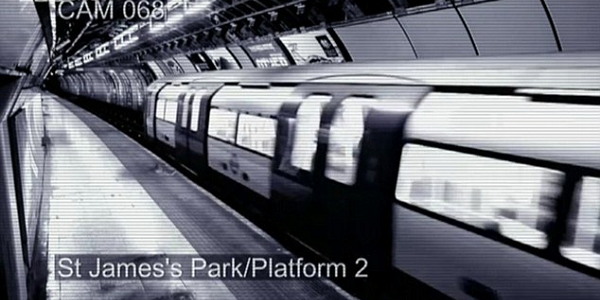
In The Empty Hearse, Lord Moran is nicknamed "the giant rat of Sumatra Road", by Sherlock because of his status as a mole and his target of an abandoned section of the London Underground called Sumatra Road. The codename is a reference to a case briefly mentioned by Holmes in The Adventure of the Sussex Vampire, though only the name of the case is mentioned because Holmes believed the world to not be ready for the story.
4. John As The 'Dummy'
Mary thinking Sherlock placed a dummy at the end of the alleyway, though it turns out to be John and not a dummy after all, is a reference to The Adventure of The Empty House. In The Adventure of the Empty House, Holmes uses a dummy of himself to trick and capture Colonel Sebastian Moran. Holmes also used a dummy in The Adventure of the Mazarin Stone.
3. AGRA
In His Last Vow, Mary, having finally been revealed, gives John a USB drive that has her real life story on it. Also printed on the USB are the initials A.G.RA, supposedly those of her real name. Mary's supposed initials are a reference to The Sign of Four, which is Mary's introductory story and features the Agra treasure. The Agra treasure is a small fortune in pearls and jewels from the Agra fortress that Mary's father and two other men, Sholto and Small, tried to smuggle back to Britain, but ended up getting double crossed by Sholto who ran off with it all.
2. Sholto
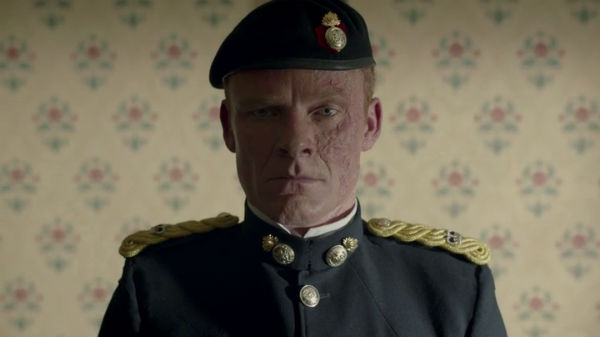
Speaking of Sholto, if that name sounded familiar while watching the Sign of Three, it's because he was in The Sign of Four! Name and rank is about the only thing the characters share though as they are mostly opposites. Major Sholto from The Sign of Four is a double-crossing thief, while the Major Sholto from The Sign of Three is a decorated war hero, who still has his enemies. Another difference is that in The Sign of Four it is Mary who is related to Major Sholto and in The Sign of Three it is John who is connected to him.
1. The East Wind
The final canonical reference in series three was Sherlock telling John about the story Mycroft told him as a kid, the East Wind, a terrifying force that lays waste to all in its path and seeks out the unworthy and plucks them from the Earth. His Last Bow, which is more Bond than Holmes, was written by Doyle during the First World War to help boost morale. The story ends with Holmes telling Watson about the east wind.
"There's an east wind coming all the same, such a wind as never blew on England yet. It will be cold and bitter, Watson, and a good many of us may wither before its blast. But it's God's own wind none the less, and a cleaner, better, stronger land will lie in the sunshine when the storm has cleared."