The Simpsons: 10 Best Episodes Focusing On Minor Characters

Shining a spotlight on Springfield's supporting players.
When you€™ve been on for over 550 episodes, which is a statement that pretty much only applies to The Simpsons, you can afford to flesh out your world and develop beloved secondary, even tertiary, characters. Then, you get the chance to hand episodes over to these characters, and if you know what you€™re doing, and in its prime there was no show better than The Simpsons, you can get great episodes of television. Homer and Bart may carry the bulk of the show's episodes, and there is no better TV character than Homer Simpson, but Springfield is loaded down with great characters. Some of them have never had the chance to be the focus of an episode, so sorry fans of Bumblebee Man or Disco Stu. Some have been given episodes, but they weren't particularly good, such as the My Fair Lady parody based around Groundskeeper Willie. However, on a handful of occasions, a secondary character has gotten the chance to get their own episode, and it has paid off tremendously. Here are the 10 best episodes of The Simpsons that don€™t focus on the family, but instead turn the attention onto minor characters, including a couple who made such a big impact, they only needed one episode to make a lasting memory.

10. This Little Wiggy

Ralph Wiggum usually serves as a non-sequitur machine, and he€™s had many a memorable line, but on occasion the show takes the time to flesh out the character a bit. €œThis Little Wiggy€ sees Bart coerced into hanging out with Springfield€™s oddest, dumbest child, but realizing there is a person in there. Sure, he€™s in part a person who has access to the master key to Springfield, but he€™s a person beyond that. This episode may not quite be as good as "I Love Lisa," but that episode was really more about Lisa than Ralph. Plus, at that point, they were only really starting to turn Ralph into a real character. By the time of "This Little Wiggy" he was the supremely odd, happily dim child we've come to know and love. It was a nice idea to give Ralph this showcase, even if his best role remains the kid who pops up with bon mots such as €œMy cat€™s breath smells like cat food.€

9. A Fish Called Selma

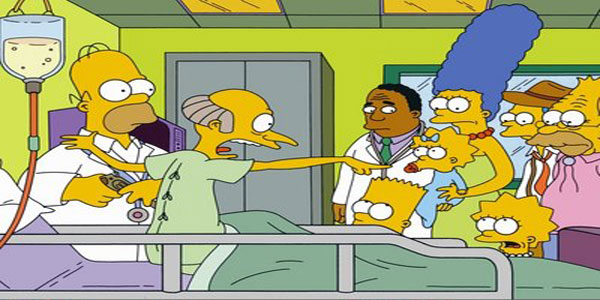
Usually, Troy McClure would only appear in pop culture within The Simpsons€™ world. He€™d show up in bad movies and infomercials and educational films, always reminding us where we may have seen him. These were, by and large, great, and very funny. Had that been Troy's only role in the show, that would have more than sufficed, and he would have likely remained a well-regarded piece of Simpsons lore. This one time, however, he got the chance to gain some depth to his character, and the late Phil Hartman knocked it out of the park. McClure, desperate to boost his flagging career, talks Marge€™s sister Selma into a sham marriage, but Selma is conflicted. As such, this episode really focuses on two characters that didn't always get a lot of screen time, and gave them a sort of, kind of love story. Well, it really is a love story, but both people involved are in love with Troy McClure. Also, we see a musical version of Planet of the Apes. What more could you want?

8. Simpsonscalifragilisticexpiala(annoyed grunt)cious:

If that title is a baffler to you, just think of it as the Sherry Bobbins episode. If that€™s not ringing a bell, either, then think of it as the episode that parodies Mary Poppins. Given that this is just an episode long musical parody of a much loved film, it isn€™t surprising that Bobbins only stuck around for one episode. Of course, in that subversive Simpsons style, in the final moments of the episode Sherry is sucked into a plane engine. Before that, there are several funny songs and sendups of Mary Poppins, among other films. It may be a bit goofier and sillier than earlier episodes of The Simpsons, and it from a time period when some folks thought the show was heading down a concerning road of nonsense. However, it works here, especially for an episode that is clearly in part parody. The final song of the episode is really a thesis statement for the Simpson family too, so its not like this dropped in from a parallel universe. A universe where characters like Ricky Rouse and Monald Muck exist.

7. Hurricane Neddy

Ned Flanders is a nice guy, almost too nice, and he always tries to keep his spirits up regardless of what€™s going on around him. However, in €œHurricane Neddy€ things finally become too much for him, and it leads to a real freak out, and then a trip into Ned€™s past. This is played for humor, of course, but Ned€™s emotional state is not in and of itself a joke. You may think it may be hard for TV to generate laughs from an episode that revolves around a hurricane and a nervous breakdown, but The Simpsons was up to the task. In the end it is Homer€™s general boorishness that manages to help Ned breakthrough. In a later episode of the show, Homer referred to Ned as his best friend. It may seem a bit jarring on the surface, but in reality, it€™s probably true. It is episodes such as this that is emblematic of that. Homer and Ned are a great pair that the show could easily go to even more often than it does, if "Hurricane Neddy" and similar episodes are any indication.

6. Who Shot Mr. Burns?

The one time The Simpsons did a two-parter, Mr. Burns was at the center. Admittedly, he was in a coma for the vast majority of the second episode, but the main plot thrust was figuring out who it was who shot the evil miser who had blocked out the Sun in part one. Burns' level of immorality and greed has peaks and valleys along the run of the show, but this is probably his pinnacle. After all, even Waylon Smithers, a man who deeply loves him, thinks he has gone too far. A whole big mystery and real world contest were built around the mystery of who shot Mr. Burns, as the two parts aired as the finale of season six and the premiere of season seven. The first half lays out everybody's storylines, and gives them reasons to perhaps shoot Burns, and then, of course, ends with him being shot. The second part then involves Lisa and Chief Wiggum trying to solve the case, sometimes with the help of warm cream. In the end, it turns out Maggie did it, but what€™s most important is that both parts are funny, which part one, the more Mr. Burns-centric part, being the funnier of the two.

5. Much Apu About Nothing

In recent seasons, Apu has faded even more into the background. Maybe it€™s because the show has run out of ideas for him after marrying him off and giving him octuplets. Maybe it€™s because they realize he is sort of an Indian caricature, and one voiced by a white guy to boot. However, caricature or not, €œMuch Apu About Nothing€ makes the Kwik-E-Mart proprietor the hero of the story. After Mayor Quimby decides to use immigrants as a scapegoat, which is fortunately a completely absurd notion in real life, folks like Apu, who are not in America legally, find themselves scorned and facing deportation. Fortunately, the Simpson family come to his aid to help him gain his citizenship before it€™s too late. The opening of this episode, with bear panic and its satire of political overreaction, is tremendous. "Much Apu About Nothing" is the episode that really made a catchphrase out of "Won't somebody please think of the children!?" which makes it top notch in and of itself. Beyond that, though, we get a very funny, sharp episode that is even handed about immigration in America. Apu loves this country like Homer loves a cold beer on a hot Christmas morning. He deserved as much.

4. Brother From Another Series

Sideshow Bob has played the villain in several episodes of the show, and when he pops up, the action always revolves around him. Most of them, at least the early ones, are very good, and often unusually funny given that Bob is usually planning to kill somebody. Having said that, of all the episode to feature Bob, €œBrother from Another Series€ probably focuses on him the most, and it is also arguably the best Sideshow Bob episode anyway. In many ways, it is a stealth Frasier episode, as Bob, who is voiced by Frasier himself Kelsey Grammer, is joined by his brother Cecil, voiced by David Hyde Pierce, who played Frasier's brother on, well, Frasier. Part of the humor, and quality, of this episode, comes from the fact that, for once, Bob isn€™t really the bad guy. Instead, it is Cecil who has the fiendish plot, as he hopes to finally get revenge on Bob for slights from the past. It€™s a nice change of pace to keep Sideshow Bob€™s character fresh. If you ever wanted to see an episode of Frasier that was animated and featured slack-jawed yokels and a dam exploding, then look no further.

3. Grade School Confidential

This episode focuses on two secondary characters, dedicate educator Principal Seymour Skinner and defeated teacher Edna Krabappel. After wallowing through their sad lives for so long, they find each other, and a romance blossoms in secret. Until Bart finds out, at least. Thus, things heighten to a point where somebody may or may not wear hot dogs as a pretend bomb. It€™s a very funny episode, but it also treats the relationship between Edna and Seymour with seriousness, and actually kept it going for several years. Other episodes focused more on Edna or on Seymour, but this episode is great because it focuses on "Edna and Seymour." For once, Krabappel gets to be happy. For once, Bart sticks up for his usual foils. This is also a great showcase for Superintendent Chalmers, who is at his best when he's angry with Skinner. Which is to say, always. Eventually, Krabappel would actually marry Ned Flanders, before Marcia Wallace, the voice of Edna, unfortunately passed. Krabappel will be missed. We'll always have this tremendous episode.


2. Homer's Enemy

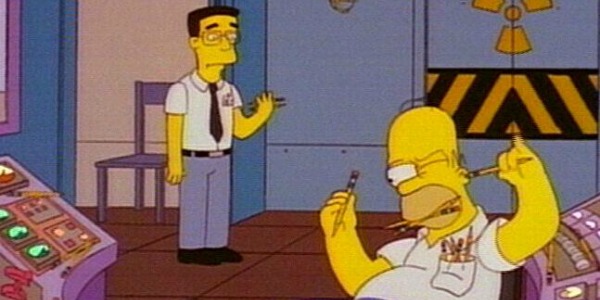
Frank Grimes only made one appearance on The Simpsons, but the impact he made was still massive. He basically dropped in, got an episode that was essentially a two-hander between him and Homer, drove the action, and then met an untimely fate. The premise of this episode is, in essence, what if a person from the real word met Homer Simpson, and saw all his faults and idiotic actions, and saw nobody chastise him or punish him? Meanwhile, despite all of old Grimey€™s hostility and anger, Homer remains a happy-go-lucky buffoon. Then Grimes accidentally kills himself during a nervous breakdown, and everybody laughs at Homer during Frank€™s funeral. A dark episode, but a hilarious one. It really has to thread a needle to work. Grimes can't come across as being unreasonable, but Homer can't be a jerkass, either. Homer truly just wants Grimes to like him, and is deeply hurt when he finds out he has an enemy. They are true comedic foils, a regular odd couple. Of course, this is an odd couple where the uptight one ends up killing himself, while the slob is likely to someday be responsible for the ruination of his hometown.

1. A Milhouse Divided

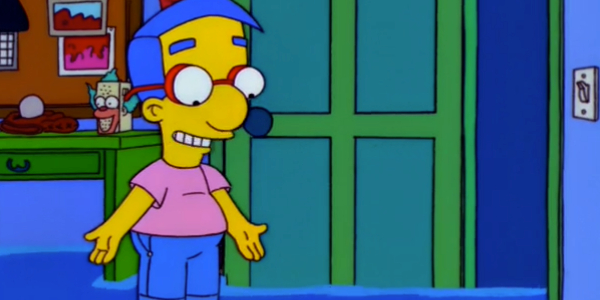
This entire episode could have been about the Van Houtens, namely Kirk and Milhouse, and been fantastic. The show wasn€™t quite willing to go that far, so Homer ends up being fairly involved as well, but the Van Houten€™s divorce is the main plot point here, and it is a master€™s class in mining sadness for humor. All you really should need is Kirk singing his single, €œCan I Borrow a Feeling?€ in all his pathetic glory. The party, with all its awkwardness, is excellent, and fortunately Homer is there to cut the tension coming from the hostility between Gudger grad Kirk and his fed up wife Luann. The episode does take Luann's side, but to be fair, Kirk is pretty pathetic. Unlike Milhouse, who seems to be cosmically put upon, Kirk brings it on himself, which is partially what makes his failures humorous. There is so much more, but this introduction to sad sack Kirk Van Houten gets more than you may have expected from the parents of that one kid Bart is friends with. Divorce has never been so entertaining.

In this post: 
The Simpsons
 
Posted On: 
Contributor

Chris Morgan hasn't written a bio just yet, but if they had... it would appear here.