Star Trek: 10 MORE Behind The Scenes Decisions We Can't Forgive
Choices were made, we have a listicle.

With Star Trek: Prodigy and Star Trek: Strange New Worlds joining Star Treks Discovery, Picard, Lower Decks, and Short Treks in the streaming realm (and at least one new movie in the works) the Star Trek franchise definitely seems like its feeling itself lately.
Despite that current success, though, the Star Trek Universe has had a dramatic history of ups and downs, particularly when it comes to decisions made by the producers, studios, and powers-that-be that have occasionally been... questionable. From kneecapping the Kelvin Timeline movies before they could become box office gold to the baffling decisions made in the Star Trek: Voyager writers room, choices have definitely been made and we ran down those and eight more for you last year.
Things are looking up in the 23rd, 24th, and 32nd centuries, but there's always going to be something... So let's get back in it and talk about Star Trek Nemesis for the millionth time, rehash our feelings about the way Jadzia went out, and trash talk a few recent decisions the producers have made. You know, like fans do.
Here are ten more unforgivable behind the scenes decisions that we believe have made the Star Trek Universe a worse place, that we're going to forgive anyway.
10. Trimming Nemesis

It's been almost 20 years and we're still asking ourselves what happened with Star Trek Nemesis. You've heard it all before: Why is there a dune buggy aboard the Enterprise? Why is Captain Picard suddenly a dune buggy aficionado? How did the crew just happen to bring their dune buggy down to a planet that was populated by aliens who also drive dune buggies?
The list goes on, so here's a new take on Star Trek Nemesis: We needed more.
Soon after the release of Nemesis in December of 2002, producer Rick Berman stated in several interviews that almost an hour of footage was trimmed from the final film, calling the editing process "really painful".
Despite being known primarily as a film editor, director Stuart Baird (who has been blamed for many of Nemesis' shortcomings), handed editorial duties off to Dallas Puett, who had the unenviable task of keeping the film under two hours in length. Since Nemesis was the franchise's first stab at a CGI-heavy action flick to rival the other big budget franchises of the early 2000s, it makes sense Puett favored noisy spectacle and left the quieter, character-based moments on the cutting room floor.
Deleted material includes a brief moment to catch up with now Lieutenant Wesley Crusher, a sweet scene of Data and Picard enjoying a glass of Chateau Picard, a dinner scene in Ten Forward, a couple moments showing Geordi mourning Data's death and Worf adopting Spot, a scene showing Doctor Crusher's departure from the Enterprise, and an alternate ending featuring the ship's new XO. Nothing earth shattering there, but Nemesis was specifically billed as "A Generation's Final Journey", as in, the last time we'd see these characters on the big screen. It was a strange choice, then, to omit much of the character development and almost all of the actual farewells from that final journey.
There are a few tender moments still left in the final cut of Star Trek Nemesis -- Picard and Riker's goodbye feels particularly poignant -- but Data's death and subsequent wake are abrupt and characters systematically disappear from the film as the story clumsily wraps itself up. It's like Puett, Baird, and Berman cut the heart out of Star Trek Nemesis with those 50 minutes; they removed the chemistry of the TNG cast playing off one another and left only repetitive action and a boilerplate revenge story.
Star Trek Nemesis was only ever a mediocre, if not outright bad film, but if the producers had managed to retain the character connections and ultimate goodbyes, then maybe Nemesis would've at least been able to succeed at being that "Final Journey" it was billed as, if nothing else.
9. Synth Sense

You have to commend Star Trek: Picard for trying and (mostly) succeeding at doing something different. By telling the story of a retired Jean-Luc Picard and a motley crew of civilian characters aboard a civilian ship, Star Trek: Picard opened the Star Trek Universe to a new, ground-level perspective. While a lot of us might've hoped for a Star Trek: The Next Generation revival, the producers opted to take the more realistic and ultimately more satisfying path, telling us Picard, Riker, Troi and the rest of the crew were real people who wouldn't be doing the same thing they did 35 years ago, no matter how iconic that might've been.
Unfortunately, despite opening the Star Trek Universe to different types of stories, Star Trek: Picard's first season was still produced in the CBS All Access era of higher and higher stakes. So while the show was advertised as a character study of an aged Jean-Luc Picard, the producers were obliged to give us an extinction-level threat and end the season with a CGI-cluttered bang.
Worse, the realism of the show itself was undercut by linking nearly every character to the overarching storyline revolving around the Romulan plot to get synthetic lifeforms banned in the Federation.
Somehow, in the stretch of just a few episodes, Jean-Luc just happened to run into Doctor Agnes Jurati, whose lover, Bruce Maddox, was at the center of the conspiracy. It also turned out that JL's former first officer, Raffi, was a Synth ban truther whose life was destroyed by her quest for answers. Raffi herself directed Picard to a pilot, Cris Rios, who, it turns out, had a chance encounter with Synths that ended in the suicide of his father figure. Oh, and Riker and Troi's young son Thad died because the Synth ban also prevented the use of a positronic matrix to cure life threatening medical conditions.
The reason the writers connected the main characters of Star Trek: Picard to the ongoing storyline is clear: If there's a personal connection to the plot, it makes it matter. Unfortunately, these connections rested on coincidence and flimsy plot contrivances. And while the show's new perspective widened the world of Star Trek, these coincidences served to condense the universe, making everyone's life revolve around plot more than character; a weird thing for a show advertised as a character study.
8. Unshared Universe

Speaking of Star Trek: Picard... it's not a secret the show went through some growing pains in its first season. In a recent interview with The Hollywood Reporter, producer Akiva Goldsman revealed that he regretted not planning out the arc of season one before production began:
If you’re going to do a serialized show, you have to have the whole story before you start shooting. It’s more like a movie in that way — you better know the end of your third act before you start filming your first scene.
Star Trek: Picard famously underwent additional photography to expand the pilot into three installments and to insert story beats into already produced episodes. Among the late additions were the numerous flashback sequences to immediately after the destruction of Mars and the grisly, apocalyptic visions of the Admonition. Seen in the episodes "Broken Pieces" and "Et in Arcadia Ego, Part 1", the Admonition featured images of war and planetary destruction with several pieces of footage pulled directly from Star Trek: Discovery's second season, itself centering on the impending robo-pocalypse.
The inclusion of reused footage immediately raised questions. Was Star Trek: Picard linking its story of Synths to Star Trek: Discovery's similar second-season plotline? The idea made sense and was bolstered by the appearance of squid-like robots in Star Trek: Picard's finale after similar creatures appeared in the Discovery episode "Light and Shadow".
No stranger to crossover events like the Maquis storyline which spanned Star Trek: The Next Generation season 7 and Star Trek: Deep Space Nine season 2 in order to set up Star Trek: Voyager, the Star Trek Universe is among the few franchises with built-in shared storytelling potential. And in today's media environment in which shared universes are highly sought after, it would be surprising if Star Trek didn't take advantage of its own internal connections.
Ultimately, though, that's exactly what happened and the crossover between Picard and Discovery never materialized. Any similarities between the two consecutive seasons' storylines chalked up to coincidence. Oh and that reused footage? Well Star Trek's no stranger to reusing footage either.
Recently, franchise honcho Alex Kurtzman teased interconnectivity between Paramount's Star Trek film franchise and the series currently proliferating on streaming. But a big crossover event, or even a small one like the one teased by Picard, would appear to be off the table. A strange course when every other franchise wants the shared universe potential the Star Trek Universe takes for granted.
7. Whoopin The Enterprise

Star Trek Beyond is widely considered one of the best movies in the franchise, praised for being the first big budget installment to actually feel like an episode of The Original Series, while also removing some of the trappings of Star Trek to focus on character. According to director Justin Lin, in order to explore the crew of the Enterprise, they had to be separated from the Enterprise; and what better way to do that than destroy the ship in spectacular, big summer movie fashion?
The death of the Enterprise in Star Trek Beyond is grand and operatic, the ship is systematically and brutally disassembled by Krall's forces -- a symbolic deconstruction of Star Trek, scored by a dramatic, choral rendition of Michael Giacchino's ear worm of a main theme. It's stirring and emotional... or at least it would be, if damn near the same thing hadn't already happened in Star Trek Into Darkness. Right down to the choral version of Giacchino's theme.
It's unfortunate the destruction of the Enterprise doesn't have more impact in Star Trek Beyond. It's a perfectly executed sequence by the director, the cast, VFX house Double Negative, and the aforementioned Michael Giacchino. The scene, however, was badly undercut by its prominence in the marketing for the film and by the fact that the Enterprise is nearly destroyed in every single movie in the Kelvin Timeline Trilogy.
Directors J.J. Abrams and Justin Lin both raised the stakes of their films by clobbering the Enterprise. In Star Trek (2009), the ship was nearly destroyed by the Narada, forcing the young cadets to take on roles that would lead to their iconic positions in TOS. In Star Trek Into Darkness, Kirk must sacrifice himself in order to save his ship as it plummets to Earth. And, as stated, in Beyond, the death of the Enterprise separates the crew but ultimately pushes them together.
In isolation, each of these instances works. Each sequence in which the Enterprise is pummeled is exciting and well staged and it's an understandable trick to get the audience invested.
But it' also a trick that only works once and the Kelvin Timeline did it three times, making the flashy new Enterprise look a bit like a clunker and robbing the final chapter of some much needed emotional weight.
6. Supersizing Discovery
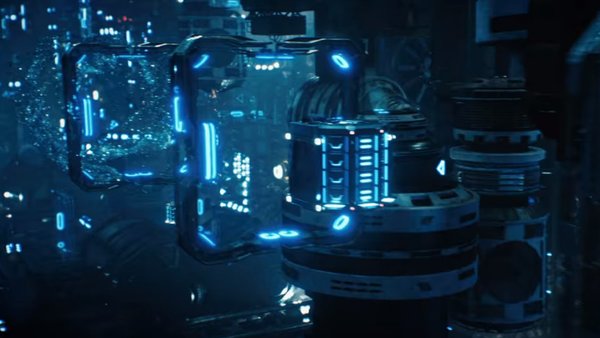
Star Trek: Discovery's third season finale, "That Hope is You, Part 2", cleverly based its centerpiece action sequence around previously mundane Star Trek hardware, showing Michael and Book battling evil goons on turbolifts as they sped through Discovery's lower decks. The sequence was full of big action, big emotion, and big turboshafts.
Due to either a weird call by the production designers or by VFX house Pixomondo, the inside of Discovery in "That Hope is You, Part 2" is depicted as being a massive open space, one that simply could not fit into the ship as we know her.
It is possible the 32nd century retrofit Starfleet gave Disco in the episode "Scavengers" equipped the ship with TARDIS-like "bigger on the inside" technology; which was actually a thing in the Star Trek: Enterprise episode "Future Tense". However, the more likely explanation is that the producers simply used dramatic license to amp up the scale and thus the excitement of the sequence.
Unfortunately, the scale was amped up a little too much and Discovery's massive, "turbolift funhouse" threw many viewers out of the episode (especially those of us who write about starships for a living), making them wonder where exactly this open expanse is located within the generally slender starship?
This isn't the first time starship interiors have been fudged for the sake of drama; the turboshaft escape sequence in Star Trek V: The Final Frontier notoriously depicted the Enterprise-A as being an unfathomable 78 decks tall and J.J. Abrams' 2009 reboot film famously inflated the size of the Enterprise for dramatic effect.
But either this VFX error or misguided attempt to increase the stakes by increasing Discovery's size is an extreme example, straining Star Trek: Discovery's already strained relationship with audience suspension of disbelief.
5. Downsizing Discovery
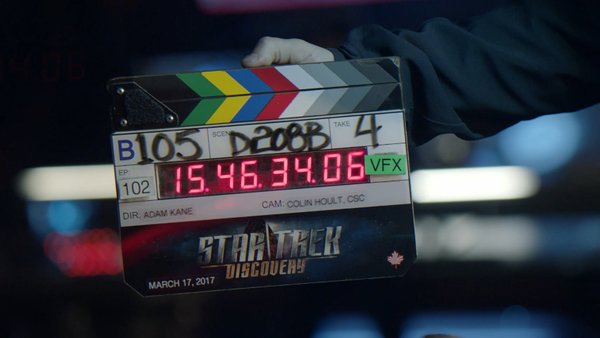
Despite being produced solely for streaming on CBS All Access aka Paramount Plus, Star Trek: Discovery and now Star Trek: Picard maintain much of the artifice of shows made for traditional broadcast television. Generally consisting of the standard four or five acts, each episode of Discovery and Picard more or less fit inside an hour, like all previous live-action Trek series.
The problem here is simply that Star Trek: Discovery and Star Trek: Picard aren't on traditional TV and the streaming model offers a freedom which modern Star Trek has mostly passed up.
With contemporaries like Disney+'s The Mandalorian and even Hulu's upcoming third season of The Orville dumping the standard television runtime in favor of expanded episode lengths as warranted by the story, there's really no reason why new Star Trek shows keep adhering to the hour-long episode format. This is particularly true when important material gets cut for time. Remember Narek and the XBs in Star Trek: Picard? Their fates are all in deleted scenes that were cut for time. Want to know the backstories of Discovery's secondary crew members? No time for that, there are turbolifts to race.
It's clear the producers are genuinely interested in these show's side characters, as evidenced by the good faith effort to give Detmer, Owo, Bryce, and Rhys something to do in at least two episodes of Star Trek: Discovery's third season. But did you even know all their names?
At around $8M per episode for Star Trek: Discovery and $9M for Star Trek: Picard, making these shows longer is obviously not an inexpensive ask. But with thinly drawn secondary characters and (often) even thinner sci-fi plots, modern Star Trek would benefit from expanded runtimes and more breathing room.
4. Axing Dax

No one is arguing that Ezri Dax isn't an interesting character who added a new flavor and new chemistry to Star Trek: Deep Space Nine's final year, but we can probably all agree that Terry Farrell's Jadzia was the definitive Dax. And that Jadzia Dax should not have been killed off.
Unceremoniously blasted with Pah-Wraith fire by a possessed Gul Dukat in the season six finale, "Tears of the Prophets", Jadzia's death really comes out of nowhere, a show of strength by a villain who isn't even his right mind when he does it. Dax doesn't die in the line of duty, on the bridge of the Defiant, or fighting alongside her beloved Worf in the battle to save the Alpha Quadrant, she was just in the wrong place at the wrong time. Which also just happened to be church.
It's unnecessarily abrupt, disconnected to the character's greater arc, and seemingly done out of malice by the show's producers rather out of a genuine drive to tell an interesting story. Years later, Terry Farrell herself said:
I didn't want to kill Jadzia. To me, that had very little to do with good storytelling.
According to Farrell, she was bullied by executive producer Rick Berman after she requested reduced screen time in season seven:
He had [another] producer come up to me and say, "If you weren't here, you know you’d be working at Kmart."... It was that kind of thing. Rick Berman said I was hardballing him, and I was, like, "I'm not. I just want to have a conversation. You're giving me a take-it-or-leave-it offer and I’m not okay with that." So I finally did have a conversation with him and asked to cut down my number of episodes or just let me out.
Ultimately, the producers opted to kill Jadzia off rather than accept using Farrell on a part-time basis. While Jadzia's death weighed heavily on the characters in the subsequent final season, the producers not-so-subtly avoided using footage of Farrell as Dax during the feel-good montage during the series finale, a clear indication of the bad blood left by the departure and yet another disservice to a character fans fell in love with in the previous six seasons.
3. My Name Is Conrad
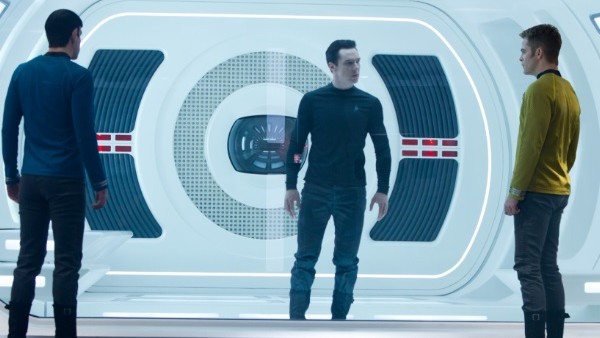
This is the lowest hanging fruit possible for a listicle about Star Trek blunders, but here's a John Harrison-is-Khan-level twist: Star Trek Into Darkness is good, actually.
That is until the whole Khan thing happens. We'll get to that.
Star Trek Into Darkness is an easy target for fan ire because it reappropriates plot elements from the universally beloved Star Trek II: The Wrath of Khan. By including these elements, the filmmakers practically begged us to hold the two films up against one another and there was simply no way for Into Darkness to come off looking great.
But Star Trek Into Darkness is less a rehash of Star Trek II than it is a Star Trek-themed retelling of Joseph Conrad's Heart of Darkness. It's even right there in the title: Heart of Darkness... Star Trek Into Darkness. See?
Like Heart of Darkness, Star Trek Into Darkness tells the story of a quest into hostile territory to capture a comrade gone mad with power. In the journey up river (or into Klingon space), our protagonists wrestle with the moral ambiguity of their missions. For Star Trek Into Darkness, this means presenting newly-minted Captain Kirk with existential and moral dilemmas that serve to develop his character from the brash youngster of Star Trek (2009) into the more reasoned and nuanced man he would become in Star Trek Beyond.
Star Trek Into Darkness is necessary character development for Kirk and it also depicts the maturation of the young captain's relationship with Spock from friendly rivalry to genuine respect.
The problem is, these developments and even the emotional "death" scene near the climax are overshadowed by the big reveal that John Harrison is really Khan. This reveal takes place at the end of act two and hangs over the events of act three, which itself devolves into a repetitive fist fight, rather than exploiting all the character development that occurred in movie's first two thirds.
The Khan reveal sucks not because it transforms Star Trek Into Darkness into a pale imitation of The Wrath of Khan, it sucks because it robs Into Darkness of its own identity and character development. Eight years later it's still one of Star Trek's greatest unforgivable decisions.
2. Back In Less Than 60 Seconds

We touched on this concept a bit in our first rant, but it's worth repeating here: Voyager spent way too much time on Earth for a show ostensibly about the struggle and yearning to get to, you know, Earth.
But when it finally came time to get the crew home in Star Trek: Voyager's series finale, "Endgame", writers Kenneth Biller and Robert Doherty opted to do it almost entirely off screen.
Just a quick recap: Star Trek: Voyager was about the epic journey of the USS Voyager to get home to Earth after being whisked halfway across the galaxy by Banjo Man aka the Caretaker. This journey across space included battles with the Kazon, the Hirogen, and, of course, the Borg, but also included numerous brief trips to alternate versions of Earth, or past versions of Earth, or duplicated versions of Earth. According to DS9 writer Ronald D. Moore, one of Star Trek: Voyager's biggest problems was that the ship spent way too much time hanging around some version of Earth as though it wasn't trapped in the distant Delta Quadrant:
There have been more episodes that have taken place on Earth, or alternate Earth, or past Earth than I think the original series did in its whole run, and the original series was set over in the Alpha Quadrant... Voyager is on the other side of the galaxy, and they have already run into some alien race recreating Starfleet Academy. They’ve run into Ferengi, the Romulans. It doesn’t feel like they are that far away from home.
Moore wasn't wrong and it's possible the producers knew this going into "Endgame", opting instead to subvert expectations by opening the episode with the crew already home... but again only in an alternate version of Earth. After much hardship and action and adventure, "Endgame" does in fact end with the crew arriving at Earth. Roll credits.
No tearful arrivals. No heartfelt reunion of Tom Paris with his estranged father Admiral Paris. No Harry Kim finally treating his parents to a clarinet solo. No Captain Janeway running through a picturesque Indiana field alongside her Irish Setter, Molly. Nothing.
Just before the climax of "Endgame", Harry Kim gives an impassioned speech ostensibly telling us "It's the journey, not the destination that matters." But in Star Trek: Voyager's case, the destination definitely mattered. The show robbed itself of its greatest chance for emotion and drama and catharsis by fading to black before its beleaguered crew could finally set foot on Terra Firma.
1. Taking 50 Damn Years
Whether or not Star Trek represents a truly progressive vision of the future is open to debate and all the times the franchise was (hopefully accidentally) regressive could fill a listicle unto itself. To expect a product of pop culture, created in the entertainment industry of the 20th and 21st centuries, to realistically represent the future and every possible form of human being therein is unreasonable.
However, the powers behind Star Trek in the 90s and early-2000s deliberately avoided depicting LGBTQIA+ characters except in the rare instance that a sci-fi story was used to indirectly address the existence of an enormous group of very real people.
Numerous examples of the producers' willful omission of LGBTQIA+ characters and topics have been well documented, dating back as far as David Gerrold's fight for a homosexual couple aboard the Enterprise-D in Star Trek: The Next Generation's first season up to Kate Mulgrew's losing cause to have a gay character appear on Star Trek: Voyager... and let's not even talk about the missed opportunity for representation on Enterprise.
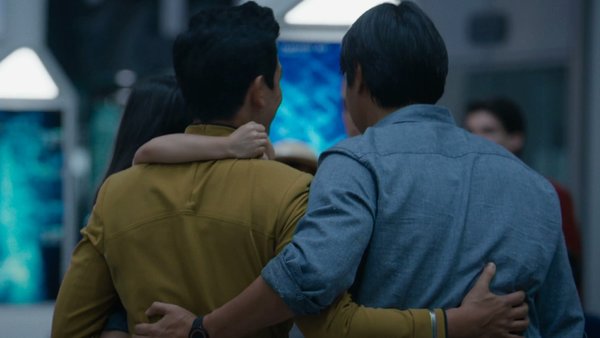
Thankfully, with the very minor inclusion of Hikaru Sulu's husband and daughter in Star Trek Beyond (a movie released 50 years after The Original Series premiered), the franchise is finally coming around. And with continued depictions of gay and nonbinary Starfleet crew members in Star Trek: Discovery, Star Trek: Picard, and Star Trek: Lower Decks, the future looks bright for true representation in the Star Trek Universe.
It took 50 years and may take some time for everyone – everyone – to look at Star Trek and see themselves. But even with a few unforced errors, Star Trek really does seem like it's trying to forge a path forward. According to Wilson "Doctor Culber" Cruz:
The universe in which we live in on the show is a place where everyone is willing and capable of loving anyone.