Star Trek: 10 Reasons Kirk Is Better Than Picard

The definitive conclusion.

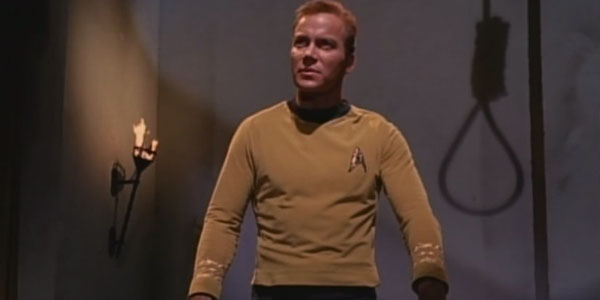
Kirk Vs Picard 1987: Star Trek fans were presented with a new series, a new captain € and a new dilemma. Who was the better captain? William Shatner€™s presentation of the Iowa-born James Tiberius Kirk compared to Patrick Stewart€™s French Jean-Luc Picard gave us two completely opposite captains. One, reckless, and ready to rush in where angels feared to tread versus another, who was a more intellectual and cerebral personality, given to careful planning and methodical in nature. But there was more to differentiate between these two captains than just this general description of their natures. After the completion of Star Trek: TNG€™, other captains from other series appeared who seemed to complicate the issue even further but actually gave us new ways to appreciate the two first captains. The standard benchmark has always been the original captain: James Tiberius Kirk; and the most common comparison has always been the captain with the longest televised run-time: Jean-Luc Picard. However, the key here is to decide what is the definitive and relevant criteria. We'll discount Picard's advanced 24th century technological superiority compared to Kirk's 23rd century technology. We'll also eliminate Kirk's obvious romantic advantages along with a perfectly full head of hair. Those would be too easy. So, in order to definitively decide, let's take a look at criteria germane to both captains that will allow us to settle the argument once and for all, who is the better captain €“ Kirk or Picard?

10. Upbringing

Let€™s start at the very beginning for both captains, and for purposes of discussion, we are going to discount the 2009 reboot of Star Trek and its sequel, and rely exclusively on established canon as Abrams€™ films occur in another time continuum which significantly changes Kirk€™s childhood and Picard hasn€™t even been born yet. Comparing both captains€™ childhoods, we see some differences. Kirk was born in Iowa and the son of a Star Fleet officer €“ George Kirk. The novel, Final Frontier, written by Vonda McIntyre, apocryphally situates George as the commander of the as-yet unnamed experimental starship (which we later discover to be a Constitution-class starship. Kirk€™s mother, Winona, was pregnant on board the USS Kelvin while her husband served as its first officer, meaning that Kirk began life in embryo on board a starship. Though born in Iowa, Kirk€™s father€™s career took his family all around the galaxy, living on different colonies and planets like Tarsus IV. James Kirk credits his father as his inspiration to serve in Star Fleet. In contrast, Jean-Luc Picard was born in rural France. He was the son of a vineyard-owner who consistently looked for greater challenges than farm-life could offer. Picard was never satisfied with the limits of rural living and fled to Star Fleet Academy. Along the way he achieved substantial recognition in athletic and academic areas, even considering becoming an archeologist at one point. If there was a ceiling to break, Picard broke it. However, Kirk€™s life is markedly different because all he knew growing up was Star Fleet. Kirk was destined to become a Star Fleet captain because of his lifestyle in space and his father€™s influence. Despite Picard€™s erudite upbringing, the edge has to go to Kirk because of pre-eminent position Star Fleet held in his life while growing up. Plain and simple, his lifestyle prepared him to think like a Star Fleet captain before he even put on a Star Fleet uniform. He was born to be a captain.

9. Tactical Ability

It€™s plainly obvious that Kirk is a tactical genius. He can beat a Vulcan at chess, can out-bluff a variety of alien species while facing overwhelming odds, and can demonstrate tactical versatility at a variety of levels, ranging from the small squad level to starship combat. As we see in Star Trek II: TWOK, Kirk€™s ability to out-guess his opponent trumps Khan€™s superior intellect. Time and time again, Kirk demonstrates his capacity to adapt to his environment and emerge triumphant. If we remember his confrontation with the Gorn in 'Arena', Kirk creates a make-shift, rudimentary gun-powder weapon out of nothing but base elements and bamboo. Oh, and of course, the Kobiyashi Maru scenario speaks for itself. In terms of war games, what matters is winning, not somebody€™s concept of fair game, and Kirk gets that. While Picard is no slouch in the starship combat department (The Picard Maneuver, anyone?), he's more of a grand strategist. He likes to look at the big picture and make the overall decision at that level. In €œRedemption, Pts 1 & 2€, Picard is appointed as commodore of a blockading task force. While he is able to position his starships in a fleet-worthy formation with a hole big enough to lure a Romulan force through and entrap them, unfortunately, the Romulans are able to easily detect this stratagem and are able to counter it. It is Data, commanding one of the ships of the task force, who is able to perceive the counter at the tactical level and respond effectively, saving the day. Picard just isn€™t a front-line captain when it comes to combat. He even loses the Enterprise to an attacking Klingon force at one point, even if it is only in an alternative timeline. The only time Kirk lost the Enterprise was to save his crew, rescue Spock and he STILL managed to capture the enemy ship. Winner? Kirk.

8. Loyalty

A captain needs a loyal crew. The question here is: which captain has the most loyal crew? It€™s a very powerful and useful trait that assures the loyalty and the effectiveness of the people who serve under that leader. Both captains are well-represented in this category. Kirk€™s crew were willing to risk their own safety to rescue him even after he was declared missing in action in the episode €œThe Tholian Web€. The same can be said of Picard when captured by the Borg in the episode €œThe Best of Both Worlds€. But, the difference between the two incidents is the way in which the crew reacts individually. To Picard€™s crew, it€™s a matter of professionalism. Options are discussed; plans are drafted and then, methodically, executed in a completely impersonal yet professional manner. To Kirk€™s crew, it€™s a personal matter. Spock, justifying his decision to stay and fight the Tholians as a logical one, is accused of being stubbornly loyal. In €œAmok Time€, Spock also displays his unabashed devotion to this captain in an uncharacteristic show of emotional relief when he learns that he has not killed his captain. His yeoman wants him to look at her legs, his weapons officer constantly vies for his attention and the chief medical officer regards the captain€™s health as his own personal challenge. Each member of the crew has some sort of personal link to Kirk, which is a stark contrast to Picard€™s detached and aloof yet respectful relationship with his crew. It€™s pretty clear that Kirk€™s crew has a deeper and more meaningful sense of loyalty to their captain.

7. Charisma

The last entry is a natural segue to this one. Charisma may seem a trivial characteristic, but when you consider how well it has served Kirk€™s command style and decision-making process, it€™s clearly a deadly weapon in his arsenal that Picard hasn€™t matched. Kirk€™s charisma endears him to his enemies. In €œDay of the Dove€, he manages to convince Kang that he is being manipulated and even manages to elicit good feelings in the Klingon commander to drive out the mysterious and malevolent alien entity. It€™s the closest Kirk will ever get to a beer fest with Klingons, but it€™s his charismatic appeal that acts upon Kang and forces him to see the truth. Picard, in comparison, is stiff and while he can be a charming man, his own personal charisma is restricted to those private moments of intimate appreciation, as with the empathic metamorph, Kamala from the TNG episode €œThe Perfect Mate€. He is rigidly disciplined enough to resist the empath€™s attraction but this is a measure of his own moral stature, not of his charm. That is what the empathy finds so attractive in him. Picard€™s charismatic abilities don€™t register in crises. He is a private, reserved man whose charisma is something to be appreciated by one person. However, it is Kirk€™s charisma that sometimes enables him to win the day.

6. Physical Prowess

This is a fun one to write about. Kirk revels in personal combat. His brand of double-fisted, drop-kicking and Judo-throwing martial arts is legendary. It may seem a little cheesy, but when it comes down to it, he€™s a bare-fisted, bloody-knuckled street brawler. That€™s something to admire. Kirk has tackled horned apes, giant humanoid lizards, Klingons, and super-strong robots. Most importantly to note about all of these encounters is that Kirk has come out on top. If you think about Picard€™s combat encounters €“ he€™s been assimilated by the Borg, captured, tortured and interrogated by Cardassians (but give him his due €“ he didn€™t break) and, in his youth, been stabbed through the heart by Naussicans. You know, Picard hasn€™t done so great. The best example of what Picard can do when pressed is seen in Star Trek: First Contact. Picard has to defend the Enterprise from the Borg, man to man. Picard isn€™t a light-weight when it comes to personal combat, but when the spirit is willing, sometimes the flesh is weak. Between the two of them, the safe bet is on Kirk.

5. Intellect

Neither one of these two captains is mentally deficient. Both of them are Star Fleet Academy graduates with substantial command training and both have voracious academic interests. But it€™s clear that one captain stands out from the other. If we scroll through the episodes and get a sense of what each captain is interested in, we see that Kirk has a love of history. He particularly admires Abraham Lincoln and American history. He obviously follows military history, both contemporary (in the case of Garth of Izar€™s accounts) and ancient. In Star Trek VI: The Undiscovered Country, Spock gifts Kirk with ancient edition of Charles Dickens€™ A Tale of Two Cities, noting Kirk€™s fondness for antiques. But that€™s pretty much it. Kirk recognizes and respects the intellectual gifts of others, but there isn€™t much room in his life for academics. Picard, on the other hand is about as erudite as they come. Picard has a firm understanding and gift for archeology and xeno-anthropology. In €œCaptain€™s Holiday€, his archeological skills come in handy, particularly in demonstrating his knowledge of other cultures. In €œFamily€, Picard returns home where we learn of his academic brilliance as a child. He also learns of a geological endeavor known as €œThe Atlantis Project€ from a friend of his €“ a supervisor of the project. It involves the creation of another subcontinent by raising a portion of the ocean floor to the surface. After Picard describes a process they used to stabilize the tectonic plates on a planet the Enterprise visited, the supervisor of the project immediately offers his friend a position, seeing how immediately Picard grasps the basic principles behind the project. It should be noted that, ostensibly, Picard is a sixteenth or seventeenth century term that is supposed to refer to someone with an enquiring mind. Picard is a natural academic, able to easily shift between various disciplines. Kirk is not.

4. Friends, Family and Relationships

Both men are loners when it comes to establishing long-lasting relationships and draw most of their social support from their friends while keeping their families at a distant length. So we have to judge them on the basis of the quality of the friendships they have chosen. With Kirk, there is a triumvirate of social support €“ While it is acknowledged that Spock is Kirk€™s best friend, McCoy forms an integral link between the two of them, defending Kirk€™s humanity to Spock while simultaneously chastising Kirk for forgetting the limitations of his Vulcan friend. The three are firm, fast friends and have often risked their lives for each other. Added to this circle is their Scottish €œdrinking buddy€, Montgomery Scott, who is ever-present in shore leaves and other social situations. But all of these men know each other€™s pasts, intimately and in detail. They know their loves, their losses, and most of all; they have a solidarity to each other that is truly the noblest definition of friendship. In €œTurnabout Intruder€, Spock recognized that Kirk was not himself immediately. Kirk knew of Scotty€™s nephew when he came aboard the Enterprise for his training cruise in Star Trek II: TWOK, just as Spock and McCoy were aware of Carol Marcus€™s importance in Kirk€™s life when her involvement in Genesis became apparent. Whatever their pasts may have included, each man knew of them and his primary allegiance was to his friends. These are the types of friendships that people dream of and represent the epitome of loyalty. This is one of the aspects of this show that makes Star Trek so beloved by its fans. Picard doesn€™t share this sense of friendship. Perhaps it€™s the age or gender differences within his friendship group, but Picard seems more isolated from his friends. There is a lack of uniformity within Picard€™s social circle that distinguishes them from Kirk€™s circle. Even in All Good Things € Picard in the future is old and alone €“ only bringing his friends together despite their reluctance for one last mission together. This is a stark contrast to Kirk€™s friends who are together with him past the Enterprise, past their prime and well into their old age. Even Sulu throws aside his command to rescue Kirk and the Enterprise in Star Trek VI: The Undiscovered Country because of this loyalty.

3. Decorations

While all other points involve a certain amount of interpretation and opinion, insofar as decorations are concerned, the record can speak for itself. So with that in mind, let's look. Kirk€™s Decorations: Christopher Pike Medal of Valour Grankite Order of Tactics Karogite Order of Heroism Palm Leaf of Axanar Peace Mission Prentares Ribbon of Commendation Star Fleet Award of Valour Star Fleet Citation for Conspicuous Gallantry Star Fleet Medal of Honour Star Fleet Silver Palm Picard€™s Decorations: Grankite Order of Tactics Decision: clearly Kirk. So there.

2. Diplomacy

How many successful diplomatic missions has either of these captains been on? Before that question is asked, we have to recognize the individual personalities of both captains. Kirk is a self-confessed €œsoldier €“ not a diplomat€, yet he has found himself on many successful diplomatic missions despite this assertion. Picard is actually a better diplomat, but on the eleven diplomatic missions Kirk was assigned, he succeeded every single one of them. Granted, the €œcowboy€ diplomatic approach may have been the most unsubtle and overt approach to its success, but regardless, Kirk succeeded. Compared to the amount of recorded Picard€™s diplomatic missions €“ there must be about two or three in comparison €“ it€™s amazing that despite Picard€™s natural aptitude, it€™s remarkable that Picard hasn€™t been in more successful ones. In fact, in Star Trek: Nemesis, Picard claims to have been involved in 27 first contact missions, but there is no way to actually discern the level of his involvement. Whereas in Kirk€™s recorded missions he has a 100% success rate in over ten missions compared to Picard€™s two or three. The nod has to go to Kirk in this category.

1. The Outcome

If we look at the entries, it€™s a clear decision: Kirk is the better captain. However, this isn€™t a criticism of Picard€™s abilities €“ even in Star Trek: Generations, there is an easy-going acceptance and cavalier relationship between the two captains of a ship of the same name. There is the matter of the fact that the two captains are of different time periods. As has been indicated by people of different generations, there is a set of different mind-sets (ie: walking to school, both ways uphill sound familiar to anyone?) with regards to achievement and success. Hell, comparatively thinking about the generation of the people who lived during World War II, the level of achievement has been lowered since then. Perhaps the same sort of phenomenon has happened between the 23rd and 24th centuries? In any event, Kirk emerges as the more successful captain, given the criteria above. If there is any other criteria that might be considered in addition to the ones listed above, suggestions are welcome. In fact, feel free to list additional criteria in the comments below. Perhaps there are others that have been missed. Bear in mind, Kirk's Lothario-like nature hasn't been included in this examination. Subjects like military ability, achievements, relationships with crew, backgrounds, and the like are the matters that have been considered a priori. But who knows? Perhaps there has been something overlooked? Your mission - to explore new frontiers and seek out new criteria and boldly go where no critical Trekkie has gone before ... engage!

Contributor
Contributor

John Kirk is a Teacher-Librarian and currently a History/English Teacher with the Toronto District School Board. But mostly, John teaches Geek. Comics, Sci-Fi (Notably Star Trek), Fantasy and Role-Playing and table-top games all make up part of John’s repertoire, There is a whole generation of nerds-in-embryo who rely on him to make sense of it all, to teach that with great power comes great responsibility, that the force will be with us always and that a towel IS the most useful thing to have in one’s possession. When John isn’t in the classroom, he can be found in his basement writing comic reviews for www.popmythology.com and features for Roddenberry Entertainment's www.1701news.com.