Star Trek Picard: Ranking All 10 Episodes From Season 1
You will not see many more shows LIKE THIS.

Now that Star Trek: Picard's first season is behind us and we're patiently awaiting Star Trek: Discovery season three (to say nothing of Star Trek: Picard season two), it's a good time to ruminate on Trek's newest incarnation.
Recently described by Variety as "divisive", Star Trek: Picard was at the very least ambitious in trying to push the franchise into telling stories that broke from the old Starfleet ship, Starfleet crew, Starfleet stories mold.
Much like Star Trek: Discovery, Star Trek: Picard is a continuous story, more like a ten-hour movie than a ten-episode season of regular television – few if any of these episodes can be watched without seeing the episode before or after. Nevertheless, here's a ranking of the show's ten episodes, leading up to the one episode you have to watch, if (improbably) you only see one episode of Star Trek: Picard season one.
10. "Et In Arcadia Ego, Part 1"

Is "Et In Arcadia Ego, Part 1" bad Star Trek? Not really, but it's a letdown.
After seven episodes tantalizing the audience with just what could be going on with the synths and what secrets their homeworld could be hiding, Picard and the La Sirena crew make it to Coppelius and... it's a bunch of absy, surrong-clad, gold influencer types hanging out playing chess and weird musical instruments. There's no indication these people have a society so much as a commune and individual androids like Saga are played so innocent, they come off as idiots.
The big surprise of the episode is that Bruce Maddox wasn't the only human living among the synths, Brent Spiner as Altan Inigo Soong is here too. Soong describes himself as Data if he'd grown old and gone soft and the idea of a Soong-type android (Lore, anybody?) having grown older and grown to be mostly human is instantly more interesting than yet another shady relative of Noonian Soong showing up.
And then there's Sutra, Soji's golden counterpart on Coppelius, who slinks her way into the episode, chews the scenery, and pushes the synths (and Soji herself) to genocide at the drop of a hat with the thinnest of motivations.
"Et In Arcadia Ego, Part 1" contains one of the best moments in Star Trek: Picard, when the fully powered Borg Artifact comes barreling through transwarp into the middle of the dogfight between the La Sirena and Narek's Snakehead scout ship. But this occurs in the very first act of the episode and, as the giant synth space orchids come and pull the Borg cube into Coppelius' atmosphere, it's all downhill from there.
9. "Maps And Legends"
"Maps and Legends" is the second part of the three-part pilot episode, bracketed by the superior "Remembrance" and "The End is the Beginning" and suffering for it.
The episode opens compellingly enough with the first of many patented Star Trek: Picard flashbacks and features a fun, CSI-ish sequence with Laris using illegal Tal Shiar tech to sleuth around Dahj's apartment. There's also the now infamous (or iconic) scene in which Picard makes a tone-deaf plea for help from Starfleet's Admiral Kirsten Clancy and has his ass handed to him with the first of many F-bombs the series would drop into Star Trek canon.
But the episode's nature as a bridge between two other episodes ultimately makes it feel like a series of vignettes, rather than a cohesive narrative. According to director Hanelle Culpepper in the official Star Trek: Picard Podcast, after it was decided to expand the pilot from two to three episodes, "Maps and Legends" became the installment that housed the bulk of the added expository material, and it shows.
"Maps and Legends" also frustratingly introduces a couple of interesting ideas that ultimately prove to be dead ends for the series – the mysterious gray zone aboard the Borg Artifact and the inclusion of Laris and Zhaban as charming and useful additions to the cast are promising but sadly boldly go nowhere.
8. "The End Is The Beginning"

After a strong start in "Remembrance", it's difficult not to look at the two subsequent episodes "Maps and Legends" and "The End is the Beginning" as disappointing followups. Nevertheless, owing to its role as the conclusion to the expanded three-part premiere, "The End is the Beginning" fares a little better than "Maps and Legends", if only by virtue of having a climax.
The biggest sin of both followup episodes is misleading the audience into thinking Laris and Zhaban will be coming along for the ride, but at least the "The End is the Beginning" spares the us the heartbreak/eye roll of killing the two former Tal Shiar agents just to give Picard a little more motivation to go on his quest. The episode also spends enough of its runtime fleshing out the actual cast of Star Trek: Picard (namely Raffi and Rios) to make the episode feel less like wheel spinning and more like a proper prelude to the coming episodes.
7. "Broken Pieces"

"Broken Pieces" is less a complete episode than it is cleanup duty for the preceding eight episodes.
To its credit, "Broken Pieces" sits the characters down at a table and lays everything out for the audience to understand. Raffi, Rios, Agnes, even Soji spill their guts to each other and to Picard and the grand mystery of the synth ban, the Zhat Vash, and the Admonition more or less falls into place. There's still a major twist to come in "Et In Arcadia Ego, Part 1", but "Broken Pieces" at least makes a concerted effort to dispense with the mystery plot and move those broken pieces into alignment before the endgame.
The problem with "Broken Pieces" is that all the major revelations are either things characters have already been saying for weeks, or they're things the audience was already able to deduce. It's frustrating that Picard takes a whopping eight episodes to come around to believing Raffi's Mars attack conspiracy theory when he was asking everyone around him to believe his equally absurd story about Soji and her relationship with Data. It's also frustrating that Rios' occasionally teased demons turn out to be less about Rios himself than about linking him to the overarching plot line. Did every single character aboard the La Sirena have to be personally involved in the synth conspiracy?
This is in service of personalizing the story to give the characters stakes in massive galactic affairs, but making Rios, Raffi, and Agnes all coincidentally linked to the synth story is a stretch and robs them of being real people rather than just plot points.
"Broken Pieces" also suffers from following on the heels of two extremely strong episodes, "The Impossible Box" and "Nepenthe" – the latter episode taking the exact opposite approach and telling a deeply personal story that has stakes because it is so personal.
6. "Absolute Candor"

"Absolute Candor" is the closest Star Trek: Picard comes to a standalone episode. The third in a row to open on events taking place 14 years prior, this episode is the most successful at using the flashback versus present day structure to dramatize how both Picard and the world around him have changed over the years.
One of the warmest, most visually sumptuous episodes of the season, "Absolute Candor" spends a great deal of its runtime on the planet Vashti, and the scenes of Picard reading to young Elnor and teaching him how to fence are the rare, very welcome glimpse of a truly happy time in Picard's life. These scenes also serve to properly deliver a compelling backstory for Elnor and provide him with motivation going forward.
Of course Vashti of 2399 isn't what it once was and Picard's reaction to the decay and ethnic strife on the planet, practically starting a race riot when he sits himself down in a "Romulans only" cafe is one of best scenes in season. Defying the offensive segregation is fully in line with the Picard we've known since Star Trek: The Next Generation, but illuminates the flaws in the man depicted in Star Trek: Picard who clearly doesn't realize gestures like this are less noble than they are stupid in the current climate of the universe. Picard isn't Captain Jean-Luc Picard strutting into the Romulan Social Club and making a statement, he's just an old human who clearly can't read a room.
And then there's the battle sequence at the episode's climax, mostly gratuitously throwing in an old TOS-style Romulan Bird-of-Prey, but it's a bit of energy and action that lead up to what we'd all been waiting for since the first trailers for the series dropped: Seven of Nine.
5. "Stardust City Rag"

As an episode that opens with the gruesome torture and mercy killing of a (more or less) beloved legacy character, "Stardust City Rag" is Star Trek: Picard's funnest episode.
Actually, "Stardust City Rag" is Star Trek: Picard's only fun episode.
Fully dispensing with the intercutting to the Narek / Soji romance / mystery baiting plot line of the previous five episodes, "Stardust City Rag" takes Picard and company to Star Trek's Vegas planet, Freecloud, and brings our beloved Seven of Nine along for the ride. After Seven of Nine literally dropped in on the crew in the previous episode "Absolute Candor", the show follows a similar path as that episode, showing a piece of Seven's past and catching us up on where she is in life 19 years after the USS Voyager returned to Earth. Except "Stardust City Rag" throws a curveball, illuminating our understanding of who Seven is now, by placing her in a bizarre prisoner exchange storyline in which Picard, Rios, and even Elnor have to beam down to Stardust City in disguise.
It's a shame there weren't more opportunities in season one for the crew of the La Sirena to let their hair down, but Patrick Stewart and Picard himself are clearly relishing the opportunity to dress up. Stewart goes full camp for the first time in his 30 years as Jean-Luc Picard, affecting a terrible French accent (despite the fact the character has always been French), donning an eyepatch, and shouting his dialogue.
There will never be a line reading like when Picard reveals Seven of Nine to Mr. Vup and Bjayzl: "You will not see many more LIKE HER!"
4. "Et In Arcadia Ego, Part 2"

Like the first installment, the second part of Star Trek: Picard's first season finale is imperfect.
"Et In Arcadia Ego, Part 2" fails to deliver any new turns or reversals, taking the revelations from "Broken Pieces" and Part 1 and mostly playing them straight. The advanced synths, much hyped in the previous episode, barely play a role in Part 2 and the big battle between the Federation and Romulans is diffused abruptly. Narek, Seven of Nine, and the XBs, ostensibly key components in season one, are given limited screen time and no real resolution, and even Narissa's death is perfunctory at best. The surprise return of now Acting Captain Will Riker is welcome, but a little too easy, raising the question why other TNG vets like Worf, Geordi, or even Doctor Beverly weren't also there to lend their former captain a hand. Also, after Star Trek: Discovery's second season finale showdown between Starfleet and Control just a year before, did we really need another space hole and another set of anonymous CGI starships facing off against one another?
All that being said, "Et In Arcadia Ego, Part 2" is saved in its final moments when it progresses the story at the heart of Star Trek: Picard's first season and provides closure for Lieutenant Commander Data once and for all. An open wound for TNG fans (and Picard himself) since 2002's Star Trek Nemesis, Data's fate was never properly resolved and Star Trek: Picard wisely tied up those loose ends in this episode. And did so beautifully.
With an excellent reprise of "Blue Skies" from both Star Trek Nemesis and Picard's premiere episode "Remembrance", sung by Isa Briones aka Soji herself, Data's goodbye to Picard and ultimate death scene are perfectly shot, perfectly acted, and wholly resonant.
At its heart, Star Trek: Picard's first season was about reconciling the past with the passage of time, moving past the way things once were to what they are now. The death of Data in "Et In Arcadia Ego, Part 2" is the perfect encapsulation of that core theme and a mission statement for Star Trek: Picard season two: It's time to move on.
3. "The Impossible Box"

Playing on the theme of moving on from the past, "The Impossible Box" is one of the best installments of Star Trek: Picard and an excellent followup to the TNG film Star Trek: First Contact.
While it has been said numerous times that Star Trek: Picard is not a true sequel to Star Trek: The Next Generation or its film franchise, "The Impossible Box" rightly picks up Jean-Luc Picard's story thread from First Contact and delivers a satisfying conclusion.
One of the very best films in the Star Trek Universe, First Contact's biggest flaw is that it failed to fully resolve Picard's feelings of anger and violation after his experience with the Borg in "The Best of Both Worlds, Parts I and II". "The Impossible Box" uses the running theme of change and the passage of time to finally provide Picard closure, revealing the Borg on the Artifact to Picard as the victims he always perceived himself to be. Star Trek: First Contact features Picard killing numerous members of his own crew because he believes they cannot be saved after assimilation, but here he is finally able to sympathize with the Borg. Not only that, the mass de-assimilation and reclamation of the XBs serves to illustrate that even the Borg can move forward and carve out futures for themselves, something Picard struggled to do himself over the past 20 years.
Picard's reunion with Hugh is also cathartic, presenting a friendly face in place that amounts to Picard's worst nightmare. The hug Hugh and Picard share is especially welcome after numerous preceding episodes in which Picard is met with hostility and anger.
"The Impossible Box" expertly weaves 30 years of Star Trek lore into the present, using an old enemy to provide Picard a new perspective and advance his characterization. Star Trek: Picard is a study of Jean-Luc Picard the man, the "Impossible Box" reintroduces that man to the personification of his demons and the audience to a classic Trek villain, and succeeds in improving both.
2. "Remembrance"
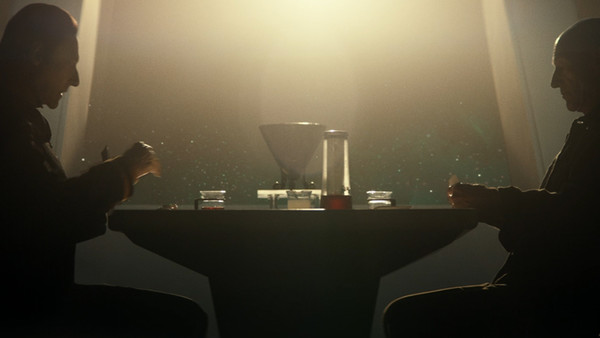
It's difficult to separate the promise of "Remembrance", the very first episode of Star Trek: Picard, from what season one ultimately provided.
On one hand, "Remembrance" (and its two sister episodes "Maps and Legends" and "The End is the Beginning") is an outlier, an earthbound show with smaller stakes and Picard, Laris, and Zhaban at its core. Later episodes launched Picard into space, leaving behind Château Picard and (unforgivably) the two Romulans who kept it running, pursuing a larger story of galactic peril. But the roots of the character study and exploration of Jean-Luc Picard are there from the beginning, even if they sometimes got lost amid the giant ship-killing flowers that fly and robotic octopus arms from across the galaxy.
Taken in isolation, "Remembrance" is one of the franchise's very best pilot episodes and very different from anything that came before. "Remembrance" is a quieter, more contemplative, ground-level glimpse at the Star Trek Universe, exploring life on Earth, life outside Starfleet, and life inside the mind of Jean-Luc Picard 20 years after all those heroic adventures we grew up watching.
Star Trek: Picard may have fallen into the trap of telling stories that could easily be told (and basically were told) on Star Trek: Discovery, but "Remembrance" is a wholly unique entry in franchise. The Château may be in the rearview mirror, but the quiet contemplation it represents are the core of Star Trek: Picard and they're worth continuing to explore in season two.
1. "Nepenthe"
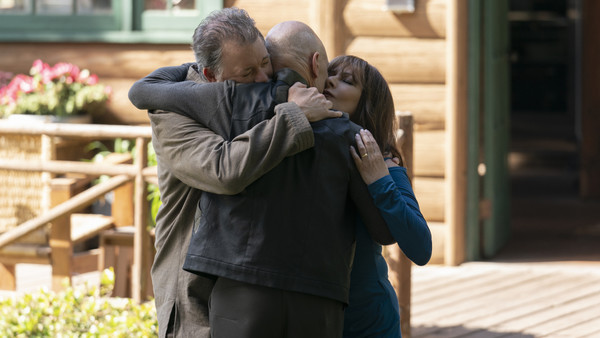
While "Remembrance" was an advertisement for the kind of show that didn't always materialize in season one, "Nepenthe" is the fulfillment of that promise. All the ups and downs of the first season were worth it for the sight of Jean-Luc Picard in the warm embrace of his old friends, Will Riker and Deanna Troi, and the insight that they could share into his character and into the running plot line of the show.
Star Trek: Picard's first season wisely avoided the trap of being a Star Trek: The Next Generation reunion special, it didn't constantly throw Memberberries at the audience to artificially ramp up feels, it didn't unnecessarily stuff its legacy cast members into their old uniforms and ask us to believe they could still be doing the same thing they were doing 30 years ago. Instead the series built out a new set of characters around Picard, did the heavy lifting by carving out its own storyline, and then allowed itself to dip into nostalgia.
In keeping with the theme of the show and the passage of time, Riker and Troi have aged, they've changed. Their life together developed in a believable way and their reunion with Picard is believable because of that. Their shared history allows them to express their unique insight into the character and "Nepenthe" allows them the time and breathing room to do so. Picard's on the run in this episode, but the most revealing moments don't happen in dire straits or life and death struggle, they take place over a wood fire pizza oven, a tomato garden, and a dining room table.
"Nepenthe" is the slower, quieter, intellectual, emotional character study the show set out to be. Star Trek: Picard at its very best.