Star Wars' Obi-Wan Series: 10 Things Fans Need To See
Kenobi's show might've suffered multiple set-backs, but it's still the most anticipated spin-off.

A few days ago Ewan McGregor revealed that he is excited for Disney+'s upcoming Obi-Wan series, citing the use of practical effects as why he will "enjoy it all much more" than filming the much maligned Prequels.
After months of radio silence, the news came as a relief to Star Wars fans - not because fans expected the Obi-Wan series to capitalise on green screen production (after the Prequel backlash, the focus on practical effects seems obvious), but because after dubious reports of script changes, the number of episodes supposedly cut down, and production delays, it seemed for a while Disney's second Star Wars live action series was destined to follow the Anthology movies as yet another abandoned projected.
McGregor's statement was welcomed by fans who had been seduced by The Mandalorian's gritty design and grounded sets, as well as Prequel lovers who have been itching for a live action return of one of the franchise's most beloved characters.
While McGregor didn't reveal any specifics about the series (though he claimed to know what it's about), there are a few things that fans would love to see, from the return of old friends, to new plot-threads not yet covered in the expanded universe...
10. The Return Of Anakin Skywalker

After months of anticipation and speculation, Prequel fans were disappointed that Anakin Skywalker did not appear in The Rise of Skywalker. Episode IX's name, and the fact that Anakin/Darth Vader formed the backbone of the first two Trilogies, seemed to assure Hayden Christensen's imminent return, and Prequel fans were understandably let down by Christensen's short and jarring voice cameo, believing that the character (and actor) deserved more respect.
Given that Obi-Wan entered into exile in Tatooine after his best friend and apprentice fell to the Dark Side, Anakin's potential to return is pretty obvious here. The series could flashback to dark Anakin moments we never saw on film, as his old Master tries to understand just how he could turn, with Kenobi processing some of Skywalker's less-than-Jedi-like behaviour in new ways.
But there's a chance that the Obi-Wan series could give us more than just flashbacks. Due to Vader's ambiguous "a presence I've not felt since..." statement in A New Hope, there's always a chance Obi-Wan and Anakin/Vader could have an entirely new encounter, giving fans a chance to see Darth Vader at the height of his powers.
If this is the direction Disney chooses to head down, they should still give Christensen a role, perhaps revealing a glimpse of his face behind the mask.
9. Recreating Maul's Duel From Rebels

After a live action Maul was teased in Solo, many fans began to speculate that the former Sith Lord would form a backbone of Disney's future Star Wars releases, his appearance at the end of the second Star Wars Story seeming to indicate the media mogul's big plans for the fan-favourite character.
However, after Solo's poor box office performance Disney scrapped the idea of standalone Anthology movies, and there seem to be no more planned Maul appearances in sight.
Of course, the character finally died at the hands of Obi-Wan Kenobi toward the end of Star Wars Rebels, concluding his storyline set in motion after Maul's resurrection in The Clone Wars.
While it would be unwise for the Obi-Wan series to simply rehash the entire Maul storyline in a live-action setting, it's clear that fans are itching to see more Ray Park-helmed Maul action. A recreation of the Maul and Obi-Wan Rebels fight might require a hefty amount of exposition, but if Disney's scriptwriters find a way to integrate Maul well into Kenobi's story, seeing the foes' final confrontation would be a dream.
And while we've seen how the Sith Lord ended up on Tatooine from Maul's point of view, the series will give us an opportunity to see the story from Ben's eyes.
8. Well Integrated Cameos

Disney Star Wars has had something of a problem with integrating cameo characters. For every appearance that made sense in the context of the story being told (Yoda in The Last Jedi, Lando in Solo), there have been a dozen that seems tacked on for the sake of fan service and action figure sales (Lando in The Rise of Skywalker, Dr Evazan and Ponda Baba in Rogue One).
While integrating existing characters can lead to the franchise continuing to grow insular and inward looking, well-integrated characters can help build a more cohesive, MCU-style universe. Especially given the extent to which the Star Wars Prequel era was overlooked by Disney, this can help make McGregor's take on Kenobi feel more like a part of the universe, helping bridge the gap between the Prequels and Sequels.
Of course, there are some characters whose inclusion would be too jarring. C-3PO and R2-D2, appearing in all but one of the films, would be an obvious choice, but given Obi-Wan's apparent inability to recognise them in A New Hope would necessitate too much awkward, Solo-style explanation.
Still, there's no reason why Kenobi shouldn't meet Rogue One's Cassian Andor, and an appearance of the rebel can provide a springboard for his own forthcoming series. Also, seeing Kenobi and Bail Organa interact perhaps would retroactively make Princess Leia's hologram more emotive in A New Hope.
7. More Prequel Love

Again, there's a chance that self conscious callbacks and cameos can grind down the series, distracting from the actual story and providing too many forced, eye-roll inducing moments that the show would definitely be better without.
With McGregor reprising his role (the actor's take on Obi-Wan is often cited as one of the highlights of the Prequel Trilogy), the Obi-Wan series will doubtlessly be more Prequel-centric than any other Disney Star Wars product, but the show provides a prime opportunity to fix the Prequel erasure that ran throughout the Sequel Trilogy.
This fix should, however, do more than placate Prequel fans who feel their favourite Star Wars era has been overlooked.
Incorporating some planets, species, and droids that originated in the Prequel Trilogy - with some 21st century practical effect spit-and-polish - can help bridge the gap between the Prequel and Original Trilogies' visual styles.
As long as these callbacks are well integrated into the story, there's no reason why Disney should continue to ignore the Prequel Trilogy, especially after its surge of popularity following the missteps of the Sequels.
6. Obi-Wan's Jedi Training

At the end of Revenge of the Sith, Yoda reveals Obi-Wan's old master Qui-Gon Jinn, who died at the hands of Darth Maul in Episode I, managed to commune with him through the Force, having discovered the secret to eternal (albeit spectral) life.
While fans see glimpses of the nature of Qui-Gon's semi-formed Force Ghost in The Clone Wars (the ability was developed further by Yoda and Obi-Wan, who managed to retain their physical forms after death and even interact with the corporeal realm), it's never really shown how the Jedi manage to master this ability.
The Obi-Wan series would provide the perfect space to show how Obi-Wan and Yoda worked to sustain their form through the Force after death, and could follow Kenobi's training as he communes with his old Master Qui-Gon Jinn.
While this might be difficult to portray on screen (The Clone Wars made it clear Qui-Gon could only communicate through his voice), a Qui-Gon cameo would again integrate the Prequels with the wider Star Wars universe. The Master and Padawan could even have conversations about the supposed Chosen One's fall to the Dark Side, and speculate how to avoid such a travesty happening again.
5. Look Beyond The Original Trilogy

As the Obi-Wan series will almost certainly be set between Revenge of the Sith and A New Hope, there's always a chance that, like the Disney Star Wars movies, it will rely a little too much on the Original Trilogy.
Solo: A Star Wars Story, as entertaining a film as it was, was chockablock with eye-roll moments and forced references, demonstrating a misguided attempt to please Original Trilogy fans who would have appreciated more of a focus on an actual story than a series of Easter eggs. Scenes depicting how Han was christened 'Solo', how Han did the Kessel Run, and how Han got his blaster belong more to the realms of fan fiction than a $275 million movie.
While The Mandalorian largely strayed away from obnoxious references to the Original Trilogy, the fact that the Obi-Wan show will focus on an Original Trilogy character might make obvious references a bit too tempting to ignore.
However, fans absolutely do not need to see a story they've already seen before. The Obi-Wan series should have no instances of Obi-Wan defending Luke from Tusken Raiders, no awkward explanations for why he called himself "Ben", and certainly no in-your-face return to the Mos Eisley Cantina of A New Hope fame. And, as tempting as it might be, there should be no digital ageing to make McGregor look more like Alec Guinness.
The aesthetic links - provided by the Tatooine setting - should be enough of a connection to the original movie.
4. Tie-Ins To The Movies

Explicitly tying in the series to the Skywalker Saga movies is a difficult line to cross, especially if Disney relies a little too heavily (as it has done in the past) on rehashing old material.
However, the final four episodes of The Clone Wars, which overlapped with Revenge of the Sith (and even included a cartoon recreation of a number of key scenes from Episode III), proves that it can lead to some moving and clever scenes. The Clone Wars finale's Revenge of the Sith overlaps, in fact, provided some of the highlights of the universally lauded show, and a similar format would be welcome (as long as it is handled well) in the Kenobi series.
Flashbacks could tie in with Revenge of the Sith and the immediate aftermath of the fall of the Jedi; indeed, the show could - and perhaps should - pick right up from Obi-Wan giving Luke to Uncle Owen and Aunt Beru at the end of Episode III. Key scenes from Revenge could even be recreated for the series, perhaps expanding on Anakin and Kenobi's final encounter at the end of the Prequel Trilogy.
Though the Obi-Wan series really needs to be able to stand on its own two feet, The Clone Wars showed just how effective and unobtrusive scenes overlapping with the films can be at the hands of accomplished and considerate writers.
3. Obi-Wan's Post Traumatic Stress

While it is unclear what the story of the Obi-Wan series will be, it would be difficult for the show to avoid exploring the aftermath of the fall of the Jedi and the effects Anakin's turn to the Dark Side had on his former Master Obi-Wan.
Kenobi must have had a massive shock after Anakin's turn and the slaughter of his comrades, and while he seems quite at peace in A New Hope, the old Master must have had serious adjusting to do.
While a serious, slow-paced character study might not necessarily be to Star Wars fans' taste (though would be the perfect genre for a minimalist Disney+ show), it would be disingenuous for McGregor's Obi-Wan to be chirpy and hopeful.
While it might be very Disney of Disney to entirely ignore the demons that must haunt Obi-Wan, the series should illustrate how he reacted to the fall of the Jedi Order, and offer some explanation as to why Yoda and Ben went into exile, rather than pairing up with the remaining Jedi or helping the Rebels against the Empire from the get-go.
2. A Proper Story Arc
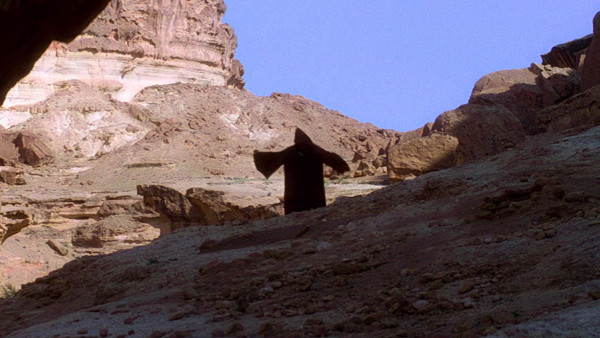
While The Mandalorian's episodic nature proves that hours of Obi-Wan wandering around Tatooine's endless desert protecting Luke from various small scale threats might just work, it would be great for Obi-Wan to have a proper challenge to overcome himself, giving the character a real story arc that explains how he evolved from his Revenge of the Sith iteration to the character that appeared in 1977's A New Hope.
Fans are desperate to see what exactly Ben got up to on Tatooine for two decades, and how he managed to look over Luke from afar without accidentally spilling the beans about his past life.
It could transpire that Obi-Wan actually tried to lead a Resistance of his own, gathering the Jedi diaspora to launch a small-scale fight against the Empire. This storyline could culminate in an operating reunion of Kenobi and Anakin, with Obi-Wan's defeat prompting him to return to Tatooine to take stock, deciding that it's better to sit tight and wait for a new Chosen One to return.
Almost as much of a go-getter as his apprentice, it doesn't make sense that Obi-Wan just decided to sit still for twenty odd years on a desert planet without even trying to disrupt the Empire. Even if Kenobi just helps supply the Rebels (which will involve numerous encounters with Bail Organa), at least it would give the old wizard something to do.
1. Great Live Action Set Pieces

The use of practical effects might seem a given due to McGregor's comments about "what you see is going to be what we see on the set" and the actor's comparisons with technology used in the production of the forthcoming series and The Mandalorian, but anything less than a continuation of The Mandalorian's tone would be seen as a let down.
While the Prequel Trilogy had some fantastic set pieces, these suffered from an over reliance on green and blue screen technology. The Phantom Menace and Attack Of The Clones in particular have aged pretty badly (with the sleek cinematography of 1980's Empire Strikes Back looking better today than either of those movies), their actors standing out a bit too obviously against digitised backgrounds.
While the Sequel Trilogy struck a pretty decent balance between post-production wizardry and live-action sets, The Mandalorian looks even better still.
Though it's hard to imagine the Obi-Wan series will be anywhere near as action packed as its Disney+ predecessor, a Star Wars show without any combat whatsoever is difficult to imagine. Technologically at least, the Obi-Wan series seems to be in safe hands: let's just hope that the slick visuals will have a fantastic story to match.
Watch Next
Star Wars Quiz: Which Obi-Wan Kenobi Said It: Alec Guinness Or Ewan McGregor?
