Stranger Things Season 4: Volume 1 Review - 6 Ups & 4 Downs
Stranger Things returns for a messy, ambitious, and WAY too long fourth season.

Almost three years after Stranger Things' third season premiered on Netflix, season four is finally here.
With the pandemic causing production to be shut down for over six months in mid-2020, the fourth season has had a long and arduous journey to the screen - one impatiently anticipated by fans.
Netflix also made the unexpected decision to split season four into two parts, with the first seven episodes now available while the final two - including a season finale clocking in at almost two-and-a-half hours - will drop on July 1.
So, was Volume 1 worth the wait? Yes, albeit with some fairly major qualifications.
Fans of the show will of course simply love to be in the company of these characters yet again, and the Duffer Brothers certainly deserve credit for refusing to rest on their laurels with this bold and often unexpected season.
But far from every creative gamble ends up paying off, as this nine-hour first volume often feels like an over-indulgent endurance trial likely to test the patience of all but the most forgiving fan.
There's a lot to love here, and it'll surely leave fans on tenterhooks for the final two episodes in July, but it's very, very far from perfect. Further to that end, here's where Volume 1 stumbles...
Downs...
4. Every Episode Is WAY Too Long

Stranger Things hasn't ever been above the occasional episode exceeding an hour in length, but season four truly takes the cake as all of the seven released episodes are in fact an hour-plus, with six of them even being over 70 minutes long and the last of the batch running in at a beefy 98 minutes.
Yet making so many of the episodes close to the length of a movie doesn't feel like it was necessitated by the material - this is a mostly sluggishly paced seven episodes packed with melodramatic bloat, largely in the way of numerous saggy, unnecessary subplots.
Far too much of the early season focuses on Eleven (Millie Bobby Brown) trying to settle into her new high school in Lenora Hills, California, not to mention the strained romance between Nancy (Natalia Dyer) and Jonathan (Charlie Heaton), and Lucas' (Caleb McLaughlin) attempts to fit in with the jocks on the basketball team.
These are just a few examples in a season of TV that has no interest in killing its darlings or, dare one say, respecting the audience's time.
There's just way too much meandering "character development" and repetitive breadcrumb following derring-do. Less is more, guys.
3. Hopper's Storyline Is A Huge Disappointment

By far the most tantalising plot thread left hanging at the end of season three was the fate of Jim Hopper (David Harbour), who had seemingly been incinerated in an attempt to shut down a gate to the Upside Down.
Yet season four's early marketing quickly confirmed that Hopper was indeed alive, but imprisoned in a grim Soviet gulag (is there any other?).
It was certainly a potential-rich setup for his arc this season, yet fans are sure to be massively divided on Hopper's journey over the course of season four.
Without giving much away, Hopper spends far longer in the gulag than you're probably expecting, meaning he has precious few opportunities for interaction with the show's main cast.
More to the point, Hopper's incarceration is an incredibly one-note storyline that just doesn't have much in the way of dramatic juice, no matter how long the Duffers drag it out here.
David Harbour is great as Hopper once again, but his role is so piecemeal and repetitive to almost make you think he had a major scheduling conflict and couldn't commit to a more substantial appearance.
2. Characters Are Split Up Far Too Much

Though it's certainly not a new trick for Stranger Things to split its large cast of characters up into various subplots, it's a narrative technique that's never felt more desperately strained than in season four.
Because the huge ensemble cast has grown to such a near-unmanageable size, they're portioned off into numerous parallel plots: Eleven trying to start over, the Hawkins kids dealing with a new supernatural threat named Vecna, Hopper being imprisoned in the Soviet Union, Joyce (Winona Ryder) and Murray (Brett Gelman) trying to rescue him, and the Byers kids... not doing a whole lot in California.
Even with the episodes being as long as they are, it's shocking just how many major characters feel frequently sidelined by this heavily compartmentalised structure.
With characters siloed away in their own storylines of wildly varying quality, and without the major convergence you might reasonably expect, the Duffers force themselves to continually cross-cut between these plots, as becomes tiresome long before Volume 1's end.
While it's simply not realistic or practical to have every major character together all the time, the excessive fracturing of the cast makes it difficult for any of these individual plots to build a head of dramatic steam.
1. The Distractingly Aged Cast
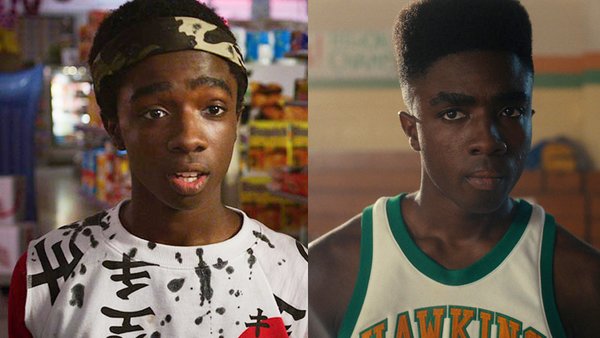
Now, there's not really much that anybody could've done about this, especially with the pandemic further delaying production, but the cast's noticeably aged appearance sure does take some getting used to.
Despite the seasons being shot three years apart, season four takes place only around six months after season three, rendering it unintentionally comical that characters like Lucas have still aged, well, about three years.
Ultimately it's just something audiences need to roll with and accept, but it's nevertheless a frequent distraction, in large part because virtually no attempt is made to conceal the physical changes the cast has gone through.
Needless to say, unless filming on the fifth and apparently final season starts soon, the Duffers might want to write a time skip into the story.
These issues aside, though, here's why you should still check out Season 4's first volume...
Ups...
6. It's The Most Ambitious Season Yet

Stranger Things' fourth season is without question its boldest and most ambitious yet, perhaps to a fault.
You can't reasonably say that the Duffer Brothers just rehashed the same old thing for another go around - they certainly tried to push the envelope in terms of scale, with the action unfolding across four geographically disparate locations, as well as the Upside Down itself of course.
There's been a clear effort here to try and do something different, which in a show that could easily coast satisfactorily by simply playing the hits, is to absolutely be commended.
If the stitching together of the various plots is relatively graceless, it still adds up to an intriguingly diverse, thematically dense tapestry, attempting to expand the scope of the story in ways that, while not always successful, show that the Duffers want to give us more than just the bare minimum.
5. The Ensemble Cast Kills It

Even in its weakest moments, there's no arguing with season four's exceptional ensemble cast, who absolutely give it their all across the board.
There are some clear standouts, though: Millie Bobby Brown, the show's major breakout talent since its first season, continues to give a full-bodied and highly empathetic performance as the troubled Eleven.
Elsewhere Maya Hawke, who stole so much of the show last season, gets to lend more shade to Robin, Sadie Sink rises to the challenge of exploring Max's major trauma following Billy's death, and the bromantic pairing of Steve (Joe Keery) and Dustin (Gaten Matarazzo) continues to delight.
Other notable turns include Brett Gelman's hilarious work as Murray - paired with Winona Ryder's Joyce for the entire season and significantly elevating an uneven subplot in the process - and the great Paul Reiser returns to work through some of his finest material as Dr. Sam Owens.
4. The Darker, More Violent Tone

This is undeniably the show's darkest, bleakest season yet, as made evident from the very first kill carried out by the villainous Vecna in the first episode.
Vecna's preferred method of murder - brutally contorting a victim's limbs before gouging their eyes out - doesn't lose much of its gnarly impact over the course of the season, ensuring he more than lives up to the fearsome standard set by both the Demogorgon and the Mind Flayer.
Thematically season four also digs into the darker side of '80s nostalgia, in particular examining the United States' "satanic panic" of the era, where bored citizens were convinced that Satanists were going to ruin their children's lives. Here, this manifests in the gang's D&D group being mistaken for a Satanist cult by the local do-gooders.
While some might lament the grimmer tenor this time around, it's at least a refreshing turn away from the nostalgic comfort food of the first two seasons in particular.
3. The Terrific New Characters

Even with the roster of characters already being so damn huge, season four nevertheless adds a ton more, most of whom are totally worthwhile inclusions.
The easy MVP of the new blood is the no-nonsense D&D metalhead Eddie Munson (Joseph Quinn), who becomes fast friends with the Hawkins kids and slots effortlessly into their group.
Meanwhile in California, there's Jonathan's new friend Argyle (Eduardo Franco), a shameless stoner stereotype who brings some much-needed levity just when the show needs it.
In the Soviet Union, there's the hilariously mischievous smuggler Yuri (Nikola Đuričko), while Eleven's storyline sees her cross paths with a mysterious individual played by Jamie Campbell Bower, the particulars of whom are best left for audiences to discover themselves.
2. It's Full Of Nods To Classic Horror

Stranger Things has always been a sci-fi horror series, but season four truly ramps up the horror, such that fans of the genre's classic entries are sure to have great fun pointing out the various touchstones invoked throughout.
Most obviously, antagonist Vecna's ability to distort his victims' realities and prey on their fears is extremely reminiscent of A Nightmare on Elm Street's Freddy Krueger.
To further hammer the point home, iconic Freddy Krueger actor Robert Englund even has a terrific cameo as a blind man accused of murdering his own family.
Elsewhere there are blatant references to The Silence of the Lambs, Hellraiser, and numerous Stephen King texts, with a certain creepy house bearing a surely intentional resemblance to the Neibolt house from King's It.
All in all these references make it clear beyond any remaining doubt that the Duffer Brothers have a real affection for the genre. You love to see it.
1. The INSANE Production Values
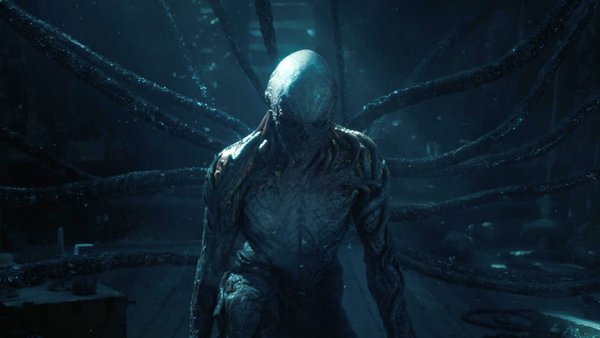
Even when the writing isn't always perfect, few are going to have problems with the show's jaw-dropping production quality, which remains as first-rate as ever.
With each episode of season four reportedly costing a stonking $30 million - admittedly in part due to the cast's renegotiated contracts - it'd be embarrassing if the episodes looked anything less than amazing, though thankfully that's not the case.
From the stunning, dynamic camerawork to the exemplary production design and stellar visual effects - among some of the finest you'll see in any TV series, for sure - season four provides yet further proof that Stranger Things is one of the most aesthetically meticulous shows on the air right now.