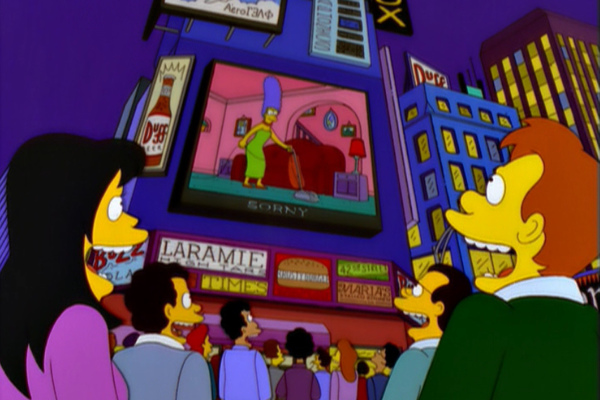
The Simpsons: 10 Most Important Episodes Ever Made

Indispensable, landmark and progressive episodes of the best show of all-time.

Despite the fact that nowadays The Simpsons is often thought to be a mere imitation of its former self, there's no denying that the show is one of the most influential series ever. Over the course of its nearly three decade run, it is has produced some of the most intelligent and innovative 22-minute episodes ever put to television, many of which managed to capture the zeitgeist of their time in ways that other TV shows simply didn't. So whilst The Simpsons' legacy is inarguable, is there such a thing as an "important" Simpsons episode? An episode that, looked upon in retrospect, now displays a genuine cultural value and longevity? An episode that succeeded, perhaps, in tackling a big or controversial subject and deconstructing it in a way that allowed for cultural progression? The simple answer to this question is: "Yes, of course!" And whilst there are lots and lots of reasons why an episode of The Simpsons might be deemed to be "important," it's also key to remember than an episode might be branded as such from an internal perspective, too; episodes that advanced the show intellectually, broke new ground, or dared to go places that other TV shows were too afraid to venture...


10. The Joy Of Sect (13.9)
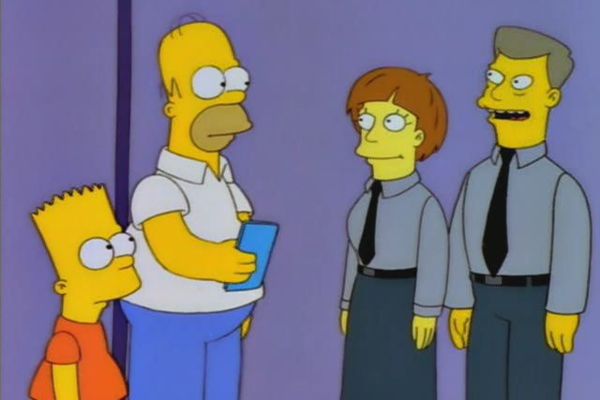
Whilst most Simpsons fans will recognise The Joy of Sect as that episode of the show in which the writers took aim at crazy, money-stealing religious cults, many will be surprised to learn that the intention of the episode wasn't merely to poke fun at cults in general, but to target a specific cult: that is, The Joy of Sect is all about Scientology. Yes, one brave television show dared to make fun of Scientology as far back as 1998 - a fact that showcases the boldness of its writing staff. No, Scientology is not mentioned outright, but its influence is plainly felt when you revisit this episode (it was also inspired by groups like Heaven's Gate and the Peoples Temple, but to a lesser extent). The Joy of Sect, then, sees the residents of Springfield drawn under the wing of a group calling themselves "The Movementarians," and aside from its lampooning of Scientology's strange practices, it paved the way for others to do the same. As a result, it's a truly landmark episode; a trend-setter in the ongoing campaign to expose Scientology. South Park famously took on the group in their own episode, but The Simpsons got there first.

9. Homer's Phobia (15.8)

Homer's Phobia was the first episode of the show to deal with gay themes, as Homer befriends a campy novelty store owner named John (brilliantly voiced by director John Waters) and turns against him when he discovers him to be gay. A show like The Simpsons had never dealt with gay themes prior to this episode, and Homer's Phobia broke new ground in its exploration of a "bigger" subject - all in a very tidy 22-minutes. When Homer's Phobia aired, the writers expected the reception to be highly controversial, but were surprised to receive very few complaints about the content of the episode. What's remarkable about Homer's Phobia, and indeed the reason that it stands as one the show's most important - and progressive - episodes, is the way that it touches on so many gay issues and manages to deconstruct them in an intelligent way without it feeling preachy. Once again, this episode is an example of The Simpsons breaking down the barriers of what was deemed to be acceptable at the time.

8. Bart Vs. Australia (16.6)

"The reason we can be nasty to any country, any person, any race or creed, is because we are always the most nasty toward the United States, toward our main characters." These were words uttered by showrunner David Mirkin on the DVD commentary track for Bart Vs. Australia, almost as an excuse for the highly controversial (and brilliantly funny) episode that saw the iconic family on a trip to Australia after one of Bart's pranks goes array. Bart Vs. Australia is often cited as one of the best episodes of the show thanks to a succession of great, memorable jokes and the way that it targets the world's perceived absurdness associated with Australian culture - without holding back. Many took offence, failing to see the irony behind the episode's warped perspective of the land down under. Bart Vs. Australia, aside from establishing The Simpsons as an important cultural force willing to take potshots at anything (including an entire country), also marked the first time that The Simpsons ventured abroad and embroiled themselves with foreign lands to hilarious effect - a trope that has since taken them to countless far-off destinations.

7. The Itchy & Scratchy & Poochie Show (14.9)

Given the subject matter, it's surprising that an episode like The Itchy & Scratchy & Poochie Show ever wound up being made. That's to say, this classic installment of The Simpsons set out to target television's greatest evil: network interference. The fact that the network actually let this one air, especially since most of the jokes are at their expense, is either a credit to them for taking a joke or shows them up as entirely oblivious. For starters, then, the Itchy & Scratchy & Poochie Show marked The Simpsons' 167th episode, which made it the longest-running prime time animated TV show, overtaking The Flintstones. But there's even more to this episode, because it also existed as an excuse to poke fun at fans of the show - something that shows do all the time nowadays, but weren't quite as keen to do back in '97. Namely, the writers set out to ridicule the fan obsession with continuity and its nit-picking, deemed to be a side-effect of the new internet age. As a result, The Itchy & Scratchy & Poochie Show started the still on-going conversation about the troubled relationship shared between shows, networks and their audiences.

6. El Viaje Misterioso De Nuestro Jomer (9.8)

El Viaje Misterioso De Nuestro Jomer, otherwise known as "The Mysterious Voyage of Homer," is one of the show's outright weirdest episodes. The plot sees Homer eating a bunch of Guatemalan insanity chillies, which subsequently sends him on a hallucinogenic vision quest and into a strange and bizarre mystery world. As far as "pushing the envelope" goes, El Viaje Misterioso De Nuestro Jomer is a defining work of Simpsons' magic. The reason that it's so important, then? Because it was a plainly unconventional and unbelievably surreal episode of the show - one which opened up new possibilities and avenues for the writers in its later years. With its warped artistic style and psychedelic flourishes (Johnny Cash providing the voice of a "Space Coyote," for example), El Viaje Misterioso De Nuestro Jomer emerged as an experiment that broke the Simpsons mould. When this episode first aired back in 1997, The Simpsons was yet to go quite this weird. In turn, its existence - and success - led to episodes of the creatively unconventional kind being made in future seasons, some of which - "The Springfield Files" and "Lisa's Wedding," to name two examples - are deemed to some of the show's greatest ever.

5. Dancin' Homer (5.2)

One of the things that The Simpsons is best renowned for is its flurry of guest stars; almost every episode of the show features a famous celebrity either playing a wacky version of themselves, or an original character who - generally speaking - appears in just a single episode before disappearing. Whilst it wasn't strange for live-action TV shows to feature guest stars from time to time in the early '90s, it was quite unusual for an animated show. Dancin' Homer, then, the fifth episode of the second season, was the first Simpsons episode to feature a guest star playing themselves. The lucky individual? American singer Tony Bennett, who the family run into whilst talking a tour of Capital City. Rather aptly, Bennet also sings a jazzy song named "Capital City" as the family takes a city tour. The Simpsons, of course, is defined by its guest stars, and the show has probably featured more famous people than any other sitcom to date. Pretty much everyone who means anything has starred on The Simpsons in some capacity - and it all started right here.

4. Homer Simpson, This Is Your Wife (15.17)
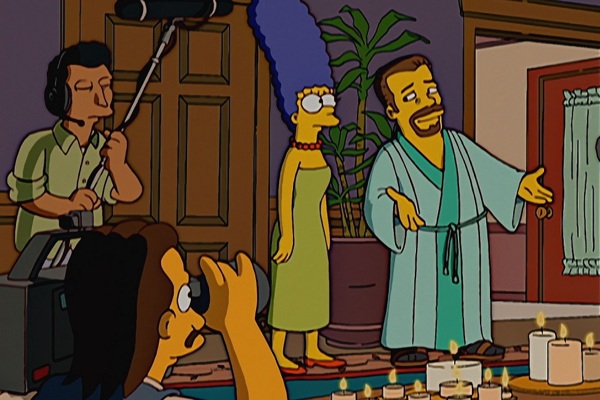
In the almost two decades leading up to the season seventeen episode, Homer Simpson, This Is Your Wife, writing for The Simpsons was done internally. It was only possible to write an episode of The Simpsons if you were on the writing staff. That all changed when Matt Groening extended an offer to Ricky Gervais after declaring The Office and Extras to be TV masterpieces. And so Gervais became the first ever "Guest Writer" on the show. Homer Simpson, This Is Your Wife isn't a particularly great episode, though Gervais - who voices a character named "Charles" who attempts to seduce Marge - is a great addition. Still, it's an important landmark in the series on the whole as it designated a point at which the time-tested approach to writing the show was busted open; an outsider was let in and given free reign to pen an entire episode, signalling a change in the show's procedurals. That's to say, comedy actor Seth Rogen (and his writing partner Evan Goldberg) were later granted an episode of their own, and plenty more will presumably follow suit.

3. Behind The Laughter (22.11)

Behind The Laughter is arguably the greatest meta-episode that The Simpsons ever produced; a tour-de-force of inside jokes, references to the show's legacy, and whatever else the writers felt they needed to get off of their chests at the time of writing. Unlike some of the episodes produced in the "non-canon" vein, Behind The Laughter feels earned. As an comment on the show itself, Behind The Laughter (in itself a parody of MTV's "Behind The Music") whacks it out of the park with every candid joke, the best of which references the ill-judged and very controversial episode in which Principal Skinner turns out to be a fraud with its nod to the show's use of "gimmicky premises and nonsensical plots." Then there's the clever way it mocks its reoccurring tropes, like Homer strangling Bart. So why is Behind The Laughter such an important episode of the show? Because it essentially served as the ultimate deconstruction of the show itself (and all of its flaws), something that was very rare for any TV series to attempt at the time. Behind the Laughter calls out The Simpsons on its own mistakes, making it a highly vital, important episode.

2. At Long Last Leave (14.23)

At Long Last Leave marked the 500th episode of The Simpsons. Whether or not you were still into the show when it touched upon this incredible milestone matters not - this episode is made inarguably important on account of its existence alone. Thankfully, it's actually a pretty good installment in general - one that sees the family thrown out of Springfield after the town become sick and tired of them (a knowing meta-comment, perhaps?). This episode is also notable for the guest appearance of Wikileaks creator Julian Assange, who they discover is hiding out in a place called "The Outlands." Plot aside, though, perhaps the best thing about At Long Last Leave is its opening couch gag, a brilliant dose of nostalgic awesomeness made up of previous couch gags from across the years. 500 episodes of anything is a great and notable accomplishment, and though - at the time that At Long Last Leave aired back in 2012 - the show was considered (and still is) to be twiddling its thumbs somewhat, there's no denying the importance of The Simpsons - an animated TV show about a loveable, dysfunctional family - cementing its place in history.

1. Simpsons Roasting On An Open Fire (1.1)

No list of important Simpsons episodes would be complete without the very first episode, and as first episodes go, this one is landmark. And yet who could have predicted that Simpsons Roasting On An Open Fire would spawn a TV series now consisting of 575 episodes (and counting)? Interestingly, this wasn't even supposed to be the first episode, but was deemed to be the best of the season and was moved to serve as the very first. Nowadays, Simpsons Roasting On An Open Fire - with its weird character voices and awkwardly animation - looks like a true relic (indeed: it's the only Simpsons episode to have aired in the '80s). It's not even particularly hilarious. One cannot deny the importance of it in retrospect, though, given that it served as the jumping off point for everything that came thereafter - all the bare bones of the show are here, just waiting to be developed further. Indeed, the positive reception received by Simpsons Roasting On An Open Fire when it first aired proved that the world was ready for a show like The Simpsons. Over the course of the next decade, Matt Groening's little cartoon about a yellow family would go on to define itself as the smartest, funniest, densest and greatest television show of all-time. Like this list? Like The Simpsons? Do you agree that these episodes are some of the most important episodes ever made? Let us know all your thoughts in the comments below.

In this post: 
The Simpsons
 
First Posted On: 
Contributor

Sam Hill is an ardent cinephile and has been writing about film professionally since 2008. He harbours a particular fondness for western and sci-fi movies.