The Walking Dead: 10 Things Season 7 Got Horribly Wrong
With the seventh season now ended, it's time to reflect on where it went wrong.

Another season of The Walking Dead has come to a close, bringing with it death, tiger attacks, and the world on the precipice of war between Rick and his allies and Negan and the Saviours.
It brings to an end what has been one of the show's most divisive (and arguably weakest) runs in recent years, which has seen viewership slide from its record-breaking levels to even lower than it was back in 2013, although with over 10 million viewers it's still way ahead of the competition.
It's natural for a show to lose viewers when it goes on for so long, but the sharp decline does also point to many problems with Season 7. It started well (in ratings terms) with the premiere, as everyone who tuned in to see just who Negan had killed off after the Season 6 finale cliffhanger (somewhat justifying that ridiculous decision).
After that, however, as the world became Negan's, the quality and enjoyability of the show gradually declined in line with the ratings.
While it wasn't all bad, with strong performances from most of the cast, some great walker set-pieces, and the aforementioned tiger, there are a lot of areas where the show really went off-track this year.
10. Sidelining Major Characters
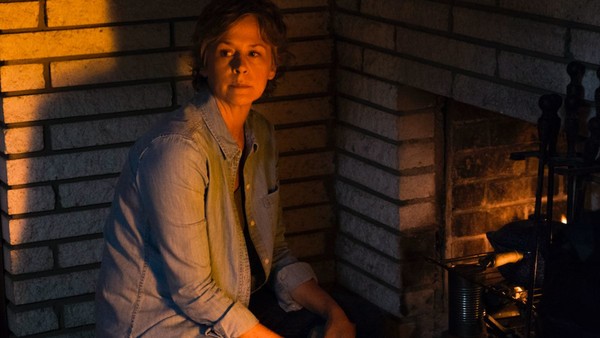
The Walking Dead has a lot of characters, with those listed as 'main' for Season 7 extending to 20 individuals. Within that, however, there's a subset of the truly key players, the ones who've been around a long time, had the most development, and viewers really care about.
While Rick is always going to be a focal point, others from this group were pushed to the side for large amounts of Season 7.
Carol didn't appear until the second episode, and then disappeared for a while. Maggie was in the premiere, but then out of the picture again until episode 5. It was much the same for the likes of Daryl, Morgan, and Michonne as well, with all of these guys frequently in-and-out of the picture across the seventh season.
It disrupted their arcs and stalled development, and meant that we were left without seeing the show's best characters for multiple episodes at a time, which definitely weakens it. Spending time with these characters in particular is one of the highlights of the show, and it just wasn't there for most of this year, and also meant that developments such as Maggie becoming a leader, or Carol and Morgan returning to the fight, weren't given the room they should've been.
9. Too Many Communities And Characters

Previously on The Walking Dead Rick and his hardy band of survivors have usually been out on their own, running into one group per season, who more often than not serve as antagonists.
That started to change last year as we met some Saviours and the Hilltop, and it's massively expanded upon this time around.
We learn more of the Hilltop for a start, and we discover that the Saviours belong to a place known as the Sanctuary, have vast numbers and numerous outposts. Then there's the Kingdom, Oceanside, and the Scavengers (or Trash People, Heapsters, or whatever you wanna call them).
Despite this being the apocalypse and just one small part of North America, all of these groups exist within at least driving distance of each other, if not walking distance. After seven seasons, it's a lot to buy, and means the show ends up feeling rather overstuffed. It's not capable of balancing all these locations, meaning that we don't end up caring about many of the people at any of them, and contributes to the story being bloated.
8. The Scavengers
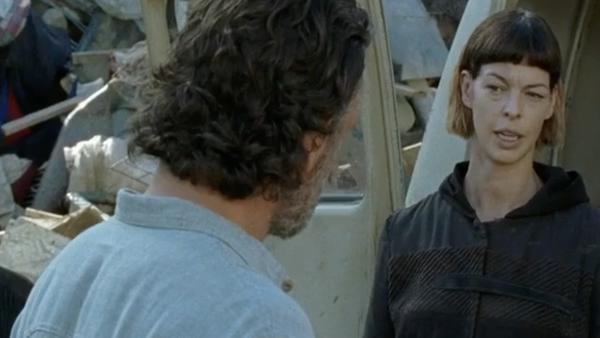
Speaking of too many communities, by far the most troubling of the bunch is the Scavengers, led by Pollyanna McIntosh's Jadis.
Even accepting for the startling number of communities in close quarters, it's hard to understand just what the hell the Scavengers are. Within the context of the universe, you can see how someone with the bluster and theatrics of Ezekiel could happen, because it's all an act. Likewise, the all-female Oceanside makes sense, as Negan killed all the men.
But the Trash People? They willingly choose to live in a junk yard, they take but don't bother (except they clearly do bother when it aides their taking), they look weird and speak even more-so, using phrases such as "the up up up" and "I will lay with him after."
If this was set decades after the apocalypse had happened you could understand it, as these people could've been born into this world and developed their own system and language. But given it's only been a few years, the Scavengers make absolutely no sense (and yes, I realise I'm saying this about a show where a self-styled King has a pet tiger).
Because of this, and the fact that we then spend hardly any time getting to know them, the twist in the finale is completely underwhelming too. It was obvious they couldn't be fully trusted, it was just to what extent. The fact that Rick totally trusts them makes him, the hero of the show, look like an idiot, and forces him into moves - like robbing Oceanside of their guns and leaving them defenceless - that makes him little better than Negan.
7. Singular Episodes

The show has given over entire episodes to one storyline before, such as with last year's deep dive into Morgan's character, Here's Not Here.
That proved that it can work, so long as you've got a character worth telling such a focused story about (and it helps having an actor as great as Lennie James in the role), but this year it used the singular episodes to terrible effect.
Just when it'd built up the fact that there were numerous communities, and had split up all if its main characters (Carol and Morgan at the Kingdom, Maggie at the Hilltop, Daryl at the Sanctuary, Rick and the rest at Alexandria), it decided to go through them one-by-one.
Rather than splitting episodes up and intercutting storylines, we had an episode focused on Carol, then Daryl and Dwight, then Alexandria, then Hilltop, and then freakin' Tara get her own entire episode and so on.
It continued in the second-half of the season too, even if other aspects improved. Even in the build-up to the finale, the show was still dragging its heels, mostly centring on just one location and a couple of characters, meaning storylines never converged in the way they needed to in order to setup the finale, nor provide the necessary excitement and suspense.
6. Predictability

The Walking Dead has long-since fallen into the same old routine, which sees our survivors arriving at a new safe haven, discovering a new threat, defeating them, then moving on again. Sticking at Alexandria frames this slightly differently, but the wider picture, with Negan and the Saviours just being the next bad guy to defeat, remains the same.
Even within that, though, the show has become more predictable than before. While it previously had an aura of almost anything could happen and anyone could die, that's now out the window. It was almost certain that the death was going to be one of Abraham and Glenn, and quite possibly both (which was of course ultimately the case).
It was just as clear that Rick would be built back up, and work with the other communities to take on Negan. Sasha's death, the only major one of the finale, was signposted many episodes beforehand. Spencer, with his hatred of Rick, was clearly going to die.
With the thick plot armour around Rick, and certain characters needing a big send-off (and so many others it's hard to care about), the show finds itself as a contradiction: increasingly reliant on shock factor, and yet increasingly unable to surprise us too.
5. Bleak Brutality

With this becoming Negan's world, things took a much darker turn on The Walking Dead. The season premiere was an hour of sadism, and the following seven episodes didn't let up too much either.
Of course, brutality is nothing new to the show, and there's nothing wrong with it having characters in peril and some good ol' gore and violence.
Over the course of those first eight episodes, however, the show went way beyond that point. After killing Abraham and Glenn it was all about breaking Rick and showing Negan was in charge, something it beat us over the head with episode after episode after bleak, depressing episode. We'd long got the point, but it just kept on going, to the stage where there was little fun to be had in watching the show, because it was just a miserable experience.
Of course The Walking Dead isn't a comedy, there's going to be darkness, but there does need to be some sort of balance. Admittedly the tone did pick up in the second half, but by that point a lot of damage had already been done.
4. Awful Pacing
Although most episodes stick to the standard 45-minute (ish) runtime, The Walking Dead has increasingly played around with longer episodes over the past couple of seasons, something that was particularly the case this year.
Four of the episodes were pushed up to an hour, including the mid-season and season finales, and a few more come in at around the 50-minute mark.
One thing that was notable across these was just how much the show struggles to fill the time given to it. The seasons could definitely stand to be shorter than 16 episodes anyway, and that's before you get into extended instalments.
The sluggish pacing of the episodes, and the overarching narrative too, meant that for weeks on end the series felt incredibly boring, with almost nothing in the way of plot progression (partly because episodes stuck around at just one location) and not a great deal of character development either. There were some memorable moments in the season, but almost every episode suffered from pacing issues and moving too slowly.
3. Using Death And Violence As A Narrative Crutch

Death has always been a major part of The Walking Dead - clue is kinda in the name - and over the years we have, for one reason or another, said goodbye to a number of beloved heroes and hated villains (and a lot of cannon fodder too).
Season 7 didn't shake things up too much in terms of the number of deaths, with the biggest ones being the two in the season premiere, and then Sasha in the finale.
What it did do, though, was further the show's reliance on these individual moments, using death and violence as a crutch to prop the show up rather than focusing on telling a good story or developing its characters.
Glenn's death should've been a major catalyst for people's actions over the course of the season, especially Maggie, who should've been at the heart of the show after this event. Instead, she didn't appear for a few episodes, and it's only in the last few weeks Glenn's death has really even been mentioned. Abraham's death paved the way for Sasha's death. Olivia and Spencer... well, no one really cared about anyway. Benjamin's death led to Richard's death, and the pair of them were characters who only lived to die.
Hardly any of this told any meaningful kind of story. This goes back to the Glenn fakeout in Season 6, and then the cliffhanger. This season, the premiere deaths were further dragged out by around 15 minutes or so, then we had the show act like Heath was a walker, or that Rick might've been eaten. And then you get to the finale, and have the flashback scenes with Abraham used to setup Sasha's death, even though they were together for five minutes.
The show continually relies on trying to trick viewers, either with shocks or emotional manipulation, and forgets about the little things like, say, story and character.
2. Negan

Negan is supposed to be the worst of the worst; the biggest bad that we've ever seen on The Walking Dead.
Instead, he feels like he'd be more at home on the series' after-show, because he just never shuts the f**k up. Jeffrey Dean Morgan does the ol wisecrack-lean-back, and that's about it; there's no substance to the character, and he appeared so frequently in the first half of the season, doing the same act every time, that his presence became an irritation.
To an extent their hands were tied: Negan is a major part of the comics, so they had to bring him to the screen, but the translation hasn't really worked. So far, he's not as interesting nor as fun to watch as previous Big Bads such as Shane or the Governor. Hell, even Dwight, an underling, is more interesting. Simon, his right-hand man, more charismatic and fun to watch,
There's no depth to Negan at the minute, despite a season largely centred around him. And even as far as being a truly terrifying, remorseless monster goes, he hasn't lived up to billing, because it makes no sense he'd allow Rick and co to go on living (this is a guy who killed all the men of Oceanside, after all). It's not an easily solvable problem, because they're in very deep with the character, but some backstory and doing something other than mouthing off and setting himself up for serious back trouble in later life would be a start.
1. A Season Of Filler
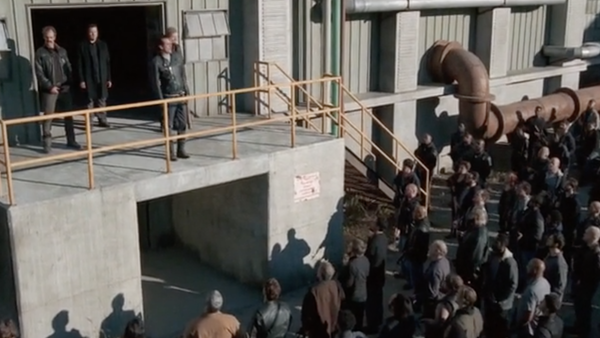
Season 8 of The Walking Dead will "melt people's minds" according to showrunner Scott M. Gimple.
That's all well and good, but what about Season 7? The series ended at the very outset of war - All Out War, to be specific - and yet it's hard to shake the feeling that the entire season was something of a waste. It was all just prologue to get us to this stage.
The major deaths came in the premiere and the finale, as did the major plot points (Rick gets broken by Negan; Rick gets a small victory and the communities come together). Sure, we were introduced to a few new characters who'll be pivotal - well, ok, just Ezekiel and Shiva really - but you could pretty much jump from the first episode to the last without missing too many beats. The Walking Dead Season 7 had a lot wrong with it, but perhaps the worst is that it was almost 16 hours of filler, with just a tiny bit of killer.
What did you think of Season 7? Share your thoughts down in the comments.