True Detective: 10 Reasons Season 1 Can’t Be Topped

Or, why season 2 is destined to fail...
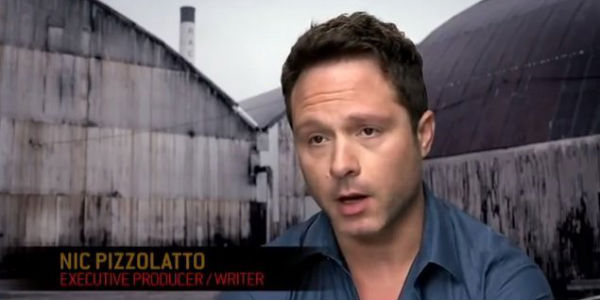
Sophomore seasons of TV shows don€™t necessarily come with the same stigma as follow-up LPs. Since the modern era of primetime TV begun with Oz, shows such as 24, The Shield, The Sopranos, The Wire, The West Wing and Six Feet Under have all impressed for multiple seasons, and in most of these cases, the first season isn€™t even considered as the best. But a new trend in how TV is able to tell a story has the potential to test this creator-audience relationship to the limit: the full reboot. Like FX€™s American Horror Story before them, 2014 saw two refreshing new shows that came with the announcement that each season would be a stand-alone story. In the case of another FX show, Fargo, this feels like a welcome approach as the first season was already a story-reboot of the film of the same name. By rebooting the story but setting it in the same world, creator Noah Hawley has the opportunity to keep hitting that €˜same, but different€™ button that seems to work so well. So why is then that when it comes to True Detective, the full reboot approach feels like more of a curse than a blessing? What were the elements that made the first season so untouchable, and what revelations regarding the second outing are working against Nic Pizzolatto striking oil twice? Here are ten reasons why the first season of True Detective can€™t be topped...

10. The Whole Is Greater Than The Sum Of Its Parts
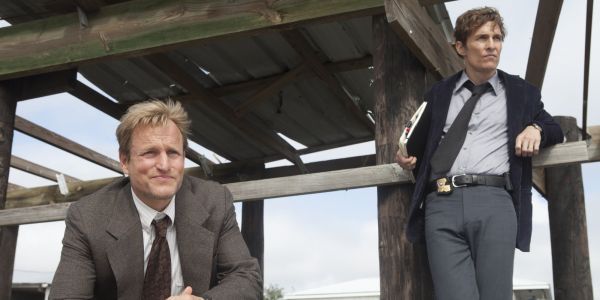
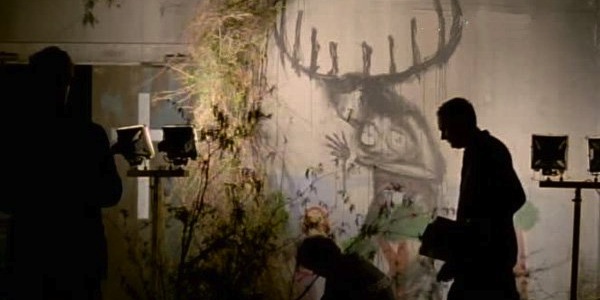
Examining True Detective piece-by-piece feels like a game of quickly diminishing returns. In the first instance, True Detective is a procedural following a grounded every-man and a deeply flawed genius as they investigate a series of brutal, religiously affiliated murders in the murky Louisiana bayou. The characters themselves take on the basic clichéd attributes of a womanising blue-collar officer with a chip on his shoulder (Hart) and ex-addict-turned-conspiracy-ridden-philosopher (Cohle). On top of that, women are treated mainly as victims €“ not exactly a valid example of a gender equality-focussed stance €“ and the villains are all meth-addicted bucktooth hillbillies or whiter-than-white politicians who breed corruption. And then there is the locale of Louisiana which has become a regular addition on to TV screens (True Blood, American Horror Story) but here is painted under the belief that the deep-fried South is inhabited purely by religious nutbags and child killers. As well as this, there is the fact that the murders have a strange Hannibal/Dexter-esque artistic quality and that they seem to be linked to a vast political conspiracy. Yet True Detective is utterly compelling and feels fresh in every beat, proof that it is the whole that defies the individual qualities that consists within. Writer Nic Pizzolatto and director Cary Fukunaga took the conventions of a pulp detective thriller and made it their own, following in the footsteps of other existentially-minded cop stories such as The Pledge and Zodiac to create layered, dense puzzle of a TV show. To incorporate established cliches and still be able to create an environment in which all of these elements can be successfully married is one thing; to do it again would require a minor miracle.

9. A Novel Approach

It is hardly surprising that True Detective would adopt narrative techniques more common to literature than with film or TV, since its creator started as an author. This novel approach can be seen predominately in how the show ties multiple story threads from different points in time through the bookending interview scenes but, most importantly, True Detective shows its colours proper with affective use of the unreliable narrator at the series' mid-point. Alarm bells probably started ringing in episode four when Cohle requests personal time in order to visit his sickly father, but then proceeds to infiltrate a gnarly gang of bikers (more on that later). In essence, this small fragment of a moment would go on to inform the most critical moment in the next episode - The Secret Fate Of All Life - and possibly the entire series. The sequence begins innocently enough as Cohle and Hart€™s interview is cut together in order to tell the story of how the shootout in the bayou occurred. As the disembodied voices of the true detectives continue over the footage, subtle clues begin to tell the audience that what is being said and what is happening are at odds with each other. It is here that True Detective finally hammers the point home that it does not matter what is happening but how it is happening. It is an important piece of story-telling that makes sense only in its current form, but manages to pay off dividends for the audience and the narrative as a whole. What this scene does going forward is the sense that these narrative-based tricks will be expected in season 2. Repeating any of the methods displayed in season 1 is out of the question, however, replicating the function of creating an unpredictable moment is a must if the same heights will be reached.

8. The McConaissance

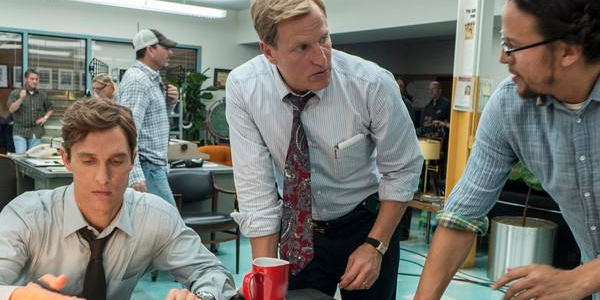
If there was one crucial element in getting an audience to sit down for another cop procedural, it would be the inclusion of a bonafide Hollywood star and, with True Detective€™s leading men, they arguably had two. With Harrelson and McConaughey€™s names on the contract, the prospect of Nic Pizzolatto€™s dream project became tantalising and was snapped up quickly by HBO. In Woody Harrelson, the show had an industry mainstay and someone who was well-known both to commercial and indie audiences. And with Marty Hart, Harrelson had the opportunity to play the straight man, the detective who would personify the opposite of the strange and dangerous world he would soon investigate. Harrelson, for intents and purposes, knocks it out of the park but, unfortunately, the combination of a monstrously well-written role, as well as perfect timing, gave his co-star the deserved push into the limelight. As Cohle, McConaughey played a cross between fighter and philosopher that rarely gets to take up television time. Unlike many 21st century protagonists, this is no immoral bad guy whose charm manages to win an audience over in the face of any deadly deeds. In fact, Rust Cohle is the opposite to all of the Walter Whites of the current TV landscape in that his demeanour often falls into pretention or callousness, making his ideology irrelevant to the parties he attempts to convince. What Cohle proves to be, however, is a character who is willing to put it all on the line for an opportunity at spiritual balance. Couple this with the fact that McConaughey was in the middle of a comeback that started in 2011 with Lincoln Lawyer, and True Detective becomes a current high point in what is now favourably discussed as the McConaissance.

7. Rust's Philosophy

In essence, the diametrically opposed Hart and Cohle represent both the grounded, troubled circumstances that an obsession with earthly pleasures can bring as well as the cracked spiritual torture that can come about due to a strict perseverance in locating a balance of truth and justice. But if it is Hart€™s nonchalant acceptance of the world and society put in front of him that grounds us in a relatable scenario, then it is Cohle€™s ability to open up every existential can of worms at his disposal that makes us an audience want to question this world with him. His no-holds-barred attitude, combined with his outside-the-box school of thought, makes for a complicated and militant protagonist. For one, consider how Cohle's declaration that "time is a flat circle" is engrained in the show's structure. Its willingness to travel between different points in the investigation prove how it is in those moments that Cohle's philosophy is allowed to breathe and take prominence. It is here that not only the character, but the entire show, can be defined.

6. A Showdown With The Abyss

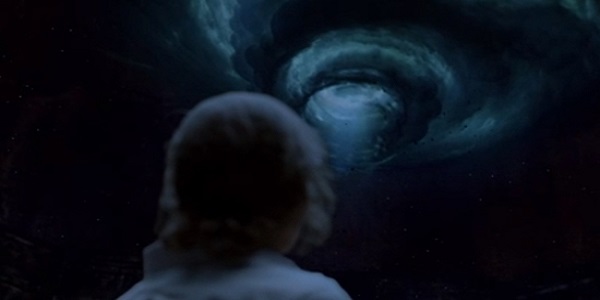
It is first through questioning is it learnt that Cohle was a once-prominent undercover Narco who quickly found the abyss and let himself get swallowed up in it in the form of amphetamine addiction. Cohle remarks back to intense visions which he says are no longer occurring, only for Cohle to be shown vacantly staring into nothing on more than one occasion. During a moment that brings Cohle and Hart closer together, Cohle admits that the visions have never gone away and that "the visions...most of the time I was convinced that I'd lost it. But there were other times, I thought I was main-lining the secret truth of the universe." It is in that confession that it is understood what kind of closure Cohle is looking for. He is a character who is haunted and, by that very definition, is looking for a way out of the curse. The show€™s climax then gives Cohle an objective that goes above and beyond any spiritual relief a traditional showdown would provide. He is not only looking to bring the murderer to justice, but is proving to himself that he has the ability to not only face the abyss, but is able to overcome it. It is through that visual representation of Cohle€™s true antagonist where an ending that both accepts the generic conventions of a thriller is achieved whilst also managing to make it both artistically interesting and thematically relevant to the larger story at hand. But, like the use of the unreliable narrator, it is a trick that has a one-time only use. It is telling to a degree that season 2 needs its own existential flourish (either visually or auditorily) to help it transcend the vanilla procedural it could be without it.

5. One Take Wonder

If it was the slow-burn paddle into an existential apocalypse that got you to episode 4, then it was the head-first barrelling into those uncharted waters that pushed you through the rest of the series. What starts off as another piece to the procedural storyline (the discovery that Ledoux works for the Iron Crusaders) rapidly becomes a source of intrigue. As Cohle lies his way into taking personal time, it is discovered that the next piece of the puzzle is not going to come easily as Cohle is forced to don his old skin and go undercover with his former gang. Two fantastic sequences laced with tension follow as Cohle first attempts to win back the trust of his former comrades, all who look like extras from the Sons Of Anarchy. The first reminds that Hart and Cohle are, essentially, two sides of the same mirror. As Hart struggles to find out what is happening to his friend behind closed doors, Cohle€™s blood pressure has already dropped and he has put on the mask of darkness that fits him so well. But it is once the bar has been left and the car pulls into the murky Louisiana projects that the sequence that puts all of the slow-burn into context is revealed. In the following ten minutes, the full extent of what Cohle is capable of is finally realised. In a single-take of exploding terror, Cohle enters a contest he knows he cannot win before slyly escaping with Ginger who has now become his prisoner. The scene is bloody, action-orientated and, above all else, is jarring in its juxtaposition to what has preceded it. By all accounts, this is a sequence that would be more at home as a mission in GTA than in the grim procedural that True Detective was thought of before the scene. And for that very reason, True Detective proved it had the ability to shock you by showing you that nothing was out of the question.

4. One Direction

What is fascinating the most from an artistic perspective is how two primary creatives (Nic Pizzolatto and Cary Fukunaga) managed to hold-up a level of consistency in their art when the general consensus (in writer€™s rooms) is the more the merrier. In comparison, the premier primetime shows of the last year or so €“ Mad Men, Breaking Bad, Sons Of Anarchy €“ have all struggled to maintain this level of constant greatness even with a room full of genius writers. So why has True Detective managed to succeed where others have failed? It would be unfair not to bring up the amount of produced content (compare True Detective€™s 8 episodes to the standard 10 €“ 24 episodes per any other show) however that it feels more likely that having one director gifted the production more opportunities in that it managed to shoot back-to-back. Why this is now a problem, however, is due to the announcement that half of that partnership €“ Fukunaga €“ is leaving the True Detective world and is being replaced by multiple directors. Talent notwithstanding, True Detective season one ripped through itself as an effortless haiku of twisted destruction, an affect that felt easy to a core group of creative minds who forced themselves to live and breath their project with no breaks. Bringing in other directors means not getting on board that rollercoaster and not reaping its possible rewards.

3. Accusations Of Plagiarism

€œWe became too self-aware. Nature created an aspect of nature separate of itself. We are creatures that should not exist by natural law.€ €“ Rust Cohle, True Detective €œWe know that nature has veered into the supernatural by fabricating a creature that cannot and should not exist by natural law.€ €“ Thomas Ligotti, The Conspiracy Against The Human Race €œ...programmed with total assurance that we are each somebody. When in fact each everybody is nobody.€ €“ Rust Cohle, True Detective €œ...everybody is nobody.€ - Thomas Ligotti, The Conspiracy Against The Human Race
Above are just two examples of where Rust Cohle€™s philosophy share similarities with Thomas Ligotti€™s The Conspiracy Against The Human Race. It makes for an interesting comparison but the accusation of plagiarism has long signalled the death knell to an author€™s credibility. On the author€™s side, he is forced to confront these accusations, explain himself and apologise for any damage that may have been caused. For the audience, however, with the authenticity of the work now in doubt, it leaves questions of whether the work is genuine which in turn leads to wondering if the artistic vision overall has become compromised. So, in a roundabout way, it doesn€™t matter if Nic Pizzolatto did plagiarise or not, the mere accusation can lead to a sour taste being left in the audience€™s collective mouth.

2. Everybody Loves It
As the year comes to a close, the end of year TV lists seem to point at True Detective as one of the best (if not the best) shows of 2014. It€™s not a surprise really as reviews at the time seemed to herald it as the TV event of the year. It€™s held a solid 97% Rotten Tomatoes score (almost 10 months since the last episode aired) and an equally solid 87 metacritic score. But since its grand reception, TV mainstays Mad Men, The Walking Dead, Sons Of Anarchy and Scandal (alongside newbie How To Get Away With Murder) have all but erased True Detective from the public consciousness. On top of that, the internet has not been kind to the news that Colin Farrell and Vince Vaughan are filling the shoes of McConaughey and Harrelson. An even bigger issue is that no one seems to even care that Rachel McAdams or Taylor Kitsch have joined up to season 2, let alone comment on it. This all points to the horrible notion the first season should have stayed a contained mini-series and avoided the anthology route. With all of the elements that made the first season so successful removed, the entire fate of the show lives and dies on whether lightening can strike twice. But that seems less and less likely when you consider WHY it was so universally loved...

1. Cult Ownership

A theory based in film studies indicates towards the idea that a text becomes a €˜cult€™ property by being claimed by its fans. This might be through quoting a particular film or tv show, or wearing mechandise or even, in the case of True Detective, becoming so immersed by the narrative that predictions to what was coming next were constantly discussed. Who is the Yellow King? Did Rust kill the girls? Was Audrey Hart one of the escaped victims? It was through these questions, and the persistent theories that materialised online in the run-up to the finale, that encapsulate what it means for an audience to €˜own€™ its show. The knock on effects of this mentality can be split into two different consequences. The first revolves around complaints about how the ending was unsatisfactory and how the shift in perspective during the final episode lessened the impact it had on the reveal to its audience. The truth of the matter is, any finale that stays grounded (i.e. does not include a supernatural twist) is going to follow the limited conventions of its cop procedural concept. On the other hand, this may leave many fans wondering why the finale of True Detective was too disappointing and may add this to the other evidence (ambivalence to casting news, accusations of plagia) that the second season could only be a let down. The real truth of it all, however, is that the success of the second season of True Detective (and any show for that matter) rests purely on the quality of the product. That€™s the only way that the first season of True Detective can be topped.

Contributor
Contributor

Screenwriter, musician and all-round troublemaker who, when not lifting weights or securing buildings poorly, is here writing about wrasslin' and other crazy things.