The Walking Dead: 10 Exciting Improvements We All Want To See Happen
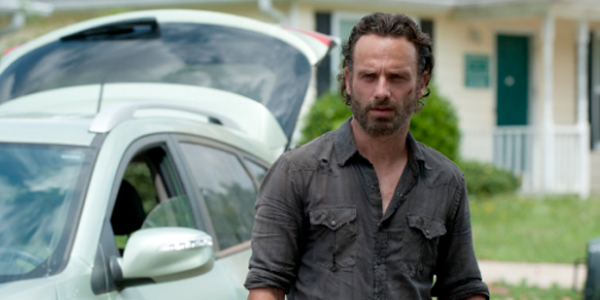 Let's take a minute to acknowledge two things: The Walking Dead is as popular as anything on television right now, and most of the time it isn't very good. Rest assured, however, that with Netflix viewing and DVRs this weekend's midseason finale will score another massive collection of viewers for the undead hit. Yes, we all love to see zombie brains get splattered on walls and floors and vehicles and people and whatever else, but it doesn't make for high theatre. It doesn't even make for good television, not in the way that other epic AMC properties like Mad Men and Breaking Bad do or did. But we're all tuning in every week anyway. Here are ten things we might be waiting to see as we do.
10. Scandal That Isn't Agonizing To Watch (Because Lori Isn't Around Anymore)
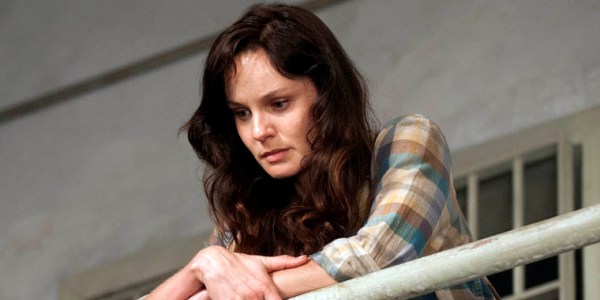 It's safe to say that the Shane/Lori/Rick era of The Walking Dead was unpleasant, but that had a lot more to do with Lori being an insufferable character that no one could sympathize with. The tension between Shane and Rick was as good as any interpersonal problems the show has produced, and nothing should be taken away from it. With so many faces in the prison and so many possible ways for them to interact now, why not try for a new scandal to liven things up. The king of zombie lore himself, George A. Romero, has said the show is nothing more than a soap opera, so why not indulge that side again? Let's have a few people make some bad decisions and have those decisions affect the community dynamic. Commit to it - don't make it a thing that fills in a B story for week or two - and see if it injects some life into a few cardboard characters.
9. Someone - Anyone - Doing More With Their Anger Than Brooding
 The Walking Dead is a show that loves brooding: any time anything happens that could warrant a good brooding, you could put your house on the fact that the opportunity will be grasped with both hands. The phrase "__________ broods" probably appears in stage direction more than anything else in a script. So here's a thought: why not let someone actually do something with all that negative energy? Don't have Tyrese brood for two episodes then shrug his anger off after a half-hearted scuffle with Rick; actually have him try to undermine the whole leadership operation and cause a stir. Don't leave Carl weaponless and petulant because Hershel ratted him out and his dad took away his gun; have him try to get it back with all the ill-advised planning of a teenager, and let that mistake be incredibly costly. Don't make Darryl give Bob a stern talking to when he endangers the group; have him leave the guy on the spot because that's the way life has to be in a world that doesn't afford second chances at survival. Real people are really complex. They do things out of anger that they wouldn't do normally - things that aren't always right and don't always make for the easiest narrative route available. Embrace that and watch it make for a better show.
8. Dissention In The Prison
 Semi-related to the last point is the idea of some dissension in the prison: it could be triggered by a character's anger, or by the choices someone made, or by anything else, but it should certainly be there. Think about your daily life: do you like everyone in your town? On your street, even? How about at work or school - or in your own house, for that matter? The answer to at least one of those is almost definitely a negative. So why should we believe that a collection of strangers would all get along because they're behind the same fence and some other group of strangers sits around a table and decides what's best for them? It's unrealistic. The perfect chance for some dissension among the prisoners was the Carol/Tyrese situation, but it was brushed under the rug literally the second Rick returned from his scavenging trip with Carol. It would be nice to see that come back in the second half of the season and lead to a split in the prison community, but that's no guarantee. But then, people getting the flu is apparently a lot more interesting.
7. A Rick That's Less Convenient For The Writers
 Rick is an interesting character, but not in the sense that he's actually interesting to watch on a weekly basis, because frankly, he's not. But fundamentally, on the level that he's a once-good man trying to understand what makes a good man in a pretty bad world, he's interesting. Unfortunately, the writers have turned him into a guy that simply suits their needs for a leading man on a season-by-season basis. Season 1, when they needed a token good guy, Rick was there. Season 2, when they needed a conflicted family man, Rick was there. Season 3, when they needed a guy tired of life and ready to play by his own rules, Rick was there. Season 4, when they needed a man trying to prove he'd learned from all of his mistakes, Rick is there. Let Rick be Rick. Write him subtly and let his struggles play out over the course of multiple seasons, not just between commercial breaks. Don't club viewers over the head with how hard he finds this new world, or try to change his whole personality over the course of a few episodes simply because that's the easiest way to set up a season. Such a decision would undoubtedly pay off in the long run.
6. The Payoff We Never Got With The Governor
 It's easy to get the appeal of The Governor to most folks: he wears an eye patch, he has a disconcerting air about him, and he's more than a little crazy. Given how he's written, David Morrissey actually does a solid job with the character and it was commendable for the show to keep him around instead of taking the easy way out by killing him off in the Season 3 finale. That said, viewers deserved far more than they got in that finale and they're rightfully still waiting for it. Having someone as menacing as The Governor show up with a few guys and a few peashooters before turning tail was as sad a climax as has ever been seen on television. There's hope now that he's back in charge of a group of survivors, but make no mistake people are still salivating for a proper "Governor raids the prison" episode.
5. Characters With Some Dimension
 You know what was amazing? How the video game edition of The Walking Dead left most people who played it near tears by the time it was over. It was a horribly heart-wrenching, agonizing experience that was about as long as half a season of the show and a hundred times more engaging. Why? Because the characters mattered. Sure, you could engage them on a level that you never could engage a television character, that's just the nature of a game - especially one founded almost totally on choice. But they also mattered because they had depth. Lee was conflicted and wasn't really a good person before civilization ended, but he wasn't a bad person once things went pear-shaped. Kenny, a "normal" dude in a past life, became much more of a grey area when things went south and he was left with a family to care for and no obvious answers on how to do it. And then there was Clementine, a child who had to learn how to live in this new world and had only a convicted criminal to show her how. The characters had depth, there was a dimension to them that simply doesn't exist on the show. It's easier to create that when your audience literally controls every step and every choice, but good writing is good writing and a layered character is a layered character no matter the medium. The show needs to give viewers more than characters with a single defining characteristic each, and it can look under its very own licensing umbrella to see how to do it.
4. Commentary Through The Story
Your zombie story needs to say something - it can't just be shovels hitting partially decomposed heads and bullets flying all over the place. Yes, it can largely be that, but it can't only be that. The zombie genre is unique in its ability to comment on the world we live in: every good piece of zombie fiction has an underlying premise that gnaws at the individual consuming it (pun intended). Whether it's a critique of consumer culture, a commentary on social or economic divides, or an examination of what it means to be human, a commentary exists in any zombie piece worth its salt. The Walking Dead doesn't really comment on anything. Sometimes it tries to, but that usually devolves into Rick eye humping the camera or Darryl saying something cool and riding a motorcycle. More often than not though it focuses on annoying people talking about nonsense, their dialogue broken up by a horde of zombies that need a creative and hurried dispatching of. Taking a little time to say something - about anything - would do the show a world of good. Everyone loves the splatter, but do the genre some justice in the process.
3. An Indication That The World Doesn't Begin And End in Georgia

2. Standalone Stories
 It's probably not a secret that the Frank Darabont era was something of a rocky one for The Walking Dead. Actually, any show that changes showrunners more often than those showrunners change underwear earns a reputation for a little rockiness. But one idea that Darabont had trumped anything that the program ever did. He wanted to have occasional standalone stories in seasons, stories where the viewer would see random people they'd never been introduced to and follow them through the world for a bit. His original idea was to examine the dead man in the tank with Rick in the pilot, but there were rumors of others. Since then AMC has sort of come around, offering a similar approach to their TWD webisodes. Those look as good as anything the show itself has done. Seeing people aside from the usual suspects and how they struggle in the apocalypse would be refreshing and it might also give the viewer a new appreciation for the characters they know. It's hard to fully comprehend what's shown with no reference point to the rest of the world, having the occasional standalone episode like Darabont envisioned might help do that. Plus it's just an outright cool idea.
1. A Relevant Death (That People Are Actually Upset By)
 This might be the most important one. Shane was a decent character and Jon Bernthal did a solid job portraying him, but by the time he was killed no one was pining to keep him around. The love triangle stuff was going down like sour milk on a weekly basis and it had to be stopped. The night Lori was killed off you could almost hear the collective cheer of humanity, given how reviled she was. When Andrea got it there was a similar elation. People weren't as happy to see Dale go, but the anti-climatic way it happened didn't do much to drive it home. Carol's gone, but she's not dead (that we know of) and not one person in the world was effected by the loss of her daughter a couple of seasons ago - a disaster, considering that was supposed to be the emotional thrust of the season. Basically everyone else who has been killed off has been killed off unceremoniously or in a manner that's been totally forgettable. With so many people getting eaten by zombies, it's nearly impossible to keep track of who's ending up dead and when it's happening. That's why the red herrings and fakeouts need to stop. Someone needs to get sick or get in trouble and not get out. The show needs to stop finding excuses to save people because their names are in the opening credits and start creating tough situations for their most important characters. Only Rick and Carl really need to stick around in any given episode, and even that much might be debatable. A show like Game of Thrones is so popular and successful because of its realistic approach to conflict and death, and it, too, is based on a prior literary property. Thus the blueprint is clearly available to The Walking Dead. Don't build up to it all season; don't make it gratuitous; don't let it be someone who people didn't know or care about anyway. Take someone away swiftly and brutally and show how it effects the people who are left behind. That's something every viewer would like to see. How else do you think The Walking Dead could be improved? Share your own thoughts below.