10 MORE Doctor Who Episodes You Didn't Know Were Connected
The subtle touches that provide links between episodes of Doctor Who, both old and new!

Doctor Who loves making callbacks to its own history. In the early days of NuWho, writers like Russell T Davies would reference episodes from the show's original run. This was done to provide a bit of fan service, and also to prove RTD's credentials as a massive nerd.
NuWho has now been around for so long that there are references to early modern episodes in some of the newer ones. 2005 was almost two decades ago, just to make everyone feel old.
Whether it's modern to classic, classic to classic, or modern to modern, some connections between episodes are obvious, while some take a little bit of work to figure out. Our original list on this subject (video version below) already pointed out ten of these obscure links, but there are loads more scattered throughout Doctor Who history.
Whether it's a character visiting a location that was mentioned in passing years prior, old props reappearing, or ancient plotlines getting dragged back up, these ten pairs of episodes all have something in common.
These connections can be big, small, or absolutely minute, but they're all bags of fun to notice regardless!
10. The Doctor Dances & Twice Upon A Time

The planet Villengard is located at the centre of the Doctor Who universe, and was home to massive weapons factories during the Time War. This made the planet a key battleground in the fight between the Daleks and the Time Lords.
There's a Doctor Who comic where the War Doctor goes there and turns all those weapons factories into a banana grove, because the comics are just as weird (if not weirder) than the show itself.
The Twelfth Doctor visits Villengard in his final episode, Twice Upon a Time, alongside the First Doctor, the glass avatar of Bill Potts, and Captain Archibald Hamish Lethbridge-Stewart.
Not only was this the last outing for Peter Capaldi as the Doctor, but it was also the final episode written by departing showrunner Steven Moffat. What you might not have realised is that Moffat's inclusion of Villengard made for a neat little callback to the very first Doctor Who story he wrote (The Curse of Fatal Death notwithstanding).
In Series 1's The Doctor Dances, the Ninth Doctor comments that Captain Jack's sonic blaster is from the weapon factories of Villengard in the 51st century.

Twelve real-world years later, and Moffat capped off his Doctor Who tenure by visiting Villengard with the Twelfth Doctor, creating a nice little bookend for his time on the show.
9. The Dalek Invasion Of Earth & The Stolen Earth

Many connections between Doctor Who episodes are extremely subtle. And other times, the Doctor just says them out loud.
Series 4's The Stolen Earth features - if you can believe it - someone stealing the Earth. This is the work of the Daleks, who are using our planet as one of the 27 worlds needed to power their reality bomb.
When the Doctor realises what's going on, he says "Someone tried to move the Earth once before". It's a bit of a throwaway line, so it's very easy to miss what the Doctor is actually referencing here.
In 1964's The Dalek Invasion of Earth, the Daleks... invade the Earth. Part of their plan is to replace the planet's core with a device that will allow them to pilot it around the universe. Thankfully, the First Doctor and his friends were on hand to stop the Daleks from turning Earth into an intergalactic minibus.
Ten regenerations later, the Doctor used his knowledge of this encounter to deduce that his greatest enemies were up to their old planet-moving ways once again.
8. Mummy On The Orient Express & Hell Bent
The excellent Mummy on the Orient Express contains a very obvious connection to another Doctor Who episode, when the Twelfth Doctor asks the Foretold "Are you my Mummy?"
Do you get it? Cos it looks like a mummy, and that's what the Empty Child says. Genius.
Elsewhere, there's this far less obvious connection with Series 9's Hell Bent.
While onboard the Orient Express, the Doctor and Clara are entertained by an old-timey style jazz singer. In real life, this is the Grammy-winning Louisa Rose Allen, also known by her stage name Foxes.
The song she's singing is a classical version of Queen's hit Don't Stop Me Now, a tune that the Doctor and Clara would both hear again at a later date.
In Hell Bent, the pair is reunited one last time before Clara's final goodbye. These scenes - which take place in a diner - are spread throughout the episode, but guess what song can be heard playing over the speakers when the Doctor first walks in? That's right - the Orient Express version of Don't Stop Me Now.
It's one of those details that's very easy to miss in the moment, but is super obvious upon a rewatch.
The question is, was it just a popular song on the jukebox? Or a memory of happier times?
7. The Mind Of Evil & Last Of The Time Lords

Classic Who's eighth season gave the show its deadliest (and campest) villain yet: the Master. Initially played by Roger Delgado, this renegade Time Lord first appeared in Terror of the Autons, where he famously killed someone with a chair.
In the next serial, The Mind of Evil, he's out to blow up a peace conference on Earth, to plunge the planet into a catastrophic war.
What a dick.
The Master plans to do this by using a special machine designed to play on people's greatest fears. This backfires when the device seems to gain a mind of its own and starts taunting its creator.
This leads to a great scene where a towering image of the Third Doctor is displayed to the Master, causing him to recoil in horror. NuWho fans might think they've seen something like this before - and they'd be right.
During the slightly wonky ending to Series 3's Last of the Time Lords, the Tenth Doctor is restored to full power by the Master's own psychic network, and he too appears to his nemesis as a powerful vision.
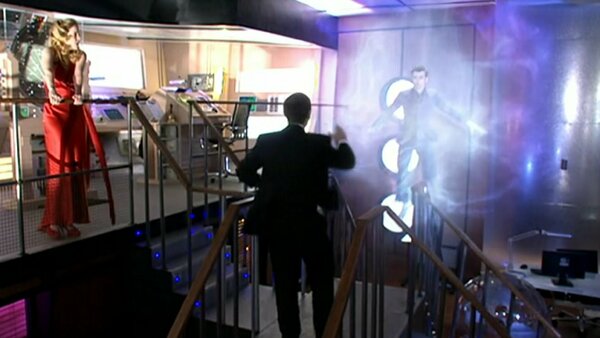
It's not clear if this was an intentional callback to The Mind of Evil or not, but they do look extremely similar.
And if it was intentional, this is one of the nerdiest connections in the show. So bravo Russell!
6. The Runaway Bride & Forest Of The Dead

While most people would be thrilled to see David Tennant on their wedding day, Donna Noble was not.
Audiences first met Catherine Tate's fiery temp worker in 2006. After Donna mysteriously appears at the end of Doomsday, The Runaway Bride finds the Tenth Doctor discovering that there's a lot more to her fiancée than first meets the eye.
Being in cahoots with a giant alien spider is probably decent grounds to call the wedding off.
Though Donna never got to fully walk down the aisle in this episode, she did at least get to wear her beautiful wedding dress. She would later get the opportunity to wear it again - although not in the way you're probably thinking.
In Forest of the Dead, once Donna is absorbed into the Library's computer, she lives out a perfect simulated life. This involves marrying Lee, the man of her dreams, in the very same wedding dress she wore in The Runaway Bride.
And by "very same wedding dress" we really do mean the very same. It's the exact same one, as confirmed by David Tennant on the episode's web commentary.
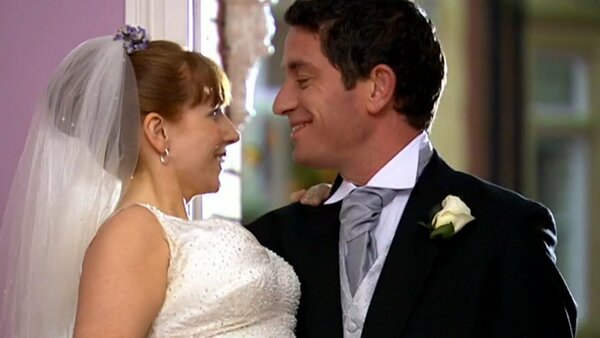
Clearly though, that dress was cursed, which is possibly why Donna ditched it when she got married for real in The End of Time.
5. Logopolis & The Doctor Falls

The Fourth Doctor serial Logopolis is remembered for many reasons. Firstly, it's really good, and secondly, it was the final regular appearance of Tom Baker as the curly-haired, scarf-wearing, jelly baby-offering hero.
Baker's Doctor meets a sticky end while battling the Master atop a large radio telescope. He ends up falling a long way to his doom, regenerating into Peter Davison with the help of a weird zombie-looking dude that was thankfully never used again.
It's an iconic regeneration for an iconic Doctor, as well as the final bow for one of the show's most beloved stars. That might be why it was subtly alluded to at the end of another Doctor's story 36 years later.
In The Doctor Falls (Peter Capaldi's penultimate appearance as the Twelfth Doctor), two versions of the Master taunt a beaten-up Doctor about his past deaths.
Missy leans in and says "I know you've fallen", a direct nod to the time she was present when her arch-rival plummeted to his death.
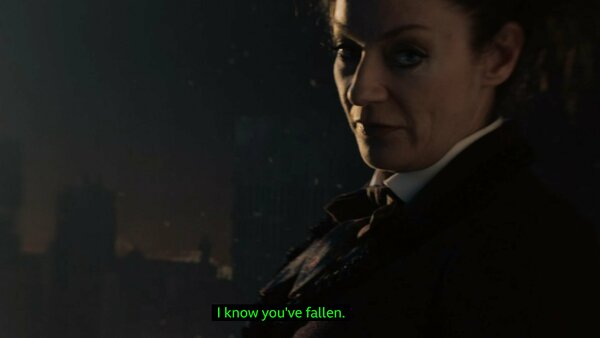
The Master hasn't witnessed many of the Doctor's deaths, so this was a fun way to acknowledge one of the only times it's happened.
4. The Romans & The Fires Of Pompeii

If time travel were real, first of all, everyone would be screwed. Second of all, a lot of people would probably choose to go back to Ancient Rome.
The Roman Empire at its peak continues to fascinate, if the thousands of books, movies, and TV shows set there are anything to go by. Doctor Who is no stranger to this trend, as the Doctor has visited this time period before.
The Tenth Doctor tried to visit there in Series 4's The Fires of Pompeii, but ended up way off course. However, believing she's in Ancient Rome, Donna asks her travel buddy if he's visited there before, only for the Doctor to respond "That fire had nothing to do with me... well, a little bit," alluding to the Great Fire of Rome.
All the way back in 1965's The Romans, the First Doctor inspired said fire by accidentally burning a map of Rome, which gives Emperor Nero the idea to do it for real.
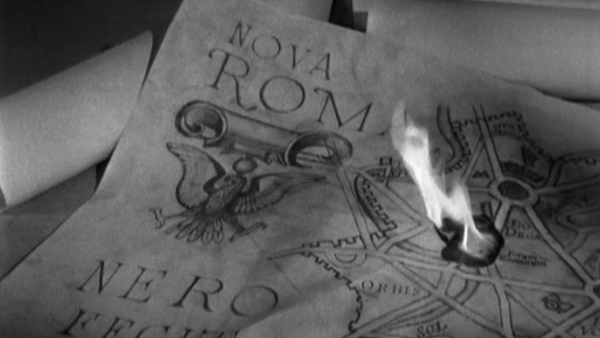
In short, the Doctor was the one responsible for the Great Fire of Rome in 64 AD.
Don't let your history teacher tell you otherwise!
3. The Ark In Space & Kill The Moon

In one form or another, the yo-yo has been entertaining human beings since 500 BC. Its insane longevity might explain why so many different versions of the Doctor have carried one over the years.
The Fourth Doctor frequently used one to keep himself happy during his downtime. It wasn't all fun and games though, as this yo-yo had some practical applications that came in handy on certain adventures.
In the Season 12 story The Ark in Space, the Doctor uses a yo-yo to test the gravity immediately after landing on the titular space station. A good idea, seeing as gravity is kind of integral to the yo-yo's design!
This was such a clever move that the Twelfth Doctor repeated it nearly 40 years later. In Kill the Moon (the one we don't talk about), the Doctor uses a similar trick to study the odd gravitational changes of the Moon.
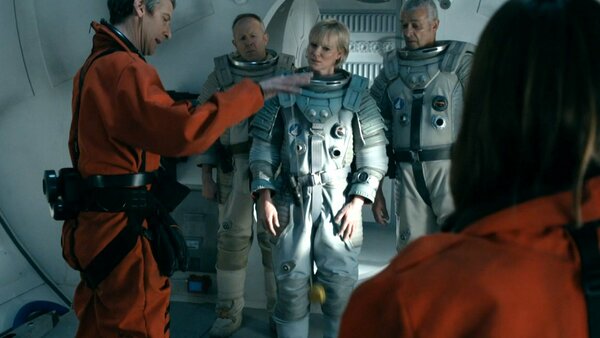
Sadly though, the yo-yo didn't tell him the Moon was an egg. Everyone had to find that out the hard way.
2. The Moonbase & Nightmare In Silver

Written by the very talented and utterly mad Neil Gaiman, Nightmare in Silver whisks the Eleventh Doctor and Clara off to a theme park in spaaaaaaace.
There, they encounter the most horrifying force in the universe - overpriced snacks! Oh, and some Cybermen.
The metal nasties want to capture the Doctor and force him to become their leader. They half-achieve this, creating two personalities in one body - one is the Doctor, the other is the evil Mr. Clever.
The Doctor is initially able to overcome Mr. Clever by using gold, which Cybermen are weak to. This bit of lore was first established in Season 12's Revenge of the Cybermen, but it's not the only weird Achilles heel the Cybermen have.
Nightmare in Silver also mentions that Cybers can be stopped using cleaning fluid, which you might not know connects all the way back to the 1967 serial The Moonbase. Here, companion Polly concocts a "Polly Cocktail", a chemical mixture she uses to break down the Cybermen's plastic components.
She gets this idea after noting how a cleaning fluid like nail varnish remover is effective against plastic, a detail the Eleventh Doctor recalls all those years later.
1. The Doctor’s Daughter & Asylum Of The Daleks

You all remember Jenny, right? The Doctor's "daughter" who was created as a clone of him on Messaline? The one who died and then came back to life? The one who's actually the Fifth Doctor's daughter and the Tenth Doctor's wife?
When she takes off in her spaceship at the end of The Doctor's Daughter, how many of you were paying attention to the chair she was sitting in?
More of you should have been, because that same piece of set design would appear in a rather curious place a few series later.
In Asylum of the Daleks, the Doctor comes across Oswin, the surviving crew member of a ship that crash-landed in the Dalek asylum. If you look closely at the chair Oswin is sat in throughout the episode, it appears to be the exact same one from Jenny's shuttle.
Before the mystery of Clara was solved in The Name of the Doctor, this connection sparked all kinds of wild theories that Jenny and Clara were linked. Heck, maybe they are linked - could Jenny be a Clara splinter that just happened to look different from the rest?
As head canon, it sort of works, even if the reality is just that the BBC has a small number of chair props.
Watch Next
Doctor Who Quiz: How Well Do You Know Matt Smith's 11th Doctor?
