Cyclical is the term often used to describe the business of pro wrestling, mainly as a way to excuse the lulls and disinterest in the product to its detractors. The industry has experienced several distinct boom periods, as theyre called, when the popularity of the sport reaches a peak. Rock n Wrestling/Hulkamania in the 80s was the beginning of the surge, and then after a significant downturn things picked back up in a major way with the late 90s Attitude Era. It isnt always easy to remain a loyal fan, and its a safe bet that most adults have wavered in their support and interest at least once, tuning out entirely, only to come back when something or someone grabs our attention. Those of us who are longtime fans sometimes feel as if were an abused spouse. The pastime that we love and have given so much of our leisure time to disappoints us time after time, and just when we grow optimistic that this time things will be different, we get smacked upside the head yet again. Its maddeningly frustrating, yet we hang in there and just hope to ride it out. We can all pinpoint years and eras where we loved being a fan. At the height of the Attitude Era, wrestling had captured the zeitgeist and became cool again, largely thanks to stars like Steve Austin, The Rock and The nWo. The product was exciting, cant-miss TV and every week was a rollercoaster. But we can also recall the times where we felt the exact opposite. Where keeping up with it felt more like a chore than something we enjoyed. The performers lacked the same it factor, the creative direction was uninspiring, the matches were paint-by-numbers affairs, whatever the reason, wrestling just wasnt doing it for us. Those dark and dreary days are the subject of this article. Were going to be taking a look at the 10 worst years to be a fan.
10. 2013
If you were to assess everything WWE did right in 2013, you would be left with a very short list that would likely only consist of one entry: The Shield. Virtually everything else the company did during the year left much to be desired. There was the horribly mishandled Daniel Bryan angle, with the fans forcing WWEs hand to elevate him on the card when it seemed they werent interested in doing so. The Randy Orton title run post-SummerSlam cant objectively be viewed as anything other than a disaster, with him being castrated by HHH and Stephanie along the way. WrestleMania 29 was the usual spectacle, but with an uninspiring main event of Rock/Cena II, as well as a lackluster streak match between Undertaker and CM Punk, HHH going over Brock in another WTF booking decision, and Alberto Del Rio vs. Jack Swagger in a battle of two stars with zero heat, the card itself was very lackluster. When the calendar turned to 2014, fans were feeling frustrated with the direction of the company and there was very real resentment and complacency setting in. Main events featuring the likes of Orton vs. Big Show werent exactly setting the world on fire, and interest in the product was floundering.
9. 1994
The biggest piece of news to come out of wrestling in the early 90s was the U.S. federal government's indictment of Vince McMahon for steroid distribution. A case that his daughter Stephanie famously compared to the 9/11 terrorist attacks, Vince was eventually cleared of all charges. But at the time, WWE was preparing for the boss get locked up, and had picked Jerry Jarrett to run the company in his absence. One cant help but shutter at the thought of WWE World Champion Double-J Jeff Jarrett. Although internally the company was going through turmoil, there were a few bright spots scattered throughout. WrestleMania X is fondly remembered, giving us a great Bret Hart vs. Owen Hart bout as well as the legendary Shawn Michaels/Razor Ramon ladder match. But there was a whole lot of bad to get past to find them. Lex Lugers run was a spectacular failure, Randy Savage was spinning his wheels in a greatly reduced role, and Yokozuna, while playing his character well, was the drizzling sh*ts in the ring. He defeated Undertaker in a casket match that saw Taker die and rise to the heavens, and when he returned he feuded with The Underfaker. Over in WCW, the year started off pretty well with Flair, Vader, Sting and Rick Rude on top, and the Nasty Boys, Cactus Jack and others were killing themselves in the tag division, but this was the year the Hulkster would arrive and grab the company by the throat with his creative control-holding hands. He came right in and beat Flair for the title, retiring him for one of 17 times, What was meant to be a shot in the arm for WCW instead led to more of the same old Hogan formula and a death of creativity. It was a rough year all around.
8. 2011
This particular year was quite interesting for WWE because, while it sparked one of the most captivating angles the company had done in some time, propelling a star to the level of superstar, the aftermath was horribly mismanaged and deflated most of the excitement. When CM Punk dropped his infamous pipe bomb worked shoot promo and kicked off WWEs version of The Summer of Punk, many lapsed fans once again had their eyes on the product. The Voice of the Voiceless spoke to many of the frustrations that fans felt as well, and Punk became the figurehead of a movement that rejected the status quo. His title win at Money In The Bank was a memorable occasion and one of the biggest moments wrestling had given us in a while. What should have been the kickstart to a creative renaissance was instead a stalled out ride down the same worn path. Punks subsequent loss to Triple H and the involvement of Kevin Nash did more to reinforce the issues addressed in the pipe bomb and took the focus off the hottest act in the company, for seemingly no discernible reason other than Hunters ego. 2011 also saw the unfortunate retirement of Edge due to injury complications, the abominable Michael Cole/Jerry Lawler feud (and announcing) and a WrestleMania main event featuring The Miz. Despite the good things done that year, all the above definitely left 2011 as a net negative.
7. 2010
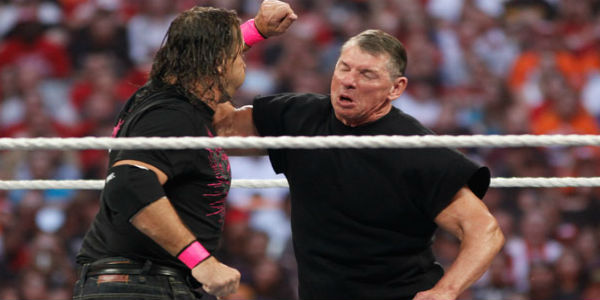
Ladies and gentlemenyour WWE and World Heavyweight Champions: The Miz and Jack Swagger. The fact that that statement is totally incomprehensible in todays WWE says a lot about where the company was in 2010. Nowdays one guy is barely on TV, while the other is a glorified jobber with an over catchphrase and no direction. Its not a knock on the talent of either performer, just an indictment on the state WWE was in to have those two featured so heavily. 2010 also saw the departure of two of the biggest stars in Chris Jericho and Batista. Although both would return to action, their absence from the full-time roster was a noticeable negative. Not as negative as the decision to turn Michael Cole heel, though. That was just torture. The Nexus began as a red hot angle that instantly elevated the members into name players but quickly fizzled out due to the powers that bes inability to have them go over the more established stars. John Cena basically single-handedly decimated them and destroyed their credibility, and four years later only one member of the group (Barrett) is in a comparable position to where he was previously. Bret Hart vs. Vince McMahon was a match that sounded outstanding in theory, but in reality was an ugly, sad affair, watching the Excellence of Execution hobble around the ring a shell of his former self. In fact, thats an apt metaphor for the entire year, as the once exciting WWE limped along, going through the motions in an attempt to recreate some of that old magic that, at least for 2010, continued to allude them.
6. 1991
In the midst of the first Gulf War, Vince McMahon decided to rip his stories from the headlines and turned American hero and real-life G.I. Joe action figure Sgt. Slaughter into an Iraqi sympathizer and turncoat. The angle was a little too close to home for many fans, especially those who had loved ones serving in our armed forces. Even in the (still somewhat) kayfabe years of 1991, we recognized this as the exploitation that it was. His feud with Americas avatar, Hulk Hogan, failed to light the wrestling world on fire and WrestleMania VII was forced to change venues due to poor ticket sales. This was also the birth of the McMahon steroid controversy, when the WWE figurehead was accused of distributing steroids to his performers and indicted by the federal government. Hogans appearance on Arsenio Hall was particularly embarrassing, when his admittance that he had taken steroids contradicted his earlier public statements. This year also saw the first departure of The Ultimate Warrior from WWE. After a dispute over compensation, McMahon brought Warrior back for SummerSlam only to fire him immediately afterward. This was a huge loss as the man from Parts Unknown was still one of the biggest stars in the industry. 91 had some strong midcard action from the likes of Bret Hart, Mr. Perfect, etc. but it wasnt enough to make up for the stink at the top of the card and the black cloud of the federal case.
5. 2009
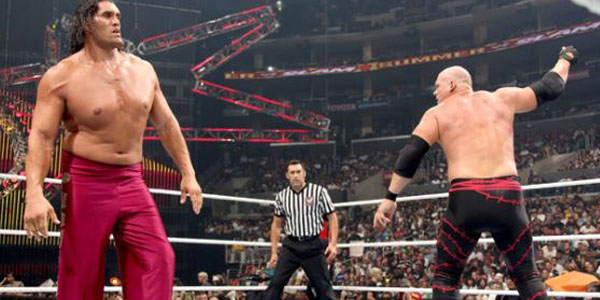
The year of the Raw guest hosts. What a dreary time for sports entertainment. While some of them may have been entertaining (Bob Barker springs to mind), most were abysmal and it was obvious they had very little knowledge of the show they were appearing on. Casual fans may have found the novelty amusing, but hardcore fans were turned off in droves. While WrestleMania XXV gave us the legendary Undertaker/Shawn Michaels match, it also gave us another Triple H battle with Randy Orton, as well as Orton vs. Cena Vol. 137, as if we needed more of those two. By 2009, DX had really worn out their welcome and instead of being the edgy, anti-authority figures the group was founded as they just seemed like middle-aged men pretending to be teenagers. If you were watching in 2009 and werent a fan of Hornswoggle, too d*mn bad, because dude was everywhere. He served as DXs mascot and feuded with Chavo Guerrero. This year WWE gave us the worst of their sophomoric humor, and the Kane-Khali feud, while not meant to be a part of that humor, was particularly laughable. Just an all-around rotten year.
4. 1990
Fresh off the heels of a wildly successful 1989 with the Flair-Steamboat and Flair-Funk feuds, WCW was facing a difficult transitional period the following year. Head honcho Jim Herd, one of the most unanimously despised figures in the history of the business, decided what WCW needed was a fresh face at the head of the booking table, so be brought in Ole Anderson, a man whose face is about as fresh as an Easter Island statue. The founding member of the Four Horsemans antiquated mentality was too far behind the times to have any positive effect on the product. Capital Combat 90 gave us the celebrity wrestling cameo to end all celebrity wrestling cameos, as ROBOCOP made an appearance to save Sting. Not the actor playing RoboCop, but the actual half-man/half-robot cyborg crimefighter. For a form of entertainment that depends on the suspension of disbelief, this was pushing it a bit too far. 1990 also saw the notoriously horrendous Ric Flair vs. Junkyard Dog match, which proved that, while Flair may be able to carry a broomstick to a decent match, JYD was a lesser worker than a broomstick on this particular night because the match was the sh*ts. The fall birthed one of the most ridiculous angles ever conceivedThe Black Scorpion. The entire storyline was that a man from Stings past was returning to torment him (and it was vaguely implied it could be The Ultimate Warrior), and after some shenanigans involving magic tricks and performers unwilling to assume the role, the Scorpion was revealed to beRic Flair. Not even the WWEs Warrior/Hogan feud could undo the damage done in WCW.
3. 1995
1995 was a year of horrible gimmicks. THE YETAAAAAY unleashed his butthump of death on Hulk Hogan, Phantastio and Mantaur were terrorizing WWE rings and the biggest star the business would ever see was still toiling around aimlessly as The Ringmaster. Vinces company was right in the middle of the transition from Hulkamania to the Attitude Era, and men like Bret Hart and Shawn Michaels were there to bridge the gap. Unfortunately, despite being great workers, neither man drew all that well at the top, nor did Diesel, who dominated the title scene for much of that year. Mabel, of all people, walked away from King of the Ring as the winner of that years tournament, because size, and was facing Diesel in main events for the championship. Bret Hart was feuding with an evil dentist, and lets not forget the main event of WrestleMania Xi which featured Bam Bam Bigelow, a man who had never held such a high profile position in North America facing off against NFL player Lawrence Taylor. WCW was turning out more of the same Hogan-centric nonsense, with he and his cohorts engaged in a war with The Dungeon of Doom. That years Starrcade also saw a battle between the American stars of World Championship Wrestling and their Japanese peers, which drew zero interest from the U.S. audience.
2. 1993
WWE was still reeling from the steroid controversy and business was not doing well at all. House shows were being ran in smaller markets in front of much lesser crowds than the company was accustomed to. This was the year of the failed Lex Luger push, as attempts to make him the next Hulk Hogan were bombing, and Bret Hart and Yokozuna were at the top of the card. Yoko, while a formidable big man, wasnt going to put on any classic matches, so having him carry the strap was cumbersome for fans of exciting in-ring action. But never fear, Hulk Hogan would return to snatch the spotlight once again at that years WrestleMania, to massivemeh. Over in WCW, the removal of Bill Watts saw the title move from Ron Simmons to Vader, which gave humanity the gift of The White Castle of Fear. If youve not seen this segment, stop everything youre doing right now and watch it. If youre at work and dont have internet access, quit your job immediately and get to a computer. Its the Breaking Bad finale of wrestling vignettes. The match that resulted from it was awesome, but the promos were so terrible that it couldnt be redeemed. So of course WCW gave us ANOTHER mini-movie, this time with Sting and his partner Davey Boy Smith playing volleyball on the beach when Sid and Vader show up and distract the heroes long enough for an evil little person named Cheatum to sneak a bomb onto Stings boat and blow it to smithereens. Take all my money now. 1993 was also known as the year of The Shockmaster, a debut so infamous I need not recap it here, and the scissor brawl between Arn Anderson and Sid Vicious that cost Sid his job and nearly his life. And did I mention that PAUL F*CKING ROMA joined the Four Horsmen?
1. 2007
As youve seen from this list, there have been some pretty tough years for us wrestling fans. From an abundance of characters that failed to connect, horrible booking and uninspired creativity to more of the same old retread ideas and too-familiar faces at the top. Those things are no fun and lead to some bland periods of little enjoyment, but we can get through them. In 2007 however, the wrestling world was the center of a tragedy the likes of which the industry had never seen. When beloved fan favorite Chris Benoit murdered his wife and son before committing suicide, the entire business and its fans were sent reeling. Shock set in as those who knew Benoit best were in disbelief that their friend could be capable of such a heinous act. Fans who viewed The Crippler as everything pure about pro wrestling, someone who succeeded due to pure in-ring talent alone, a rare case where the steak was more important than the sizzle, were devastated. It was a hard pill to swallow. The media firestorm that surrounded the case all pointed the accusatory finger at the seedy world of wrestling, where the performers abuse drugs rampantly and torture their own bodies for our entertainment. In the wake of these accusations, washed up ex-wrestlers like Marc Mero crawled out of the woodwork to condemn the sport which made him a good living, while current stars like John Cena and Chris Jericho articulately defended the business on the talking head shows. For many of us, it was an extremely hard year to be a fan, and the toll the double-murder/suicide took on wrestling is still being felt. Many of the changes, such as (allegedly) more stringent drug testing and a focus on eliminating concussions and head trauma are big positives. But the public perception of the industry that has provided us fans with so many hours of entertainment was forever tainted, tarnished by one sick mans act of rage. And no amount of classic 5-star matches can ever erase the damage that was done.
Brad Hamilton is a writer, musician and marketer/social media manager from Atlanta, Georgia. He's an undefeated freestyle rap battle champion, spends too little time being productive and defines himself as the literary version of Brock Lesnar.