10 Attempted WWE Repackages That Failed Miserably
Oh Chavo...
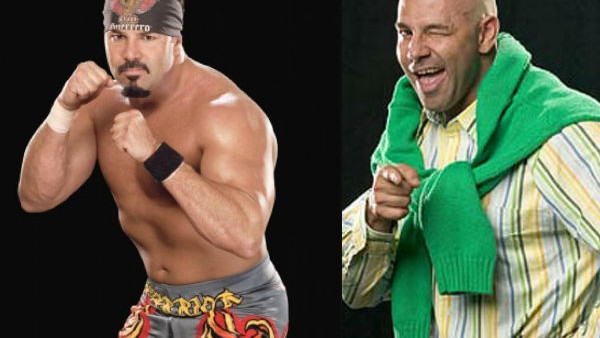
Repackages are often a necessity in professional wrestling. Acts become stale, gimmicks lose their steam and wrestlers fall in popularity: it happens all the time, and whether through poor booking or natural stagnation, it often calls the creative team into action. WWE aren’t always quick to make such decisions, but a repackage can either make or break a pro-wrestler’s career, and history is strewn with examples of both.
Kane became one of wrestling’s most notable monsters upon transitioning from Isaac Yankem DDS and Fake Diesel, and becoming JBL transformed Bradshaw from tag team also-ran to WWE Champion. Such repackages have seen WWE strike gold and create marketable main events out of previously underwhelming wrestlers, but it doesn’t always go so well.
For every Kane or JBL, there’s an Adam Rose or “Ringmaster” Steve Austin (whose “Stone Cold” repackaging might be the most successful of all-time, ironically). There are countless wrestlers who fell from grace after having their names, gimmicks and characters changed by WWE’s writers, and repackaging isn’t always the shot of adrenaline it’s purported to be.
Featuring fallen main eventers, career midcarders and everything in-between, here are 10 attempted WWE repackages that failed miserably.
10. Owen Hart To The Blue Blazer

Owen Hart is a future WWE Hall of Famer (hopefully), and one of the most highly-regarded pure wrestling talents in the history of the business. His legacy reached a tragic conclusion, and while he was never WWE World Champion, Hart enjoyed a highly-successful run through the company’s upper-midcard and will forever be remembered among the all-time greats.
Sadly, WWE saw fit to mess with this by putting a mask on Hart and having him become The Blue Blazer in 1998, which was a gimmick he'd used in the early 90s. While the repackaging was reportedly something Owen wanted to do, it was a horrible misuse of one of the company’s best wrestlers. A garish superhero pastiche, the Blazer was incredibly self-righteous and played-up the claim that he wasn’t Owen Hart despite overwhelming evidence to the contrary.
The Blue Blazer was affronted by the Attitude Era’s edgy, risqué shift in programming and would regularly rage against the company’s creative direction. The character took a comical turn when Blazer connected with Jeff Jarrett, and Hart was never as notable while wrestling as the Blue Blazer as he was when working under his own name.
9. Cody Rhodes To Stardust

Cody Rhodes performed the Stardust gimmick with such zest and vigour that nobody could’ve known just how miserable he’d become behind the scenes. Such commitment speaks volumes to Cody’s professionalism, but the frustration of being stuck as a lower-midcard novelty act slowly built-up over the years, and eventually led to Rhodes’ release earlier this year.
Now turned loose on the independent circuit, Rhodes is free to perform however he sees fit. He first became Stardust while working with his brother, Goldust, through 2014. Adopting similar facepaint, mannerisms, and attire to his brother, Stardust was obsessed with the cosmos, and while initially a fun distraction, the gimmick quickly became an egregious misuse of a celebrated second generation superstar.
The fact that Cody is Dusty Rhodes’ son alone should protect him from such questionable direction, and it’s only compounded by Cody’s skill between the ropes and on the microphone.
Stardust became listless towards the act’s end, and Rhodes was used as no more than a gap-filler. He allegedly requested to wrestle under his real name again in the months leading-up to his release, but creative said “no” and WWE parted ways with a big asset. This repackaging effectively killed Cody Rhodes’ career prospects in WWE, and the company’s reluctance to ditch it proved fatal.
8. Viscera To Big Daddy V

Some of these wrestlers went from from a lofty position on the card to the doldrums after being repackaged, but not Viscera. The former Ministry of Darkness enforcer had long since slid from his King of the Ring winning heights prior to becoming Big Daddy V, but he was never a great wrestler. Slow, immobile and incredibly basic, Viscera was as unexciting a big man as you’ll find in WWE.
Big Daddy V was WWE’s last attempt at rebuilding him as a feared monster heel. Viscera’s “World’s Largest Love Machine” act and attempts to woo ring announcer Lilian Garcia had made him a daft comedy act prior to being drafted to ECW in 2007, and Big Daddy V was a certified flop. A hired gun under Matt Striker’s employ, V initially aided Striker in his feud with The Boogeyman, before eventually competing for the ECW Championship at No Mercy ‘07.
He faded away shortly afterwards having completely failed to win the crowd over, and was released from his WWE contract the following year.
Viscera was too far gone to be rebuilt as a credible threat. Years of clumsy performances and the “Love Machine” gimmick had totally eradicated any hope WWE had of pushing him, and just what were they thinking with that look?!
7. D-Von Dudley To Reverend D-Von

WWE’s original Brand Split saw a number of tag teams split-up and go their separate ways, and while some parties went-on to enjoy considerable singles success (hello once again to JBL), others floundered. The Dudley Boyz were one such team, and while it was arguable that they’d reached the end of their lifespan in WWE, the split benefited neither D-Von nor Bubba Ray, and both failed as singles workers.
Bubba eventually found great success as TNA’s Bully Ray, but D-Von was never cut out for this singles wrestling malarkey. One of the greatest tag team wrestlers of all-time, D-Von’s first singles run saw WWE draw on his real life as a clergyman’s son to create “Reverend D-Von”: a hooting and hollering preacher who served as Vince McMahon’s spiritual advisor.
Alongside him was Deacon Batista, who’d frequently clobber D-Von’s opponents with his collection box before eventually betraying the good reverend. Religious gimmicks rarely work in WWE, and crooked Reverend D-Von is a perfect example of that. D-Von himself was never lacking in his portrayal and always put full effort into trying to get the doomed gimmick over, but he could never grab the crowd’s interest.
The repackaging was quickly abandoned and the Dudleyz were reunited six months after the initial split.
6. Albert To Tensai

Albert was a regular fixture on WWE’s midcard throughout his first stint with the company. Whether working alongside Test as one half of T&A or wrestling as A-Train, he was a near-constant presence throughout the late ‘90s and early ‘00s, even if his matches were sometimes limited to Velocity.
Albert was released in 2004, and went on to sharpen his skills, perfect his act, and become a very well-rounded professional wrestler as NJPW’s Giant Bernard. A highly-successful Japanese run saw him become a two-time IWGP Tag Team Champion, and he perfected his monster heel act during his time away from WWE.
He returned to Vince McMahon’s empire in 2012, and WWE sought to take advantage of his Japanese success by repackaging him as Tensai. Though he enjoyed high profile wins over John Cena and CM Punk, Tensai was a disaster from the very start. Fans never took him seriously, and he was regularly mocked with chants of “Albert” every time he stepped into the ring.
It soon became abundantly clear that he was never going to win the WWE Universe over, and when he was finally paired-up with Brodus Clay, Tensai’s reputation was dead in the water.
Now working as head trainer at the WWE Performance Center, Matt Bloom’s professional wrestling career ended on an incredibly sour note with Tensai.
5. Tony Atlas To Saba Simba

Tony Atlas really did have an up-and-down wrestling career.
While personal demons prevented him from ever reaching his true potential, Atlas had all the tools required in a top-level professional wrestler, and is rightly seen as a trailblazing figure for African-Americans in the business. At his peak, Atlas was in incredibly high demand among promoters and a proven draw who, if he was a little more refined on the microphone, would be remembered as one of the all-time greats.
He and Rocky Johnson were the first pair of African-Americans to win WWE’s Tag Team Titles after unseating The Wild Samoans in 1983, and while Atlas took some time away from the company towards the end of the decade, he returned in late 1990.
Atlas wasn’t competing under his original monicker, oh no. Instead, he was reborn as 'Saba Simba', a Ugandan tribal warrior that was distasteful at best and straight-up racist at worst. Accompanied to the ring by tribal drums, wearing a headdress and carrying a spear, it’s one of the most offensively crass gimmicks in WWE history, and it went down as such.
Saba Simba was, fortunately, short-lived, and as terrible as it was, Atlas credits his WWE return with saving his life. The WWE Hall of Famer was homeless and living on a park bench when he got the call from Vince McMahon, and coming back to the business helped him rebuild his broken life.
4. Jim Neidhart To Who

Not the flashiest or most eye-catching member of the Hart wrestling dynasty, but Jim “The Anvil” Neidhart has an important place in wrestling history. A big, burly powerhouse, he was considered one of his era’s best tag team specialists, and The Hart Foundation became a legendary unit among WWE’s ranks.
For all his successes as a tag wrestler, however, Neidhart often struggled to progress as a singles wrestler. While Bret Hart soared, Anvil floundered in the midcard, and eventually left the company in late 1995. He’d return just seven months later in one of the most baffling repackages of all-time as the masked villain 'Who', and wrestled only in a handful of relatively meaningless low-card television matches, most of which he lost.
Who was a personality-less husk of a character with few recognisable character traits, and zero direction. Even the mask looked relatively forgettable, and instead of being used as a vehicle to push Neidhart, Who was created solely for Jerry Lawler and Vince McMahon to parody Abbott & Costello’s famous “Who’s on First?” routine on commentary.
Said jokes were pretty much all Neidhart was reduced to in this role, and he was released just two months after returning.
3. One Man Gang To Akeem

The One Man Gang was a solid mid-level WWE brawler known mostly for his imposing size and unique biker gimmick. He wasn’t the most dynamic athlete in the world, but he cut a fearsome figure in the ring, and benefited from working against a variety of master sellers who made his offense look stiff and brutal. Sporting traditional Hells Angel attire to go with his mohawk, he existed solely to beat people up. Nothing more, nothing less.
Things took a sharp left turn in 1988 when Slick, the Gang’s manager, announced that his client was African, and planned to re-embrace his roots. Gang was repackaged as Akeem, The African Dream, and appeared in a series of vignettes from Gene Okerlund from an African ghetto dubbed “the deepest, darkest parts of Africa”.
Said vignettes saw performers dressed in stereotypical African tribal garb dancing and chanting around a fire, with the distinctly Caucasian Akeem delivering a promo in an offensively lazy “African” accent. It was every bit as terrible as it sounds and is widely (and rightfully) regarded as one of the worst WWE gimmicks of all-time.
Unfortunately, this one wasn’t so short-lived: Akeem survived all the way until October 1990, when his fading role in WWE finally saw him released from the company. He signed with WCW to resume his One Man Gang persona a few months later.
2. Terry Taylor To The Red Rooster

Speaking of terrible gimmicks…
The Red Rooster lives-on in WWE infamy. The performer, Terry Taylor, was a well-respected southern babyface with great technique, and even greater selling ability. His success increased tenfold with a pre-WWE heel turn, and he was a valuable midcard wrestler for both WCCW and UWF during their heyday.
Unfortunately, Taylor couldn’t parlay his undeniable skill-set into major league success. It looked like his day had finally come when WWE got hold of him in 1988, and while he originally debuted under his regular name, Taylor soon became “The Red Rooster”.
With Bobby Heenan as his manager, The Red Rooster dressed all in red, styled his hair like a rooster’s comb and strutted around the ring like a cockerel. Terry Taylor, one of the most well-rounded talents in the company, was reduced to play the role of a human chicken. Naturally, it flopped.
Quite why WWE tried to repackage one of the south’s most capable in-ring mechanics like this is anyone’s guess. Rumour has it, however, that WWE had originally planned to bestow Taylor with the “Mr. Perfect” gimmick. Curt Hennig wound up taking it and becoming one of the most celebrated professional wrestlers of all time.
Go figure...
1. Chavo Guerrero To Kerwin White

On a list littered with poorly conceived ideas, badly developed characters and proper old-school racism, Kerwin White stands tall over the competition.
Chavo Guerrero wasn’t doing much on his own. He’s from a celebrated wrestling lineage and is a fine performer in his own right, but his WWE popularity always hinged on his cousin Eddie, who remains a cult hero in the wrestling world. Chavo was struggling to get over after losing the Cruiserweight Championship in 2005, so WWE went down the familiar route of rebranding him.
They couldn’t have made a bigger hash of it if they tried. Chavo Guerrero, a hispanic gentleman, became Kerwin White, a stereotypically middle-class white conservative, who drove a golf card to the ring and adopted the catchphrase “if it’s not White, it’s not right”.
Let that one sink-in for a moment.
Who knows what was going on in creative’s heads when they came-up with this idea, particularly in 2005. This was the kind of pig-ignorant jingoism that should’ve died decades ago, but here was Kerwin White, appearing on your screens to make suggests remarks towards African-Americans, Hispanics and Asians on a near-weekly basis.
White was brutally offensive, and while eventually dropped after Eddie’s passing, his memory lives-on as a grim reminder of just how low WWE’s writers can go in search of cheap heat.