It is hard to say when the WWF Attitude Era started. According to WWE, it began sometime between June 1996 (when Brian Pillman pulled a gun on Steve Austin) and March 1998 (when Austin became WWF Champion). The Attitude Era saw the WWF move away from a family-friendly product towards a more adult-oriented one. With that came new extremes of sex, violence and sophomoric comedy as WWF tried to corner the 18-25 male demographic. They succeeded and the WWF experience a pronounced boom period and incredible success. Some viewers were turned off by the change in direction and the WWF incurred the wrath of moralist groups like the Parents Television Council which said that it's programming was unethical and dangerous for children to watch. Sponsorships were lost and lawsuits filed but, for the most part, Vince and company laughed all the way to the bank. As the WWF moved in a new direction they began to create new stars and the Attitude Era not only gave life to many new and unforgettable characters but it also breathed life into old ones. Stone Cold Steve Austin, The Rock, Triple H, The Undertaker, Mankind, Kane, The Hardy Boys, Kurt Angle, Trish Stratusthe list goes on and on. Along the way, however, there were notable misfires. Not everything the WWF touched turned to gold and they flat-out missed the boat on many performers.
10. Vader
Don't be fooled by the man who has made sporadic appearances in the WWE in recent years: Big Van Vader was, at one time, one of the best big men in the business. 'The Mastodon' rose to prominence first in New Japan Pro Wrestling where he was a top heavyweight and captured the prestigious IWGP Heavyweight Title an impressive three times. From there, the big man moved on to WCW where he also drew big money and won many championships including the WCW World Heavyweight Championship. His matches against Mick 'Cactus Jack' Foley are some from that time are some of the most sickeningly realistic ever seen in North America. So it was with great excitement and fanfare that Vader arrived in the WWF in 1996. Things got off to a good start and he had a belter with Shawn Michaels at SummerSlam. From there, however, things gradually got worse and by the end of his run Vader was reduced to playing the role of jobber-to-the-stars and feuding with the likes of TAFKA Goldust. Vader's time in the WWF serves as a textbook case of poor booking. With his athleticism and no nonsense style, he could have been one of the biggest stars of the Attitude Era.
9. The Big Show
It might seem strange to say that The Big Show, of all people, should have been bigger. Given his gargantuan size and WWE championship reigns it is hard to see how Show could be (literally or figuratively) bigger than he is. But during the Attitude Era people were writing off Mr. Wight as a massive failure before his career took off properly later. Jumping from WCW in February 1999 and attacking top star Steve Austin while aligning himself with the super-over Mr. McMahon, things initially looked good for The Big Show. Having signed a lucrative ten year contract with the organisation and with the business more popular than ever, Wight must have been feeling pretty good about his prospects in the group. That good feeling disappeared quickly when, after briefly flirting with the main event boys, 'The Big Nasty Bastard' found himself down in the midcard. Worse still, Show was involved in some truly humiliating feuds and segments including the notorious angle where Show surfed on his father's coffin as the Big Boss Man attached it to a hearse and drove it away. After another brief run in the main event in early 2000 Show was sent to developmental league Ohio Valley Wrestling to work on his cardiovascular conditioning and get into better shape. Given his physical attributes, Show should have been a world-beater but instead found himself in a glorified fat camp as a result of his own laziness.
8. Jeff Jarrett
Double J was used to working on top. He was a main event player in father Jerry's USWA in the late 1980s and early 90s, capturing the promotions top prize ten times. Although he wouldn't be the beneficiary of such nepotism in Vince's WWF, Jarrett nonetheless received a fairly decent push in the promotion when he debuted in 1993 with a country singer gimmick. After wrestling for WCW in 96 and 97, Jarrett returned to the WWF with some attitude. With Steve Austin allegedly refusing to work a programme with him, Jarrett left the company in 99 and jumped to the waning WCW where he would realise his main event aspirations. Jarrett left the WWF under a cloud of controversy after he demanded (and received) a large payoff to drop the Intercontinental Title to Chyna at No Mercy. Jarrett is now on the WWE black list.
7. Sable
For the predominantly male Attitude Era audience, Sable was a sex symbol. Forgoing the girl-next-door routine that previous bombshell Sunny opted for, Sable instead chose to leave it all out there. Few fans can forget the sight of Sable standing in the middle of the ring with only the impressions of handprints covering her breasts at Fully Loaded 1998. A spread in Playboy and a heel turn in 1999 made sure things stayed interesting for the 'Sable-icious' one. Sable left the WWF later in the year and sued the company sighting allegations of sexual harassment and unsafe working conditions. Sable returned to the WWE in 2003 and feuded with fellow playboy cover girl Torrie Wilson and Stephanie McMahon. As popular as Sable was, you can't help but feel that she could have been even bigger had she stuck around in 1999.
6. Ken Shamrock
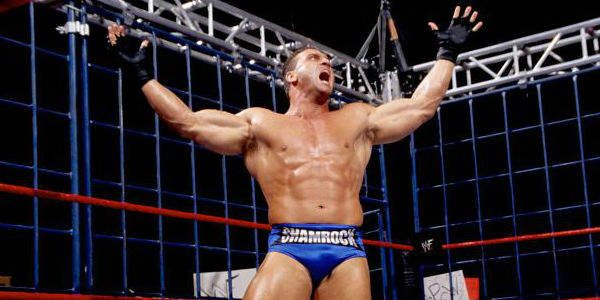
Shamrock was hot property when he signed for the WWF in 1996. Dubbed 'The World's Most Dangerous Man', his exploits in the burgeoning MMA world made him a star. Ken was immediately thrown it at the deep end and feuded with Vader, Bret Hart and the Hart Foundation for much of 97 before moving on to feud with The Rock over the Intercontinental Title. A quick learner, Shamrock proved a deft hand at professional wrestling. He had the required superhuman physique, an intense, full-on ring style and could hold his own in backstage segments and on the microphone. It is surprising that Shamrock didn't go all the way to the top in the WWF and found himself languishing in the mid-card for much of his time there. A definite missed opportunity.
5. D'Lo Brown
You're looking at the real deal now. Well, that's what D'Lo's entrance music claimed, anyway. Brown initially found success as a member of the black supremacy stable the Nation of Domination. When the group split, Brown moved on to feuds over the Intercontinental and European Titles at one point holding the belts simultaneously. While fans remember Brown's feuds with X-Pac, Jeff Jarrett and Stone Cold Stunner he took on top of a car there's a feeling that he should have been a bigger start than he was. After a disappointing 1999, Brown's year turned tragic when he accidentally dropped Droz on his head with a running power bomb gone wrong. The mistake would leave Droz confined to a wheelchair for the rest of his life. As a result, Brown understandably began questioning himself and the way he worked in the ring although nobody held him responsible for the unfortunate incident. Brown gradually slipped down the card and could most be found wrestling on Sunday Night Heat as the Attitude Era drew to a close.
4. Billy Gunn
'Bad Ass' Billy Gunn and The Road Dogg were one of the most over tag teams of the attitude era. As members of DX, The New Age Outlaws had the fans in the palm of their hand with their pre-match promo and masterful crowd-working. As popular as the Outlwas were though, the WWF clearly had bigger plans in store for Billy and there were many attempts to get elevate him as a singles wrestler. Considering his size and look, the man Jim Ross frequently called the 'best pure athlete in the WWF' (whatever that means) had a lot going for him. After winning the King of the Ring in 1999, it seemed that 'Mr. Ass' was being groomed for the main events. Save for a brief feud and match at SummerSlam with The Rock, the push didn't exactly go to plan and Gunn was back teaming with Road Dog when he wasn't on the injured list. Returning from another in a long series of shoulder injuries in late 2000 as 'The One', Gunn yet again failed to make a connection with the WWF faithful. He never made it to the main event level but it wasn't through want of trying.
3. Val Venis
Hello, ladies! WWF's resident porn star was one of the most risqué characters of the Attitude Era. Venis was an accomplished pro, having been a top star in Mexico and wrestling in Japan. He was also undeniably entertaining on the stick and had an apparently endless list of double entendres. Attitude Era fans lapped it up. It is perhaps surprising that Venis didn't rise above the mid-card. He had the look, could get it done in the ring and had an entertaining character. But then again, so did many stars of the era. Venis inevitably got lost in the shuffle and, despite an attempt to repackage him as a super-serious heel in 2000, he never really caught on. It could be that the porn star gimmick was too corny for the main event scene and that he was never going to get there no matter how hard he worked. Few could believe that he lasted until 2009 before being released from his contract. He now spends most of his time on Twitter, usually advocating the legalisation of marijuana.
2. Rhyno
Rhyno must go down as one of the WWE's biggest miss opportunities. 'The Man Beast' had the size, the look and an aura that few have had. Coming to the WWF after the closing of ECW in 2001 he aligned himself with friends Edge & Christian as their would-be henchman. The invasion angle saw Rhyno move up the card and into feuds with members of Team WWF, most notably Chris Jericho. From there, Rhyno's star began to fade and found himself feuding with Tajiri in a nothing programme. A serious neck injury suffered in 2002 kept him out for over a year and he never again found himself pushed as much as he was at the start of the invasion angle. Maybe Rhyno came to the WWF too late or perhaps the Federation didn't like him since he was a 'Paul Heyman guy'. Whatever the case is, one thing is for sure: Rhyno should have been a lot bigger than he was.
1. Test
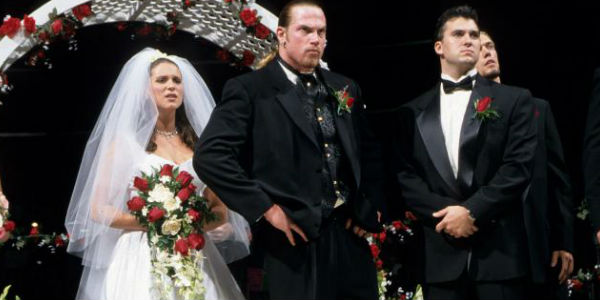
Andrew 'Test' Martin, like many people on this list, seemed to tick all of the boxes required to succeed in the WWE. The most impressive thing about Test was his look. The guy was tall and jacked. He also had a strong head of hair, something Vince reportedly really likes. He could also move around well for a man of his size and dimensions and had a devastating big boot. Test looked to be the total package and, despite not being especially charismatic, he made a connection with the Attitude Era crowd. His 'Lover Her or Leave Her' street fight with Shane McMahon at SummerSlam 1999 stole the show and was arguably one of the best matches of the year. After being involved in the classic Triple H/Stephanie drive-through wedding angle, Test was poised to get revenge on 'The Game' for taking his woman from him. A big PPV match grudge match beckoned. Only it never happened. Test didn't get revenge on the dastardly Triple H and instead formed a tag team with Albert, managed by Trish Stratus (T&A, geddit?). The demotion must have been crushing for Test. WWE tried with Test again in 2006 on the ECW brand but the moment had passed. Test died in 2009, another wrestling tragedy and another example of a WWE superstar who didn't reach his full potential.