10 Awesome Facts From The Iron Sheik’s Documentary

The real #1 wrestling documentary out there...
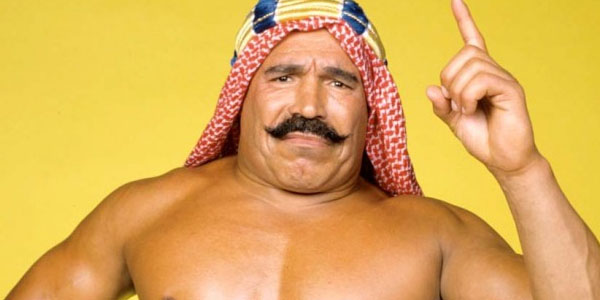
The author of this article recently viewed the Iron Sheik€™s Documentary, titled €˜The Sheik€™, which covered the highs and lows of the legendary wrestler€™s career. It discussed his early life in Tehran, Iran, his migration to the United States, and his experiences in the wrestling business before the rise of Hulkamania. It also referenced the many challenges, both personal and professional that the man has dealt with, as well as the outpouring of support he has received from friends, family, and fans. Without question, the Sheik€™s documentary is a must-see for fans of professional wrestling and for documentary enthusiasts alike. It gives fans a lot of insight into the behind-the-scenes realities of professional wrestling, and how one small mistake can change one€™s life, for better or worse. This article will discuss the ten most interesting and impressive facts presented in the Iron Sheik€™s documentary. It will cover aspects of the in-ring career and post-wrestling life of Hossein Khosrow Ali Vaziri, the man behind the Iron Sheik character, as well as those close to him and who helped build his post-wrestling career. In the end, once you€™ve finished reading this article, hopefully that will inspire you enough to go watch €˜The Sheik€™ and see for yourself why Vaziri had a once-of-a-kind career, and how his life is one of the greatest stories ever told.

10. He Came Up With The Word 'Jabroni'
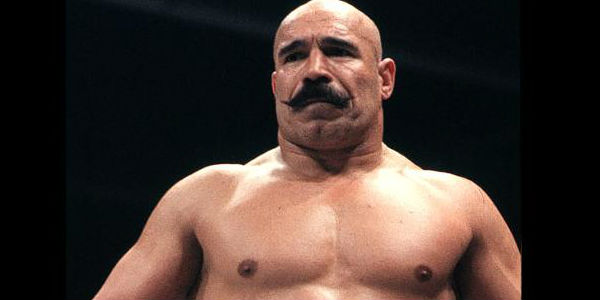
Anyone who has ever watched the Rock speak has heard him insult his opponents with a wide variety of words and clever phrases, but one of his most commonly-used terms was €˜Jabroni€™. For those who don€™t know what that means, a jabroni is a wrestling term for €˜jobber€™ or €˜enhancement talent€™, i.e. someone whose sole purpose is to make others look good in a match. The Rock has used this term more than anyone, but he€™s not the one who came up with it. In this documentary, the Rock gave Sheik 100% credit for that term, which has become a part of wrestling lexicon and is easily one of the most recognizable of the Rock€™s catchphrases. While he did use it first on WWE programming, the truth is that the Iron Sheik used the term long before that when talking to people backstage. The following are the words said by the Rock in this documentary: €œLet me tell you something about the word, Jabroni. So, I was very lucky and fortunate to have coined the word, Jabroni€ publicly, on TV. Utilize it as part of my Rock speak. And had it become part of pop culture. And now the word, Jabroni, is connected to me . When a lot of people think, Jabroni, €˜oh yeah, that€™s the Rock€™s word€™. No, no, no, no. It€™s not my word. It€™s The Iron Sheik€™s word. I give the Iron Sheik all the credit in the world for the word, Jabroni. € So there you have it. Hossein Khosrow Vaziri is the one who came up with one of the most famous wrestling words in history, and influencing one of the greatest talkers in WWE history.

9. He Was Shah Pahlavi's Bodyguard

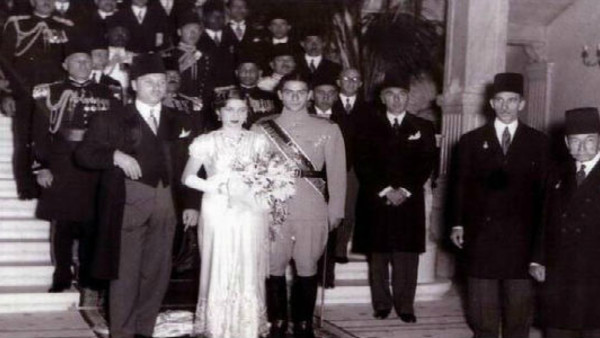
Thanks to the intense training Vaziri went through during his early years as well as his military training and wrestling accomplishments while in the military, he became a bodyguard for the Shah of Iran, Mohammad Reza Pahlavi. To put that in perspective, imagine Kurt Angle becoming a member of the U.S. Secret Service after winning his Olympic Gold Medal, but before signing with WWE. Being a bodyguard for a head-of-state is a very rare kind of legitimacy that helped build Vaziri€™s image and reputation as a badass. During his service, no one ever hurt the Shah or his family, which is a testament to his skill as a bodyguard. He was also able to translate this experience into his on-screen character, which gave him even more heat as a true Iranian. This experience also provides the viewer with Vaziri€™s perspective on working for the Shah. According to Vaziri, the Shah was good to the athletes, but was not willing to give money to build more crucial infrastructure for the Iranian people. When he asked Takhti if he wanted money, Takhti instead asked him to use that to build schools, highways, hospitals, etc. But the Shah got furious and left the room. This gives the viewer a rare perspective on what was happening behind closed doors in Iranian politics at the time, and it a treat for those who€™re interested in that sort of thing.

8. He Was Trained By The Absolute Best
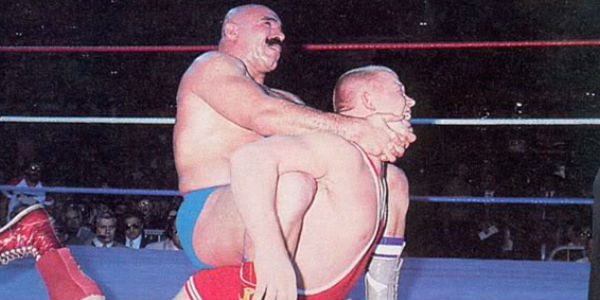
There€™s a reason that the Iron Sheik was such a good athlete when he began wrestling professionally: before joining the legendary training group with the likes of Ric Flair, Jim Brunzell, and Greg Gagne in the AWA, he was trained in Iran by Gholamreza Takhti, who was the first Iranian to wrestle in the Olympics, and the best wrestler in Iranian history. At the time, Iranians had two real heroes: Takhti and Muhammad Ali, but it was Takhti who the people truly loved, because, according to Mohamad Tavakoli (a professor on the Middle East), €œIranians believed that physical training was viewed as the foundation of healthy citizenship and a healthy state.€ And both Takhti and Vaziri embodied this philosophy entirely. At one point, Vaziri was even considered to be €˜the next Takhti€™ in terms of his skill, popularity, and potential. That alone says a lot about Vaziri€™s athletic prowess and his determination: he idolized Takhti and wanted to become a champion like him, which he ended up doing. Unfortunately, Takhti was an outspoken critic of the Shah of Iran and died under controversial circumstances. The Iranian government ruled his death a suicide, but no one in Iran, especially not Vaziri, believed that. Fearing for his life, and realizing that €˜Iran would not be good to him€™, Vaziri came to the United States where, as we have seen, he would become one of the best wrestlers and heels of all time.

7. He's An Amazing Wrestling Coach/Trainer

Sheik was one of the few wrestlers who were willing to teach the younger generation of stars about the wrestling business. Dwayne €˜the Rock€™ Johnson, who€™s featured prominently in the film, expresses his gratitude towards the Sheik on several occasions. In particular, the Rock notes that the Iron Sheik gives a young Rocky a lot of very useful advice, when he didn€™t even have to give him the light of day. Vaziri also trained Bret Hart and wrestled in Stu Hart€™s infamous dungeon, and Bret, whom many consider to this day as the best technical wrestler to ever lace up a pair of wrestling boots, has nothing but praise for Vaziri, which says a lot about the Iron Sheik€™s skill. Vaziri was also the coach for the 1972 US Olympic wrestling team, and that team won the AAU Championship four times in a row while he was training them. There are very few people who can boast such an amazing accomplishment. There€™s a scene towards the latter end of the documentary where the Sheik is watching a group of wrestling journeymen trying to become wrestlers, and he€™s giving them advice on the fundamentals of wrestling, including shoot-style takedowns and proper technique. For a man like the Sheik to be helping aspiring wrestlers in the way that he does is amazing, and it shows that his love for wrestling has not changed, even as he has gotten older. Any aspiring wrestler would consider his advice priceless; after all, when an Olympic Champion and former WWF Champion is giving you advice, you€™d be crazy not to listen.

6. He Was Constantly Getting Legit Heat From The Crowd
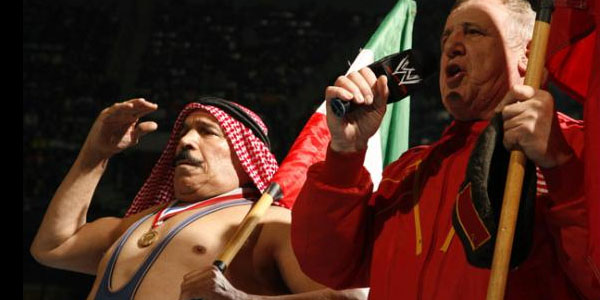
When it comes to really p*ssing off a crowd, there have been few people in the wrestling industry as the Iron Sheik. Due to a combination of real-world circumstances and his own commitment to character, the Iron Sheik character was able to capitalize on real-world Islamophobia and tension vis-à-vis the Iran Hostage Crisis, and amplify the hatred towards his pro-Iran character a hundredfold. The results were one of the most hated wrestlers in the entire history of professional wrestling. According to Jimmy Hart, who makes a cameo appearance in the film, when he and Sheik were doing a radio interview together, a man and his father came down to the station and brought their guns with them, and were going to shoot both Hart and Sheik, but thankfully the duo escaped thanks to a police escort. As another example, in Madison Square Garden, Sheik had such serious heat that people would wait outside for him, and he feared that they would hurt him. So Vince McMahon had him leave in ambulances to get to his hotel room, and other creative measures had to be taken. While most fans today know that WWE is scripted by nature and aren€™t likely to do something drastic like attack a wrestler, things were very different during Sheik€™s era. He was a genius in getting heat from the crowd, and set the standard for how good a heel can be for decades to come.

5. He Was The Instrumental Force In Hulkamania
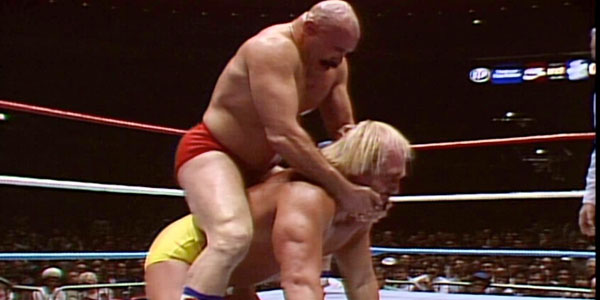
Arguably the biggest era in pro wrestling history, Hulkamania was the period when wrestling had the most pop culture reference and popularity€and it couldn€™t have happened without the Iron Sheik. The WWF Champion at the time, Bob Backlund, didn€™t want to drop the belt to Hogan, because he didn€™t think that Hogan was enough of a €˜pure athlete€™ to defeat him. So WWF devised a plan whereby Sheik, with his legitimate grappling experience, would defeat Backlund, and Hogan would later defeat Sheik to usher in Hulkamania. It was the perfect combination; right place, right time, right opponent. Sheik defeating a respected athlete in Bob Backlund, who brought legitimacy to pro wrestling, only to lose it to Hogan, was the ideal set of circumstances in fulfilling Vince€™s vision of a national and then international wrestling brand. Furthermore, as several WWE alumni suggest, without the Iron Sheik, there wouldn€™t have been Hulkamania; and without Hulkamania there wouldn€™t have been a WrestleMania; and without WrestleMania, WWE might not even exist as it does today. This is especially poignant considering Verne Gagne offered Vaziri $100,000 to break Hogan€™s leg and take the belt to the AWA. But Vaziri was loyal to Vince and helped him build WWE into the #1 wrestling promotion in the world. In the end, virtually everyone can agree: The Iron Sheik did the right thing.

4. He Became The Embodiment Of American Values
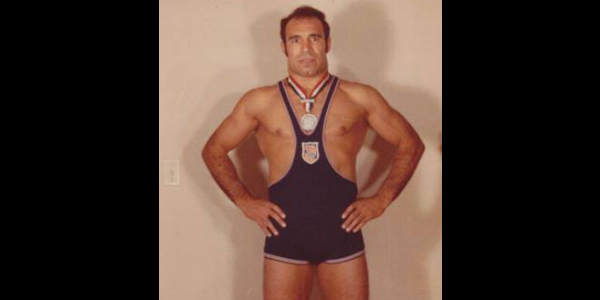
Iron Sheik Olympics Ironically, despite all his anti-American rhetoric and all of his pro-Iran promos during the 1980s, Hossein Khosrow Ali Vaziri was and is the opposite of his character he once portrayed while wrestling. He was, and still is a family man with deep admiration for America€™s values and is often seen carrying a miniature American flag with him when in public. He loves the United States, and his intelligent wrestling fans are aware that his condemnations of the U.S. were all part of the show. In terms of the American Dream, where people from other countries come to the US to make it big, there are few better examples of such success than the Iron Sheik. He came to the US and could barely speak any English, and the only thing he knew was wrestling; yet he managed to get past these shortcomings and make it big in the United States. He married the love of his life and started a family, and made tons of money doing what he loved. This was also exemplified in how he looked at the beginning of his career: he wore a singlet, carried his Olympic medals with him, and presented himself as a straight-shooter of an Olympic wrestler (remind you of someone?) So if there was ever a wrestling character that was the polar opposite of what the man behind the character was like, it€™s the Iron Sheik; he loves the United States, and is thankful for the opportunities he got as an American citizen.

3. MANY People Still Remember And Respect Him
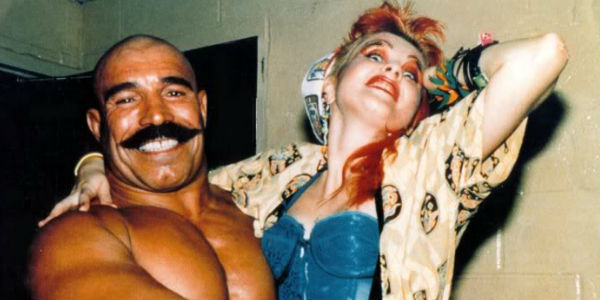
There€™s this fear among professional wrestlers that, once your in-ring career winds down, you have nothing left. The Iron Sheik, however, managed to stay relevant, thanks in part to the hard work put in by the Magen Boys. This is shown by the sheer volume of celebrities and pop culture figures, who meet him, reference him, make tributes for him, and praise him. From being on Howard Stern and Robot Chicken, to meeting hip hop artists like LL Cool J, Jay Z, Ludacris and Snoop Dogg, to comedians Adam Sandler, Jack Black, Russell Peters, the list of people that still knew and respected the Sheik is amazing. As Page Magen said, €œWe would go to these events, in which the biggest celebrities in the world were there. And they all knew the Iron Sheik. They all loved the Iron Sheik.€ For Vaziri, it must be an amazing feeling to know that, not only are there millions of people out there who still remember him as their childhood hero, but that these are successful people themselves, and they still respect him for what he has done. So for anyone who thinks that wrestlers€™ relevance disappears once they stop wrestling, the Iron Sheik€™s documentary provides an example of how much people still remember you long after your crowning moment in the spotlight is over.

2. The Amount Of Work Done By The Magen Boys

Magenboys Despite being centered on the Sheik, this documentary puts an important emphasis on two important people: Jian and Page Magen, the children of a childhood friend of the Sheik€™s. While Vaziri was training in Tehran to wrestle, there was another man who was becoming a national pro in Ping-Pong, Bijan Magen, whose sons Jian and Page watched the Sheik when they were younger. Years later, when Sheik was wrestling on the independent scene, the two of them met him and began the process of turning his life around. Both of them discussed in the film how they encountered the Sheik one day wrestling in a bar in Toronto, and were compelled to help him, even if it meant travelling all the way to Sheik€™s home in Georgia, and travelling with him around the world. The film shows several times when Sheik was having a lot of personal difficulties, yet the Magen boys stayed by his side, and helped him conquer his personal demons. Moreover, it was the two of them who managed to take the Sheik€™s colorful ramblings and share them with the world. These days, they€™re the ones who manage his Facebook and Twitter accounts, and accompany him wherever he goes, all while running their own business in Toronto. Truly, the amount of hard work that Page and Jian Magen have put into helping the Sheik find a new career in life is commendable, and they deserve as much of our respect as the Sheik himself does.

1. He's The Real Internet Celebrity
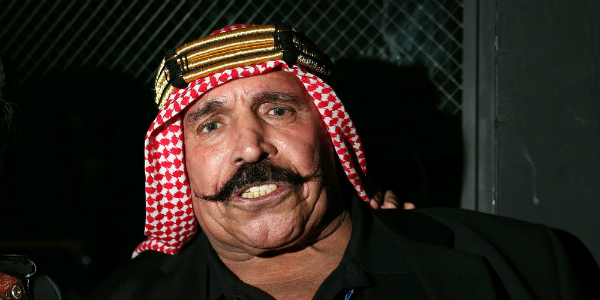
Forget about all those so-called €˜Internet celebrities€™ who became quasi-famous thanks to YouTube and social media€none of them have experienced the kind of popular and sustained renaissance that the Iron Sheik. What started off as the Sheik yelling and cursing rather nonsensically at people and at celebrities has turned him into a bona fide star. People all around the world have watched his videos on YouTube, where he shouts obscenities in his thick Farsi accent, and comes up with clever ways of insulting people (using such terms as €˜Tic Tac D***€™ and €˜Grasshopper Balls€™. As of the making of this documentary, the Iron Sheik has 450,000 Twitter followers, his Facebook page has been €˜liked€™ around 50,000 times, he has appeared on Howard Stern, his Tweets have been featured on Comedy Central€™s show €˜@Midnight€™, and he has made appearances with numerous celebrities. Truly, it€™s a heartwarming sight to see the Iron Sheik enjoying a new kind of popularity without having to get into the ring anymore. He spent the bulk of his life entertaining (and scaring) the audience with his antics, and he is one person who has definitely earned the respect of wrestling fans everywhere. Iron Sheik€™s is currently available on iTunes, and for more information on it, be sure to visit http://sheikmovie.com/

In this post: 
Iron Sheik
 
Posted On: 
Contributor

Alexander Podgorski is a writer for WhatCulture that has been a fan of professional wrestling since he was 8 years old. He loves all kinds of wrestling, from WWE and sports entertainment, to puroresu in Japan. He holds a Bachelor of Arts degree from Queen's University in Political Studies and French, and a Master's Degree in Public Administration. He speaks English, French, Polish, a bit of German, and knows some odd words and phrases in half a dozen other languages.