10 Best Lucha Libre Wrestlers Of All Time
Wrestling with style.
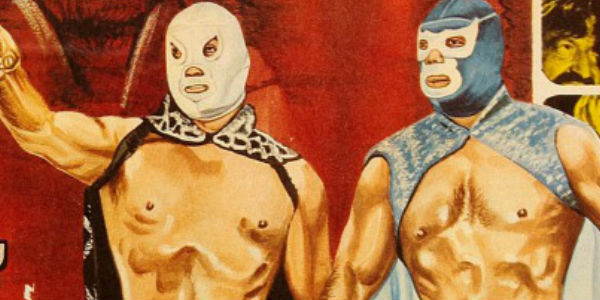 Mexico and other Latin countries have had a profound influence on modern professional wrestling. Most of the high-flying and quick-paced moves performed by many top wrestlers today emanate from Lucha Libre wrestling, and the importance of masked performers has become a defining feature of Mexican wrestling. Truly, without Lucha lLbre, modern pro wrestling would probably be wildly different, and not in a good way. It is for this reason that we should celebrate the achievements of some of the greatest Lucha Libre wrestlers of all time. All ten of these wrestlers have made a tremendous impact; some of them only in Latin countries, while others became worldwide sensations. Not all of them, however, have been masked wrestlers; some of them became worldwide stars without wearing a mask yet still became big stars in Latin America as part of the Lucha Libre style. These ten wrestlers all achieved considerable popularity in Mexico and in wider Latin America and in the southern United States as some of the most impressive wrestlers on the planet. Some of them were revolutionaries who transformed the sport into something never seen by international audiences, while others had such great feuds that they rival some of the best rivalries from the top American and Japanese promotions. What is most important, however, is that the legacies of Lucha Libres best stars arent forgotten or overlooked when one discusses the most important named and historical figures in professional wrestling. Honorable Mention: Salvador Lutteroth González
 Though not a wrestler himself, wrestling in Mexico as we know it wouldnt even exist without this man. Salvador Lutteroth founded Empresa Mexicana de Lucha Libre, which is now known as CMLL, in 1933, and is the oldest active wrestling promotion in the world. These days, he is considered the father of Lucha Libre not only for bringing wrestling to Mexico and making it a big part of Mexican culture, but also for expanding masked wrestling to a national audience, ushering in a golden age for the sport in Mexico. Without him, wrestling in Mexico wouldnt have ever become the national cultural icon it is today, and the 10 legendary luchadors and their descendants wouldnt have become legends in their own right.
10. Místico
 Before coming to WWE and becoming synonymous with botching (which is very unfortunate), Luis Ignacio Urive Alvirde was known in Mexico as Místico, and is considered to be one of the most exciting luchadores in history. Small in stature even by Lucha Libre standards, he was the ideal underdog and was arguably the top wrestler in the world in 2006. He would easily draw in crowds of ten thousand or more on a regular basis in his native Mexico, and main evented eighteen major shows throughout the 2006 calendar year. He was so popular and such a desirable opponent that WWE started expressing interest in him as early as 2007, and TNA soon followed suit. Místico also did shows for New Japan Pro Wrestling, and even performed at Wrestle Kingdom III, and later won the IWGP Junior Heavyweight Championship, which he defended against numerous opponents, including the legendary Jushin Thunder Liger. Like many luchadores before him, Místico also had a comic book based on his character printed in Mexico, and also starred in a music video for a local pop music act. So even though his WWE career was less-than-stellar, theres a reason that he was considered Wrestling Observers Best Box Office Draw of the Decade (2000-2009): he was just that good of a Lucha Libre wrestler, whose WWE career shouldnt represent his entire career.
9. Rey Mysterio, Jr.

8. Perro Aguayo
Another great wrestler to seldom wear a mask, Perro Aguayo is a huge name in Mexican wrestling history. He was the first person to win the WWF Light Heavyweight Championship, defeating Gran Hamada in a tournament final to win the belt. That was when the belt was recognized by the UWA and New Japan Pro Wrestling, not the WWF (as the name implies). Still, Aguayo won the belt an impressive 7 times. But one of his most important rivalries was his mission to unmask the legendary El Santo. Much like the Undertakers WrestleMania winning Streak, Santos mask was at one point considered more prestigious and desirable than any championship, and challengers came from all over to try and defeat the Silver-Masked One. But it was Perro Aguayo who was the first person to be presented as a legitimate contender and possible victor over El Santo. Though he didnt win, it was one of the greatest rivalries in Mexican wrestling history. Aguayo has enjoyed an incredible amount of success in all of Mexicos major promotions (UWA, CMLL/EMLL, AAA, WWA), as well as in Puerto Ricos World Wrestling Council. He is one of the most popular wrestlers still active in the country, and anyone who enjoys Lucha Libre wrestling would certainly enjoy watching him perform.7. Dos Caras
6. Gory Guerrero
5. Ray Mendoza
4. Karloff Lagarde
 One of the earliest success stories in Mexican wrestling history, Karloff Lagarde is considered the King of the Welterweight due to his association with the Mexican National Welterweight Championship. As mentioned in another article, that is one of the most prestigious wrestling belts in the world, and Lagarde has achieved every record for holding that belt. Throughout his career, which began in 1950, Lagarde had some of the greatest matches with some of the greatest luchadors of his time, including El Santo, Mil Máscaras, Huracán Ramirez, Gory Guerrero, Ray Mendoza, Perro Aguayo, and many others. For those who dont follow Lucha Libre wrestling that regularly, these are some of the most important names in Mexican wrestling history. Lagarde further etched his name into Lucha Libre history by holding the aforementioned Mexican National Welterweight Championship, the NWA World Welterweight Championship (which he won from the legendary Blue Demon) and the Mexican National Middleweight Championship (which he won when he defeated the equally-legendary El Santo), all at the same time. Lagarde was one of the first pioneers of wrestling in Mexico, and his incredible legacy of great matches, incredible title reigns, and fantastic heel (rudo) work will never be forgotten.
3. Mil Máscaras
 The uncle of Alberto del Rio and the brother of Dos Caras, the Man of a Thousand Masks was the Lucha Libre wrestler who introduced the style to an international audience. Ironically, in his native Mexico, he was a heavyweight and not what most observers would call a cruiserweight, but that didnt prevent him from being one of Mexicos Big Three in Lucha Libre. Because he was more of a mat-based wrestler in Mexico, he used his high-flying style while traveling around the world. Many now-common aerial maneuvers, including the plancha and tope suicida, were first used by Mil Máscaras in his matches in the United States and in Japan. He would also wrestle the likes of Superstar Billy Graham in WWF, and was the first masked wrestler to ever perform in Madison Square Garden. In terms of legacy, Mil Máscaras set the bar for light heavyweight wrestling for generations to come. According to Satoru Sayama (the original Tiger Mask), without Mil Máscaras, there wouldnt have been any opportunity for Jushin Thunder Liger, Ultimo Dragon, or even Rey Mysterio, to succeed in wrestling. That says a lot about his popularity and impact on the professional wrestling business. Interestingly enough, Mil Máscaras still wrestles, even as he enters his 70s. His family, especially his nephew Alberto el Patrón, must be very proud of his achievements and legacy in professional wrestling.
2. Demonio Azul/Blue Demon
 Blue Demon is the second-biggest name in all of wrestling in Mexico. There is only one person bigger than him, and thats the person wholl be discussed on the next page. Blue Demon was an enormous star all around Mexico. He excelled as a rudo (heel) and struck gold when he formed one of the best teams with the Black Shadow, and together they called themselves the Shadow Brothers. Demons most important moment was arguably the single most important and historic match in Lucha Libre history. On November 7, 1952, El Santo defeated the Black Shadow, and Shadow was forced to remove his mask, which is, more often than not, a career-altering move. Blue Demon, billed as the real life brother of the Black Shadow, vowed to avenge his brother and him and El Santo would continue to have some of the best lucha matches over the following years and decades. One of these includes the now-legendary match between Blue Demon and El Santo for the NWA Welterweight Championship on September 25, 1953. Blue Demons career was one of the greatest in lucha history, and like his famous rival (whom well get to in a moment), he starred in numerous lucha films and became a popular culture icon. In the end, Blue Demon passed away at age 78, and was buried in his trademark blue mask, forever concealing his identity from the Mexican public. Mexican wrestling wouldnt have been as successful as it was without Blue Demon, as he was the biggest rival to the one man who managed to transcend Demons popularity
1. El Santo, El Enmascarado De Plata
