10 Biggest AEW Creative Mistakes
Santana and Cody Rhodes expose AEW's few failings...

There are several, almost countless examples one can draw from to illustrate the fact that the following list is comprised of aberrations. Generally, despite an uneven 2022, All Elite Wrestling is a euphorically apt name for the promotion.
The best example that isn't Kenny Omega Vs. Hangman Page nor CM Punk Vs. MJF is in AEW's expert promotion of the Sting character.
With no hyperbole whatsoever, "expert" is the wrong word.
"Magic" is the word.
Sting is 63 years old. Under the immortalising paint, ingenious smoke and mirrors match layouts, and the demented, life-affirming high spots in which it is revealed that Sting doesn't always need the help, he is able to perform, somehow, as an ageless version of himself. The sheer thought and creativity that goes into booking Sting with such reverence is incredible.
Contrast the positioning of Sting as a living legend with WWE's portrayal of Rey Mysterio and any argument that the promotions are in any way comparable becomes asinine. It would be nice if WWE was Elite, but it simply isn't. So much is just...there, and doesn't feel as remotely vital as AEW.
Doesn't always feel vital, however...
10. The Wingmen

Fans have to organically connect with a certain act.
They had to be charmed into embracing, for example, John Silver's exaggerated hyperactive teenager. They warmed to him following a series of Being The Elite skits in which Silver was repeatedly caught being a buffoon by Mr. Brodie Lee. Had Silver suddenly turned up on Dynamite flexing his muscles and grinning like a daft, incorrigible tw*t, it would have reeked of off-putting desperation.
Enter the Wingmen: AEW's ill-advised and mercifully brief attempt at forcing a meme onto its audience in the summer of 2021.
That isn't how memes work, and their antics, like giving Orange Cassidy a mid-match makeover, felt like a frantic attempt to engineer that which takes on a life of its own. It was just too wacky for its own good, and because nobody got in on the joke first, the punchlines didn't land. At all. Even as a frivolous undercard act, the Wingmen failed dismally. There was no catharsis in watching them get their asses handed to them because they were too busy getting their own self-indulgence in than anything else.
Nothing spoiled - they barely ate up any TV time in an otherwise great period for the company - except something was, because JD Drake is a super-worker who has (or had) the potential to make the established stars look awesome in defeat.
9. Pairing HOOK With Danhausen

Danhausen is a strange character to accurately judge. Is he effective or not?
He generates a pop in most arenas, has an in-built cult audience, and has shifted significant amounts of merchandise thus far in his AEW tenure. It doesn't matter if you're charmed by his abstract gimmick or think of it as an unfunny retread of the worst of Chris Jericho's Attitude Era patter - haha, he gets their bloody names wrong, what's he like? - because those objective metrics are what matter. The thing is, as much as Danhausen is good at getting Danhausen over, he's something of an anti-rub.
Look no further than HOOK for that.
'HOOKhausen' seemed to exist because, by contrasting the characters, HOOK would appear even more like a badass. In reality, HOOK was lowered to Danhausen's inessential level and his killer prodigy aura was diminished. That, or AEW wished to "develop" HOOK's character.
In any event, it was a major error - another strange attempt to make a "cute" connection. AEW enjoys "wholesome content", but this was not the time for it. The memories of HOOK murdering people are disintegrating.
AEW is currently in the process of rebooting HOOK, even implying that he's orbiting a title picture of some sort, so this may be a slight misstep rather than one of their biggest creative mistakes - but if they don't course correct, it will scan as a disaster.
8. Not Running Kenny Omega Vs. Eddie Kingston

All Out 2021 was one of the best and most iconic wrestling shows of all-time. This might scan as total pedantry, but a 9.6/10 show could well have been a 10, had a teased mega match headlined it at the expense of Kenny Omega Vs. Christian Cage.
That match was very good, if a slightly inferior version of their perfectly built gem on the Rampage premiere, and Omega Vs. Eddie Kingston - built and then curiously abandoned across the summer - would have elevated a breathtaking show to perfect. Just imagine Kingston roaring through the pain of a V-Trigger spree, man.
Going with Cage enabled a trademark Tony Khan booking device, in that Cage's association with Jurassic Express informed the Falls Count Anywhere trios match at Full Gear, and there was another factor at play: Kingston was so beloved that he might have allowed fans to forget about the bond they'd built with Hangman Page over two super-focused years.
If Omega Vs, Kingston, a quite brilliant character contrast, had happened, it would not have undermined Kingston's popularity; if anything, it would have enhanced the heft of his "can't win the big one" programme with Chris Jericho.
7. Storytelling For The Sake Of It

Tony Khan is guilty of telling long-term stories for the sake of it. Short ones too.
The idea is to deepen the elusive, premium feel of the big match, but this only works when fans truly give a sh*t about the characters involved. Death Triangle Vs. House of Black closed with an electrifying trios match at Double Or Nothing, and was delayed by an injury suffered by Rey Fénix, but did it need to last almost half a calendar year? What did AEW truly do to build the heft of a match that people were always just going to watch purely as a spot-fest?
What did Alex Abrahantes dressing up for Halloween for three months six months after the holiday actually do?
There are several bad AEW takes out there. They really aren't worth entertaining. One in particular however is so awful and the opposite of true that it must be mentioned here. AEW, if anything, tells far too many stories. Before the match was cancelled, Bryan Danielson had suggested that Chris Jericho paid Zack Sabre, Jr. to take him out of Blood & Guts at Forbidden Door.
What?
Why couldn't the 1 best technical wrestler alive challenge the A best technical wrestler alive to determine who was, in fact, the best wrestler alive?
AEW is episodic to a fault, if anything. Everything has to be linked to a story in some way, and it can become almost patronising as well as contrived. The Lucha Brothers couldn't just work Private Party to establish potential contenders for the new, fighting World Tag Team champions last week. It had to involve some forgotten, sh*tty AHFO lore.
This is a big mistake in the overall creative process because this contrived attention to detail and procrastination accomplishes nothing of true significance that a simple match graphic could not, half the time.
6. The First Iteration Of The Dark Order

Decent idea, lame execution.
Horrible execution.
Because wins and losses matter in AEW, the promotion originally built a stable around the latter narrative component; with defeats piling up, and actually affecting the pay, status and mentality of the wrestlers, the Dark Order would prey on and recruit the despondent failures and use them to bolster their ranks and give them "strength in numbers": an inspired, holistic use of the rankings system.
They looked like complete geeks, which rather undermined the idea; each and every one of the "creepers" looked like they weren't even far enough in wrestling to have been connected with a gear maker, and because this was actually true, the act stood no chance of appearing as a threat. An attempt at a soft reboot, with a Scientology-adjacent explanation, provided context without heft or entertainment value. The heavily rumoured twist - that Marty Scurll, left behind, had formed the Dark Order in the shadows before debuting a year after his lapsed friends - was also inspired, but it never happened.
Mercifully.
Mr. Brodie Lee saved the faction with his total riot of a gasket-blowing Mr. McMahon parody x incredible big man worker act, but the original iteration of the stable was so dire that, after December 18, 2019, its failure transformed the very complexion of the company's creative process.
5. The Nightmare Collective

Aptly named.
A disastrous byproduct of the original booking committee that Tony Khan disbanded after the in-parallel Dark Order disaster, Brandi Rhodes miscast herself in all too ambitious attempt to rid herself of the valet stigma.
She was great in that babyface role - her vengeful fury at Shawn Spears played a considerable part in one of AEW's most underrated storylines - but she didn't want to do it, and in the promotion that enabled creative freedom, she didn't.
There was something quite important about the group in that it strove for positive, high profile representation, but the praise ends there. It was untenable before it was horrifically am-dram in its arch b*llocks; the big bad, Awesome Kong, was cooked and couldn't physically play the hoss monster, Mel was deeply limited, and Brandi Rhodes never did decide if she wanted to be a wrestler or not. The addition of Luther further depicted the stable as cartoonish community theatre, and the fans were utterly disinterested in a supernatural stable that attempted to recruit an alien in the sports-oriented promotion.
At least NXT 2.0 knows what it is; this was a Bruce Prichard nightmare that took on a heavily ironic definition.
4. The Women's Division
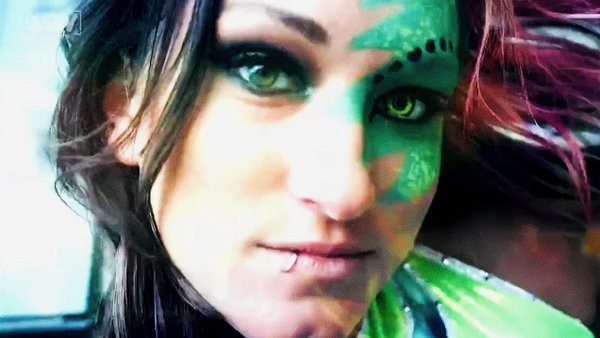
Tony Khan has lost his "Let it play out" privileges as it pertains to the AEW Women's division.
The excuses - the roster was thin, the pandemic prevented the joshi arm from appearing, there was barely an indie scene on which the more green talents could get reps in 2020 - no longer hold. Tony Khan has assembled a roster with range and depth deep into 2022; Toni Storm, Serena Deeb, Kris Statlander, Jamie Hayter and Athena are all excellent workers, Riho, Yuka Sakazaki and Hikaru Shida are all over and super talented special attractions, and Dr. Britt Baker, Thunder Rosa, Nyla Rose and Jade Cargill all bring charisma and star power.
The problem, Khan's key creative mistake, is that he books the women's roster in the same way he books the men's division - and bluntly, there are far more experienced and well-rounded talents in the men's division that enable his top star versus fall guy TV match formula.
He is guilty of positioning several talents who aren't ready for the spot in predictable, drama-bereft matches. Those talents are then cycled out, but aren't experienced enough to slot right back in when asked. A lot of time has been wasted, ultimately.
Khan should dive into a more all-star approach instead of, for example, allowing Kris Statlander to languish for a month after getting over huge in front of an exhausted Rampage crowd.
3. Almost Everything To Do With Sammy Guevara In 2022

How do you ruin a wrestler mere months after he entered the performance of a lifetime?
What was this: a late 2010s NXT to main roster promotion?
Sammy Guevara's performance in his January 26, 2022 Dynamite Ladder match win over Cody Rhodes was sublime. Fusing stunt work with opportunistic strategy in a match with a stirring competitive energy, Guevara entered a complete genre performance that literally scaled the heights of the classic and modern iterations of it.
Informed by his...happy existence on social media, Guevara was turned heel when the "happy and contented person" bit hardly conveyed a babyface struggle. "A computer took your place, daddy," is exponentially better than "I'm the hot chick's daddy on your computer", but even the heel role was ineffective. A handsome guy with an attractive girlfriend was deeply midcard, and just didn't cut it in a promotion with several too many main event-level names. The rank misogyny, title devaluation, frequent turns: this was Vince Russo in the extreme.
Guevara's status in AEW at time of writing is a grim byproduct of AEW's recruitment drive. He's back where he started, effectively, undermining what was an inspired push to get the 'Four Pillars' over so that AEW's dream singing spree in the summer of '21 wouldn't serve to abandon that which had already been built.
He's not the only one...
2. Aggressive Recruitment Sidelines Santana
AEW's aggressive recruitment strategy has created as many problems as dream matches.
It's easy to understand why Tony Khan hired so many ex-WWE guys - why wouldn't a wrestling promoter hire Keith Lee, Swerve Strickland, Bryan f*cking Danielson? - but the excess has normalised what it means to be a true figurehead wrestling star around which a show is built. Khan has effectively spoiled us, and in doing so, has spoiled more than one AEW selling point.
It's all, at the very least, bittersweet; one of the joys of watching AEW in its original phase was in tracking the growth of and getting behind acts that had little to no mainstream presence before Double Or Nothing 2019. Watching Darby Allin gradually ascend the rankings system, and suffering big match setbacks before finally winning the big one at Full Gear '20, was a great device that encouraged fans to stay with him on his arc. It was an objective winner of a booking mechanism, too; his TNT Title run was a ratings smash.
As a result of the endless wave of new signings blocking out TV time, Santana never did capitalise on his enormous babyface potential. His February 2020 sit-down interview with Jim Ross, in which he revealed he took Jon Moxley's revenge attack personally because his father went blind in his teen years, was both gut-punch and breakthrough - and in general, Santana had a quality that made it very easy to root for him that never tarnished his badass aura. To go from that, to infrequently used tag guy, was a huge shame.
In some respects, AEW is better now - but it's nowhere near as impressive, if that makes sense. Anybody can hire an established, great talent.
1. Too Much Focus On The Future

This will probably read as deeply pretentious, sorry, but AEW works so well at its very best because Tony Khan has built a stunningly effective narrative ecosystem.
Factions enable conflicts to persist without burning through the marquee matches ad nauseam. Top star versus upstart rookie/respected veteran/great worker midcard hand matches function to strengthen said star ahead of a far less predictable show-down on PPV. All the while, the lower rung members of stables are patiently built up so that, in a year or two, all going well, they become top stars. TV matches are high quality, if predictable, but they serve to make the expensive PPV matches an incredibly close, dramatic affair. Tony Khan has persisted with this model because it's successful, but also because, with a TV rights negotiation looming, it is crucial that he leaves several matches on the table.
In what might be a massive creative mistake, he's already left loads and loads - and the recent injury crisis has brought into focus the dangers of such an approach. It feels like it takes Khan takes forever to do something at times, and time runs out quickly in pro wrestling.
Do wrestling fans really want to look back on and wonder what could have been, had Khan booked Kenny Omega Vs. CM Punk and matches like it before they fell apart? AEW fans have already been deprived of the mouth-watering programme, premised on who really changed pro wrestling, between CM Punk and Cody Rhodes. Spend too much time prolonging things in an industry forever in flux, and sometimes, it's all for naught.
Another point: Khan's trademark building/dawdling can ruin months' worth of TV in retrospect, if the pieces don't fall into place. Kenny Omega Vs. Adam Cole feels like it is an eternity away from happening, and they teased the sh*t out of it.
For what, at this point?
For a vastly deeper look into the bad, and the very, very f*cking good of AEW, purchase my book Becoming All Elite: The Rise of AEW, which is available to order at Amazon here.