10 Biggest Mainstream Misconceptions About Pro Wrestling

All those things you hated to hear at school and in the media.

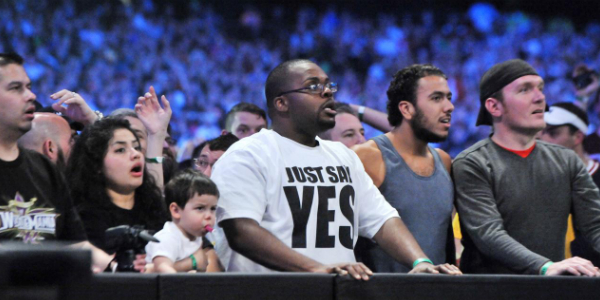
When you're a giant fan of some niche form of entertainment, you tend to be hypersensitive to things that people get wrong about it, whether in the media or social interaction among friends, classmates, co-workers, and so on. Fans of pro wrestling may be better tuned to this type of thing than anyone else. Whether it's minor things like getting people's names wrong to fundamental facts about how the business works, it's something that non-fans tend not to absorb information about like they would about other pop culture, probably because it's so stigmatized. Every little thing...it could get to you, albeit much more so when you were a kid. From the way wrestler deaths were either ignored or laughed off for far too long, to the appearance that reporters seemingly felt they could make more mistakes because of the subject matter, to being treated like an idiot who thought pro wrestling was a real sport just because I enjoyed it as an entertainment product. It's much better than it used to be, as it's slowly moving towards being just another "geek culture" entertainment genre, but there have been lot of popular myths and misguided beliefs among non-fans, so let's take a look at the most common ones.

10. The Fans All Think It's Real

The obvious one. It's much, much less widespread than it used to be, and really, it doesn't make much sense to hear it from someone younger, as wrestlers don't stay in character when doing media interviews anymore. The things that really distinguish pro wrestling from other TV shows are that the shows are shot in sports arenas, there are no credits, and the big one: They use character names when doing promotional work and sometimes their real names when wrestling. That last one is the remaining hurdle. Even if Big Show is completely out of character and referring to himself as an entertainer, he's still Big Show and not Paul Wight, so the lines are blurred. If WWE wants to be treated like any other TV show, they have to start there, but then they lose out on some of the "real life superhero" appeal. On the other hand: The Muppets have appeared on Raw and gotten involved in matches. I think we can safely say the cat's out of the bag even with the other issues still in play.

9. Nobody Gets Hurt

Again, less prominent in recent years. More and more people are aware that it's essentially a combination of stunt work and acting without crash pads. But just how many non-fans think that is something of a question mark. Chris Benoit having such severe brain damage at the end of his life was a fairly big news story when it came out. You don't get that from light playfighting. Bumping has been described as being like a small car crash each time you land, and over time, it can destroy your body. There may be exceptions, as Mexican luchadores who stick with rolling bumps have had much longer careers, as have wrestlers like Ric Flair who don't land flat, and even then, they can still get hurt pretty easily.

8. The Ring Is Like A Trampoline

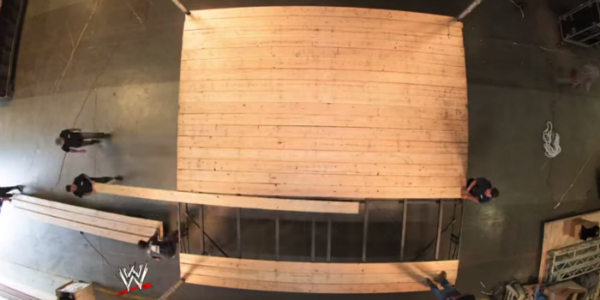
It's a little difficult to figure out the origin of this one. It's incredibly common, and a lot of rings certainly look bouncy, especially on independent shows, but they also look nothing like trampolines. Have you ever seen kids try to wrestle on a trampoline? It's not pretty. They're tripping over themselves. The closest "real world" analogue to what a wrestling ring feels like is a gymnastics spring floor. It's hard enough for you to easily keep your footing, but it has enough give that you're not landing on concrete. That's why taking a bump is like a small car crash: You're still landing on a hard surface, it just moves a little bit when you hit it. WWE has built a "high flying ring" that's used at the Perfomance Center in Florida, which is a regular ring except with a platform in the corner and a crash pad-like surface. You can't have a match in it, as it's designed solely to practice flying moves in without taking damage. Maybe, over time, they'll find a way to build a more forgiving ring that has better footing.

7. Blood Capsules

This one is pretty understandable, more or less. How would YOU expect wrestlers to bleed other than using some form of stage blood? Take some kind of blood capsule or squib out of his trunks, break it on his head, and boom, instant bleeding. What else could it even be? If you're reading this, you probably know: Razor blades. As in cutting their own foreheads with them. The practice of blading, believed to be popularized by Doc Sarpolis and Danny McShain in Texas in the 1940s, has pretty much been the only source of blood in wrestling whenever we've seen it. "Pretty much" because WWE has occasionally used stage blood when doing angles where a wrestler was discovered or dragged from backstage already bleeding. With the obvious health concerns involved, the practice is just about dead on a major league level. When TNA re-introduced the blade for one match recently, the crowd reaction was one of revulsion. Plenty fans miss the drama that comes from the visual of blood, but what can you do?

6. Everyone Is On Drugs. Everyone.

It's easy to see why it might have seemed this way at certain points in history, when major promotions were filled with bloated musclemen and prescription pill abuse was clearly an issue to those who saw the wrestlers after shows. But it's not nearly as widespread anymore. A number of muscular independent wrestlers shrunk dramatically or even packed on bodyfat in WWE, where they're regularly drug tested for anabolic steroids. Soma, an outdated muscle relaxer that was popular among some wrestlers as an intoxicant, is banned outright by the company, even with a prescription. Anyone who's ever had a talent booking contract with WWE can go to drug rehab free of charge. No drug testing program is foolproof, as there are drugs that can't be detected in urine tests, only have very faulty tests, or are completely undetectable, but the business, especially in WWE, is much cleaner than it used to be.

5. Everything Is Scripted & Rehearsed

This is one that has gotten a lot more truthful over the years, especially in WWE, but when it was a more common talking point among non-fans, it was rare to see scripting and rehearsals. It depends on the wrestler. For a long time, guys like Randy Savage and Diamond Dallas Page were ridiculed for laying out their matches move for move even though they were getting great results. Wrestling is, at its best, a completely unique, improvisational form of theatre where the wrestlers are quietly communicating occasionally or even just working off their feel for what is best for that crowd. As the saying goes, it's not acting, it's reacting. Even if you have a match laid out move for move, you need to be able to adjust if something goes wrong. There have been multiple instances where, when someone was injured, an experienced veteran ike Shawn Michaels had to direct traffic as everyone else in the match looked confused. As legend has it, during the filming of Paradise Alley, the actors were making fun of the wrestlers when director Sylvester Stallone stopped filming and refused to resume until they stopped. Why? Because "these are the best improvisational actors in the world."

4. Everything Is Fake. Even If It Makes No Sense That It Would Be.

https://www.youtube.com/watch?v=jTf3JnNzEyg Owen Hart dying? Fake. WWF and WCW battling for promotional supremacy? Fake. It's weirdly common that when a wrestling-related topic comes up in the mainstream, whether among news anchors or friends who just saw it on a news broadcast, a non-fan will explain that it's fake because it has to do with wrestling. Even if there's no way it could be fake unless it was part of an illuminati conspiracy, it's questionable because it's part of pro wrestling, so you'll always find someone somewhere saying that X Real Thing was fake.

3. Wrestlers Are Barely Even Real People

In the late '90s, when young wrestler deaths started to occur at a much faster rate, there was a weird pattern in the media coverage: Anchors treated the deceased like they weren't actual human beings. Similarly, there's a school of thought that wrestling's worked nature makes some fans think of dead wrestlers as disappearing TV characters because of the line they straddle. When Sylvester Ritter (best known as the Junkyard Dog) died in 1998, ESPN had to apologize when a Sportscenter anchor made a comment along the lines of "Professional wrestling will never be the same...unless you read the script!" CBS issued a non-apology apology for this Craig Kilborn line in 1999: "World Wrestling Federation wrestler Owen Hart, known as the Blue Blazer, died Sunday night. Blue Blazer's partner, White Turtleneck, was unharmed." When Rick Rood ("Ravishing" Rick Rude) passed away, Kathie Lee Gifford used a discussion of the tragedy as an opening to trash him for how he behaved in character when appearing on her show. If anyone from any other profession had died, would news anchors, talk show hosts, and/or comedians be joking about their deaths?

2. It Doesn't Matter If You Get Something Wrong. It's Only Wrestling.

Mick Foley1 This problem is not limited to wrestling. It probably goes on with any niche entertainment product that you may be a fan of. So if you're a hardcore fan of anime or comic books or whatever, you probably notice this a lot, too. Wrestling, however, because it's "fake," probably gets it the worst. Mick Foley famously recounted in his second book dealing with all sorts of reporters who routinely got things wrong, most famously including Margaret Carlson calling The Rock an "anti-white skinhead." He also wrote about appearing on ABC's 20/20 newsmagazine show and having his comments edited out of context to show him endorsing ultra-violent backyard wrestling, only to be shocked that he couldn't take legal action. See, in the above clip, Foley claims to have been shown super tame backyard wrestling, only for his approving comments to be used after a clip of the ultraviolent stuff. It's not uncommon to see newspapers interview people who either never wrestled or had short independent careers, only to take them at their word that they were international superstars. It was one thing that this happened from time to time in the early '90s, like when the fake Gorgeous George died, but in the internet age, it's inexcusable. Once, a Montana newspaper writer did a follow-up piece where she made fun of the wrestling fans who politely explained that she got conned by the subject of the article. Why? It's just wrestling.

1. All Wrestling Fans Are Illiterate Dullards
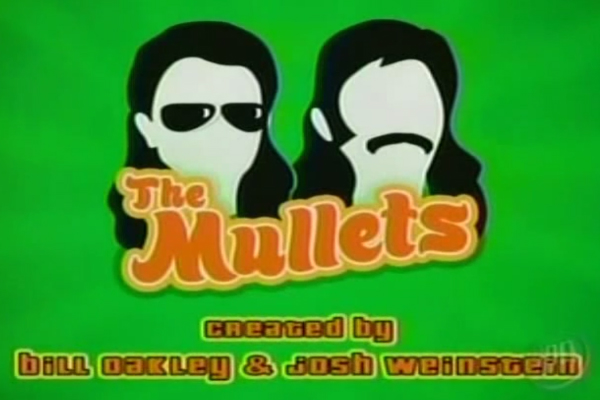
While some legitimate research has shown WWE programming skews towards lower-income and less-educated viewers, the fact is that often doesn't even get taken account by people who don't think the fans think it's real have low opinions of wrestling fans. The rates for advertising on pro wrestling shows are about half that of shows with comparable viewership. For years, TV networks have tried to find the right lead-out for wrestling shows to retain the audience and get ad rates in line with what they're actually worth. Meaning that pro wrestling fans are only low rent when they're watching wrestling. Yes, they try to get the same people to watch the other shows. Not only does that mean that their reasoning is kind of BS, but they also try to win fans over with portrayals of wrestling fans as idiots, like The Mullets. This show featured a bunch of dumb, backwoods wrestling fans, but was meant to appeal to wrestling fans and launched after an abbreviated episode of SmackDown. It was a clearly negative appeal to wrestling fans.

Contributor
Contributor

Formerly the site manager of Cageside Seats and the WWE Team Leader at Bleacher Report, David Bixenspan has been writing professionally about WWE, UFC, and other pop culture since 2009. He's currently WhatCulture's U.S. Editor and also serves as the lead writer of Figure Four Weekly and a monthly contributor to Fighting Spirit Magazine.