10 Biggest WWE Survivor Series Debuts
Arriving And Surviving
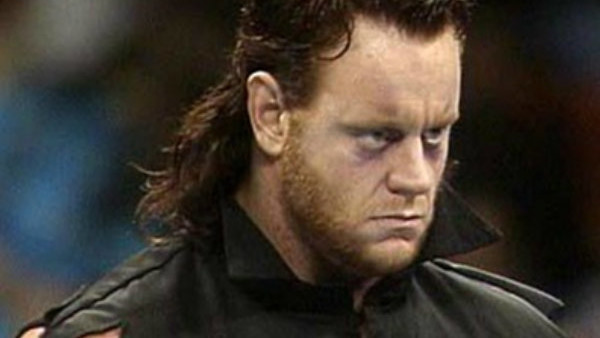
What is it about WWE's November classic that allows so many to make their mark for the very first time?
At the inaugural Survivor Series, The Jumping Bomb Angels dazzled a growing pay-per-view audience despite Stephanie McMahon not actually inventing women's wrestling until almost 20 years later. The Japanese pair's futuristic assaults made them overnight sensations in a doomed late-1980s Women's revival.
Nearly a decade later and not far removed from an All Japan Women's card considered one of the industry's best ever pay-per-views, Aja Kong, Lioness Asuka, Tomoko Watanabe, Chaparita Asari, Kyoko Inoue and Sakie Hasegawa all took their WWE bow at the event.
The prodigious talents may have been better served entering a winner-take-all Elimination Chamber, itself birthed at the Survivor Series in 2002 on the same night new arrival Scott Steiner impolitely demanded the 'f***ing mic', unaware that he was heard loud and clear. The Madison Square Garden crowd that night exploded for 'Big Poppa Pump', perhaps stifling memories of having to cheer Flash Funk through the door at the same event six years earlier.
Even perennial nearly-but-not-quite Bruce Hart got a turn at the Thanksgiving spectacular. Making up the Hart numbers in 1993, he knocked Shawn Michaels all over the shop four years before the rest of his family wanted to do it for real.
It remains to this day one of the places to kickstart careers, only enhancing the iconic status of the branding in the process. The ones that make it there, seemingly make it anywhere.
10. The Gobbledy Gooker (1990)

Few lists on any moments from Survivor Series history would be complete without ripping the p*ss out of one of Vince McMahon's biggest brainfarts.
Several weeks before the 1990 edition of the show, a ginormous egg appeared by the entrance on television. There wasn't a spot of explanation as to how or why it was there, nor what on earth could have possibly laid it. Then-WWE Champion The Ultimate Warrior was talking out his a*se an awful lot at the time, but even he certainly wasn't birthing a zygote that substantial.
It did, in traditional WWE fashion, build a bit of intrigue. Fans were willing to treat the odd device for what it was - an opportunity to debut a new superstar, albeit in ludicrous circumstances.
It was somehow both a massive surprise and a crushing disappointment when a giant chicken emerged from the egg. Hector Guerrero's in-ring talents were reduced to feathered forward rolls as the bizarre manifestation jigged and jived with Mean Gene to the sound of ferocious boos.
The character was apparently supposed to be WWE's new crowd-stirring mascot akin to the types seen at professional sports events. As if drawing reactions from supporters wasn't the job of every wrestler.
9. Steve Blackman (1997)

Steve Blackman dove into the ring just days before the Survivor Series in an effort to save Vader from a 'Team Canada' kicking. It was lucky the 'fan' was a chiselled specimen with a canny knack for martial arts.
'The Lethal Weapon' was an unnamed invader from the audience on the go-home Monday Night Raw, having actually performed jobber duties for the company nearly a decade earlier before a near-fatal bout of malaria robbed much of his early-1990s career.
Kicking a not unreasonable amount of a** on Vader's 'Team USA' alongside mostly useless heels Marc Mero and Goldust on the Montreal undercard, Blackman was eliminated early by count-out as commentators noted he perhaps wasn't fully aware of the rules.
His impactful style immediately drew comparisons to Ken Shamrock, ensuring him a solid spot on the undercard for the entirety of the Attitude Era. There were fewer nights better to make a main roster bow.
8. The Boogeyman (2005)

The Boogeyman did just about everything he was capable of when he finally appeared in the flesh at the 2005 Survivor Series.
Vignettes promoting the farcical character had ran for months on television, with animated threats of the overblown spook 'coming to getcha' closing out the daft segments. The gimmick had already drawn negative press for triggering hostilities in Ohio Valley Wrestling between Jim Cornette and the future Santino Marella that regrettably continue to this day.
'The Milan Miracle' received an unacceptable slapping from the 'Louisville Lip' for p*ssing himself at Marty Wright's demonic portrayal. It was hard to disagree with the sentiment when he emerged under the brightest lights.
The muscular oddball dropped 'Easy E' with a pumphandle slam, ate some worms and bailed through the crowd. Short of smashing an alarm clock over his own bonce, his act had nothing. That he managed singles encounters at the next two 'Big Four' pay-per-views was no laughing matter.
7. Doug Furnas & Phil LaFon (1996)

May 1992's All Japan Pro Wrestling scrap pitting Doug Furnas & Phil LaFon (wrestling as Dan Kroffat) against Kenta Kobashi and Tsuyoshi Kikuchi is required viewing, not least to see exactly how to present the ultra-skilled pairing in a way WWE only managed once.
The duo were a gift to WWE's barren tag division, with victory over doubles titleholders British Bulldog and Owen Hart (the only other remotely enjoyable unit) capping off a memorable Madison Square Garden arrival. That they looked painfully out of place in a contest also featuring The Godwinns and The New Rockers should have foreshadowed how disappointing their eventual run would be.
Unfortunately the fire and fury of the debut was doused within weeks, as a mutual indifference seemed to open up between them and Vince McMahon. Original plans allegedly saw them dethroning Bulldog and Hart ahead of a split ultimately parked to facilitate a Hart Foundation reunion. They subsequently struggled to regain momentum, and a car crash injuring both in mid-1997 saw their WWE tenure irreversibly damaged in the wreckage.
6. Jazz (2001)

Paul Heyman was predictably more excited than just about anybody else than when his ECW discovery Jazz made her WWE bow as part of an Alliance that would literally cease to be less than an hour later.
It may have looked like inopportune timing on the part of the 'Baddest B*tch', but it probably couldn't have worked out any better.
Though putting in a relatively pedestrian display in the six-pack challenge with Lita, Ivory, Mighty Molly, Jacqueline and eventual winner Trish Stratus, Jazz was entering a division about to undergo its most profound transformation up to that point.
Stratus lifted a belt abandoned by dominant former Champion Chyna, and would ultimately lead the league through several prosperous years before WWE gave into itself and fell back on exploitative Diva titillation. Polished and professional, Jazz and Trish traded the title in 2002 and 2003. Her WWE arrival may have come too late into an ECW/WCW invasion, but otherwise couldn't have been more welcome.
5. Kurt Angle (1999)

Kurt Angle's Survivor Series 1999 debut is in hindsight not only the best thing on the entire card, but perhaps one of Vince McMahon's most underrated creative success stories.
Perfectly crafted and executed amidst the chaos and carnage of the Attitude Era, Kurt Angle's introduction as an American hero that demanded respect rather than commanded it was an inspired reading of the audience of the day.
Knowing and blusterous, preparatory vignettes aired for weeks in the run-up, with Angle prattling on about his own brilliance, blind to the dissent he was likely to face from a jagged crowd accustomed to the gritty realism of Stone Cold Steve Austin and bombastic brilliance of The Rock.
The fans' distaste mate complete sense, as did Kurt's incredulity at their hatred. Intentionally boring audiences with his amateur style and insincere smile, the 'Most Celebrated Real Athlete' in company history snapped at the crowd at the five minute mark. 'You do not boo an Olympic gold medalist!' he cried. Their stage-managed rebellion kickstarted his meteoric rise.
4. The Shield (2012)

Dressed in turtlenecks and featuring a sexy samoan front and centre, The Shield weren't perhaps what CM Punk had in mind when he pitched the terrifying triumvirate from NXT. But Dean Ambrose, Roman Reigns and Seth Rollins were at least permitted to leave their ungainly branded riot gear in the back when they rushed Survivor Series 2012's triple threat main event.
Ryback had champion Punk and fellow challenger John Cena subdued when the three rocked up and pounded him into oblivion. As Michael Cole identified them as Full Sail insurgents, The Shield delivered their first triple powerbomb on 'The Big Guy' through a table, leaving 'Big Match John' prone for a Punk quick win.
Cole's instant identification was important for giving the audience just enough intel on the mysterious trio before further television attacks would flesh out their motivations and intent. As impactful as virtually everything they did in their original run, Rollins, Ambrose and Reigns were instantly on the map.
3. Sting (2014)

Unlike virtually every one of his former colleagues that entered Vince McMahon's empire with mixed fortunes, perennial Southern states star Sting held out long enough for most to assume he'd never appear in WWE.
Going as far as to join noted Vince blindspot TNA in 2003, 'The Stinger' seemed more than happy to be the exception to the rule, until all the rules suddenly started changing.
WWE went PG. They embraced countless ostracised legends in the name of pay-per-view surprises, Hall Of Fame headlines and video game sales. Lucrative DVDs documented forgotten careers in beautiful, timeless fashion.
Meanwhile, a March 2011 TNA main event ended with Sting having to forcibly tie up Jeff Hardy in a shoot pinfall because he was too wrecked on a cocktail of drugs and booze to know where he was.
'The Icon' did little upon his Survivor Series arrival, but the consequences of his actions were ostensibly huge. Taking out a corrupt Triple H with a Scorpion Death Drop, he helped Dolph Ziggler defeat Seth Rollins to remove The Authority from TV FOREVER!
Okay, so the ramifications weren't really huge, but Sting finally working for McMahon was legitimately enormous.
2. The Rock (1996)

Jim Ross prophetically spoke on Dwayne Johnson one day being 'The Man' as Rocky Maivia gleefully charged down the Madison Square Garden aisle for his main roster launch.
The commentator and then Head Of Talent Relations knew he was on to a megastar with the third generation talent, but the future Rock was showered in dated WWE bullsh*t destined to sink him before he could even properly set sail.
Despite winning the match as his team's sole survivor in a game effort to promote the newcomer, he's a literally a head-to-toe failure as a character.
His hair seemingly knew it first, bouncing so hard off his skull it looked as though it was trying to escape the scene. Blinding Madison Square Garden spotlights couldn't compete with Rocky's 'overjoyed-just-to-be-there' fizzog flashing his pearly whites. And on a recent podcast, company insider Bruce Prichard could only offer "...it was Polynesian" as trite justification for the laughable ceremonial strands flapping from his action star physique.
He'd arrived at least, and just a year later would be well on the way to phenomenal success. But in November 1996, The Rock was still in a hard place.
1. The Undertaker (1990)

Like anybody else could lay claim to the number one spot.
The Undertaker's historic introduction to WWE lore holds up to this day as one of the most important and impressive debuts in company history. Never even flirting with farce despite an ostensibly daft concept, 'The Deadman's original incarnation is fully formed from the second the wailing organs screech out the haunting original version of his theme music.
The company are right to replay the scene as often as they do - it's an inch-perfect presentation that should frankly be pored over internally even more than it is by fans old and new. Establishing a gimmick, an in-ring style, a killer finisher and a window into the character's future, The Undertaker tore through his first opponents in exquisitely booked fashion.
Making mincemeat of the goons on Dusty Rhodes' team before taking out the 'American Dream' himself, 'Taker brawled to the back with Rhodes in a count-out elimination that didn't strip an iota of his awe-inspiring aura. It took decades to craft a WrestleMania legend, but just a single match to build a Survivor Series one.