10 Bizarre Backstage Rules WWE Forced On Wrestlers
From corporate rules to long-standing traditions, the WWE superstars had seen them all!

Every workplace has a set of rules that employees must follow, and it's the same with professional wrestling promotions. However, these rules are not something HR can print up in orientation handbooks and hand over to the superstars when they sign their contracts.
WWE is a company that has thrived for over seven decades and has seen different generations of wrestlers. Apart from the basic corporate rules, there are unwritten codes, conducts, and traditions passed down from one generation to the other, and there are rules that stem from impulsive decisions.
While things are more relaxed in the current era, such rules were more common during the old Vince McMahon regime, and wrestlers had no choice but to comply or risk the consequences. From dress codes and banned words to menial issues like sneezing and nodding, some rules WWE imposed on its wrestlers raised more questions than clarity. However, change is inevitable, and while some of these rules went through changes according to the times, some even became obsolete.
These ten entries would explain the implications of these eccentric rules and prove life behind the screens in WWE is as wild as the action inside the ring.
10. The Interviewers Must Be Shorter Or Made To Look Shorter Than The Wrestlers

Every wrestling promotion wants to portray its wrestlers as larger-than-life characters, and WWE is no different. One tactic the company has always employed to achieve this feat is to ensure the backstage interviewers are shorter than the wrestlers or are deliberately made to look shorter.
Former WWE commentator Jonathan Coachman, who started his career as a backstage interviewer, shed some light on the bizarre technique the interviewers must use to look shorter than the wrestlers. Speaking to Chris Van Vliet, Coachman stated that the interviewers must spread their legs out during the segments to make the wrestlers look taller. He recalled an incident when the cameraman widened the shot too quickly during an interview segment, inadvertently showing Coachman with his legs spread apart.
Scott Stanford, a Studio Host for WWE since 2009, stated during an interview with The Launchcast that in his early years in the company, he had to kneel during the backstage interview segments to look shorter than the wrestlers. He also claimed that it is why WWE started hiring short female interviewers.
9. No Sneezing & Nodding Around Vince McMahon

There is a long-standing rumour that former WWE Chairman Vince McMahon is a germaphobe and hates it when he sneezes or when someone sneezes around him. Paul Heyman, who worked alongside McMahon for many years, stated during an interview with Ariel Helwani that he gets irate whenever he sneezes because it's something he can't control. Heyman also revealed during an interview with Chris Jericho that McMahon yells at people and tells them to control themselves whenever they sneeze. He also angrily mutters to himself and loses focus for a few minutes whenever he sneezes.
McMahon's daughter and former WWE official Stephanie also confirmed the rumour while appearing on the Barstool Sports Podcast and the Bill Simmons Podcast. She claimed that her father hates sneezing because it's involuntary and stated that he doesn't like anything he can't control. She also said he doesn't like it when even she sneezes around him.
She also mentioned that Vince McMahon dislikes seeing people nodding during meetings. He reportedly feels a person can influence the room when he nods while another person is speaking, and might prevent other people from thinking what they want and cloud their judgment.
8. No Political Posts On Social Media

Professional wrestling is a sport enjoyed by a diverse group of people and brings them together despite differences in their core beliefs. The same goes for the WWE roster, as they have to put aside all their differences to work with their colleagues to create entertaining content for the fans. However, in this era of free speech and social media, things can go wrong in the blink of an eye, and that's why WWE has a strict policy when it comes to what the wrestlers and other WWE crew members post on social media, especially when it comes to their political views.
They made an exception out of former superstar Jaxson Ryker of the Forgotten Sons faction when he posted a tweet in support of President Donald Trump, which coincided with nationwide protests over the tragic death of George Floyd. The ensuing controversy earned him the wrath of fans and colleagues, including his partner, Steve Cutler.
The market leader took the faction out of action, sending Ryker to Raw and pairing him with Elias, while Steve Cutler and Wesley Blake remained on SmackDown. While Dave Meltzer first reported that WWE officials were hesitant to let Ryker go because he expressed freedom of speech on social media, he later reported that the company might release him as part of budget cuts, which eventually happened in November 2021.
7. Must Shake Everyone's Hands Backstage

WWE has been around for over seven decades, and while it has seen many people come and go, some traditions have remained intact despite the changes. One such tradition is shaking hands with everyone in the locker room every time and all the time. No matter how many times a wrestler might walk past his colleagues, they have to shake their hands every single time.
WWE.com published an article in 2013 discussing the tradition with personal takes from wrestlers like JBL and current WWE Champion Cody Rhodes. JBL stated that the tradition didn't originate there, but existed much earlier as a secret handshake among wrestlers during the early carnival days of the sport. While it looked like the grip was tight, the wrestlers started giving loose handshakes to let their colleagues know they were one of the boys. The loose shake became obsolete over the years, and a firm handshake emerged as the new norm.
Cody Rhodes added that his father, the late Hall of Famer Dusty Rhodes, taught him the perfect way to shake hands in all situations, which was a firm, look-them-in-the-eye kind of handshake, as it brings the element of respect to the table.
Brock Lesnar had some choice words for the tradition in his autobiography "Death Clutch: My Story of Determination, Domination and Survival." He recalled shaking hands with everybody in the arena but claimed that despite it looking like people were happy to see each other, the handshakes were insincere and phoney.
6. The Controversial Third-Party Platform Policy

WWE imposed a controversial ban on the wrestlers in 2020, preventing them from earning additional income from third-party platforms like Twitch and Cameo. The rule stated that wrestlers are not supposed to use their in-ring names, the intellectual property of WWE, to earn revenue through third-party platforms.
While there were already controversies surrounding the "Independent Contractor" nature of wrestlers' employment with WWE, the company's attempts to limit their wrestlers' earning potential, especially during a pandemic, sparked severe outrage.
Several wrestlers even tried to have constructive talks with Vince McMahon to get him to change his mind, but the former boss didn't budge that easily. The company tried to make an example out of Zelina Vega, who ignored the ban by continuing to stream on Twitch. According to Justin Barrasso of Sports Illustrated, her opening an OnlyFans account was the last straw, as it led to the company releasing her on the grounds of breach of contract in November 2020, but they ended up rehiring her nine months later.
With the criticisms reaching a boiling point, management worked things out with the wrestlers and lifted the ban in 2022.
5. Don't Get Into Bar Fights If You Can't Win Them

Wrestlers and fans might get along with each other during live events, autograph signings, or brief friendly social encounters, but things can go wrong in the blink of an eye, especially if they are at a bar in an inebriated state.
There have been occasions when wrestlers had to get physical with fans or other people at bars and other locations, and while they did get the upper hand on most occasions, they didn't come out on top at all times.
Wrestling promotions put considerable effort into portraying their wrestlers as invincible characters, and neither the company nor the wrestlers can afford to break this kayfabe mask by losing a real-life fight to an average Joe. Shawn Michaels' Syracuse incident, when he got knocked out by six Marines and sent to the hospital, is a prime example. Since the wrestlers got their "tough guy" reputations to protect, there was an unwritten rule back in the day for wrestlers not to get in bar fights unless they knew they could win.
4. The Dress Code

In 2004, Vince McMahon implemented a dress code for WWE superstars, which received mixed reactions from the crew. He had previously instituted a similar dress code before the Attitude Era, but later allowed the wrestlers to dress more relaxed to match the era's feel. However, when he reinstituted the dress code in 2004, not every wrestler was a fan of the decision, as revealed by current WWE Executive Director Bruce Prichard in the Something to Wrestle podcast.
Prichard believed Vince McMahon overdid the dress code by making the wrestlers and top executives wear professional attire like sports coats, jackets, and ties when they appeared in public. He stated that wrestlers like Ric Flair and Batista, who were already wearing similar attires in public, had no problem with the rule, but Randy Orton was not a big fan of the code and questioned why he couldn't wear some nice jeans instead.
Wrestlers like Chris Jericho, Molly Holly, Edge, and Hardcore Holly tried to voice their displeasure with the new rule, but it fell on deaf ears as Vince McMahon shot down all their pleas.
3. The Infamous Wrestler's Court
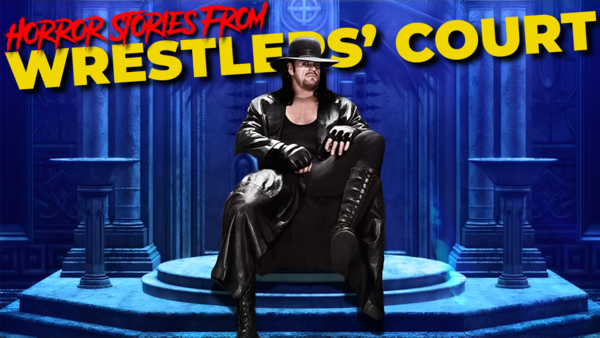
In a typical workplace, employees often seek out their immediate managers or the human resources department in case of internal disputes. However, that's not how things worked in WWE back in the day, as the infamous Wrestler's Court was the go-to place. Like a real-life courtroom, the wrestler's court had a judge, prosecutors, and defendants, but the punishments given to the wrongdoers were quite unorthodox.
The Undertaker often served as the judge, while JBL was one of the regular names who came in as the prosecutor. The court provided a platform for wrestlers to resolve issues among themselves and teach a lesson or two about respect to the offenders.
Many wrestlers have endured the wrath of the wrestler's court and paid the price, and the most infamous stories include The Miz getting banished from the locker room for eating chicken over another wrestler's bag, Teddy Long getting ordered to buy buckets of chicken, and cases of beers for the locker room for being cheap and selling viagra backstage, and Shawn Daivari getting forced to do 1000 squats for disrespecting the locker room veterans.
As times changed, the backstage traditions evolved, and the wrestler's court became outdated. Seth Rollins confirmed during an interview in 2016 that this system no longer exists.
2. No Leaving Early
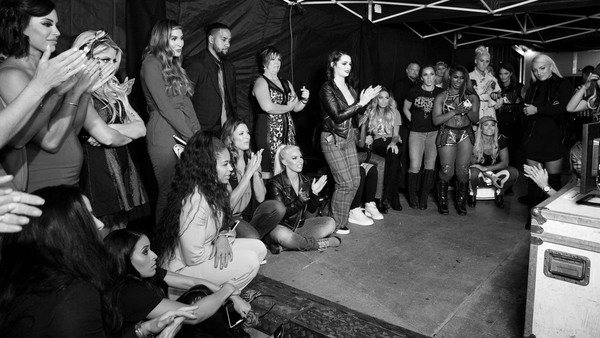
WWE fans may have seen segments in which wrestlers exit the arena during a show, but in reality, that is far from the truth. The code among wrestlers is that no one gets to leave early, even after they've competed in their match, and they have to stay until the curtains are closed.
This practice isn't something officials insist on the wrestlers, but it is more of an ethical code among the performers to stick around until the show is over and watch the other matches and learn from each other, and to see what the crowd is reacting to. WWE scripts also undergo multiple changes before and during the show, and it's only fitting that all wrestlers are in the arena throughout the entirety of an event so the company could use them for last-minute appearances or matches whenever necessary.
While reacting to a video discussing the rule, former WWE superstar Maven Huffman weighed in and seemingly confirmed that this is a legitimate practice among the wrestlers.
1. No Consuming Alcohol 12 Hours Before A Match
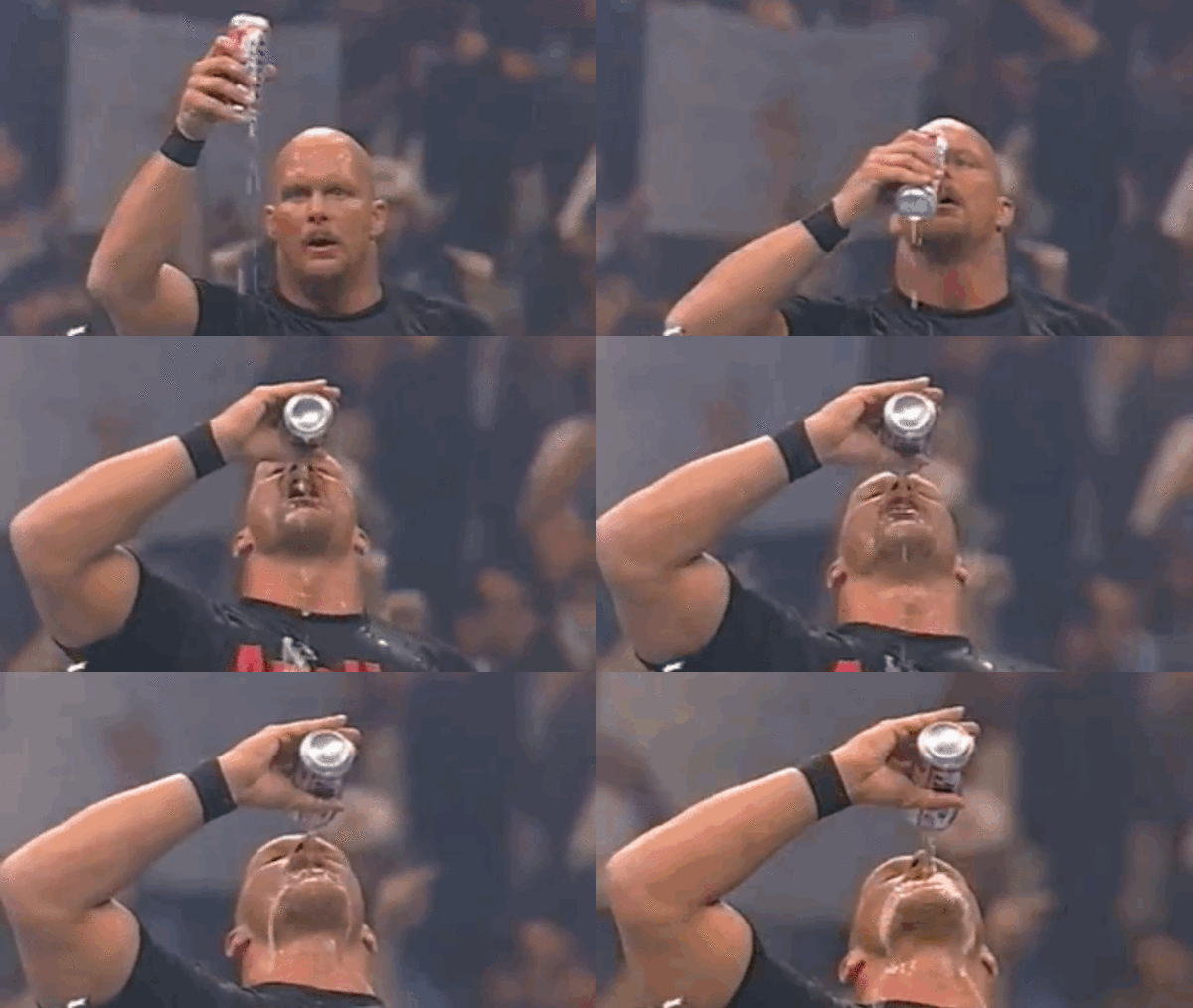
It is common for wrestlers to relax after a busy day by having a drink or two; however, they are not allowed to enter the ring while intoxicated. Even Stone Cold Steve Austin opens his many cans of beer only after he opens a can of whoop-ass on his opponents in the ring.
An article published on WWE.com in 2012 discussed the rule and stated that the company policy dictates that active wrestlers cannot consume alcohol within 12 hours of competing at an event. The rule might sound bizarre, but violating it will have catastrophic effects on both the offender and their opponents, as being in an inebriated state during a match would spell disaster on any occasion.
The 2011 TNA Victory Road PPV is a prime example, as Jeff Hardy entered the ring intoxicated and was in no shape to perform, leading his opponent Sting to forcibly end the match and shoot pinned Hardy within 88 seconds. WWE even used the rule in a storyline when CM Punk was forced to do field sobriety on the 23 April 2012 episode of Raw.