10 British Wrestlers Who Had Profound Impact In America

Legal aliens from blighty who took the States by storm!
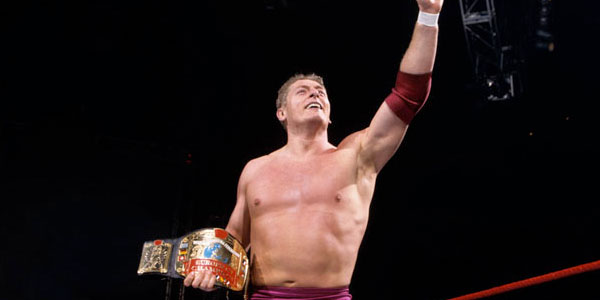
For decades, Britain has been known across the world for producing some truly great wrestlers. Although just a small island nation with a population of 60 million, the worldwide impact of British stars has been profound. I have previously stated, when appearing on the BWC British Wrestling Roundup show on Challenge TV here in the UK, that I genuinely believe that British wrestlers are the best in the world. When you consider our nation€™s small size and the number of Brits who have made a global impression on the wrestling world, compared to the size of other wrestling countries, it is an excellent rate €˜per capita€™. The British style, technical and mat based, has become slightly diluted as the American influence has crossed the Atlantic over the past two decades, but it has enjoyed a renaissance to a degree through the popularity of some of the wrestlers listed in this article. There are also a number of British wrestlers who ventured across the pond who have not made the top ten, but still made a great impression on Stateside fans. Giant Haystacks, a British legend of the 70s and 80s, drew packed houses across the UK, often during his feud with Big Daddy, which made the two genuine household names in the country. Renamed Loch Ness, he arrived in WCW to feud with Hulk Hogan, only for a diagnosis of cancer to force him to return home. Nigel McGuinness, a US trained Brit who hung onto his British technical roots, made a huge impact in Ring of Honor, introducing the style to a new generation of fans. Again, ill health cut his career short soon after he signed with TNA. Wade Barratt has finally found a gimmick to suit him as Bad News Barrett, and has enjoyed a PPV main event and an Intercontinental title run in the WWE already. Norman Smiley had a good run in WCW in its last few years and is now a trainer in NXT. One former NXT wrestler told me that Smiley was the best trainer that he€™s ever encountered. Robbie Brookside had a storied UK career as well as a brief stay in WCW as a preliminary talent, but is now a trainer in NXT, sharing his decades of wisdom, experience and psychology with the next generation of WWE superstars coming through the system. Dave Taylor, a British veteran, joined his compatriots in bringing the British style to WCW and the WWE and also ran a successful training facility in Atlanta. Drew McIntyre had a good start in the WWE as Mr McMahon€™s chosen one, but wrestling politics proved to be his downfall and after an IC title run and a one month tag title reign, he floundered before being released earlier this year. Katie Lea was the first British woman to get signed by the WWE in 2008, teaming up with her storyline brother, Paul Burchill. The two had both wrestled for the FWA in Britain, and were the first of the €˜new generation€™ of twenty-something Brits to be signed up to the biggest promotion in the world. Burchill himself had previously been in the company for a year or so beforehand, but had been repackaged as a comedy pirate, which killed his momentum. Katie Lea left the WWE and signed for TNA, when she had a prominent run in the company and won the Knockouts title three times. And finally, Les Thornton was one of the best junior heavyweight wrestlers anywhere in the world in the 1970s, and at one point in time held both the WWF and NWA World Junior Heavyweight Championships at the same time! However, he ended up as a preliminary jobber on WWF television in the 80s with his legacy pretty much swept under the carpet by the WWF machine. With all of those talents not making the top ten, you can be assured that the top ten are people who have really taken the United States by storm.

10. Rockstar Spud

Standing just 5€™4€ tall and weighing in at 140 lbs (10 stone), Rockstar Spud is certainly not the typical signing for a major American company. But it is for this very reason that he has made this list, for his impact, while only recent, has been profound. In 2012, he was selected to be a part of TNA€™s British Bootcamp reality show. He won the show, won a contract with TNA, and then took part in the company€™s annual tour of the UK, which are the highest grossing shows in the TNA calendar. Spud€™s success broke the mould, proving that talent and charisma is a greater commodity than size. He has grown into a regular and memorable character on the TNA roster, aligning himself with the boss herself, Dixie Carter. It also showed that someone who had worked on the British independent scene for the past decade could make it into the big time. Upon signing, Spud quit his day job in his native Birmingham, packed his bags and set off for the USA. He€™d finally achieved his dream of becoming a full time professional wrestler, doing what he loves for a living. http://www.youtube.com/watch?v=ruedBqkLtrk TNA have recently recorded a second series of British Bootcamp, but on a much bigger scale, compared to the first one, holding auditions in multiple UK venues and sending six, as opposed to four finalists across to the USA. The interest in the show was huge from British wrestlers, all inspired by Spud€™s success. Spud has gone from being a weekend warrior to a pint-sized pioneer.

9. Dave Finlay

A veteran of the UK scene, Dave Finlay€™s career has seen him tour the world. A second generation star, he was a regular competitor on World of Sport, the nationally televised wrestling of the 1980s. He rarely lost, and displayed bags of charisma while getting the crowd to hate him. Finlay was a tough Northern Irishman, renowned for his uncompromising, hard hitting style, and as a man who could outwrestle you or outbrawl you, whatever was necessary. In the 1990s, he was a frequent traveller to Japan, competing in the annual Best of the Super Junior tournaments. In 1996, after a Lord Steven Regal match, Finlay made his WCW debut, appearing out of nowhere to beat the holy hell out of Regal. To British fans, this was just typical old school tough guy British wrestling. To American fans, this was jaw dropping. In WCW, he beat Booker T for the World Television title. A serious injury scuppered his momentum, and when WCW was bought out by the WWF, Finlay was kept on as a trainer for new wrestlers, such was the high regard that he was held in. Finlay worked with the WWE divas, transforming them from being titillation or a toilet break into great, solid wrestlers. Trish Stratus changed from a model with a few wrestling moves into one of the best female wrestlers of her era. The likes of Lita, Mickie James and Victoria all learned under Finlay€™s tutelage and WWE women€™s wrestling was better than it had been in decades. He was also responsible for the continued pro training of Kurt Angle when he arrived from the amateur ranks. At the end of 2005, after nearly five years out of the ring, he made a comeback with the WWE at the age of 48. He was involved in a feud with Bobby Lashley, which was designed for Finlay to pass on his knowledge to the young Lashley, who was being groomed for superstardom. He won the United States Championship the following year, before being moved down the card and being paired with Hornswoggle. He retired from in-ring competition for the WWE in 2010 and continues to work as an agent, putting together matches, to this day.

8. Magnus

I vividly remember a teenage lad called Nick Aldis coming down to Worthing, on the south coast of England, to work on a Premier Promotions show where I was in attendance. He was tall, well-built and good looking but was obviously very green. After the show, he took the time to come over to me and ask my opinion of his match. It was clear to me that this young man was determined to learn and improve himself. Over the coming years, he did indeed improve and showed himself to have a very good mind for business and self-promotion, so it came as little surprise when Aldis turned up on my TV screen as one of the new breed of Gladiators on ITV. Aldis had the size and look for American wrestling, and at the end of 2008, just five years into his career, he debuted with TNA as Brutus Magnus, a Roman gladiator: not the greatest of gimmicks. He was then paired up with experienced campaigner Doug Williams (ironically, his first ever opponent) in The British Invasion tag team, which proved to be very successful. The duo won both the TNA and IWGP (New Japan) World Tag Team Championship in a very prosperous 2009. After the tag team run (and a change of booker) in TNA, Magnus€™s star fell, but he was back in the spotlight in 2012 in a tag team with Samoa Joe, where he again became a World Tag Team Champion. However, his crowning achievement came in November last year, when turned heel and defeated Jeff Hardy in the final of a tournament for the vacant TNA World Heavyweight Championship. TNA liaised with its UK office and quickly released a statement, declaring that Magnus had become the first Brit to win the World Heavyweight Championship of a major American company in the 108 year history of US pro wrestling. It was played up huge in the UK, even throwing a fan party in London to celebrate. While Magnus€™s reign was brief, only lasting five months, his place in American wrestling history was secure.

7. Chris Adams

Chris Adams Well before the likes of Magnus and Spud, there was Chris Adams. Starting out in judo (his brother Neil won a silver medal in judo in the 1984 Olympics), Adams started wrestling barefoot as a martial arts expert in 1978 and made numerous appearances on World of Sport. In 1981, he moved to the United States, initially recruited to Los Angeles by famous judoka Gene LeBell. Adams popularised a finishing move called a thrust kick €“ a powerful, upwards kick to the jaw of a standing opponent. You will probably know it better as the Superkick or Shawn Michaels€™s Sweet Chin Music. Yep, Adams was the man who put that move on the map. In 1983, Adams moved to World Class Championship Wrestling, run by Fritz Von Erich out of Dallas, Texas. In the early 80s, World Class was on fire. It was one of the most innovative promotions in the world at the time, being the first to use entrance music and having the best produced TV show of its time. It was syndicated in a huge number of markets, both in the US and abroad, having a particularly large following in the Middle East. Adams was a regular team mate of the Von Erichs, around whom the promotion revolved, in their legendary feud with The Fabulous Freebirds. Once the Freebirds departed, Adams was turned heel to become a headliner against the Von Erichs. At this time, World Class€™s big stadium shows were regularly drawing over 25,000 fans, with their most famous ever show being the David Von Erich Memorial Parade of Champions in May 1984 at the Texas Stadium in Dallas. Adams wrestled in the opener, in front of 50,000 fans. Adams left World Class in 1986 and opened up a wrestling training school, where his most notable pupil was a young man called Steve Williams, whose career skyrocketed later as Stone Cold Steve Austin. He appeared in WCW at their Pat O€™Connor international tag team tournament at Starrcade 1990, representing Great Britain alongside Norman Smiley. He re-signed with WCW during the Nitro era, where he was used to put over midcard and headline talent. Adams tragically died in a shooting incident at home in 2001. However, his discovery of Steve Austin, his major role in World Class and his popularisation of the superkick were all ways in which Adams made a profound impact in the United States.

6. Doug Williams
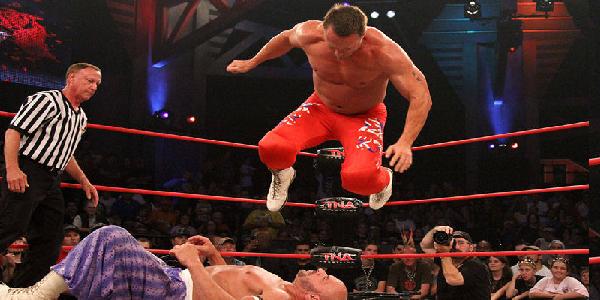
A former national judo champion, Doug Williams€™ first match was in 1993 (where a young MC called Dean Ayass also worked his first ever show). A product of Andre Baker€™s Hammerlock School of Wrestling, Williams was clearly the star pupil, entering into a main event feud with his trainer. Moving to the FWA, where he became a headliner, his first venture to the US came with Sheldon Goldberg€™s New England Championship Wrestling. Williams€™ first major break in the US came at the seminal King of Indies event in 2001, which also featured Bryan Danielson, Low Ki, Samoa Joe, AJ Styles, Frankie Kazarian and Spanky, and was the inspiration for Ring of Honor starting up the following year. Williams made several appearances for ROH in the early part of the decade, facing Danielson in his debut and challenging for the ROH World Championship later that same year. In 2004, Williams captured the ROH Pure Championship, defeating Alex Shelley in the tournament final. While being a regular part of the Pro Wrestling NOAH roster in Japan, Williams continued to make appearances for ROH, and in 2008, he was selected to represent €œTeam International€ in TNA€™s World X Cup tournament, and continued to make regular appearances for TNA thereafter. As part of the British Invasion stable, he captured both the TNA and IWGP World Tag Team Championships, and once the stable split, he embarked upon a successful run as a singles competitor, winning the X Division Championship in January 2010. He then became a member of the headline stable Fortune, sharing the TV screen with the likes of Ric Flair and AJ Styles. By the end of the year, Williams had turned face and left the stable, and in December 2010, he enjoyed the biggest win of his career in the United States, when he cleanly pinned AJ Styles with his own Styles Clash manoeuvre to win the World Television Championship at the Final Resolution PPV. He lost the belt to Abyss the following month and then fell down the pecking order after a change in booker. After making only sporadic appearances on screen, Williams was appointed as a trainer in TNA€™s developmental territory, OVW, but was then given his contract release in 2013.

5. Paige

When you win the top championship in American women€™s€™ wrestling on your first night, you know you€™ve made an impact, and that€™s exactly what Paige did at the age of just 21. America has the Funks and the Von Erichs. Canada has the Harts. And the UK has the Knight family, owners of WAW, one of the UK€™s longest running promotions. The daughter of wrestlers Rowdy Ricky Knight and Sweet Saraya, Paige had no intention of becoming a wrestler initially, but fell into it over time while being surrounded by the business. Not only did her parents wrestle, but so did her brothers, two of Britain€™s most solid and spectacular talents, Roy €œZebra Kid€ Knight and Zak €œZodiac€ Knight. Debuting at the tender age of 13 to fill in for an absent wrestler, she displayed a natural aptitude for the business, and would often travel abroad with her mother or even alone all across Europe. I witnessed some of the matches that she would have with her mother Saraya (who€™s one of the scariest heels EVER!) and, well, let€™s just say that they didn€™t go easy on each other, putting on some of the most hard-hitting women€™s€™ matches ever seen outside of Japan. Paige and Saraya€™s exploits were making waves all across the wrestling world, and they didn€™t go unnoticed in the United States. In 2011, Paige (wrestling as Britani Knight) and Saraya ventured across to compete in Shimmer, the all-female independent promotion based out of Illinois. They had a couple of unsuccessful tag team title challenges before the team imploded, and the mother and daughter combination had a typically brutal no-DQ match which proved to be Paige€™s last match for Shimmer. When the WWE reinvented their developmental territory, Florida Championship Wrestling, as NXT, Paige featured prominently in the opening titles. Her debut match came in the third episode and she was given time to display her talents. With the main WWE roster being very much glamour over graft at the time, it was clear to see that the best women€™s€™ wrestling was happening in NXT rather than WWE itself. When NXT created a women€™s€™ championship, it was clear that they viewed Paige as the best wrestler they had on their roster, and she became their inaugural champion. This meant that NXT viewed Paige as the person they could rely on most to deliver when it came to the headline female matches. In April, on the day after WrestleMania, in front of a crowd filled with travelling European fans who were very much familiar with her from NXT and her European exploits as Britani Knight, Paige made an unannounced appearance on Raw and captured the WWE Divas Championship from a stunned AJ Lee. This meant that Paige would be appearing on every episode of Raw and every PPV as champion. She is currently embroiled in a highly entertaining feud with AJ over the title, which has switched between the two and is currently back with Paige. It€™s clear to see that women€™s€™ wrestling in the WWE is in safe hands with Paige at the forefront for many years to come.

4. Dynamite Kid

One of the toughest men to ever lace up a pair of wrestling boots, Tommy Billington was a survivor of a Lancashire training school run by Ted Betley. Debuting in the UK in 1975, he quickly became a favourite of the television audience, and won the British Lightweight title just two years later, in a very fast ascendancy. Joint Promotions had a working relationship with Stu Hart€™s Stampede Wrestling in Canada at the time, and the Dynamite Kid travelled across the Atlantic many times, often with his cousin Davey Boy Smith. He was a sensation in Canada and was then booked in New Japan Pro Wrestling, where his legendary feud with the original Tiger Mask changed the face of junior heavyweight wrestling in the early 1980s. He won the WWF Junior Heavyweight title, which, despite its name, was primarily competed for in Japan, in February 1984, but this led to the WWF offering him an exclusive contract to wrestle for them. In August of that same year, Dynamite made his WWF debut, teaming with his old Stampede and New Japan colleague, Bret Hart. However, before long, he and Davey Boy had been put together in a tag team, as The British Bulldogs, complete with their own pet bulldog, Matilda. Their feud with The Hart Foundation really put tag team wrestling on the map in the WWF with fast paced and hard hitting matches that hadn€™t been seen in the WWF before. In fact, the tag team division was so successful that in both 1987 and 1988, the annual Survivor Series event saw a ten team elimination match. Just imagine trying to do that today! The Bulldogs won the WWF World Tag Team Championship at WrestleMania II and held them until February 1987, when they dropped them to the Harts after Dynamite had suffered a debilitating back injury caused by the combination of drug abuse and his unique but hard style of wrestling. Dynamite€™s style was unrelentingly hard. His top rope diving headbutt was spectacular, and he occasionally did the move to the outside of the ring! His snap suplex was the fastest in the industry. His style influenced many great wrestlers of future generations, most notably WWE champions Chris Benoit and Daniel Bryan. Bret Hart has previously stated that Dynamite was the best wrestler he ever saw. The Bulldogs left the WWF immediately after the 1988 Survivor Series and returned to Japan, where Dynamite enjoyed further success. But his American adventure was over. Today, he lives in a council house in his native Lancashire. Since the late 1990s, he has been confined to a wheelchair and in 2005, it was reported that he had to have a leg amputated. But in his autobiography, Pure Dynamite, he says that he wouldn't change a thing.

3. Billy Robinson

http://www.youtube.com/watch?v=lmovwWxMX0Y Initially an accomplished amateur wrestler, winning both British and European championships, Billy Robinson attended the infamous €˜Snake Pit€™ training school in Wigan. The Snake Pit is renowned globally for producing €˜shooters€™ €“ men who could take you down and hurt you for real if they needed to. Robinson won the British Heavyweight title in 1967, beating fellow Snake Pit attendee, Billy Joyce. In the following two years, Robinson won heavyweight titles in Japan and Canada. It was this international reputation that took him across the Atlantic to the AWA (American Wrestling Association), whose owner Verne Gagne liked shooters to maintain the reputation of the wrestling business. Before long, Robinson was a top contender for Gagne€™s AWA World Heavyweight title, and their feud is still remembered to this day. Although Robinson had his greatest fame and influence in Japan, as his British style based around technical mat wrestling and legitimate submission holds was lapped up by the Japanese audience, he was revered by modern day students of submission wrestling. In the late 1980s and early 1990s, a more legitimate looking style of wrestling, based around €˜shoot style€™ matches, began to emerge in Japan, with Robinson being viewed by many as a godfather of this style. At the turn of the century, MMA started to grow in popularity, and Robinson again found himself in demand as a trainer to many MMA stars, such as Josh Barnett and current UFC rising star, Rolando Delgado. The legitimate holds that Robinson had learned as a way of defending himself and preserving the integrity of the wrestling business in one generation were now being valued by MMA fighters of a new generation. Even while needing a stick to walk, Robinson would still get down on the mat and demonstrate holds to students. The MMA influence on professional wrestling in the United States can be witnessed through watching classic matches of the past decade such as Samoa Joe v Kurt Angle in TNA and either of the two Brock Lesnar v John Cena PPV main events. Billy Robinson was the very first Brit to make an impact in the United States, and he paved the way for future generations, as the British style of wrestling became a true global export. Robinson was truly an all-time great. He passed away at the age of 75 this past March. While he may no longer be with us, Billy Robinson€™s work lives on in a huge number of wrestlers and fighters across the globe.

2. William Regal

Breaking into wrestling in the late 1980s, Roy Regal (as he was initially billed) made a handful of appearances on televised wrestling in Britain before it was axed in 1988. Training under globetrotting British star, Marty Jones, Regal€™s upbringing in wrestling was in the brutal carnival booths of his native Blackpool. As he gained experience at home, he started to travel, wrestling in continental Europe and South Africa. But his dream was always to get into the big time promotions of the United States, and every year, he would send a new videotape of his recent work to the WWF and WCW. In December 1991, WCW made their first trip to the UK, and Regal was drafted in and wrestled on every show of the tour. By the end of the tour, he was starting to be given wins over WCW regulars Terry Taylor and Jimmy Garvin. His traditional British style was something that was out of the ordinary in WCW and this was his unique selling point. In the summer of 1993, with his other European commitments completed and all the visa paperwork done, Regal made his WCW debut. He was a nervous babyface in Union Jack trunks called Steve Regal. While his pure wrestling was streets ahead of most in WCW, it was clear that his character needing tweaking to get American audiences to notice him. Enter Bill Dundee in a suit and bowler hat and a royal blue cape, and Lord Steven Regal, a conceited nobleman, was born. The character was cheesy and was a massive stereotype of what Americans perceived Brits to be, but Regal pulled it off with aplomb. He was hilarious. His facial expressions and reactions to everything going on around him were priceless. He maintained the Lord character for five years, until he jumped to the WWF in 1998. However, he was plagued with health problems at this time, and barely made it onto TV. He checked into rehab and was released by the WWF in 1999. After rehab, he reappeared in WCW where he had a midcard role as a toned down version of his old Lord character. He then re-signed with the WWF in 2000, where he was repackaged as William Regal, a British snob, similar to his WCW character. Regal won the WWF European Championship and then became Commissioner of the WWF. The skits filmed in his office, often with Tajiri as his sidekick, were hysterical, and often the highlight of the entire show for me. Regal then moved to Smackdown, the more wrestling orientated weekly show, and then to WWE€™s version of ECW, where he worked with younger talents to pass on his years of experience. He still wrestles very occasionally, most recently in NXT, where he is an excellent commentator and is now the new Commissioner of NXT. Although he never won €˜the big one€™, Regal has been a mainstay of American professional wrestling for over 20 years, and has won European, Tag Team and Intercontinental titles. The fact that his two IC title reigns were six years apart bears testament to his longevity in the business. A great wrestler and a great trainer (just ask Daniel Bryan, whose burgundy trunks are a tribute to Regal, who often wore the colour himself), William Regal has certainly had a profound impact on the United States.

1. Davey Boy Smith

There could only be one person at number one. Taking a similar route into the business as his cousin, the Dynamite Kid, Smith ventured from British television wrestling to Canada to Japan to the WWF. But while Dynamite stayed in Japan, Smith returned to the WWF as a singles competitor in 1990. Looking bigger than ever before, and with his hair in distinctive braids, he was known as The British Bulldog. At this time, the WWF was starting to gain in popularity in Smith€™s native Britain, and so the WWF began to feature him more prominently and move him up the card. A 1991 UK tour was based around Smith, who had taken the place of Hulk Hogan as the top draw in the country. As the WWF became a phenomenon in the UK, SummerSlam 1992 was moved from the US to the UK, and the Intercontinental Championship match between Bret Hart and Smith became the main event of the night as 80,000 fans packed Wembley Stadium. While all of this happened in the UK, the WWF, an American company, were the ones raking in the financial benefits. The match was a classic, voted Match of the Year by numerous polls as Smith became Intercontinental Champion for the only time. In 1993, Smith switched to WCW after leaving the WWF in late 1992. Again, his popularity in the UK was the driving force behind two highly successful British tours that year for a major American company. Smith was pushed very prominently in WCW, forming an alliance with Sting and headlining the Beach Blast PPV against Vader and Sid Vicious. Smith would also challenge unsuccessfully for Vader€™s World title on numerous occasions, headlining house shows. The following year, he returned to the WWF as part of the Hart family feud between Bret and Owen. He subsequently turned heel and cut his hair short. The turn reinvigorated his career and he headlined three consecutive In Your House PPVs, with a bloody World title bout with Bret being the highlight. In 1997, the WWF created the European Championship (which was defended in the US as well), which Smith became the first holder of. After the events of the 1997 Survivor Series and the Montreal Screwjob, Smith left WWF and returned to WCW, where he had a less than stellar run, buried in the midcard. An accident where he landed on a trap door hinge during the Fall Brawl 1998 PPV nearly paralysed him and he was left in hospital in a full body cast. It was at this time that the ever classy WCW fired him via Fed-Ex. He had a final run in the WWF, where he won the WWF Hardcore Championship, but his €˜Britishness€™ was stripped from him. Competing in jeans and without Rule Britannia as his entrance music, he had lost the thing that set him apart from his contemporaries. He wrestled his final match for the WWF in May 2000. Smith€™s son Harry followed in his father€™s footsteps and became a wrestler, competing in both the WWE and New Japan Pro Wrestling. The father and son duo teamed together three times in 2002 before Davey Boy€™s tragic and untimely death that year at the age of 39. His death was mainstream news, such was his popularity and instantly recognisable look.

Contributor
Contributor

Dean Ayass is a well known name to British wrestling fans. A commentator, manager, booker and ring announcer who has been involved in the business since 1993, Dean's insight into the business is second to none.