10 Deadliest Wrestling Submission Holds Ever

Many are impractical and some are downright goofy, but every single one on this list was guaranteed, at some point or another, to get a pop from the crowd.
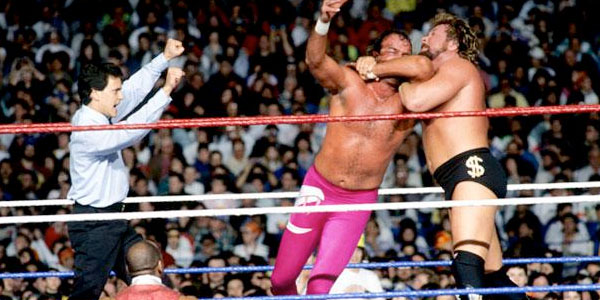
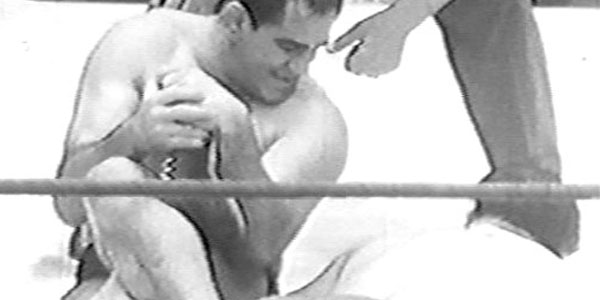
€œAll I saw was a flash of an arm and a hook of a neck, and then a human constrictor wrapped around its prey. A human constrictor wearing a mask of bright crimson, so thick and so wet that it stood in bright contrast to the whites of his eyes. Eyes that were calm. My father was hooked around Baskin in a sickening way. A way that held the man€™s body at angles that bodies won€™t go. But the sounds. The sounds I think were the most sickening of all. Low guttural wheezes from way back in his lungs. Animal noises from a prey that was done€. €“ Excerpt from Tietam Brown (2003) by Mick Foley. Despite the scientific, ground-based mat game indicative of €˜old school€™ pro wrestling going the way of the dinosaur over the last 20 years or so, amateur-style holds and reversals of holds are still a vital part of any serious pro wrestler€™s training. Most professional matches still begin with a lockup and a great many still end in submission, no matter how many closed-fist punches and triple somersaults are performed in between those two events. A submission victory is, in a very obvious sense, the dramatic re-enactment of a very primal thing. In legitimate, or €˜shoot€™ wrestling, grasping your opponent and inflicting unimaginable pain upon him is pretty much the aim of the game. It is the ultimate test, one man pitting his will, mettle and skill against another€™s. To the winner goes pride, whilst the loser limps home in disgrace... However, this article isn€™t really about €˜legitimate€™ wrestling holds. In a real fight, you€™re highly unlikely to be able to use pro wrestling staples such as the sharpshooter, figure four leg lock, Mexican surfboard or tarantula rope stretch. However, a correctly applied front facelock, chokehold or armbar stretch can effectively end almost any fight against anyone. Of course, pro wrestling is a show, an exhibition, a demonstration of athletic prowess and, above all, a story being told. Therefore, the holds are flashy, designed to look good on camera and to illicit an emotional response from you, the viewer. Over the years, countless performers have used these holds to win countless matches and, as a result, all of them have a great deal of value attached to them from a ring psych standpoint. Many are impractical and some are downright goofy, but every single one on this list was guaranteed, at some point or another, to get a pop from the crowd and was (or is) easily capable of ending any worked match situation. Here€™s 10 of the best...

10. The Anklelock

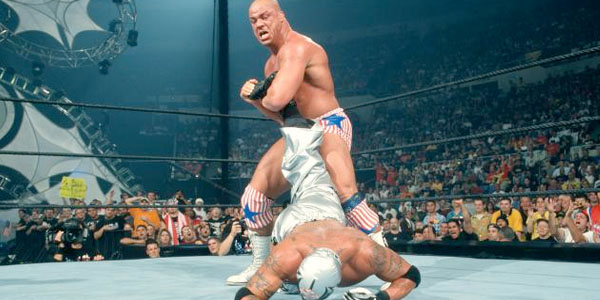
Greatest Practitioner: Kurt Angle Also used by: Ken Shamrock, Jack Swagger. Early forms of the anklelock were practiced in medieval Japan and the hold is believed to have originated from ju-jitsu. It is also used in judo, MMA and amateur wrestling. In professional wrestling, however, the leg is usually lifted off of the ground in a more theatrical fashion, which occasionally leads to a more traditional mat-variation with body scissors applied. Ken Shamrock is generally credited with bringing this move into modern pro wrestling, but as it was/is used in traditional €˜catch€™ or €˜shoot€™ wrestling, he is definitely not the first wrestler to have ended a match or two with it. Once Kurt Angle started using the move in the early 2000€™s and garnered a string of highly credible victories with it, the anklelock€™s stock was boosted significantly and it is now greatly respected by pro wrestling fans as a premier submission hold. Nevertheless, in any incarnation, this move can genuinely hurt a person.

9. The Camel Clutch

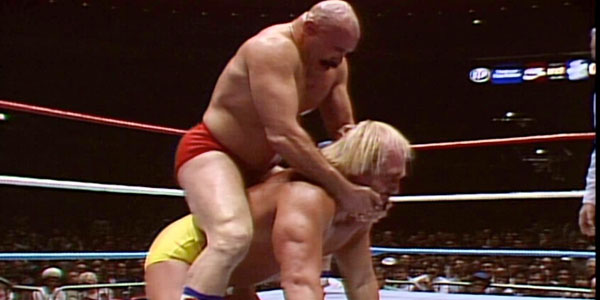
Greatest Practitioners: The Original Sheik, The Iron Sheik. Also used by: Gory Guerrero, Sgt. Slaughter (as a heel), Sabu, Rusev A nasty variation of the rear chinlock, the camel clutch involves stretching the opponent€™s back and wrenching their head backwards at the same time. Technically, the difference between a rear chinlock and a camel clutch is the placement of the opponent€™s arms over your thighs, but the two names are often used interchangeably. Gory Guerrero (patriarch of the legendary Guerrero wrestling family) innovated the hold as a chinlock variation in Mexico. The hold was then adopted by Ed Farhat €“ alias The Shiek - who re-named it to fit his Middle Eastern gimmick. From there, it got over as one of the most feared submission holds in the history of pro wrestling. Heel wrestlers generally usually use it more than babyfaces do, as it is incredibly painful to look at and thus represents a great way for a babyface to illicit sympathy from a crowd. It also works exceedingly well as a photo/video opportunity. Because The Sheik used the hold so well throughout his career and because he was so feared in his prime, the hold was over enough for The Iron Sheik to use it to end the five-year reign of WWF Champion Bob Backlund. In this famous incident, Backlund€™s friend and manager Arnold Skaaland reluctantly €˜threw in the towel€™ after seeing that Backlund would never escape the deadly hold.

8. Last Chancery

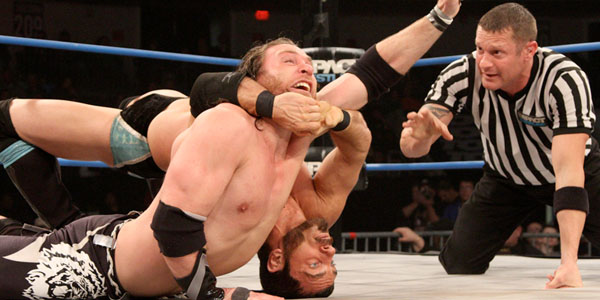
Greatest Practitioner: Austin Aries Also Used By: No-One (yet!) The €˜Last Chancery€™ is the name used by Austin Aries for his modified version of a bridging arm triangle choke, a type of chokehold that originated from judo. The move takes its name from the front chancery; a type of standing headlock that is similar to an arm triangle. An arm triangle choke is a legitimately deadly move that involves a headlock that constricts the windpipe between the victim€™s own shoulder and the arm of the practitioner. It is commonly used in MMA fights. Aries€™ version, like the best pro wrestling holds, adds a dash more spectacle to the mix, as, once the hold is applied, Aries rolls forward in a flip-like motion, bridging his back and wrenching his opponent€™s back and neck upwards at the same time. It looks awesome, providing an excellent photo opportunity. This is a hold that you can probably expect to see taking its place as a much-feared and widely used move in the years to come.

7. The Iron Claw

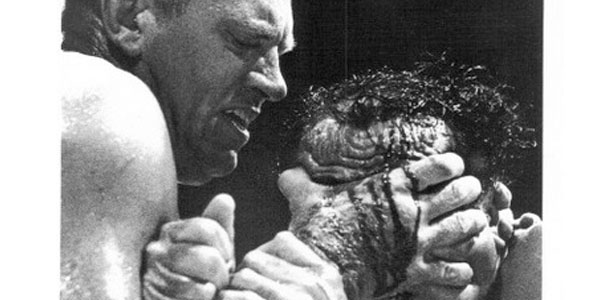
Greatest Practitioner: Fritz Von Erich Also Used By: Baron Von Raschke, The Von Erich Family, Killer Kowalski The Iron Claw is a perfect example of the power of ring psychology. Put simply, like The Stone Cold Stunner, The People€™s Elbow and, erm, The Worm, The Iron Claw is purely for show...And yet people believed in it absolutely. In this hold, the practitioner grips the opponent€™s face and squeezes as hard as he can. The thumb and forefinger bite into the temples and threaten to cause brain damage. Of course, this makes for a great photo op and a dramatic ending to any match (if it is sold correctly by the victim). In his autobiography, More Than Just Hardcore, Terry Funk recounts how over this hold actually was at one point (and could easily be again, with the right promotion) €œBaron Von Raschke used to get his clawhold over with people in a spot where he didn€™t even put it on his opponent. He used to do a spot where he€™d lunge with the claw, but his opponent would move, and Von Raschke would have to pry his clawhold off the turnbuckle! That was one of my favourite holds in the business. His clawhold grip was so strong that he couldn€™t make his own fingers let go of the turnbuckle! And people believed in that! They believed he was truly unable to release the turnbuckle. What was it he had, that he could get away with doing something so absurd?€ The Iron Claw was once one of the most feared holds in pro wrestling, carrying more weight to it than 99% of today€™s holds (even the legitimate MMA stuff that has migrated back into today€™s wrestling). In the minds of the fans, this was an awesomely lethal finisher. It would be nice to see it make a comeback...

6. The Stepover Toehold

Greatest Practitioners: Ad Santel, Lou Thesz Toehold Variations Also Used By: Dory Funk, Jr, Terry Funk, John Cena, William Regal. The toehold is a move that can legitimately break a man€™s leg, if applied correctly. There is even an old story in wrestling that details hooker Ad Santel using the move to disable former World Heavyweight Champion Georg Hackenschmidt before his famous rematch with Frank Gotch in 1911. The story is probably a €˜mat myth€™, but like all other mat myths, it is nevertheless fun to talk about and to ruminate upon. The great Lou Thesz likely learned the move from Santel (or maybe from his mentor Ed €˜Strangler€™ Lewis) and would later combine the stepover toehold with a front facelock, in order to innovate the STF (Stepover Toehold Facelock), a move that is (sort of) used today by WWE Champion John Cena. Over the years, many variations on the basic toehold have been employed. Perhaps most notable on the list of practitioners are the Funk brothers, Dory, Jr and Terry, who both used the €˜Spinning€™ toehold variation to great effect as NWA World Heavyweight Champions. By today€™s standards, the generic toehold is actually quite a boring manoeuvre to watch and would likely only be used to get an injury angle over. Having said that, the stepover toehold is still a supremely valuable piece of wrestling mechanics that holds a lot of other, more complicated, moves together. It may no longer be a main attraction, but it is still one of the sport€™s vital building blocks.

5. Crossface

Greatest Practitioner: Chris Benoit. Also Used By: Daniel Bryan, Bobby Roode. The €˜Crippler Crossface€™ €“ as the move is never, ever called on WWE TV anymore, is a type of €˜neck crank€™ that is comparable to similar moves found throughout traditional martial arts, MMA and shoot wrestling. Chris Benoit is the wrestler that most modern fans associate with the crossface. His €˜Crippler€™ variety of crossface was hugely over at the height of €˜The Canadian Crippler€™s€™ career €“ and probably still would be if he hadn€™t died under such awful and tragic circumstances. Still, the move has continued to enjoy a high profile since Benoit€™s death and famous wrestlers use variations on it to this day. Daniel Bryan has a brilliant take on this hold in his moveset. The €˜Yes Lock€™ used by Bryan is actually an omoplata crossface or coil lock €“ a hold commonly found in the arsenal of any accomplished judo or ju jitsu practitioner. The same also goes for Bobby Roode, who employs a more traditional variety of pro wrestling crossface in his matches. A different type of crossface, the Crossface Chickenwing, was also used to great effect by former WWF World Champion Bob Backlund throughout his career.

4. Bearhug

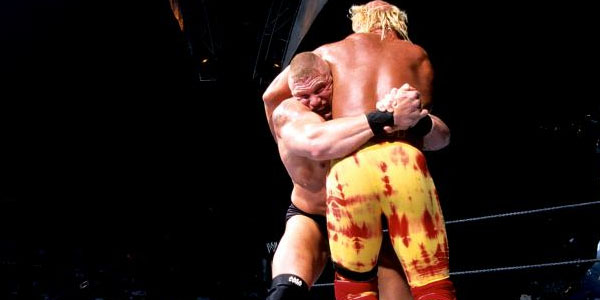
Greatest Practitioners: Georg Hackenschmidt, Bruno Sammartino. Also Used By: Andre The Giant, Brock Lesnar, The Ultimate Warrior, Big Show, Big John Studd, Mark Henry (and every other big man in the history of wrestling...) The psychology behind the bearhug is deceptively simple. Take a great big set of powerful arms, wrap them around the waist of a smaller opponent and literally squeeze the air out of him until he passes out. It sounds a bit silly, but the bearhug is actually a very dangerous move if employed for real. Evolving from amateur wrestling, the bearhug has been usually been used as a finisher by large, powerful wrestlers. In photographs, it demonstrates the strength of a wrestler and provides an easy (and effective) photo opportunity. Used by a babyface, the bearhug demonstrates power and dominance. When used by a heel, it becomes a useful sympathy-inducing tool in €˜David vs. Goliath€™ matches (such as Brock Lesnar vs. Eddie Guerrero at WWE No Way Out 2004 or Sycho Sid vs. Shawn Michaels at the 1997 WWF Royal Rumble). By far the most effective bearhugger of all time was €˜The Russian Lion€™ Georg Hackenschmidt, a legitimate candidate for the strongest man of his era (early 20th century) and something of a physical marvel. Hackenschmidt was probably the first widely recognized World Champion of wrestling, although we€™re talking legitimate €˜catch€™ wrestling contests here. Hackenschmidt was not a technical marvel by any stretch of the imagination, but once he locked in his signature bearhug, pretty much any bout would be brought to a swift and decisive end.

3. Figure Four Leg Lock

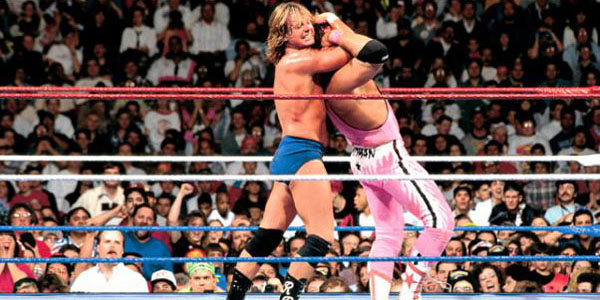
Greatest Practitioner: Ric Flair Also Used By: Buddy Rogers, Greg Valentine, Dusty Rhodes, Bret Hart The figure four leg lock is a move that has been used by many a wrestler, including a lot of very successful World Champions. Like the best pro wrestling holds, it carries with it an air of legitimacy, but would be rather difficult (although probably not impossible) to apply in a legitimate fight. Basically, there are far more effective (and far less tricky) moves you could use instead. The figure four leg lock was innovated in the 1950€™s by €˜Nature Boy€™ Buddy Rogers and later popularized by €˜Nature Boy€™ Ric Flair (hence the omnipresent €œWooo!€ chants that go up whenever a modern day wrestler attempts to use it). Another cool thing about the figure four leg lock is that it is a pro wrestling original. Figure four stretch variants (basically anytime a joint lock resembles a €˜4€™ shape) exist in martial arts, MMA and shoot wrestling, but this particular manoeuvre was designed with professional wrestling in mind. As such, it is tailor made for ring psychology and photo opportunities and is easily applied by babyface and heel alike.

2. Sleeper Hold

Greatest Practitioner: Ed €˜The Strangler€™ Lewis Also Used By: Ted DiBiase, Dolph Ziggler, Randy Savage, Jack Brisco, Roddy Piper (and many, many, many more) In reality, the sleeper hold is yet another move that is legitimately dangerous. By cutting off the flow of blood to the carotid artery, it is possible to induce a loss of consciousness in an opponent. It is also possible to kill them outright if the hold is not broken in time. The sleeper hold is an effective submission move because it is legitimate, credible and easy to understand, even for those in the cheap seats at the back of the arena. It makes for great photography and is a move that can be placed on anyone, anywhere and at any time, regardless of the opponent€™s size, weight or physical conditioning. It is also a favourite €˜rest hold€™ of many wrestlers, past and present. The greatest sleeper hold ever was performed by Ed €˜The Strangler€™ Lewis, who was obviously so linked to the hold that it was reflected in his name. Lewis would use the hold legitimately in shoot contests, or as needed to keep unruly opponents under control in what we can now effectively think of as the formative years of worked professional wrestling matches. When jazzed up with a cool name (such as €˜The Million Dollar Dream€™) or some well-placed theatrics, the Sleeper Hold can still be a feared finisher, even today.

1. Sharpshooter/Scorpion Deathlock

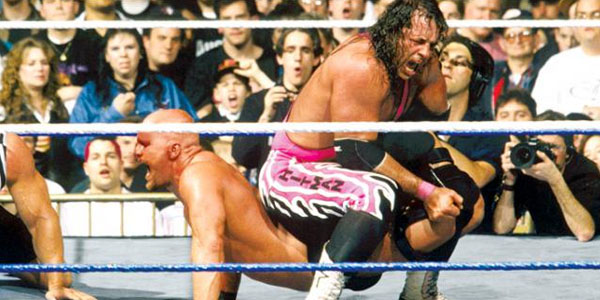
Greatest Practitioners: Bret Hart, Sting Also Used By: The Rock, Riki Choshu, Owen Hart, Edge, Bobby Roode Long held to have been created by Stu Hart (patriarch of the Hart wrestling family) for his son Bret to use, the move that we call The Sharpshooter was actually invented by Japanese wrestler Riki Choshu and was popularized in the US by Ron Garvin and, more notably, Sting (who calls his version €˜The Scorpion Deathlock€™). In case you€™re wondering, the Stu Hart story was a work created by the then-WWF to take advantage of Stu Hart€™s (well deserved) reputation as a dangerous shoot wrestler. Nevertheless, It is €˜The Hitman€™ Bret Hart who is the wrestler most closely linked with this move. Bret Hart used The Sharpshooter to win countless victories in the WWF and, once the hold was applied, it was all over. Very few ever escaped the grip of this masterful hold and it helped Hart get his hands on five WWF World Championships and two WCW World Championships. The Sharpshooter looks very painful (largely because it is) and makes for tremendously exciting TV whenever it is applied. The move also shares common elements with tried-and-true favourite wrestling holds The Cloverleaf and The Boston Crab, but, in truth, it should actually be considered to be a type of Grapevine, since it involves twisting an opponent€™s limbs together. Today, Canadian wrestlers generally use the move in tribute to Hart, who is a national sporting hero in Canada... So, that€™s the list. Remember, you only have yourself to blame if you try and hit your enemy with a Mankind Mandible Claw or Killer Kowalski Stomach Claw the next time you end up in a fight. Just because it looks good on TV, does not mean you€™ll get anywhere with it in real life! ...And that goes DOUBLE for €˜The Worm€™!

In this post: 
Austin Aries
 
Posted On: 
Contributor
Contributor

I am a professional author and lifelong comic books/pro wrestling fan. I also work as a journalist as well as writing comic books (I also draw), screenplays, stage plays, songs and prose fiction. I don't generally read or reply to comments here on What Culture (too many trolls!), but if you follow my Twitter (@heyquicksilver), I'll talk to you all day long! If you are interested in reading more of my stuff, you can find it on http://quicksilverstories.weebly.com/ (my personal site, which has other wrestling/comics/pop culture stuff on it). I also write for FLiCK http://www.flickonline.co.uk/flicktion, which is the best place to read my fiction work. Oh yeah - I'm about to become a Dad for the first time, so if my stuff seems more sentimental than usual - blame it on that! Finally, I sincerely appreciate every single read I get. So if you're reading this, thank you, you've made me feel like Shakespeare for a day! (see what I mean?) Latcho Drom, - CQ