10 Early WWE Hall Of Fame 2018 Predictions
Bare breasts, blue dots, green mist.

What is the criteria for inclusion in the WWE Hall of Fame?
The totally unexpected induction of New Japan Pro Wrestling über-legend Tatsumi Fujinami in 2015 seemed to herald a sea change of technical performers who largely made their name outside of the company. But in reality, it was perhaps more realistic that A) WWE wished to legitimise the Hall by inducting an overseas performer once per year and or B) Fujinami had a tangential association with the company by holding a title it once recognised many moons ago.
In reality, it's solely Vince McMahon's call, and he is notoriously erratic. To underscore that, Fujinami wasn't followed into the Hall a year later by a fellow Japanese talent, of which there are countless worthy of the honour. Instead, for WWE's non-US born inductees, the company cast their eye in the direction of The Bushwackers. Fujinami they ain't.
As we said, the criteria is erratic.
WWE doesn't tend to induct 10 names at once - and at this rate, with the company still so geared toward nostalgia at the main event level, it might not be able to get away with inducting even five for much longer. But what follows is a series of educated guesses, bearing the massively politicised nature of the institution in mind...
10. Sable

Sable was a major component of the WWF's Attitude Era success.
She was the company's answer to teenage daydream Pamela Anderson - an impossibly buxom blonde whose stripteases drew as much of a reaction as Steve Austin's Stone Cold Stunners. She didn't just get 'em out - lost amid that iconic image of her hand printed bare breasts as Fully Loaded 1998 was her appearances at and leading up to WrestleMania XIV. Her mixed tag match with Marc Mero opposite TAFKAGoldust and Luna Vachon was received incredibly well. She showed much in the way of babyface fire.
Beyond that, she was one of the worst technical performers ever to step foot in between the ropes - there's no getting around it - but a tenuous grasp of in-ring mechanics is no barrier to the Hall. Charles "The Godfather" Wright was honoured in 2016, and he wrestled more stinkers than even Mideon in the putrid pre-Radicalz Attitude Era undercard.
Thinking politically, Brock Lesnar's contract is up for renewal around the time the Hall is presented in spring 2018. If he has a sentimental side, WWE might play up to it in negotiations with the promise of his wife's induction.
9. Ivan Koloff
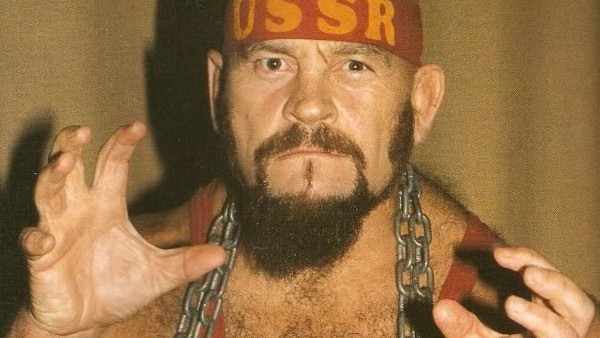
Having the unfortunate distinction of being dead limits the chances of inductees in an age in which the publicly traded WWE prefers not to acknowledge the torrid underbelly of the wrestling industry. However, though Ivan Koloff was one of countless wrestlers to have lived a life marred by struggles with drugs and alcohol, he died at the old age of 74 of liver cancer. He isn't an unseemly symbol of wrestling's lurid past.
There's no question that he is worthy of the so-called honour. Koloff was the man who ended Bruno Sammartino's record 2,803 day reign with the WWWF Title in mythical circumstances. When he pinned Sammartino, Madison Square Garden became deathly silent; so much so that Sammartino thought he'd perforated his eardrum. The hush gave way to a quiet chorus of crying women. Sammartino was so beloved that Koloff, at least at first, disappointed the people more so than he enraged them. The heat eventually grew so nuclear that the WWWF felt it was too dangerous to take advantage of.
Koloff is remembered for that moment above all else, but he was a bonafide star in the terrirory era for years.
That he died so recently might preclude a more or less immediate induction (he died as the Class of 2017 was finalised internally), but then again, WWE are hardly concerned with being perceived as ghouls.
8. Davey Boy Smith

WWE tends to induct just the one deceased performer per year - a deceased performer with a history of fast living who died young, anyway - so as to not shine too harsh a light on how horrific the industry was in the pre-Chris Benoit era.
Davey Boy Smith is probably less deserving of a place than his old tag team partner, the Dynamite Kid - but ironically, the broken state in which Tom Billington finds himself is somehow more damning of the industry's toil than Davey Boy would be in death. That's not to say Smith on his day wasn't a great worker (not that that matters much, obviously); he might have been almost literally carried through his finest moment, at SummerSlam 1992, but his sequel with Bret Hart at In Your House: Season's Beatings was an equal, bloody and massively dramatic effort. A 1997 RAW match with Owen Hart is a minor and sadly forgotten classic.
Smith was a major draw in his homeland. The then (legitimate) WWF record attendance owed much to the company's popularity via the nascent Sky Sports in the UK, but Smith was a massive factor behind it in his own right.
WWE's latest foray onto UK shores is scheduled to continue apace with a weekly Network programme. Inducting Davey Boy would be a sound way of publicising it.
7. Giant Baba

Giant Baba was never the most mechanically gifted performer in the history of puroresu, but he was an immensely popular and charismatic special attraction. He was also a drawing card as gigantic as his frame. To underscore that, he was ranked 93rd in a list of favourite historical figures as chosen by his countrymen nearly two decades after his death.
His contributions to the business outside of the ring were arguably as important as his body of work inside of it.
Baba was the founder and chief creative force behind All Japan Pro Wrestling, the 1990s oeuvre of which is for many the absolute greatest era of both match quality and purposeful star creation in puro history. Baba instigated the company's golden period with a brave and intuitive decision to put a young Mitsuharu Misawa over then Ace Jumbo Tsuruta in 1990. Misawa became the 'Standard Bearer of Future Generations', amassing more five star matches than any performer ever, selling out the sizeable Budokan Hall countless times. The carefully orchestrated pushes of Toshiaki Kawada, Akira Taue, and Kenta Kobashi unfurled in parallel. His Four Pillars of Heaven sustained mega business for a full decade, all under his immaculate penmanship.
He had little to do with the WWF throughout his legendary wrestling career, but the recently introduced "Legacy" wing - which essentially is a way of honouring incredibly important figures who nonetheless aren't perceived as glamorous enough to have lengthy speeches made on their behalf - might yet provide him with an in.
6. The Midnight Express

Given that their career-long rivals the Rock 'N' Roll Express were inducted this year, it seems inevitable that WWE will induct the Midnights in 2018.
The Rock 'N' Roll Express are credited with perfecting the timeless southern tag formula, with Ricky Morton's authentic, flailing selling used to drive the searing drama in their classic and epic series of matches. But lost in that praise is the awesome and vicious heel work of Dennis Condrey and Bobby Eaton. For fans to take Morton's selling and Robert Gibson's comebacks seriously, the damage needed to look genuine. Condrey and Eaton were totally believable in their roles. Their manager Jim Cornette wasn't lying at this year's ceremony when he gushed about how many tickets the act sold. It was an inter-territory sensation.
Several incarnations of the act used the Midnight Express moniker, but Condrey and Eaton drew the most money and the most acclaim - and to create the requisite synergy between the two Classes, it seems obvious WWE would go that route.
As to their inductors, the honour surely must go to Cornette once more. The man can cut promos for days; it's not as if he's ran out of material.
5. Christian

Vince McMahon infamously didn't much like the look of Christian's face, but he remains on excellent terms with the company - which, unfortunately, is the principal factor behind inductions - and his WWE career was astonishing for a man of his slight proportions.
Christian, with Edge, The Hardy, and Dudley Boyz, revolutionised the ladder match and made tag team wrestling relevant again - no small feat, given that the division died a death in the years before and after. His subsequent singles career was quietly excellent - too quiet for McMahon, who was happy to let him jump to TNA.
His return to the fold in 2009 was muted; McMahon was enraged that news of it leaked and installed Matt Hardy as his storyline replacement, but Christian, as he had done throughout his career, rose through the ranks, and gave Randy Orton his greatest series of matches in 2011.
Christian is also a familiar face to WWE's younger target audience - vital in convincing them to watch what what is perceived by many younger fans as a stuffy and tedious ceremony for old-timers they have no real connection to.
Christian's induction is inevitable, and he's been retired for some time. He's not worthy of the first ballot, which is one honour WWE cannot get away with bestowing on just anybody, but he was an excellent and tenured talent.
4. The Great Muta

The Great Muta is the clear favourite to follow in the footsteps of Antonio Inoki and Tatsumi Fujinami as the next major Japanese name to receive Hall of Fame recognition.
His presence in North America was major. His legendary 1989 extended introduction was a notable factor in the NWA enjoying its greatest ever critical year. His work in the midcard was sensational. His workrate was so crisp, advanced and innovative that he opened western eyes to the concept of the Japanese workhorse on a national scale.
He is known by the majority of western fans for that sensational run, but he recovered from a succession of knee injuries, compounded by his invention of the Shining Wizard, to become one of wrestling's great renaissance men as both Muta and Keiji Mutoh - coming back time and again to enjoy critical and commercial reigns with New Japan's IWGP Heavyweight Championship. Mutoh is an undisputed legend of wrestling, not that that matters.
Beyond his self-evident accomplishments, Muta is one of few deserving Japanese performers of whom WWE owns the rights to considerable video footage, so his is a more convenient - and perhaps therefore more likely - induction than most.
3. Rick Martel

Rick Martel is one of the few WWF Golden Age midcard acts not included as a plaintiff in the ongoing lawsuit against WWE for their alleged concealment of the long-term neurological impacts of pro wrestling. He is free to enter the politicised Hall on that basis.
By WWE's non-metric, he's probably had a Hall of Fame-worthy career. He was a former American Wrestling Association World Champion - a recognised World crown - but his reign coincided with and essentially happened as a result of the company's wider decline in the mid 1980s. Deserved or not, Martel was a symbol of the company's fading fortunes.
He experienced much midcard success in the WWF. His heel turn on Strike Force tag team partner Tito Santana at WrestleMania V was one of the first low-key 'Mania moments - an act that was purposefully executed on the Grandest Stage for maximum emotional resonance. His subsequent run as 'The Model' is fondly remembered by fans of a certain age, his run with Jake Roberts in particular.
Martel was a perennial three star performer - but since utter duds have been inducted, a rare clean-living relic of an ugly age is surely a boon for the hugely image-conscious WWE.
2. Victoria

The issue with inducting Sable and Sable alone is that it exposes WWE's historical treatment of women's wrestling as the misogynistic flesh parade it was for years.
WWE remains in full Public Relations mode with the Women's Revolution, but that exercise exists within an awkward paradox. WWE needs to portray the preceding era as something close to what it was - otherwise, the achievements of the Four Horsewomen et al. wouldn't resonate as much - but it can't very well directly reference that time Debra captured the Women's title from Sable because Commissioner Shawn Michaels thought she had nicer t*ts.
Inducting Beth Phoenix this year was sort of damage limitation. Phoenix never wrestled any classic matches but was, reductively, the best of a bad bunch. Her induction was an acknowledgement that she was given sh*t and turned it into something that didn't entirely stink.
Similarly, Victoria was never given a great deal of time with which to work in WWE, but as Tara in TNA she proved herself both dedicated to and damn good at her craft. Her achievements there will have zero bearing on her Hall of Fame consideration, but she commands the respect to occupy the new token diversity niche even if her WWE body of work doesn't particularly justify it.
1. The Undertaker

WWE, in the aftermath of WrestleMania 33, never drew a definitive line under the Undertaker's career. But a 2018 Hall of Fame induction beckons.
Whether or not it happens next year is debatable. WWE tends to induct just one true megastar per year because they're fast running out of first ballot-calibre inductees; as mentioned, if the part-time era does not screech to an imminent halt, WWE runs the embarrassing risk of postponing the ceremony altogether in the near future.
Goldberg could very well "do a Sting" and enter the Hall while he's still in the public consciousness, and it would be senseless to induct both men at the same time - but WrestleMania 34 being hosted at the site of 'Taker's depressing loss to Brock Lesnar at 'Mania XXX is arguably too neat an opportunity to redeem that poorly judged result. What isn't debatable is that it is definitely going to happen at some point. 'Taker is a living legend with an unsurpassed CV as far as duration goes. 'Taker wrestled classics for decades and his 'Streak' did so much to usher in WrestleMania's stadium era. He has been Vince McMahon's locker room eyes and ears for years.
Will he join the Hall in character, or as Mark Calaway? That's really the only unanswerable question.