10 Failed WWE Stars Who Re-Invented Themselves In Japan

When at first you don't succeed, try your hand at puroresu...

WWE don€™t have a particularly good track record when it comes to giving rookies good gimmicks and keeping fans interested in them for long periods of time. For every great gimmick they come up with it seems as though there are five gimmicks that last only a short while before the wrestlers portraying those gimmicks are lost in the shuffle and, eventually, given their walking papers. For many of those failed stars, their post-WWE career is a difficult one. Going from wrestling in front of crowds of 15,000 in large arenas to wrestling in front of 150 people in a high school gymnasium has to be incredibly demoralizing, and even though there are hundreds of independent wrestling promotions out there desperate to book a WWE alumnus, the prospects are a bit bleak. Of course, there is another option for these failed WWE stars: Japan. Although many promotions in the orient are slowly beginning to emulate WWE€™s entertainment-oriented approach, at their core is a philosophy that emphasizes athleticism more than promos and storylines. Because of that different mentality, many wrestlers that didn€™t manage to succeed in WWE went to Japan and managed to achieve a great deal of success. The ten wrestlers on this list were all employed by WWE at one point or another, were let go because they couldn€™t succeed in management€™s eyes, and flourished while wrestling in Japan.


10. Shelton Benjamin

Shelton Benjamin had all the potential to be a main-eventer in WWE, but a few bad backstage decisions led to him being pushed down the card and eventually released from WWE in 2010. Some say it was all due to one incident where he criticized a WWE legend (who worked as a road agent), and that was enough to forever tarnish him in the eyes of many WWE higher-ups. But that didn€™t keep the skilled Benjamin down, and he signed with NJPW in 2013. Determined to highlight the athleticism that made Benjamin a star in WWE, NJPW allowed the newly-christened €˜Shelton X Benjamin€™ to perform in the style he found most comfortable. That has since led to a large number of great matches and entertaining moments, as Benjamin hasn€™t needed to cut many promos (which is a known weakness of his). Though he has yet to win any major championships in Japan, he has managed to reverse the negative momentum he has experienced since 2006 almost completely. Nowadays, fans recognize him for his skills and agility, and not for the cheesy gimmicks and stop/start pushes he had to suffer through while working for WWE.

9. Kenzo Suzuki

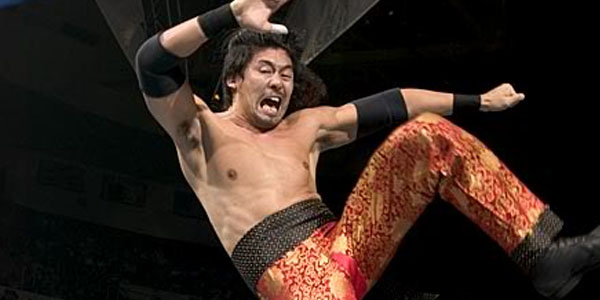
Fun fact: when WWE hired Kenzo Suzuki, they chose him over Hiroshi Tanahashi. Let that sink in for a minute. WWE tried to make Suzuki into a Japanese stereotype, complete with oriental music, martial arts attire, and a geisha companion. It didn€™t work out well for him at all, and the most notable things he achieved were a short run with the WWE Tag Team Championships and a storyline where he was obsessed with Torrie Wilson. Zenzo lacked the charisma needed to be a top star, and was released before ever making his RAW debut after being drafted to the red band in April 2004. Since then, he has returned to his native Japan, where he's managed to find more success, mainly due to the different mentalities of the bookers there. Though he wasn€™t the most athletic or technically-skilled guy (especially by Japanese standards), he still managed to work well when it counted, which led to successful singles and tag team title runs, as well as a shot at the Triple Crown Heavyweight Championship. Could WWE have made better use of Suzuki during his WWE career? Yes, but only if they didn€™t include the stereotypical elements of his character. Then again, they chose him over Tanahashi who was, and is, a Japanese Eddie Guerrero. That says quite a bit about their talent-scouting abilities back then, to be honest.

8. Vance Archer

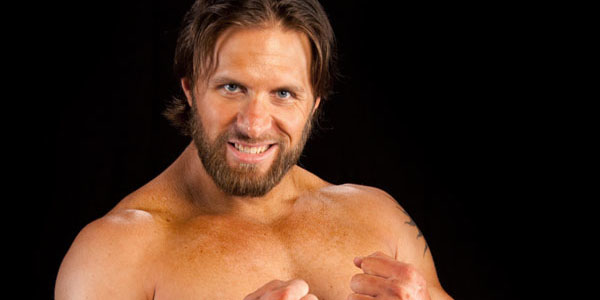
WWE really dropped the ball with Archer. They gave him 30 days to €˜make an impact€™, something he only could€™ve done if he had creative support, which he didn't. After being released along with 5 other superstars, he went to NJPW in 2011, where went on to become an excellent €˜gaijin€™ wrestler and entertaining tag team performer as one half of the Killer Elite Squad (alongside fellow WWE alumnus DH Smith). In this role, Archer has been allowed to make full use of his height and superior strength. As a true €˜monster heel€™, Archer has wowed the audience with his sheer power and surprising agility. In fact, he has become so popular that he has already won the World Tag League and IWGP Tag Team Championships. He and Smith are currently NOAH€™s GHC Tag Team Champions, and is doing wonders playing the role of evil invader as part of Minoru Suzuki€™s €˜Suzukigun€™ nWo-style army. If you want an example of how Japan€™s emphasis on athleticism versus character works for a wrestler, then look no further than Archer. He€™s taken as a credible threat, is great at drawing heel heat, and delivers one of the most devastating Chokeslams in wrestling today.

7. Luke Gallows

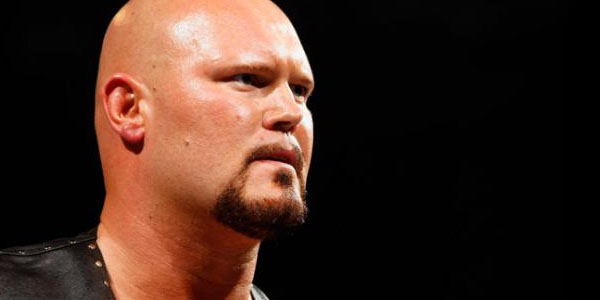
WWE€™s decision to release Luke Gallows was a confusing one. He was big, he could talk, and had an overall €˜presence€™ about him. He could€™ve been an excellent bodyguard or monster heel, but instead WWE gave him a series of disappointing gimmicks (the mentally challenged Festus, Fake Kane etc.), before giving him a decent one as a member of the Straight Edge Society. Although he worked well as a member of the SES, he was released (via phone call) by Jon Laurinaitis, much to the chagrin of the audience (and CM Punk), and soon set about finding work elsewhere. After an underwhelming stint in TNA, Gallows made his way to NJPW, where he changed his name to Doc Gallows (a combination of his WWE and TNA names) and joined the highly-successful Bullet Club stable. As part of the Bullet Club, Gallows has been teaming primarily with established tag team wrestler Karl Anderson, and the duo have enjoyed a lot of success. Together, they won the 2013 World Tag League (a big deal in NJPW), and have won the IWGP Tag Team Championships on three occasions, with Gallows playing the simple role of strong enforcer to Anderson€™s crafty veteran. This simple psychology has allowed Gallows to shine as a straightforward strong man in a country where the native wrestlers are normally much smaller, making him stand out by default. Gallows looks comfortable in NJPW, far more so than he did while he was working for Vince and Co.

6. Davey Boy Smith, Jr.

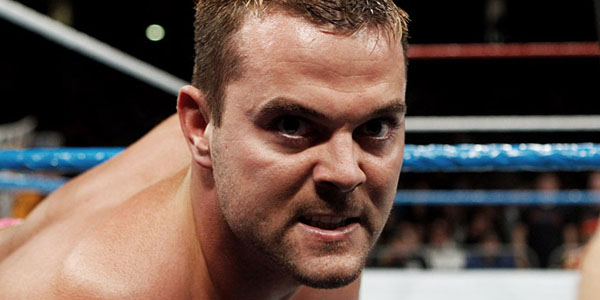
DH Smith had everything necessary to succeed in WWE. He had the size (6€™5, 250lbs.), physique (dude was built like an oak tree), the family lineage (son of the British Bulldog), and the training (the Hart family & his own father). Yet despite all of those positive attributes, WWE never used him as anything more than a lower-card tag team wrestler. This would last until 2011, when he was released after months of inactivity. But WWE€™s loss was NJPW€™s gain, and Smith has become a big name in the top Japanese promotion. Maybe it was something to do with WWE€™s style of wrestling that hindered Bulldog Jr., or maybe it was the way that WWE presents its athletes. Whatever it was, it was holding Smith back, and he has managed to shine in NJPW since signing with them in 2012. Following in the footsteps of other €˜evil foreigners€™, Smith has shown considerable improvement while in NJPW. He has been given many opportunities to wrestle in a more technical style, evidences a tighter grasp of psychology than he did in his WWE matches, and is allowed to behave in a way freer way (which wouldn€™t be allowed in the micro-managed WWE). As part of the Killer Elite Squad, Smith has become arguably the top foreign tag team wrestler in the promotion, and will continue to put on good matches as long as the bookers continue to let him do what he€™s been doing so far.

5. MVP

MVP spent years meandering in WWE€™s midcard scene and wasn€™t going any further up the bill in 2009, despite his obvious upside and potential. Frustrated with the lack of opportunities, he left WWE with the sole purpose of going to Japan, following a long-term dream of competing in NJPW. The result was a career renaissance for MVP. He wrestled to a much higher standard while working for New Japan Pro Wrestling, and enjoyed more success than ever before in his wrestling career. Of particular significance was his becoming the first-ever IWGP Intercontinental Champion, a belt that has since gone on to become such a prestigious belt that it€™s believed to be on par with the IWGP Heavyweight Championship in the eyes of many fans. Although he isn€™t likely to reach the top level in NJPW (should he ever return), MVP was a very different wrestler in Japan from the one we saw every week in WWE. He was given multiple opportunities to show off his skills, and his IWGP IC Title run was an example of his dedication paying off. While he may have enjoyed a push at the beginning of his WWE career due to his dedication and relationship with mentor Chris Benoit, that push waned as the years went by and he was only able to recoup some of the passion he had for wrestling when he made the switch to wrestling in Nippon.

4. Vader

The main reason WWE hired Vader in the first place was because of his success in both WCW and NJPW. What makes Vader a unique entry on this list is that he was successful in the orient both before and after his WWE run, as he went to AJPW after his tenure in New York came to an end. Vince McMahon was adamant on changing all the things that made Vader the successful draw that he was. To that end, he had ludicrous creative proposals suggested to him, which only hindered his growth as a star. But it was Vince€™s closeness with Shawn Michaels, and the latter€™s problems with Vader€™s stiff in-ring style, that sealed Vader€™s fate in WWE. After leaving WWE, Vader went to All Japan instead of New Japan, and it looked like he hadn€™t missed a beat. He was thrust into the main event picture almost instantly, capturing the Triple Crown Heavyweight Championship in short order and going on a real €˜monster€™ run as the top heel in the promotion. He had several great matches during this run in Japan, and was taken far more seriously as a wrestler (and didn't have to worry about being too rough with pretty boys like The Heartbreak Kid). He likely made more money, too, as he was a glorified jobber just before he left WWE, nowhere near the main event scene.

3. Giant Bernard

Matt Bloom left WWE after a series of failed gimmicks made it nearly impossible for him to get over. Despite being a massive powerhouse of a wrestler and a favourite of Talent Relations head John Laurinaitis, nothing stuck with him. When you're first gimmick is being named after a penile piercing, it doesn't look good for the rest of your career, does it? Released in late 2004 while recovering from a torn rotator cuff, Bloom tried his luck in Japan, where he became a big name in very short order. After a short stint in AJPW that didn€™t lead to anything substantial, he signed with NJPW in 2006, which is when his career really started to take off. Rechristened Giant Bernard, Bloom grew as a performer and became a more accomplished wrestler. He had to, considering he was wrestling in New Japan, where athleticism and work-rate were valued much more than gimmick. Reinventing himself as the top 'gaijin' monster, Bernard became one of the biggest stars in NJPW. He found considerable success as one half of €˜Bad Intentions€™ alongside Karl Anderson, and earned some high-profile victories in several G1 Climax tournaments. Even if he was slower and less mobile than NJPW€™s top stars, he was taken seriously as a wrestler, which is far more than can be said for his earlier (and subsequent) stints in WWE.

2. Stan Hansen

Stan Hansen left WWE under very adverse circumstances after he botched a bodyslam on Bruno Sammartino, injuring the champion€™s neck. When Bruno returned from his injury, he gained his revenge on the man who had injured him, and Hansen left WWE soon thereafter. Barred from returning to WWE, Hansen went to Japan, where he became the greatest €˜gaijin€™ wrestler of all-time. Thanks to WWE creating a storyline suggesting that Sammartino€™s injury was caused by Hansen€™s lariat, the Japanese bookers and press presented him as a dangerous wrestler who could cripple his opponents with ease. n the world of Japanese pro wrestling, where athleticism and toughness are a priority, these were golden tickets to the main-event. This, coupled with his poor eyesight, overall stiffness and training in the NWA style of wrestling and storytelling, ensured that he became a top heel in All Japan Pro Wrestling. For over a decade, Hansen was the most feared and accomplished foreigner in AJPW. He achieved considerable success in that promotion, winning the Triple Crown Heavyweight Championship four times, AJPW€™s World Tag Team Championship eight times, the Champion€™s Carnival (AJPW€™s KOTR) twice, and the World€™s Strongest Tag Determination League (a tag team KOTR tournament) on four occasions. He€™s the only foreign wrestler to achieve so much, and is widely considered a legend among Japanese wrestling enthusiasts.

1. Terry Funk

As older fans might remember, Terry Funk had a brief run in WWE from 1985 to 1986. During that time, he had a token €˜cowboy€™ gimmick that saw him wear a cowboy hat and carry a branding iron to the ring. His run wasn€™t particularly successful (despite a few title matches and a WrestleMania appearance), and it was obvious that WWE weren€™t using him to his fullest. Frustrated, Funk left WWE and ended up wrestling for IWA Japan, a fledging promotion that was trying to cash-in on the hardcore wrestling market. You can probably guess where this is going. Funk participated in the now infamous King Of The Deathmatch Tournament, which has come to be regarded as one of the biggest moments of his career, and has gone on to become one of the shining examples of hardcore wrestling at its finest. Funk wrestled in some of the most outrageous matches ever, including a €˜No-Ropes-Barbed-Wire-Exploding-Barbed-Wire-Boards-&-Exploding-Ring-Time-Bomb-Death-Match€™ against his protégé Cactus Jack. The violence unleashed by both of these men elevated them both to the highest echelons of hardcore wrestling stardom. Funk€™s success in Japan allowed him to further cultivate this image as a legendary hardcore wrestler, and that reputation followed him wherever he went, leading him to becoming immortalized as one of, if not the best hardcore wrestler of all time.

In this post: 
Luke Gallows
 
Posted On: 
Contributor

Alexander Podgorski is a writer for WhatCulture that has been a fan of professional wrestling since he was 8 years old. He loves all kinds of wrestling, from WWE and sports entertainment, to puroresu in Japan. He holds a Bachelor of Arts degree from Queen's University in Political Studies and French, and a Master's Degree in Public Administration. He speaks English, French, Polish, a bit of German, and knows some odd words and phrases in half a dozen other languages.