10 Forgotten WWE Match Types

Remember these classics?
Nightstick On A Pole Match? Kennel From Hell? How about the Crybaby Match or Blindfold Match? These are just a few examples of some of the non-traditional contests that have found their way onto WWE programming over the past 30 years. The company that brought us the classic Royal Rumble Match and the Hell In A Cell also brought us numerous match styles and stipulations that have (sometimes quite rightly) been forgotten over the years. WWE have always tried to keep their product contemporary by updating their matches with unique and entertaining conditions and stipulations. The standard one-fall-to-a-finish pro-wrestling contest can often become vanilla, but by adding certain elements at certain times, matches can feel new and rejuvenated. You can't blame WWE for trying, but not all of their attempts at creating unique matches have been successfully made into yearly traditions, like Money In The Bank. While few would argue that a return of the Kiss My Foot Match would be the answer to WWE's struggles, there are some other match types that could help improve the current product. Many of today's viewers haven't seen all of the different match stipulations that the show has presented over the years, and the company has a chance to make what was once old, new again. Not all of these matches need to occur every few months or even yearly, but WWE could do worse than to introduce their current audiences to some of these these forgotten classics.

10. Triple Header Match

The Triple Header match was first seen in September 1995 when WWF Champion Diesel teamed with Intercontinental Champion Shawn Michaels to battle the Tag Team Championship team of Yokozuna & Owen Hart. The four-main were scheduled to main event September's In Your House PPV in which all three championships would be defended in the same match. The man that scored the deciding fall would win the title from the man he defeated. The idea is that one match is so important because it will feature title defences from all of the superstars involved. The rest of the card may be perceived as weaker or not as strong as some of the other PPVs that featured multiple traditional title defence, but especially in today's sports-entertainment world, the company would be able to pull this match off again. With additional prizes existing in WWE beyond the World Heavyweight, Intercontinental and Tag titles, a match featuring more than one defence of a coveted championship would likely be seen as a brand new concept by many of today's WWE fans. The United States Championship and Money In The Bank add to the list of titles that could be defended in a Triple Header, or even perhaps a Double Header where only two titles are defended. Either way, the concept has laid dormant too long and it would make for a great main event for an off-month PPV.

9. Blue Bar Steel Cage

The blue steel cage is a staple of professional wrestling's golden era. It's often thought of as the "Hogan Cage" because of the number of times it appeared on WWF television during the Hulkamania Era, but it also got a lot of play after he departed with the likes of Bret Hart, Shawn Michaels and Mankind. The mesh style steel cage was brought (back) to WWE programming around 1999 and has remained the go-to cage of choice ever since. The company switched to the mesh style since it was believed that the blue or black bar style was too limiting and harder to work with. While that may have been the belief at the time of the switch, a return to the WWF-exclusive blue bar steel cage would be a sight that many longtime fans would love to see. It also would be a way for younger audiences to see a "new" type of match without all of the risks, costs and questions involved with creating a new match concept. As previously discussed, the company has an opportunity to introduce newer audiences to older concepts without the feeling of anything being old or recycled. The blue bars would allow for angles and spots that haven't been seen ever, if not for a long time. Think of Owen Hart at the conclusion of SummerSlam '94 getting his leg stuck in one of the openings, or Roddy Piper's commentary suggestion to tie the Ultimate Warrior's tassles to the bars at SummerSlam '90. There's a lot to work with there and WWE performers have a chance to get creative with it. The blue bar steel cage not only looks cool, but it adds additional storytelling opportunities to a world that is constantly looking for something fresh. The saying goes that pro-wrestling is cyclical and there's little reason as to why that type of thinking can't be applied to the match type as well.

8. Manager's Services For 30 Days

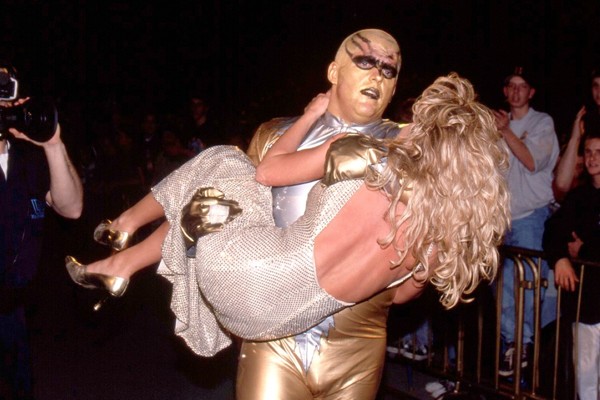
Over the past couple years, WWE has slowly brought the manager role back. With Lana, Zeb Colter, and Paul Heyman again appearing on WWE television, the role of the manager/valet/advocate/girlfriend/associate has been welcomed back with open arms after some years of diminished activity. The manager is vital to pro-wrestling and, although not everyone playing the role can take proper bumps, one way for the manager to receive their comeuppance is by having their services put on the line for a length of time, usually 30 days. One of the most notorious of these matches featured the late Brian Pillman when he defeated Goldust at In Your House: Ground Zero in September of '97 for the services of Marlena (Terri Runnels), Goldust's wife. Pillman secured her "services" following this contest, a term that was used with an ambiguous, more sexual undertone and not exactly a true managerial offering. Terri would again have her services put on the line in the famous No Mercy 1999 ladder match between Edge & Christian and the Hardy Boyz, but by then WWE was full bore into the racier Attitude Era. This match type is a great way to cause dissension between a manager and their client, and could also facilitate a heel or babyface turn for one of the superstars involved. In 2016, it could work just as well as years past and could result in some really unique character pairings and storytelling opportunities. It's also a way to get more out of the position and have the manager be more than just a second.

7. Finishing Move Match

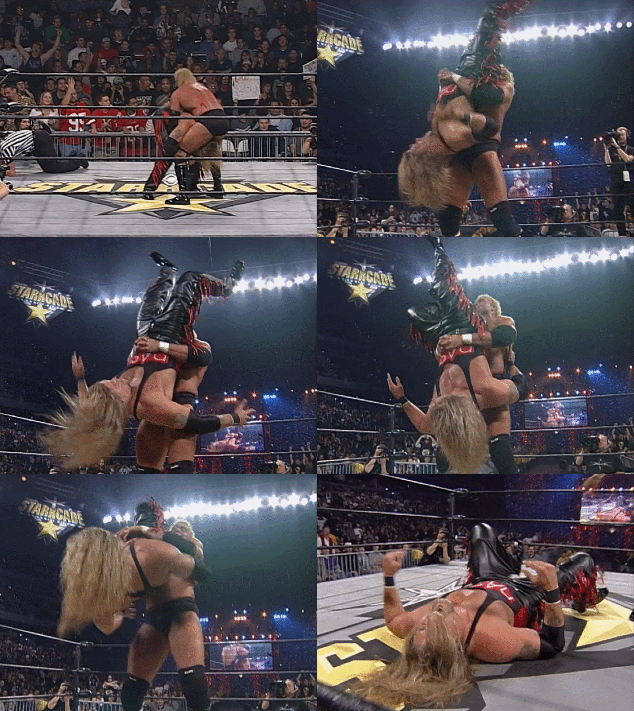
This match comes to an end once either superstar is able to execute their respective finishing move on their opponent. Many times previously in these matches, the two competing wrestlers shared the same finishing move and were battling to see whose was better and, in this case, who could apply it first. One of the most infamous occurrences of this match type is when Kevin Nash faced Sid Vicious at Starrcade 1999. Though WCW butchered the ending (see above), the idea of the match is unique and, if done right, could've lead to several interesting spots throughout the course of the match. Unfortunately, there aren't many true finishing moves in WWE today (if any), but there are plenty of signature moves. If the company decided to utilize this match type again, it could be used to help build up the severity of a specific finishing maneuver. If the audience knows that the match is over once that move is applied, it makes the finish and the move that much more impactful. It's not a match type that should be used all the time, and it would need the right performers in order to do the story justice, but this style of match would be very effective in helping to rebuild the lost art of the finishing move.

6. Elimination Matches

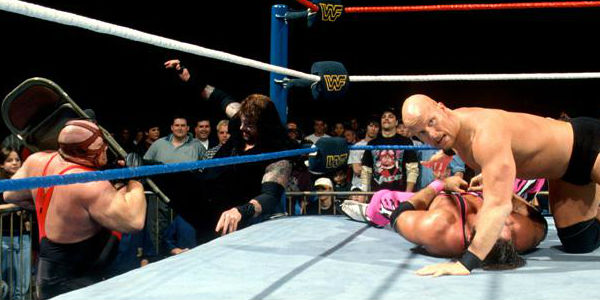
Often thought of around the time of Survivor Series, the elimination match has been around for a long time and has many variations. Elimination matches have been used in WWE recently, but not during the month of November like many longtime fans might expect. Instead, the WWE waited until after the yearly Thanksgiving tradition passed to start featuring elimination tags on RAW. This style of match doesn't just have to be 5-on-5 or 4-on-4, but could feature over-the-top-rope eliminations, battle royal style. In February 1997, the WWF presented In Your House: Final Four in which Steve Austin, Vader, Bret Hart and The Undertaker battled in a match that pre-dated Fatal 4 Way and even Triple Threat Matches in the WWF. What made this Final Four Match so special was that the men involved could be eliminated by pinfall or submission, but also by being thrown over-the-top-rope and down to the floor. Considering that WWE often provide an endless supply of six-man tags and other multi-man matches, some forms of elimination match would be useful and welcomed. So many stories can be told with this style of contest and it would make for great television in today's WWE.

5. Best Of Series

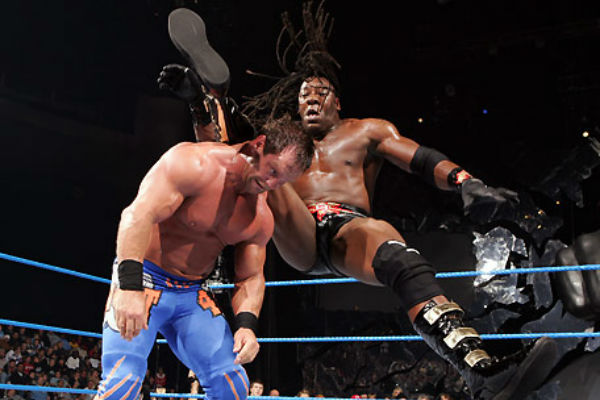
Often thought of along the lines of 2 Out Of 3 Falls Matches, a Best Of Series of matches works more like the World Series and not the Super Bowl. Instead of wrestlers having one match to decide the winner, there is a pre-determined number of matches (usually 5 or 7) and the competitors are fully aware that they will be squaring off multiple times in a row over an extended period of time. The time period may be several weeks or even months, with the potential culminating match usually taking place at a special event or PPV. The Best Of Series has also been linked with Iron Man Matches since the winner isn't decided in a typical one-fall-to-a-finish, but the two match types are separate concepts. The Iron Man Match still decides the winner in one match but by typically having multiple falls, while the Best Of Series takes multiple matches to determine the winner. The match style allows for a longer story to be told between the superstars and there is enough time for the storytelling to get even deeper and more drawn-out with these numerous battles. Usually involving the most gifted and "technical" wrestlers on the roster, the Best Of Series matches are booked in this manner because few fans want to see Big Show vs. Kane in a Best of 5 Series Match. The sight of watching the greatest athletes on the roster compete against each other in a back-to-back-to-back style affair is one to behold, hence why both WWE and WCW presented a 'Best Of' series between Booker T and Chris Benoit (in 1998 and 2005/6). With the amount of talented wrestlers that exist in WWE today, it's surprising that more Best Ofs aren't booked.

4. Tornado Tag Matches

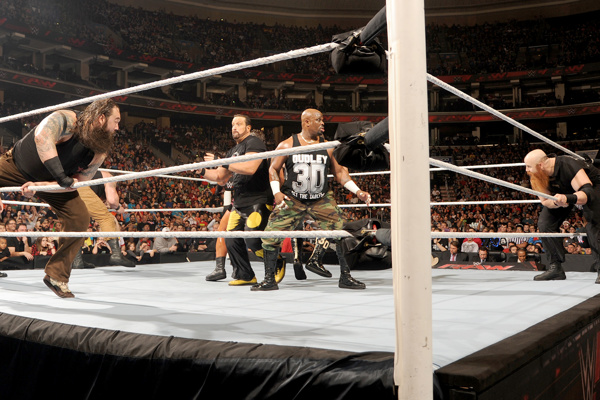
What makes a tag match a "tornado" style is when all of the participants are in the ring at the same time. Instead of one wrestler waiting on the apron to be tagged into the match, they are actively wrestling in the ring (or perhaps outside on the floor), but any man can be pinned at any time; they are all legal. Tornado tag matches are not seen on WWE very often, and it is probably because of how hectic the scene can get. It can be quite chaotic and hard to follow at times with the number of bodies in the ring, but it adds a level of intensity that is often lacking in today's standard tag team matches. WWE is used to this style of match for Money In The Bank or a battle royal and recently had an 8-man tag Street Fight involving ECW on the December 14th RAW, but it's not often that the tornado rules are added to spice up a traditional tag team match. It's not something that needs to occur all the time, but considering the excitement the tornado tag usually generates, it should be dusted off and wheeled out more than it currently is.

3. Hair Vs. Hair

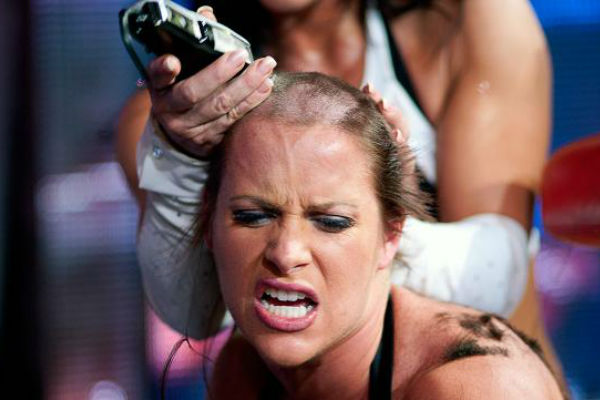
NXT recently used this concept, but as far as the main roster goes, it's been a good while since a WWE superstar was forced to have their head shaved as a result of losing a match. There have also been incarnations of Mask vs. Hair matches which were seen a couple of times throughout the last half-decade (such as CM Punk versus Rey Mysterio in 2010), but a true Hair vs. Hair match might be one that's been forgotten. Obviously, when thinking about Hair vs. Hair matches Vince McMahon and WrestleMania 23 come to mind, but there have also been other superstars to lose their hair throughout their career. Usually, the losing superstar takes the hair loss as a chance to re-tool their character and reinvent themselves with a new gimmick or look. Kurt Angle, CM Punk and Jeff Jarrett all suffered from losing their hair in WWE matches and turned the embarrassing loss into a catalyst for change. Hair vs. Hair is one match where, because of the promised aftermath, it usually creates an exciting environment and a match that fans highly anticipate. Especially with the number of characters that could use a freshening up or reboot, a Hair vs. Hair match would be an interesting stipulation to see return to WWE in 2016.

2. Bodyslam Challenge

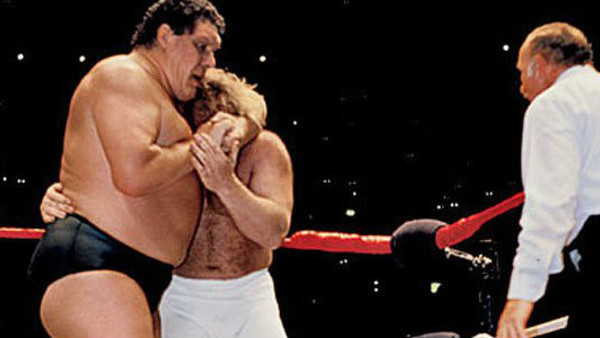
One of the highest profile matches from the very first WrestleMania was a Bodyslam Challenge where Big John Studd, managed by Bobby "The Brain" Heenan, challenged Andre The Giant. Similar to the Finishing Move Match discussed earlier, this match would only end when one man bodyslammed the other. Studd and Heenan also put up $10,000 saying that Andre could have it if he was able to slam Studd, which he, naturally, did end up doing. Although technically not a single "match", Yokozuna allowed a number of fellow superstars and athletes from other professional sports to try and bodyslam the WWF Champion on the USS Intrepid on July 4, 1993. This was the big kickoff to Lex Luger's huge babyface push as an All-American patriot after he was the first wrestler to ever bodyslam Yokozuna on WWE television. Vince McMahon has always loved big men, so it's surprising to see this match type not utilized more often. Like most stipulation matches, this isn't one that should be rolled out every few months, but this is a unique event that, for a unique character, would help to establish the selected superstar as the next big monster of WWE. It's a simple and quick angle that always has impact and it features a superstar-making moment built-in as an eventual payoff.

1. 3 Stages Of Hell

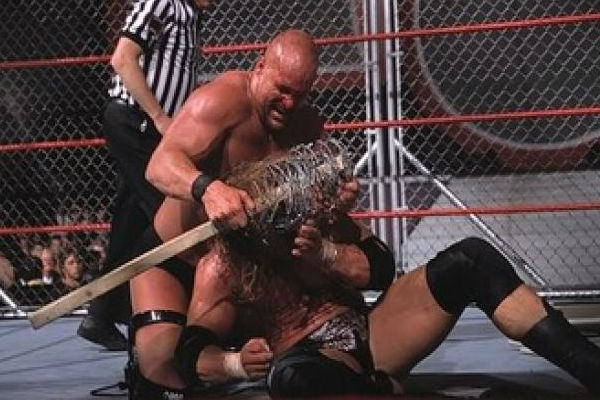
For those unfamiliar, a 3 Stages Of Hell Match is similar to a 2 Out Of 3 Falls Match with each fall containing a different stipulation. It's a stipulation match within a stipulation match and it's usually reserved for the culmination of a long-lasting bloodfeud. Stone Cold Steve Austin vs. Triple H from No Way Out 2001 is the first, and probably best, example of this style of match where the first fall was a standard singles match, the second fall was a Street Fight, and the third fall took place inside a Steel Cage. It showcased both men's tenacity and resilience while putting over the match type as absolutely brutal. This match helped cement Triple H as not just the company's top heel, but a believable heel that was a credible threat to anyone, including the biggest star in the business. The concept is a great way to payoff a feud that has been building for months, and it should be the final chapter of the story between the two superstars squaring off. It's something that is different than the Hell In A Cell or Last Man Standing Matches, which are often the go-to finales for any long-standing feud, as it really adds another layer to the match when the superstars have to battle through three different stipulations. Used sparingly, it's one of the best conclusions to an emotional rivalry as the match requires a special type of toughness from both superstars. The constantly changing environments only add to the challenge both superstars are facing and it makes the eventual winner that much more impressive.

In this post: 
Molly Holly
 
Posted On: 
Contributor
Contributor

A former stuntman for Paramount Pictures, Matt enjoys sports, water skiing, driving fast, the beach, professional wrestling, technology, and scotch. At the same time, whenever possible. Having attended many famous (and infamous) shows including WrestleMania XV, In Your House: Mind Games, and the 1995 King of the Ring, Matt has been a lifelong professional sports and wrestling fan. Matt's been mentioned in numerous wrestling podcasts including the Steve Austin Show: Unleashed, Talk Is Jericho, and Something To Wrestle With Bruce Prichard. As a former countywide performer, Matt has been referred to as Mr. 300 for his amazing accomplishments in the world of amateur bowling. He is also the only man on record to have pitched back-to-back no hitters in the Veterans Stadium Wiffle Ball League of 2003.