10 Greatest NWA World Heavyweight Champions
The kings of the Domed Globe.

While it may be a small scale throwback to the studio days of wrestling now, the NWA was once the arguable pinnacle of American professional wrestling. The champion would tour the country and, in many cases, the world, plying their craft and selling the NWA World Heavyweight Championship as more important than life itself.
As one of the big three in the US with the AWA and WWWF, NWA controlled much of the southern states where its workers would typically focus on hard-grafting, old school brawling and mat work between the ropes. Sadly, all good things must come to an end and the NWA's prestige and prominence crumbled horribly under the weight of Vince McMahon's national expansion in the '80s.
By the early '90s, NWA's premier gold was thrown to the curb by ECW ace Shane Douglas and has never quite recovered. Even now, in 2022, the NWA top prize is a shell of its old self, held by none other than WWE superfan/indie menace Matt Cardona.
Despite its odd placement in the current wrestling climate, the NWA title is an essential piece of wrestling history boasting some of the finest champions the industry has ever seen.
10. Dick Hutton

What matters more? Telling a story in the ring or on the mic?
For Dick Hutton, the ring came naturally and the mic just didn’t really come at all. A pioneer of technical and submission-based wrestling, the supremely mobile and athletic Hutton was a trailblazer between the ropes. His mastery of pacing, selling and maddening attention to detail made his matches pitch perfect in their day. Even Lou Thesz, a man who was to the NWA what Elvis was to rock and roll, freely admitted to considering Hutton the finest wrestler the world had to offer.
Thesz believed in Hutton enough that he put him over strong for the NWA’s number one prize in 1957. Hutton, a WWII veteran and all-round tough guy, was essentially unbeatable in competitive meets, even wrestling fans with a huge (at the time) $1,000 sum up for grabs. For Thesz, this was everything a top tier main eventer needed to be: a legit shooter.
Despite his amazing work rate and technique, Hutton was only a middling draw on top. The burly Texan was a wrestler’s wrestler, a master of snug, realistic grappling, psychology and sadistic submission work. For fans, it appeared some of his in-ring magic was going over their kayfabe-blinded heads.
Lacking the charisma to completely conquer the main event, Hutton as champion was never revisited after he dropped it in 1959. His impact on the stars to come proved immeasurable though with many desperately emulating his slow burn, grand finale match pacing in the years after.
9. Jeff Jarrett

'The King of the Mountain' drew a lot of hate for his insistence on being on top in the early days of TNA. His roster boasted exciting young innovators like AJ Styles and Samoa Joe as well as veteran megastars like Sting and Kevin Nash. Somehow, the gold always wound up on wrestling's biggest country music fan though.
While his lengthy, guitar-breaking shenanigans-laden title bouts were often a lower point of TNA's wild mid-noughties shows, Jarrett was arguably the NWA World Heavyweight Championship's saviour. Thanks to the death of the territories and Shane Douglas throwing the belt to the curb in the early '90s, the once essential NWA World Heavyweight Championship had lost its prestige and become, at best, a prop.
TNA iMPACT, while not a super draw for ratings, was easily the biggest non-WWE wrestling show in the world at the time. The NWA Title's return to prominence and 'Double J's insistence on treating it like the most important thing in the universe greatly rose its stock for the first time since the '80s.
Better still, as a head booker, Steve Austin's least favourite wrestler ensured everyone else did the same. Look no further than the ring swarming celebration when Christian Cage upset him for the belt at Against All Odds 2006. For all of his flaws during his time as the leading star of the Impact Zone, Jeff Jarrett put some respect back on the NWA name and for that, he deserves props.
8. Pat O'Connor

As the simultaneous holder of the NWA and AWA World Titles, the New Zealand-born amateur wrestler turned headliner was a class act and one of the biggest draws of his generation. His over 900-day reign in the NWA saw him set box office records.
One of the original big time box office draws in pro wrestling, Pat O’Connor enjoyed an exhausting two and a half year run on top. The New Zealander had a respectable competitive wrestling background, as was essentially mandatory back then. He used it to his advantage in the realism-focused NWA, defeating fellow shooter Dick Hutton to begin his long reign of stretching hapless challengers.
A smiling, white meat babyface in an era where that was actually somewhat cool, O’Connor was one of the first big time stars to be impacted by television. Like so many things at the time, wrestling was permanently altered by the arrival of the small screen. For O’Connor, it meant slightly less time hopping from territory to territory and a lot more time in Vince McMahon Sr.’s Capitol Wrestling (no prizes for guessing what CW turned into). By the time he dropped the strap to Buddy Rogers in 1961, the Kiwi was as close to an international superstar as wrestling had.
It would take more than 25 years for anyone to break his ticket sales records. A seminal figure from a key moment in the growth of professional wrestling as a major industry.
7. Jack Brisco

This NCAA Division I ace was essentially the NWA's chosen one as the '70s rolled in. Despite his lengthy time on top, Brisco's runs with the title are scarred by an odd blemish. In 1974, he dropped the title to All Japan founder Giant Baba only to regain the belt from the aptly named behemoth a mere week later.
For those outside of Japan, nothing had ever really changed yet Brisco's hopes of establishing a record-breaking title reign were scuppered. Despite the odd booking, the puritanical technician's work with the title was widely lauded by fans and peers alike. Like every NWA World Heavyweight Champion back then, Brisco travelled far and wide on an interminable journey of main event title defences to maintain the title's internationally recognised prestige.
With his brother Gerald, Brisco also engaged in an almost decade-long feud with the Funks. His title reigns became oddly defined and bookended by both kayfabe and political issues with Dory Funk Sr.'s sons. Initially miffed that Dory Funk Jr. dropped the title to Harley Race instead of him as planned, Brisco ultimately suffered another surprise when he dropped it to Terry Funk in a late stage booking change.
Unlike the Baba feud, Brisco never got his win back and ultimately went back to travelling the territories now without his crown jewel. A fast, aggressive and technically sound warrior, Brisco was everything the NWA looked for at the time.
6. Terry Funk
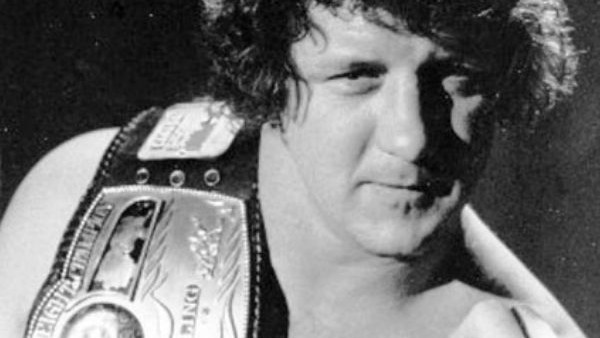
Long before he was bleeding buckets in striped tights for ECW, Terry Funk was a supremely gifted, old school brawler and technician in the territories. Initially outshone by his older brother Dory Funk Jr., 'The Funker' secured a surprise title win in 1975 over Jack Brisco.
Audiences had come under the impression Brisco would be defending the gold against Dory who had to pull out last minute. As is so often the case with late in the game replacements, wrestling promoters like to give them the win to establish a sense of spontaneity amongst viewers. After all, the replacement losing would be the painfully obvious call given it wasn't on the cards to begin with.
For Terry Funk, this meant defeating one of the most prolific World Champions planet Earth had to offer at the time. The audience went absolutely wild for the monumental upset and Funk suddenly found himself going strong on top of the card. From his intense, volatile promos to his fearless, often masochistically punishing matches, Amarillo's favourite son was a near perfect NWA World Heavyweight Champion for 14 straight months.
Arguably a long-reigning transitional champion, Funk eventually dropped the strap to NWA leading man in waiting, Harley Race. Firmly establishing himself as one of the best in the world, Funk enjoyed a more freewheeling '80s and '90s, jumping from promotion to promotion to apply his wild work without ever staying long enough to grow stale.
5. Ric Flair

Often regarded as the last truly great NWA Champ, Ric Flair styled, profiled and did 60 minute Broadway-calibre storytelling throughout the '80s. The last long term champ to really travel the territories, Ric Flair could do it all. From his incredibly hyped up, self-absorbed promos to his campy showmanship to his triathlete-level cardio, 'The Nature Boy' was the biggest star outside of the burgeoning WWF.
His blood feuds with super babyface Dusty Rhodes had audiences jumping out of their seats, desperate to finally witness 'The American Dream' overcome the dastardly Flair once and for all. The war cranked up a notch when Flair, Tully Blanchard, Ole Anderson and Arn Anderson formed the seminal Four Horsemen faction and started breaking Rhodes' limbs.
Bar his utterly ridiculous haircuts, Flair was the epitome of cool in his prime. He carried himself with style, confidence and ruthlessness, selling the belt as the most valuable prize planet Earth had to offer. Obsessively maintaining kayfabe, Flair would even buy two seats on plane trips so his beloved gold could relax next to him.
Regarded by many as the greatest to ever do it, 'The Nature Boy' was everything a heel champion should be but could work as a babyface too as evidenced by his incredible title feud with Terry Funk in '89. Flair was both a jack and a master of all trades in his day.
4. Dory Funk Jr.

Beware the spinning toe hold, it's apparently infinitely more painful than its slightly awkward execution might suggest.
At an utterly insane 1563 days, Funk's '69-'73 reign on top of the NWA is the second-longest in the title's history. A babyface technician and mat master, the noble Funk grappled and submitted his way to victory over an international litany of supreme talent as Texas' No.1 wrestling representative.
While his younger brother Terry has become the considerably more famous one over the years, most would argue Dory was a superior champion in his day. Straight-laced and harshly realistic, the uppercutting mat scientist carried the NWA World Heavyweight Championship over many of the most lucrative territories at the time including Florida, Missouri and Texas.
By 1973, the NWA were ready to give the exhausted Funk, who'd gotten hurt in a mysterious pick-up truck accident, an ultimately permanent rest from his role as king. Jack Brisco had already been tipped as the next primary babyface but bookers were hesitant to have him beat the old guard good guy in Funk.
Instead, Dory Funk Jr. dropped the strap to a young, heel Harley Race in an exhausting two out of three falls match. While he wound up spending a lot more time in Japan after his reign came to an end, Funk remains an essential part of NWA history.
3. Lou Thesz

One of the originals, a man from a time so long ago that the Lou Thesz Press was still considered a convincing potential match-ender, Thesz put the belt on the map with several epic-length reigns.
Across three, seemingly eternal NWA World Heavyweight Championship runs, Thesz carried the old school wrestling flag with gusto for more than 10 years combined. A true innovator of the squared circle, Thesz debuted a variety of moves including the STF, the powerbomb and the German suplex.
A brutally tough shooter with a wealth of Greco-Roman and catch wrestling experience, Thesz kept his work grounded. Painful mat work, counter-wrestling, joint manipulation and takedowns were commonplace in his marathon-paced main events. Presented as a prodigious super rookie in his early days, Thesz would use his legit athlete cred to shoot on anyone who dared make the business look anything less than a competitive struggle.
By 1966, the then-49 Lou Thesz was still a top draw and competitor with the kind of conditioning men half his age would scratch their heads at. Despite his tip top form, the NWA were ready to move on to the next generation of potential main event stars. Thesz dropped the strap to super heel Gene Kiniski, who was entrusted with eventually putting over the promotion's next pick for lead babyface.
2. Gene Kiniski

One of professional wrestling's first long term, top heel World Champions, Gene Kiniski wore the hatred of crowds with pride. Billing himself as 'Canada's Greatest Athlete', Kiniski terminated Lou Thesz's third and final NWA World Heavyweight Championship reign in 1966 much to the horror of the NWA faithful.
The vainglorious Kiniski, blending dastardly heel showmanship with strong technical wrestling skills, travelled the world as a despicable heat magnet champ. His run on top was glorious news for NWA All-Star, a Vancouver territory in which Kiniski owned a stake. He frequently brought major title bouts into the area that it otherwise would have likely missed out on.
The former Canadian gridiron stud went international too, travelling through Japan with his title at stake. Back in the States, he headlined and defended the gold in Los Angeles, an area the NWA had frequently struggled to secure any real footing in.
Of his many strengths, few were more beneficial to bookers than Kiniski's knack for keeping babyfaces looking strong in defeat. Not only was he an effective crowd puller but also a safe hand in keeping each territory's top guy looking like a top guy. Hurt, tired and in dire need of a break, the natural baddie finally fell to a babyface hero in 1969 when Dory Funk Jr. began his own epic run on top.
1. Harley Race

Mr Muttonchops is one of the surliest, most menacing wrestlers the industry has ever seen. Expelled from school for beating the snot out of both a fellow pupil and the headmaster, 'Handsome' Harley moved into wrestling and never looked back. Nothing from polio to a life-threatening, widower-making car crash could hold the tough chainsmoker back from reaching his destiny as the ace of the NWA.
During the '70s, Race made the rounds as champion, grumpily defending his title and establishing its prestige in gritty, gruff promos. Brawling and grappling like a high-pain tolerance tough guy, everything about Race was authentic bar that unfortunate diving headbutt. As an eight-time NWA World Heavyweight Champion, the dependable crowd puller carried himself and his title with conviction, pride and grit.
As the '80s rolled in, Race proved to be instrumental in setting up and legitimising his successor at the top: Ric Flair. The pair's blood-soaked cage match at Starrcade '83 is a seminal classic in North American wrestling that firmly established 'The Nature Boy' as the leading man of the new generation.
Via his '70s feuds with Dusty Rhodes, Race also helped get 'The American Dream' over at the main event level while he was still a fashionably challenged eccentric and not the working man hero he became. Between ruling the NWA frequently with an iron fist and helping to set up its two biggest draws of the '80s, Harley Race was the gift that kept on giving to good old southern rasslin'.