10 Greatest Sole Survivors In WWE History

Only fools thought they could eliminate these superstars.
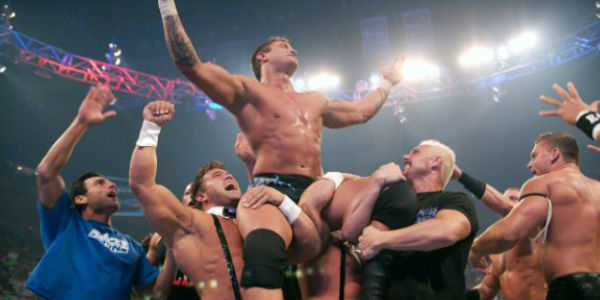
What does it mean to be a sole survivor in World Wrestling Entertainment? To be a sole survivor at the company's annual Survivor Series pay-per-view means a Superstar has overcome tremendous odds, not mention physical pain and mental anguish, to emerge victoriously in an elimination tag match when he had no other partners to lean on. He, or she, proved their toughness on a grand stage, often times outlasting some of the top competitors on the planet and overcoming significant number disadvantages to stand victoriously. In the 27 years that Vince McMahon and company have produced the fall classic, numerous of the industry's elite stars have outlasted their opposition to become sole survivors of the traditional elimination tag bouts. Hulk Hogan, The Rock, Randy Orton and the late Ultimate Warrior are just a few who have show great grit, toughness, determination and drive to emerge from the November extravaganza with their arms raised in victory. Others, such as Kofi Kingston, Roman Reigns and the Big Show have used wins in the contests to catapult them to varying degrees of success in the weeks and months that followed. On November 23, World Wrestling Entertainment will produce the 28th annual Survivor Series pay-per-view event and, with two elimination contests slated for the card, the likelihood that one of the matches ends with a sole survivor standing tall in the center of the ring is quite good. In preparation for John Cena, Seth Rollins, Ryback, Paige or Natalya adding their names to the list of Hall of Famers and all-time greats that preceded them, enjoy this stroll down memory lane with the 10 greatest sole survivors of all-time!

10. Kofi Kingston - 2009

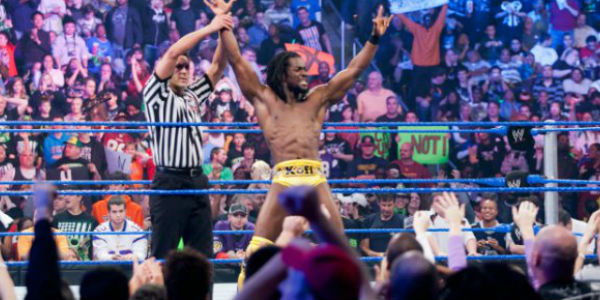
Survivor Series 2009 may have been based around two gigantic Triple Threat matches for the WWE and World Heavyweight Championships, respectively, but it was the emergence of Kofi Kingston and his blossoming feud with Randy Orton that had captured the attention of fans begging for new stars and change in the somewhat stale world of sports-entertainment. They got that change, or at least what looked like change, when Kingston led his team to victory over Team Orton, doing so with two impressive eliminations that not only left him the sole survivor, but also landed him on this list over Hall of Famers such as Ted DiBiase and Razor Ramon. The Superstars he knocked off? Former heavyweight champions Orton and CM Punk. The entire match was very much built around the idea that Kingston would prove himself worthy of hanging with Orton, who was an elite performer and coming off of a huge months-long rivalry with John Cena that included an Iron Man match at October's Bragging Rights pay-per-view. He did just that, picking up his biggest and most impressive victory to date while simultaneously building momentum for himself in what was WWE's first real attempt to push him beyond the midcard. Unfortunately, a mistimed spot in a match with Orton a month later, not to mention a very public temper tantrum by The Viper in the middle of the contest, effectively ended any shot the former WWE Intercontinental champion had of ever advancing past a certain spot on the card. Recently, Kingston has been paired with Xavier Woods and Big E in a new trio known as the New Day. Whether that partnership can help him crack the glass ceiling or not remains to be seen but for right now, Survivor Series 2009 remains one of the biggest, brightest and best nights in the career of wrestling's most dynamic star.

9. Ric Flair - 1991, 2006

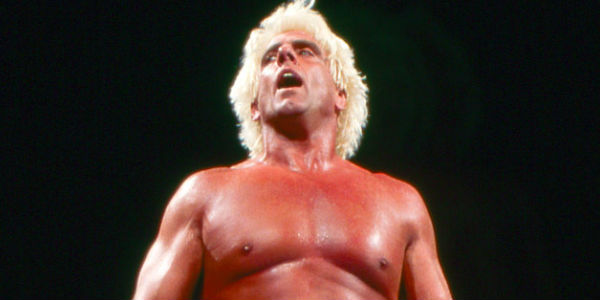
The 1991 Survivor Series was the first opportunity "Nature Boy" Ric Flair had to showcase his skills on WWE pay-per-view. Debuting with the company in September, Flair's arrival in Vince McMahon's promotion had made a giant splash in the pro wrestling world. For so long, he was associated with the National Wrestling Alliance, Jim Crockett Promotions and World Championship Wrestling that, to see him step foot in a McMahon-owned ring was quite rattling. Luckily, Flair was treated with the respect that someone of his stature deserved and at the November event, he became the night's only sole survivor by outlasting a team comprised of Roddy Piper, Bret Hart, Virgil and "British Bulldog" Davey Boy Smith. Sure, he did it by escaping a melee at ringside and getting back into the squared circle before the referee's count reached 10 but it was in that finish that fans grew to appreciate the cerebral nature of the competitor they may have been seeing compete for the first time. Fifteen years after his first dance at the show, Flair returned to captain a team consisting of Dusty Rhodes, Ron Simmons and Sgt. Slaughter into battle against the brash, arrogant and loudmouthed Spirit Squad. After Simmons found himself counted out and Rhodes and Slaughter were dispatched of by Kenny and Nicky, respectively, it was up to Flair to eliminate the remaining members of the opposition or risk humiliation on a grand stage. After all, no one wanted to admit defeat at the hands of male cheerleaders. Summoning the intestinal fortitude that helped him become world's champion 16 times, Flair knocked off Mikey, then Kenny and, finally, Johnny in the span of one minute, 18 seconds to win the match. While his Survivor Series wins are not overly impressive in comparison to the rest of his Hall of Fame resume, Flair did manage to prove both his considerable skill and intelligence in the two traditional elimination tag bouts he wrestled at the show, adding to the legend that was Slick Ric.

8. Andre The Giant - 1987

Survivor Series was an event created by Vince McMahon to not only capitalize on his promotion's immense popularity but also the overwhelming success of the rivalry between Hulk Hogan and Andre the Giant. In March 1987, WWE enjoyed unprecedented success on the back of the feud as 93,173 packed the Pontiac Silverdome in suburban Detroit, Michigan for the biggest heavyweight championship match of all-time. More eyes than ever were on the world of sports-entertainment thanks to that one match and the feud that it was born of than at any other time. Of course McMahon would look for new outlets on which to showcase their program. With the Thanksgiving Day event on the schedule, McMahon booked a huge main event pitting Team Hogan vs. Team Andre. Without any other names announced, fans were ready to pounce on the opportunity to see the industry giants battle it out once more. Wait...what's that? Hogan and Andre weren't the last two Superstars in the ring for the main event on November 26, 1987? That's right. Realizing there was even more money that could be milked out of Hogan vs. Andre, McMahon purposely baited the audience in on the belief that they would see some sort of expanded action from the rivals, then had Hogan get counted out while brawling with King King Bundy at ringside, leaving newcomer Bam Bam Bigelow to fend for himself against the Eighth Wonder of the World. It did not end well for the young New Jerseyan, who found himself on the receiving end of a butterfly suplex from Andre, who became the Survivor Series' first-ever sole survivor.

7. The Big Show - 1999

In the fall of 1999, Big Show was coming out of a championship-winning team with The Undertaker, had undergone a babyface turn and was thrown into a rivalry with Big Boss Man. It was the rivalry with Boss Man that would not only result in Big Show's return to the main event scene but also one of the most dominating performances in the lengthy history of the Survivor Series event. Boss Man had spent weeks poking fun at Big Show's ailing father. When the giant received word that his dad had passed, Boss Man relished the opportunity to turn the tragic news into a mockery, a joke even. Worst of all, he showed up to the funeral, assaulted Big Show and proceeded to drag the casket containing the remains of his giant rival's father behind his police car. It was a sickening display by a villain who had rapidly developed into one of the best in all of wrestling. Needless to say, Big Show would be looking for revenge as he rolled into Detroit for Survivor Series, his sights set on the former corrections officer. Boss Man brought what he thought was fairly formidable backup in the form of heavyweight Mideon, Viscera and Prince Albert while Big Show was assigned the likes of Kaientai and the Blue Meanie. Deciding he needed the help of no one, Big Show attacked his own partners on Sunday Night Heat and stalked toward the ring on his own. The World's Largest Athlete then proceeded to pick off each of Bossman's partners, eliminating them all with chokeslams before turning his attention to the former hardcore champion. Rather than risk pain and punishment at the hands of the man he spent so many weeks tormenting, Boss Man casually walked out, getting himself counted out as the Big Show watched from inside the squared circle. The absolute destruction of the Boss Man's team sparked and interest in Big Show that had not been there before. He had been so poorly booked up to that point that fans never really had a reason to care about him. The storyline involving the death of his father, which had actually occurred years earlier, helped him connect with the crowd and that helped catapult him back to the top of the card. By the end of the 1999 Survivor Series, he would replace an injured Steve Austin and capture the WWE Championship from Triple H in a three-way dance also involving The Rock. Talk about a star-making night!

6. Roman Reigns - 2013

Nearly one year later, the idea of Roman Reigns laying waste to an entire Survivor Series team is not a foreign one. Obviously WWE's choice to lead the company into the future, Reigns is a made man. He is the guy that will stand atop the WWE mountain when the John Cenas and Randy Ortons of the world are long gone and booking him to tear through a team of five would be smart booking, especially since he is portrayed as a juggernaut of sorts. But in 2013, Dean Ambrose was still very much looked at as the guy that would emerge from The Shield as a top draw and the future of the industry. He was the guy given a singles push and the most mic time of the three Hounds of Justice. So when Ambrose was eliminated two minutes into the traditional Survivor Series tag bout that kicked off that year's show, fans were shocked. Some were even outraged. By the end of the contest, though, all they would be talking about was the sheer dominance of Reigns and the potential he had to be the company's next breakout star. Spear! Jimmy Uso was gone. Spear! Cody Rhodes followed. Spear! Down went Goldust. Spear! Rey Mysterio was eliminated. In fact, the only member of the opposing team Reigns did not dispatch of was Jey Uso, who Seth Rollins knocked off earlier in the contest. That Reigns was able to wipe out the other team in the manner he did, with no partners to lean on by the conclusion of the contest, was even more impressive. The reaction to each elimination grew louder and louder and by the end of the contest, the somewhat enigmatic Reigns had earned the respect of the audience. In the weeks and months to follow, he would continue to utilize an explosive, high-impact offense that popped crowds and grabbed the attention of management, who finally realized just how special the second-generation star was. Hernia surgery sidelined Reigns in September but he figures to be back better than ever as WWE embarks on the long road to WrestleMania 31 in San Francisco.

5. Aja Kong - 1995

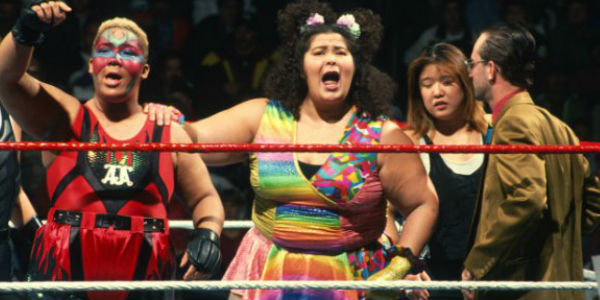
In 1995, Aja Kong arrived to World Wrestling Entertainment from Japan with one purpose: to challenge Alundra Blayze for a women's championship that was being devalued by the day, thanks to a lack of quality opposition. Kong was meant to give Blayze the type of competition that she had not faced since the rivalry with Bull Nakano ended earlier in the year. While that rivalry never materialized thanks to the departure of Blayze for competitor WCW a month later, fans got a taste of what may have been at that year's Survivor Series event. Never before had a single Superstar accounted for the pinfall elimination of every one of their opponents as Aja Kong took to the ring on November 19, 1995. That all changed rather quickly as Kong tossed her opponents around the squared circle with reckless abandoned and brutalized them with some of the nastiest, stiffest shots ever seen by an audience not all that familiar with the Yoshi style. Sakie Hasagawa was the first to feel Kong's wrath, falling prey to a back suplex that ended her evening. Chaparita Asari was next, enduring a crushing big splash from her much larger opponent that led to her dismissal. Kyoko Inoue followed, the victim of a banzai drop. At long last, it was Blayze's turn. The champion put up a valiant effort but Kong used a simple-yet-brutal Uraken Punch (backfist) to end her misery. Never before and, perhaps never again, has a single competitor dominated another team so handily as Aja Kong did in 1995. She may not have the star power of a Roman Reigns or even the Big Show but on that one night in Washington, D.C., she left an indelible mark on the history of WWE's annual November spectacular.

4. The Rock - 1996, 2001

Much was made of young Rocky Maivia's debut at the 1996 Survivor Series. For weeks leading into the event, commentators such as Jim Ross and Vince McMahon made a huge deal about his heritage, touting him as the first third-generation star in WWE history. Video packages featuring footage of him training for his first match aired seemingly nonstop on Raw and syndicated programming. It was made abundantly clear that fans were supposed to cheer this man, that the young former collegiate football star would be the future of the industry. As he stepped into the ring inside the hallowed halls of Madison Square Garden, however, it was also clear that he was not ready to be the humongous breakout star McMahon was hoping he would be. He was green. Really green. Grinch green and it showed as he executed only the bare minimum, Sure, he eliminated Crush and Goldust, was the sole survivor of his very first match and was booked to look like a world-beater but the early success only fueled the eventual hatred spewed by the audience in the direction of the generic babyface. Only in hindsight is the match, and win, memorable. It would not be until Rock took to the ring five years later at the 2001 event that his potential had been realized. As the leader of Team WWE in its war with The Alliance, The Rock was a star bigger and brighter than the world of sports-entertainment. He was a mainstream success, a movie star and his name and face were known to millions around the globe, wrestling fans or not. He was an industry icon and a pop culture phenomenon. In short, he was everything Vince McMahon ever envisioned him being. Five years after his debut at the '96 show, he again emerged the sole survivor from an elimination tag bout, though this time the competition was much stiffer and more celebrated than he had faced on that evening. Rock eliminated Booker T, Kurt Angle and, finally, Steve Austin to secure the win for WWE. Two of those stars are Hall of Famers and the other should be, if he would ever return to the company that made him a star. That makes Rock's win even that more impressive. The 2001 show would be the last the Great One would ever compete at as a full-time star. He returned ten years later to team with John Cena as part of the build to their epic WrestleMania 28 bout but he has yet to compete in a traditional Survivor Series elimination bout. And likely never will again.

3. Hulk Hogan - 1989, 1990

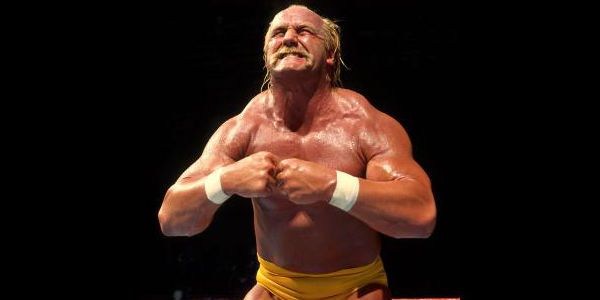
Is it really a surprise to anyone that Hulk Hogan was the sole survivor at two consecutive Survivor Series pay-per-views? The only real surprise is that it did not happen more often, such as 1987, when most expected him to blow past Andre the Giant for the second time that year and, instead, he was counted out. As a pop culture icon and the biggest star Vince McMahon had ever promoted prior to Steve Austin, Hogan was expected to be in those high-profile situations in which the spotlight was on him and him alone. His first opportunity to bask in the glory of the Survivor Series without Randy Savage standing by his side came in 1989 when, despite captaining one of the best teams of all-time (on paper), Hogan was left on his own to battle the resourceful and cerebral "Million Dollar Man" Ted DiBiase. As was the case with most of the Hulkster's matches at the time, a leg drop ended it and posing commenced. It was a triumphant night for Hogan, who unexpectedly took a backseat to a Superstar he would get to know very well in the months that followed, one that we will get to in a moment. The following year would be more of the same for the former heavyweight champion, who earned sole survivor status for the second consecutive year by way of his elimination of The Barbarian. His elimination of Dino Bravo earlier in the same contest was key. Unlike past years when being sole survivor earned you a few minutes of glory, the 1990 show featured a main event pitting all of the babyface survivors against all of the heel survivors, ensuring that Hogan would have to shake off any and all of the pain and punishment dealt to him by Earthquake if he wanted to win a second match that evening. He did, because he was Hulk FREAKING Hogan, and celebrated with co-survivor The Ultimate Warrior to end the show on a high note. Hogan would make his final Survivor Series appearance in 1991, losing the WWE Championship to some guy named The Undertaker. It was a pretty big deal.

2. The Ultimate Warrior - 1988, 1989, 1990
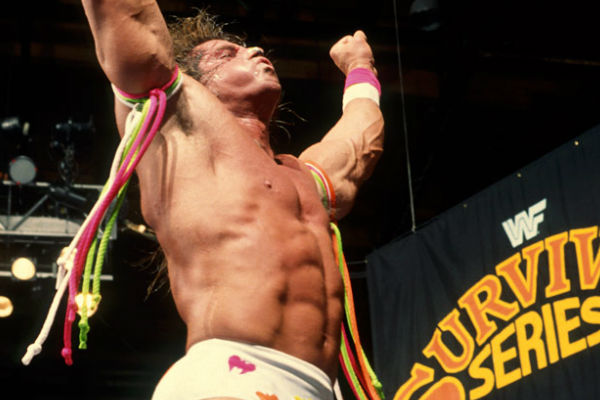
It is hard to imagine but, while Hulk Hogan may have been the biggest draw for WWE from 1988 until 1990, The Ultimate Warrior very well may have been its hottest star. Donning colorful face paint, arm tassels and trunks that matched, and sprinting to the ring to demolish his next opponent, the oftentimes unintelligible star was a favorite of many, thanks to his larger-than-life persona. He was so full of energy and intensity that it was absolutely impossible not to be captivated by the guy. That he rarely showed weakness, rolling over opponents in impressive fashion only further endeared him to a growing audience looking for exciting and fresh new talent. In 1988, he would arrive on the Survivor Series stage as the intercontinental champion and begin a run that would be matched by only one other man. There, he captained a team consisting of Brutus Beefcake, Jim Brunzell, Sam Houston and the Blue Blazer into battle against Danny Davis, Bad News Brown Greg Valentine, Ron Bass and Honky Tonk Man. Of course, since the majority of his partners were glorified jobbers, he was left in a two-on-one situation with Bass and Valentine. Neither of those men was a match for the IC champion, though, as he used two double ax handles to fell them. In 1989, Warrior's war with the Heenan Family and Andre the Giant reached its boiling point as he partnered with The Rockers and Jim Neidhart to meet Arn Anderson, Haku, Andre and Heenan. More importantly, Warrior had achieved such popularity that the decision was made to book him in the main event as opposed to Hulk Hogan, who had carried WWE on his back for five years. Fans rejoiced as they watched the surging young star eliminate Arn Anderson, then turn his focus toward Heenan. The loudmouthed manager finally got his comeuppance as Warrior delivered his trademark gorilla press slam and splash combination for the win. One year later, both Ax of Demolition and IC champion Mr. Perfect would fall victim to the same maneuvers as Warrior again celebrated as the sole survivor. To remain consistently over to the point that Vince McMahon has enough confidence to book a Superstar as strongly as he did Warrior during that three-year stretch is a testament to the performer himself. Warrior, for all of the criticisms (just and unjust), had a connection with the audience that allowed him to remain as relevant and over for as long as he was and did, regardless of the fact that he never really changed up the character to any great degree.

1. Randy Orton - 2003, 2004, 2005

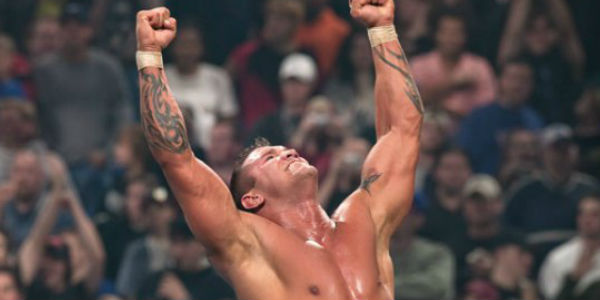
Though Randy Orton is one of the two biggest stars in professional wrestling now, it is the success he achieved early in his career that earned him a spot on this list. Tapped by Triple H and Ric Flair to be one of the faces of WWE's future way back in 2002, Orton overcame early injuries to climb the ladder in WWE, becoming the centerpiece of Team Bischoff at the 2003 Survivor Series in one of the featured matches of that event. Just one year into his main roster stint, he found himself fighting for the job of one of wrestling's most despised stars, a bloodied and battered Shawn Michaels the only person standing between he and the biggest win of his career. As it turned out, it was his ability to capitalize on interference from both Bischoff and Batista that led him to victory. A year later, Orton was in a very different place than he was previously. He was a babyface, the top young star in the business and the leader of a team consisting of Chris Benoit, Chris Jericho and Maven. All eyes were on him as he attempted to recover from what had been a shaky few months as the lead hero on Raw, battling Triple H, Batista, Edge and Snitsky in the night's marquee bout. Orton was good, very good even, as he eliminated both Edge and Triple H to win the bout. For the first time in his push to the top of the card, he was allowed to beat Triple H clean. A year later, however, he returned to his much more natural heel state, captaining Team SmackDown to victory over Team Raw via a second pinfall over Michaels. WWE had the opportunity to create something special with Orton's sole survivor streak but sacrificed it in favor of a clean sweep by Team DX over Team Rated RKO at the 2006 event.

Contributor
Contributor

Erik Beaston is a freelance pro wrestling writer who likes long walks in the park, dandelions and has not quite figured out that this introduction is not for Match.com. He resides in Parts Unknown, where he hosts weekly cookouts with Kane, The Ultimate Warrior, Papa Shango and The Boogeyman. Be jealous.