10 Greatest Technical Wrestlers Of All Time

Wrestling as an art form, as well as entertainment.
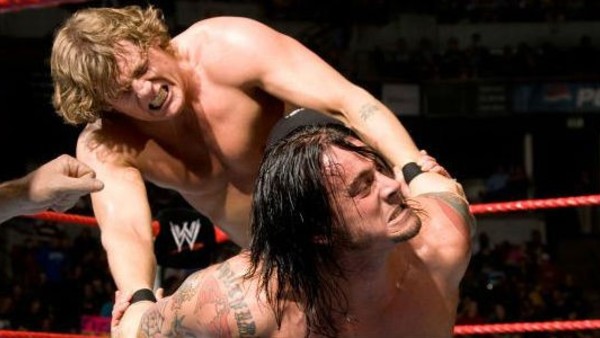
Today€™s brand of €˜sports entertainment€™ may have more movie stars and less cauliflower ears, but pro wrestling, at its core, has always been about two men in the centre of the ring, trying to earn a buck and entertain a crowd. Of course, what makes a good wrestling match HAS changed. How, where and why these (in some cases, ancient) holds are used has differed over the years, and will likely continue to do so, but a good wrestler, in any era, is a good wrestler. So, with the style and preferences of wrestling in a state of almost constant flux, how do we create a viable list of the WWE€™s ten greatest technicians? It can€™t just be about who knew the most holds, or who spent the most time tying his opponents up in knots. If it were simply about mat smarts and nothing else, then the stars of the 70€™s and early 80€™s WWWF, would likely be the only ones to appear on this list. Likewise, it can€™t just be about amateur skills. Lest we forget the many excellent amateurs that turned pro and failed to connect in a significant way with the audiences of their era. The criteria used here, then, are determined by a combination of factors, including legitimate wrestling ability, all round ring work, career success level, moveset and popularity with fans...

10. Bob Backlund

Bob Backlund was the last of the great old school wrestling champions. A man out of time, Backlund inherited a WWWF where his biggest fan and supporter was promoter Vince McMahon, Sr. Senior felt that the young, athletic and good looking Backlund€™s brand of clean cut, morally uncomplicated mat wrestling would wow the fans in the same way that €˜Superstar€™ Billy Graham€™s muscles, charisma and badass attitude had. Put simply, he was wrong. Backlund did do a credible job of holding the WWF title (they renamed it during his run), serving as World Wrestling Federation Champion for an impressive five-year stretch. However, Bob never reached the heights of popularity that the mighty Bruno Sammartino had and, once Vince€™s son had bought the company, Superstar Graham copycat Hulk Hogan inherited the belt and wrestling was changed forever. Because of this, Bob Backlund€™s place in wrestling history is often callously overlooked by fans and historians alike. A genuinely great wrestler, a successful, long-term drawing card and a supreme athlete, Backlund was a totally credible champion. In fact, if wrestling was decided by mat skills, Backlund quite possibly would have ruled the WWF roost for a damn sight longer than the 5 years he did. Backlund€™s polished ring presence and crisp, precise moveset told of an accomplished amateur background, whilst his ring psychology revealed a man who knew how to win a fight with just about anyone. In any previous era, Bob Backlund could have served as a wrestling Champion with distinction. He was, after all, a man cut from the same cloth as stars of the past like Verne Gagne, Jack Briscoe and Lou Thesz. He just happened to be born twenty years too late.

9. Dean Malenko

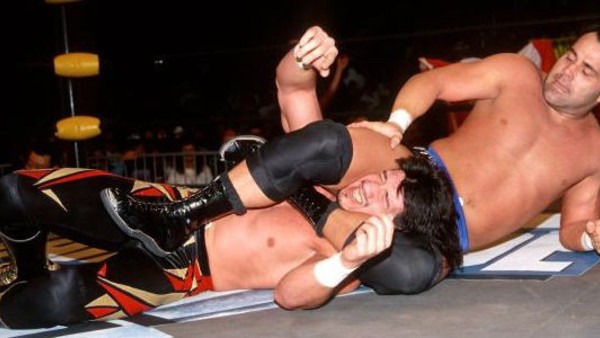
Dean Malenko was never a major WWF name, he never headlined a Pay Per View or house show and he was never allowed to ascend any higher than perennially holding the WWF€™s Light Heavyweight Championship €“ and successfully defending it against the same four opponents, week after week, in the early 2000€™s. If ever there was a wrestler that deserved more than the company gave him, it was Dean Malenko. Although not at all charismatic, Malenko was a superb wrestler. Had creative chosen to accentuate his toughness and legitimacy and given him some feuds with credible mid card opponents such as Chris Jericho, Rob Van Dam and/or former stablemates Eddie Guerrero and Chris Benoit, he could have had a great run as Intercontinental Champ and thus accomplished the recognition his vast talents deserved. Sadly, it was decided that €™eye candy€™ was the correct way to push Malenko and so, he would enter the ring, accompanied by two scantily clad ladies, both of whom usually towered over his 5,10 frame. Only given a few minutes per show, the €˜man of a thousand holds€™ usually got to demonstrate about 5 or 6 of them. Flash back to his time in ECW, however, and one can really get a chance to see just how incredible a wrestler Dean Malenko actually was. Holds, reversals, slams, high spots, even cartwheeling around the ring €“ the man could do it all. He had the wonderful ability to €˜wrong foot€™ his audience by doing exactly what you wouldn€™t expect from him and, as a result, his matches managed not to fall into the €˜show off€™, exhibitive territory that many tech-heavy matches tend to do in the modern era. Even though we only saw him sparingly in the WWF (and his time in WCW saw him booked in much the same manner), this list would simply not be complete without Dean Malenko, one of the greatest technical wrestlers to ever set foot between WWE ropes.

8. Hakushi

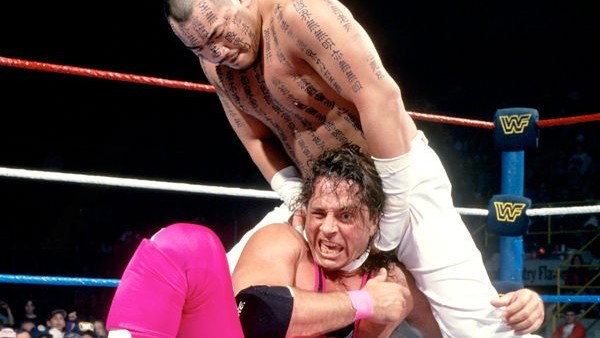
Jinsei Shinzaki, known to WWF fans as Hakushi, only wrestled in the company for a brief time, but his effect on the promotion was quite lasting. A major star in his native Japan, who is well known for his electrifying combination of perfectly-timed high flying moves and punishing, ground work, Shinzaki€™s short stint with the WWF was enough to set a generation of young wrestling fans facing Eastward. As Hakushi (the name loosely translates as €˜White Death€™), Shinzaki€™s frustratingly short, but otherwise superb, feud with Bret Hart highlighted a major new talent on the WWF roster - and even hinted at a possible World Title run one day. Sadly, neither came to pass for Hakushi and, following a couple of humiliating losses at the bottom of the card, he left the company under a cloud. Shinzaki then briefly wrestled for ECW (he is no stranger to hardcore wrestling) before heading back to Japan. Despite his brief tenure in the WWF, Hakushi makes this list for his combination of effortless poise, uncanny ring savvy and a stunning €˜shock and awe€™ style that looked forward to high-flying WWE daredevils like Rey Mysterio, Ultimo Dragon and Jeff Hardy. His unique look, legitimate toughness, tightly structured ring-work and fascinating character portrayal mark him out as one of the WWE€™s most frustrating missed opportunities. A WrestleMania bout with Undertaker would have been a major draw, especially when one considers that some fans refer to Shinzaki as €˜The Japanese Undertaker€™.

7. William Regal

William Regal is as tough as they come and twice as skilful between the ropes. He may have played a ponce on TV for much of his WWF/E tenure, but rest assured, Regal is a man that can hurt you in a thousand different ways. In addition to employing an impressive submission finisher (The Regal Stretch) and having an arsenal of moves diverse enough to allow him to wrestle in practically any style he chooses, Regal is just a paragon of wrestling knowledge, able to mix it up with anybody you care to mention. William Regal is one of the few wrestlers working today that could be picked up and planted in any era of wrestling and still be a draw. He has enough tough guy cred and shoot fighting ability to have been a star of the classic era, but equally, he also exhibits a great deal of showmanship and mic skills (€œI€™ve been besmirched!€), which made him a mainstay of the national era, as well as a prominent star in both WCW and the WWE. Its sad that the WWE didn€™t offer him one last main event run, but its perhaps better that he works with the NXT €˜rookies€™ and gives them the benefit of his experience instead. Regal is definitely up there with the best talents that the UK has ever produced (a roll call which includes legends like Davey Boy Smith, Dynamite Kid, Kendo Nagasaki and contemporary talents like Adrian Neville, Paige and TNA€™s Magnus). In addition, he is also easily among the finest technical wrestlers the WWE ever had.

6. €˜Mr. Perfect€™ Curt Hennig

In his prime, there wasn€™t a better all round wrestler in the WWF than Curt €˜Mr. Perfect€™ Hennig. In a company that featured Shawn Michaels, Marty Jannetty, Bret Hart, Randy Savage, Ricky Steamboat and Ric Flair, that really is saying something. Put simply, Curt Hennig was, well, Perfect. Hennig€™s Perfectplex finisher was a genuine sight to behold, executed precisely time and time again. He may have played the role of the cocky, arrogant heel, but in real life he more than had the skills to back up his character€™s relentless boasting. In his glory days, Hennig was never sloppy, never found wanting by opponents and never appeared to be tired of wound down, even when racked with a painful illness during his classic Intercontinental Championship match with Bret Hart at the 1991 Summerslam Pay Per View. Perfect€™s collection of holds, slams, spots and moves was nothing short of breathtaking. What€™s more, he was never wasteful or ostentatious with them - his psychology was airtight, every time. As a fan, you always understood what Hennig was doing and why he was doing it and there never seemed to be a move that he couldn€™t ooze out of and throw back at his opponent (with infuriating smugness, of course). Mr. Perfect was among the finest wrestlers in a fine era of wrestling and that is why he deserves a spot on this list.

5. Eddie Guerrero

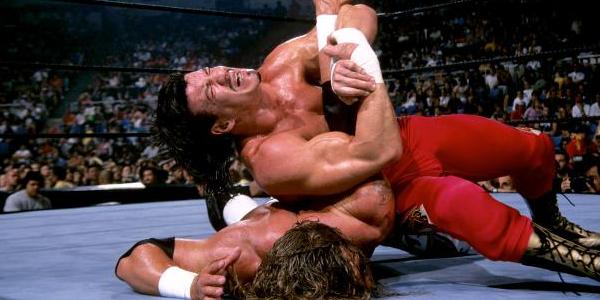
Setting aside genuine fan grief, the gloss of nostalgia and the WWE marketing machine, Eddie Guerrero was still the best all-round wrestler of his generation, barring none. That€™s my view and you can€™t shake me from it. That Guerrero occupies such a lofty place in the hearts and minds of the WWE fans is more a testament to his charisma, charm and personality than his actual wrestling ability. However, the fact that wrestling fans still talk about his body of work in hushed, almost reverential, tones speaks volumes about his talents between the ropes. Who else but Eddie, when booted out of his job, down on his luck, alone against addiction and fighting to get his life back on track could pull out such a solid gold, first class match against a young Low Ki for indie promotion ICW (Impact Championship Wrestling)? Unlike many wrestlers on this list, Eddie Guerrero was a genuine €˜wrestler€™s wrestler€™ that was allowed to go all the way to the top €“ and he took the fans with him every step of the way. His style was a hybrid of US style ground work and Mexican style high impact, but with a flair and flavour that was uniquely his own - often working on instinct and making incredible splitsecond decisions. It is not an understatement, therefore, to call him a wrestling genius. For years, Eddie Guerrero had been very highly regarded as a wrestler, but not really a personality €“ and the WCW of the 1990€™s was dominated, in large part, by ex-WWF names that were earning very good salaries and were reluctant to cut anyone else in on the action. However, the WWF gave Guerrero a chance to run with the ball and he took it, dominating the mid card first as European Champion (memorably wrestling Chris Jericho) and then as Intercontinental Champion (where he worked with a number of great opponents, but exhibited a special chemistry with Rob Van Dam). Following a high profile sacking for drinking and substance abuse problems, Guerrero cleaned up his act and emerged lean, clean and sober, as the complete article €“ the perfect wrestler. Hell, he even made JBL look like a credible World Champion. Truly there was no end to the man€™s talents. For his erratic, yet expertly crafted, moveset, his extensive collection of holds and reversals (many of which had never been seen on WWE TV before) and his wayward wrestling genius, Eddie Guerrero deserved every drop of career success he ever had, as well as a prominent spot on this list. All these years later €“ we still miss him.

4. Tie - Ricky €˜The Dragon€™ Steamboat & €˜Macho Man€™ Randy Savage

Which one of these two was the better wrestler? Frankly, I can€™t decide. Savage enjoyed a greater level of career success, for sure, but Steamboat was probably the superior athlete. Savage had more charisma by far and delivered way better promos, but Steamboat was a true artist in the ring, delivering everything with such knife-like precision and crispness. Put simply, it€™s a draw. Randy could more than hold his own in a technical bout, but was equally comfortable wrestling in what Chris Jericho has referred to as a €˜greatest hits€™ style that is pretty much demanded by major Pay Per View events. His style wasn€™t especially mat heavy, although it would be a complete fallacy to assume that Randy didn€™t use an impressive array of manoeuvres, holds and reversals in his matches. However, Savage makes this list largely because his in-ring work, even though not especially mat centric, was just so damn good. His piledrivers, suplexes and back body drops were so textbook that it would be ludicrous not to consider him as one of the company€™s all time best technical wrestlers. For his part, Ricky Steamboat was a wonderful talent also. A bodybuilder in his spare time, Steamboat had the Million Dollar look that would have made him a star even if he couldn€™t wrestle. ...But he could wrestle. He could wrestle extremely well. Steamboat€™s arm drag, to cite just one example, should be required study for everyone that wishes to be a professional wrestler (or, for that matter, a fan of professional wrestling). So lightening fast were his hands and reflexes that he could even clap his hands in midair before executing the move. In addition, Steamboat€™s abdominal stretches, chickenwing holds and leg locks were a sight to behold and he threw maybe the most perfect suplex of all time. When this pair locked up at WrestleMania III, it made for arguably the most technically accomplished WrestleMania matchup of all time, which should be evidence enough for just how great these two were in their respective primes.

3. Tie - Chris Benoit & Dynamite Kid

Chris Benoit Dynamite Kid Unfortunately, the shadow that will forever hang over the late Chris Benoit, in the form of the double murder/suicide during which he took the lives of his wife and child (and then killed himself), has thoroughly eclipsed the rest of his resume. Rightly so. The stark, violent brutality that marked the end of Benoit€™s life was a million miles removed from the gentle family man and dedicated professional remembered by friends, colleagues and family. What happened? We€™ll probably never know. Wrestling fans, being wrestling fans, have espoused hundreds of crackpot theories to explain why their hero suddenly turned into a villain in the worst possible way. Sadly, it is fruitless to search for an explanation. Sometimes people just snap €“ and, for his part, Benoit shattered like a brittle shard of glass dropped down a mineshaft. ...But that€™s got nothing to do with this list. Chris Benoit was one of the greatest technical wrestlers in the history of the WWE and his body of work speaks for itself. His series of matches against Chris Jericho (the missing number 11 on this list) were demonstrations of his mastery of the craft of pro wrestling, and his matches against Kurt Angle were peerless exhibitions of sheer excellence. To round out his impressive resume, Benoit was Bret Hart€™s opponent in what was, quite possibly, The Hitman€™s last truly great match. In the ring, Benoit threw the greatest German suplex of all time, barring none. He also performed the best diving headbutt since Harley Race. His mat work included his violent and very much feared finisher, the aptly -named Crippler Crossface, Following the murder/suicide, WWE whitewashed Benoit from history, perhaps rightly, forgetting the man and his legacy in order to survive the resultant media backlash. However, Benoit was a former WCW Champion (albeit via a very brief and contentious reign), as well as a World Heavyweight Champion in the WWE. He Main Evented Pay Per Views and was just on the verge of becoming one of the company€™s major stars, when his career €“ and his life, came to a short, bloody end. It is understandable that some people may find Benoit€™s inclusion into this list distasteful €“ and to those people I sincerely apologise. However, Chris Benoit was a genuinely fantastic wrestler and the body of work, if not the man himself, is worthy of remembrance. Dynamite Kid €“ the wrestler that Benoit very obviously based himself on €“ was a tough kid from England with a snarky attitude and a mean streak a mile wide. Away from the cameras, his problems with authority, together with his small stature and unorthodox style, meant that he never achieved the success level that his prodigious talents deserved. The name €˜Dynamite Kid€™ was no misnomer either; Tom Billington was super fast, supremely agile and extremely strong for his size. His offence was scrappy, hard and believable (often because it was all too real), but he was a damn fine technical wrestler, easily among the best ever. After working with a young Bret Hart in Calgary€™s Stampede Wrestling promotion and wowing audiences in Japan via a series of blistering bouts with Tiger Mask I (Satoru Sayama), Billington was eventually hired by the WWF, where he teamed with his cousin Davey Boy Smith, forming The British Bulldogs. Although he never enjoyed a singles run in the WWF, Dynamite Kid is still worthy of a place amongst the best technical wrestlers the promotion ever had. After all, if none other than Bret €˜Hitman€™ Hart rates you as the best wrestler he ever saw, you have to be doing something right.

2. Bret €˜Hitman€™ Hart

If a man is to be referred to as €˜The Excellence of Execution€™ and to refer to himself as €˜the best there is, the best there was and the best there ever will be€™, then he flat out HAS to be something special. Well, not only was €˜The Hitman€™ special, he was very special indeed. One of the standout talents of Stu Hart€™s Calgary-based Stampede wrestling promotion, Bret Hart was the obvious heir to his father€™s in-ring prowess. Young, athletic, good looking and precociously talented, Bret emerged early on as a large blip on the radar of Vince McMahon Jr, who was, at the time, in full-on expansion mode. After failing to make much of an impact in his early years, a frustrated Hart asked to be teamed with bearded heavyweight badass Jim €˜The Anvil€™ Neidhart and to have the pair managed by Jimmy €˜Mouth of the South€™ Hart (no relation). The truth is that the team, aptly named The Hart Foundation was simply thrown together by management, who had no specific plans for Hart or Neidhart, and so decided to simply use them as a tag team for a while. However, the decision worked out really well for McMahon, who soon found that he had a bona fide contender for the greatest tag team of all time on his hands. Of course, Bret was poised as the team€™s breakout star, eventually engaging in a terrific feud with Curt Hennig, which resulted in him winning the Intercontinental Championship (traditionally a €˜stepping stone€™ of sorts to the WWF belt). As Bret€™s popularity grew, he was hand picked to end Ric Flair€™s WWF Championship reign - and a new chapter in his career had begun. Probably the biggest drawing card on this list, Hart became the de facto star of the WWF show following the departure of Hulk Hogan and was actually able to reinvigorate the entire WWF product in the process, bringing the focus once more on athleticism and wresting skill. Hart€™s sincerity as an athlete got him over with fans of serious wrestling, but he was far from the Bob Backlund of the 1990€™s. With his wraparound shades, leather jackets and badass €˜tude, Bret Hart was the classic babyface given a tough new overhaul and re-packaged for a new era of wrestling. The Hitman is a strong contender for the greatest technical wrestler (and certainly the most successful) in all of WWE history, but one man just pipped him to the post, and that man is...

1. Kurt Angle

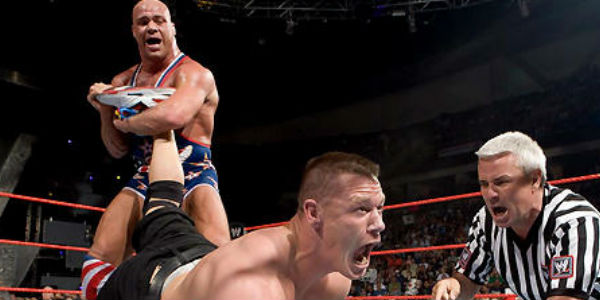
The only Olympic Gold Medallist in professional wrestling history, Kurt Angle came into wrestling with a lot of weight on his shoulders. We all know what amateur wrestlers generally think of professional wrestling and I€™m sure that Angle probably felt a lot of heat in the dressing room in his first few months with the company as a result. But Angle was tougher than tough (frankly, you€™d have to be to win an Olympic Gold Medal with a broken neck) and sharper, keener and leaner than anyone else on the roster at that time. His superb rookie year, which saw him simultaneously hold the IC and European belts, was capped off with a WWE Championship reign that lasted almost a full year. During the biggest drawing period of WWE€™s recent history (maybe even overall), the time when Vinny€™s boys finally saw off their rivals at WCW and demolished everything else in their path, Kurt Angle was the Champion, the standard bearer for the WWF€™s brand of sports entertainment. Angle went on to become a multi-time World and WWE Champion, main eventing WrestleManias left, right and centre, before eventually heading over to TNA and arguably doing more than any other star to put the fledgling company on the map. In the ring, Angle€™s work was fluid, adaptive and highly personalised. His signature anklelock, his belly-to-belly suplexes (the best ever, without a doubt), his flawless moonsault, his German suplexes (second only to Benoit€™s) and his ring psychology and timing made him the greatest technical wrestler in WWE history. Angle was legit. An Olympian no less, and his very presence on WWF TV heightened professional wrestling€™s legitimacy and credibility in a way that is impossible to understate. He approached pro wrestling with due respect and reverence €“ and he treated it like a sport. Angle wasn€™t a reality TV whore trying to make his name by taking a few bumps and putting out a dodgy rock album, he wasn€™t a steroid guru flexing his way through turgid strongman matches and he wasn€™t a flash in the pan either - he was the real deal, the ultimate wrestler€™s wrestler. Kurt Angle was the greatest technical wrestler the WWE ever had, barring none. So that€™s it. The annoying thing about lists is that you really don€™t get to say everything you want to say, or include every one you want to include. Names like Shawn Michaels (12), Ultimo Dragon (17) and Cesaro (15) have been found wanting this time, but the WWE has featured so many great talents over the years that its highly likely that this list could be expanded into a top 30, or even a top 50. ...Go ahead, give it a go!

Contributor
Contributor

I am a professional author and lifelong comic books/pro wrestling fan. I also work as a journalist as well as writing comic books (I also draw), screenplays, stage plays, songs and prose fiction. I don't generally read or reply to comments here on What Culture (too many trolls!), but if you follow my Twitter (@heyquicksilver), I'll talk to you all day long! If you are interested in reading more of my stuff, you can find it on http://quicksilverstories.weebly.com/ (my personal site, which has other wrestling/comics/pop culture stuff on it). I also write for FLiCK http://www.flickonline.co.uk/flicktion, which is the best place to read my fiction work. Oh yeah - I'm about to become a Dad for the first time, so if my stuff seems more sentimental than usual - blame it on that! Finally, I sincerely appreciate every single read I get. So if you're reading this, thank you, you've made me feel like Shakespeare for a day! (see what I mean?) Latcho Drom, - CQ