10 Incredibly Important WWE Employees You've Never Seen On TV

Do we actually know for certain that Kevin Dunn exists?
Have you ever wondered what it takes to run a multi-billion dollar international wrestling empire? WWE is far from the closely held family company it was in the 1970s and 80s, and there have been countless behind-the-scenes employees who have made the company what it is today. On-air, we are led to believe that there are three people making all of the major day-to-day decisions ... Vince, Stephanie, and Hunter. To be fair to wrestling's royal triumvirate, few details (no matter how seemingly minor they are) make it to television without approval from at least one of the three bosses; however, it takes more than just three captains to keep the massive WWE luxury liner afloat. WWE Corporate boasts that its programming is currently broadcast in 150 different countries in 35 different languages and reaches over 650 million viewers each week. They have multiple operations and business lines within the company including the WWE Network, weekly television programming, live events, digital media, licensing, merchandise, and of course, their very own (fledgling) movie production studio. Over the next few pages, we are going to give credit to the employees who haven't quite made it to air yet. You may see some of their faces if you visit WWE Corporate offices in corporate tax-friendly Stamford, Connecticut, and maybe you've kinda, sorta, possibly heard the following ten names. Chances are you haven't heard of them all, but that's what countdown lists are made for.

10. Michelle D. Wilson - WWE Chief Revenue & Marketing Officer; Spearheaded The Network

To paraphrase comedy legend Steve Allen at WrestleMania VI, send your postcards directly to her, folks! Even though many of us have had issues connecting to the Network, staying connected to the Network, and/or using the Network's archaic search function, Wilson is the person at Headquarters most deserving of the credit (blame?) for its launch. With WWE experiencing a near free-falling economic collapse since this year's WrestleMania, it's hard to tell if Wilson is on the hot seat or not. For now, however, she's the head marketing Diva and sits atop an annual revenue stream of $550 million. Wilson is also credited with securing lucrative deals between WWE and well-known sponsors like General Mills, General Motors, Colgate, Frito-Lay, and 7-Eleven.

9. Dick Ebersol - NBC Executive; Co-Creator Of Saturday Night's Main Event
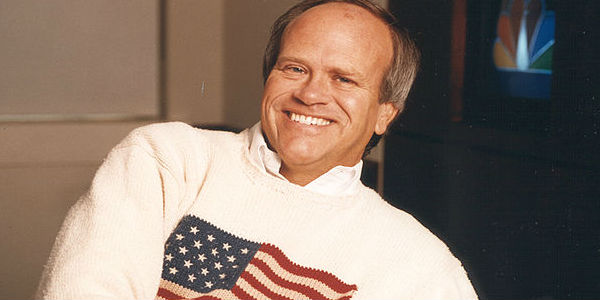
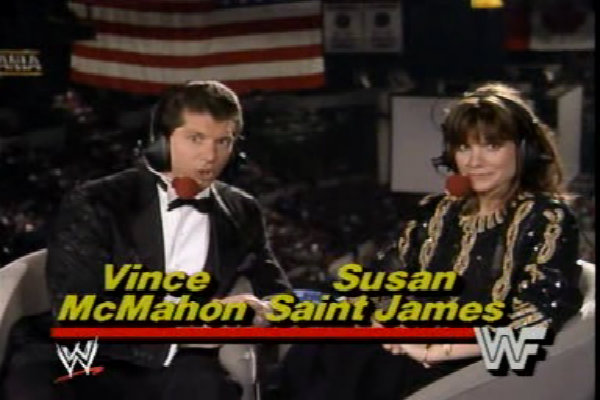
Though technically never an employee of WWE, Dick Ebersol is credited with co-creating, along with Vince McMahon, the wildly successful Saturday Night's Main Event franchise that aired on NBC from 1985 to 1992. In Vince McMahon's Don Quixote-like quest to bring wrestling into 1980s mainstream pop culture, Ebersol was instrumental in securing SNME as an occasional replacement for reruns of Saturday Night Live. In addition to being fantastic wrestling camp for a generation of superfans, Saturday Night's Main Event was professional wrestling's first national television exposure in nearly three decades. Without Ebersol's programming genius and foresight, Hulkamania would have run a little less wild, and wrestling's Second Golden Age may never have occurred. Two interesting side notes here: The March 14,1987 WrestleMania III go-home show, still holds the record for most viewers in the time slot, beating out every single episode of Saturday Night Live's nearly 40-year run. Also, Ebersol's semi-famous wife Susan Saint James, best known for her work on McMillan and Wife (Wife) and Kate & Allie (Kate), received a WrestleMania II paycheck as the baby face announcer seated alongside Vince McMahon in the New York portion of the PPV.

8. Jimmy Miranda - WWE Merchandising Guru
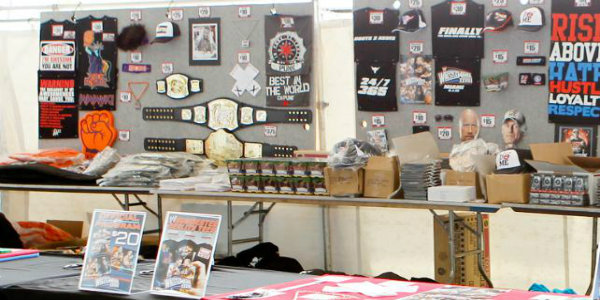
Very few people are as important to the seamless running of house shows than the ring crew that works tirelessly to set up and take down the ring and stage equipment before and after each show. Very few people are as important to the active WWE roster than those who help sell the all-important merchandise to both smart marks and Little Jimmies alike. As the Ultimate Warrior so eloquently stated during his Hall of Fame induction speech in April, Jimmy Miranda was one of these unsung heroes deserving of his own HOF recognition. According to Warrior, Miranda "was a guy who in the beginning before you could get merchandise all over the world ... used to drive his car or truck with a trailer, show up at the building, set up a table, and sell t-shirts, posters, and pictures." Do a simple Google search of his name, and you will find countless heartwarming stories of Jimmy Miranda from wrestlers, fans, and friends detailing his unmatched dedication to the business he loved so much. Sadly, Miranda died in 2002 at age 39 and received a rare on-air Monday Night RAW sendoff from announcers Jim Ross and Jerry Lawler.

7. George Scott - Former WWE Booker And Promoter

No, not the guy who famously played U.S. Army General George Patton on film. WWE's George Scott was a behind-the-scenes McMahon family toiler who was instrumental in the planning and execution WrestleManias I and II, and The Big Event Supercard in Toronto, Ontario, Canada. Scott was also the lead WWE man charged with ironing out the format and details of Saturday Night's Main Event when it premiered in 1985. Scott has been heralded by many industry experts as the premier matchmaker in the history of professional wrestling. He saw potential in individual wrestlers, matches, and story lines when others could not. Scott is also credited with first realizing the future star potential of a very young and very green Ric Flair, slowly transitioning him from the baby face cowboy gimmick Ric was given in the early 1970s to his more familiar Nature Boy persona that helped to define a generation of wrestling.

6. Mark Yeaton - Timekeeper; Bell Ringer; Beer Thrower

Mark Yeaton wore many hats during his two decade career with WWE -- from referee to timekeeper to production assistant to official ringer of the bell. Perhaps his most recognized contribution to professional wrestling, however, was in his role as "Stone Cold" Steve Austin's personal beer thrower. Whenever called upon, Yeaton rather amazingly hurled Steveweisers with the type of pinpoint speed and accuracy that rivals both Peyton and Eli Manning. Yeaton was also the corporate foot soldier who rang the bell at McMahon's behest during the Montreal Screwjob, an integral yet often overlooked aspect of that now infamous incident. In a move that surprised nearly everyone in the WWE locker room, Yeaton was released by the company last month due to massive budget cuts prompting the following tweet from Stone Cold (@steveaustinBSR) himself: "#Swigofbeer to my old beer thrower @WWETimekeeper Mark Yeaton. Best damn beer thrower in the world and great guy."

5. Bruce Prichard - Former WWE Journeyman; Backstage "Staff Member"
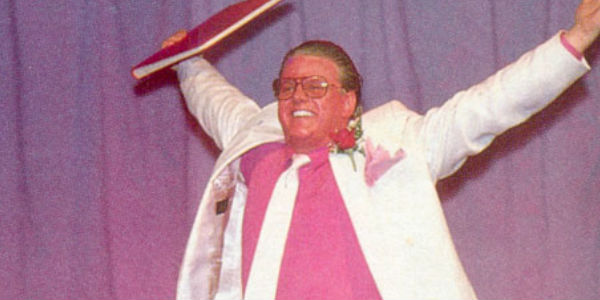
In all fairness, most wrestling fans have seen Bruce Prichard on television as the bulbous and curiously red-faced Brother Love. What most fans don't know, however, is that Prichard was a backstage WWE powerhouse for more than two decades. It's hard to say what Prichard's actual job title was with WWE -- officially he was listed as a mere staff member -- but endless locker room talk and rumors indicate a much more significant role for the corporate journeyman. It's hard to find a current of former WWE talent with anything positive to say about Bruce Prichard, but that universally negative heat is most likely the product of spending his entire 22 year career doing whatever dirty jobs the McMahon family didn't want to do themselves.

4. Adam Pennucci - Vice President Of Domestic Television
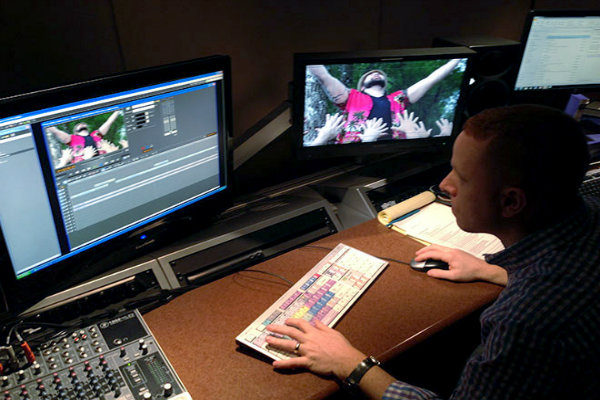
Few of us had ever heard of Adam Pennucci until Shawn Michaels' farewell speech on Monday Night Raw in 2010. After losing his retirement match to the Undertaker the night before at WrestleMania 26, Michaels was sure to thank Pennucci, the "crazy redheaded kid in Stamford" who made him and so many other wrestlers look like true superstars through his meticulously edited video packages. http://youtu.be/EC7V-ayjorg Pennucci's role is critically important to advancing story lines within the company and in introducing new wrestlers to the WWE Universe. In creating what he calls a linear approach to digital story-telling, Pennucci stresses the simple theory of €œlast week, this week, next week.€ If you've ever taken a break from watching RAW for a few weeks but were able to pick up exactly where you left off without feeling like you missed anything significant, then Pennucci and his team were successful in maintaining the soap opera illusion of professional wrestling. With almost 10 hours of original programming on television and countless angles to dissect each week, a well-crafted video package is essential to keeping the attention of even the most loyal viewer.

3. Kevin Dunn - Executive Producer of Programming; Executive Vice President of Television Production; Apparent Ghost
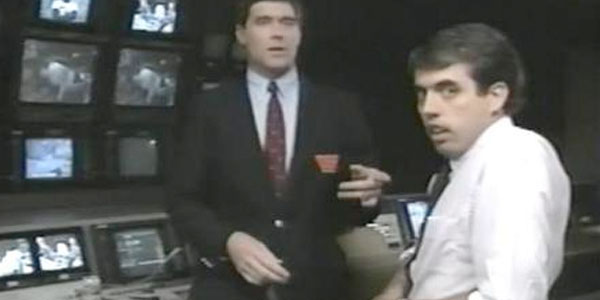
The question isn't what has Kevin Dunn done for professional wrestling. The question is what hasn't he (allegedly) done? Dunn has been employed in the television and pay-per-view production division of WWE since he was hired by Vince McMahon himself in 1984. His profile at WWE.com reads like the voice-over work from his eventual Hall of Fame induction vignette. Dunn helped bring the concept of WrestleMania from the somewhat scattered mind of McMahon to the veritable global sports entertainment event it has become today, and he has basically produced everything else released by WWE since then. The interesting thing about Kevin Dunn is his seeming lack of online presence despite being such an influential member of the WWE Executive team. There are only three badly dated and unverifiable pictures of him online (the best of which is included above), no YouTube interviews, and no news stories other than random backstage Kevin Dunn rumors. He is also the only member of the WWE Executive Team without a biographical photo on the corporate website, and his Wikipedia page was mysteriously deleted in 2007.

2. George Barrios - WWE Chief Strategy & Financial Officer

If former Cryme Time members JTG and Shad Gaspard wanted to explain what George Barrios does all day, they would simply rap, "Makin' all that money, MONEY!! Yeah, yeah!!" WWE's adorably snaggletoothed money man left his position as New York Times Vice President and Treasurer to join the McMahon family on the Stock Exchange in 2008. Under the financial guidance and supervision of Barrios, WWE has seen its annual revenues soar from $475 million in 2009 (his first full fiscal year) to an estimated $550 million in 2014. Vince McMahon himself has not fared as well as his own company has over that same period of time. The former billionaire CEO reportedly lost more than $350 million of his fortune in one single afternoon earlier this year leading to some speculation that Barrios would soon find himself future endeavored.

1. Jim Johnston - Entrance Music Composer Extraordinaire
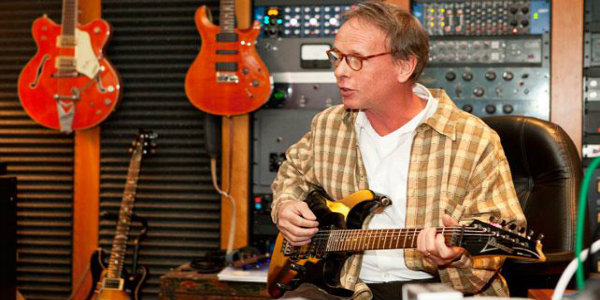
If you've ever been moved out of your seat by the mere sound of a wrestler's entrance music, chances are Jim Johnston wrote that. If you shook imaginary ropes with the Ultimate Warrior, you did so to Johnston's beat. If you got chills from one of the Undertaker's countless melodramatic entrances, if you smelled what the Rock was cooking before he even got to the ring, or made up your own lyrics to Monday Night Raw's iconic late 90s instrumental opening, Jim Johnston is your man. Chris Jericho, a decent musician in his own right, recently said of the Hall of Fame destined composer, "It always amazes me to see what he comes up with for guys who have been around for years, for guys who are just starting." High praise indeed coming from the Fozzy lead man himself ... and yes, Johnston wrote the music for Jericho's "Break the Walls Down." Watch Johnston explaining the beautiful simplicity of the Fandango's entrance music here.

 
Posted On: 
Contributor

Past Contributor hasn't written a bio just yet, but if they had... it would appear here.