10 Lessons You Can Learn From Vince McMahon To Become A Billionaire

How to make yourself rich the Vinnie Mac way...

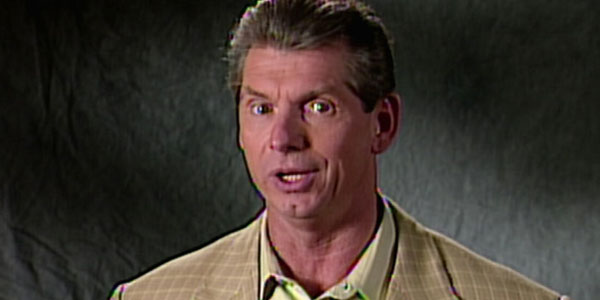
Vince Mcmahon Muscle Fitness On October 19, 1999, World Wrestling Entertainment became a publicly traded company on the New York Stock Exchange. Their initial public offering sold enough shares to ultimately make Mr. McMahon, at that point, the chairman of a billion-dollar company. However, as WWE's stock price plummeted, so did his billionaire status. But, with recent launches of the WWE Network, as well as capital investments in online promotion, mobile apps and talent development yielding dividends, Forbes Magazine - for the first time ever - recently listed Vince McMahon as being worth $1.2 billion. In examining the moves that took McMahon to taking his company to billion dollar status, and now himself into the billionaire's club, there are valuable lessons that any 21st century entrepreneur can use in order to match Mr. McMahon's ultra-rich status. We've listed them for you...

10. Embrace Globalism
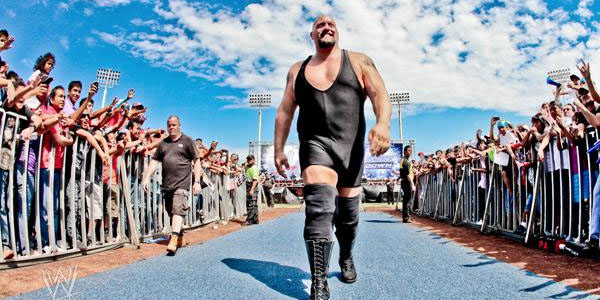
Evolving from Nikolai Volkoff and Outback Jack to Aldo Montoya and Savio Vega to Rene Dupree and Nathan Jones to Sheamus and Wade Barrett, World Wrestling Entertainment has had a rich and varied history with executing its overseas marketing with in-ring talents. However, insofar as outside of the ring work, WWE has set a truly progressive standard. At times wherein domestic (read as United States-based) touring profits are down, WWE has always turned to a more vigorous overseas touring schedule, hitting markets as varied as Japan, Dubai, South Africa and Brazil with their live events. Furthermore, WWE now broadcasts in 150+ countries, and in referring to their fanbase as the "WWE Universe" has done better than brands in other realms in marketing their globalized initiative.

9. Moreso Than Controversy, Racial, Cultural And Social Stereotypes Create Cash
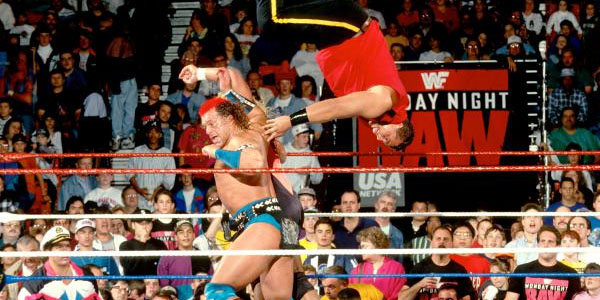
WWE's fanbase includes intellectuals like Grantland.com sports columnist Bill Simmons to a plethora of well-respected athletes, a fourth-generation of both blue and white-collar middle class men in my family, millions of children and hundreds of millions more. Whereas most traditional media-driven entities will consciously attempt to section off broadcasting and focus more heavily on particular demographics, World Wrestling Entertainment instead uses the unique concept of aiming for the lowest common denominator viewer and buyer in us all. Yes, in simple terms that means racial, cultural and social stereotypes are at play early and often, and when best portrayed in storylines, oftentimes lead to periods of great wealth for WWE. For five decades, WWE's midcard has been filled with shucking and jiving African-Americans, humble Latinos, red-necked Southern hillibillies, hard-headed Samoans, Northern European hooligans who love to brawl, and all manner of Middle Easterners who practice jihad-style religious zealotry. On the top of the card, aggressive and muscled Caucasian Americans who embody uniquely Americanized versions of success story tropes of hard work or rugged entrepreneurship and don't back down from struggle win championship after championship. Occasional deviations (like, The Rock) from this standard occur, but for the most part, WWE's history features the kind of stereotyping that the highbrow can begrudgingly accept, the average person can locate themselves within, and children can aspire to become. It's an odd formula for sure, but one that has proven successful.


8. Fiscal Responsibility Is A Must

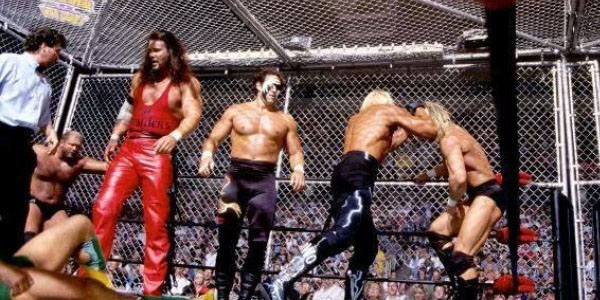
When WWE purchased WCW in 2001, one of three things could have happened. WWE could have a) brought over the entire roster and owned two separate companies that ran shows, b) purchased the contracts of WCW's ten stars perceived as their best draws and terminated the contracts of all other contracted talent, or c) brought over a mix of top, mid-card and lower card talents and alongside wrestlers from the similarly closed ECW merge all three company's rosters into a company eventually split into two brands with a multi-tiered developmental system. Well, given that hindsight is 20/20, we all chose c), and in why the era between 2001-2008 occurred, it speaks significantly to WWE's ability to be fiscally responsible and able to re-ascend to bit's once (and yet again) held status as a billion-dollar company. Had WWE run split-branded shows between WWE and WCW in 2001, it's arguable that the company would have ever rebounded to being valued at well over $1 billion. WCW was a damaged brand, and clearly second fiddle to WWE. Even if WWE would have moved talent between companies, the letters WCW were tainted in the eyes of traditional wrestling and new found mainstream fans, alike. Diverting WWE capital to the WCW brand could have likely become akin to throwing millions of dollars into a garbage disposal. Concurrently, if WWE had purchased the contracts of WCW's ten top drawing talents in 2001, that could have easily been a financial outlay of well into the range of $20 million. Without significant knowledge of how these talents would excel in WWE, the decision to not bring these wrestlers in wholesale was ultimately the smartest solution. The perception of loss on return of investment was likely entirely too high to consider. So while Hollywood Hogan, Scott Hall, Kevin Nash, Goldberg, Ric Flair and Scott Steiner would have all been ideal, they don't necessarily aid the company's bottom line. Waiting for their high-priced WCW contracts to expire (and then signing them at a reduced rate) certainly made better fiscal sense. The eventual solution of WWE accepting new talents, splitting the live event brand into Raw and Smackdown groups, and developing talent in smaller territories like Louisville's Ohio Valley Wrestling, Memphis' Power Pro Wrestling, Cincinnati's Heartland Wrestling Association and Atlanta's Deep South Wrestling allowed for a broader spread of talents to be signed. WWE creating developmental territories at the cost of say, signing Ric Flair, is a better reasoned expenditure than just signing the dirtiest player in the game.

7. Let The Women Lead

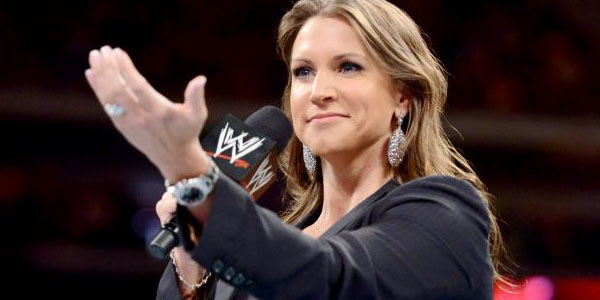
There's a clear correlation in the exposure of women to the WWE audience and the company's financial success. Whenever women have factored into the company in a significant manner, the company has seen its highest profits. In 1985, pop sensation Cyndi Lauper played a key role in the first Wrestlemania. Just after the company's public offering? Chyna was a superstar with a New York Times best-seller, Lita was with the Hardys, Trish Stratus debuted, and overall there were a dozen women with contributing roles on the roster. In WWE 2014 there's the company's Chief Brand Officer Stephanie McMahon, and as well the female grapplers featured weekly on the E! Network's "Total Divas" program. The 30-year trajectory of VInce McMahon and WWE's wealth increase as related to the increased importance of women in the company is intriguing for certain.

6. Genius Steals

There's a three-year gap between Mick Foley being trapped in a figure four leglock by Shane Douglas and eventually submitting after being repeatedly assaulted with a chair by Mikey Whipwreck to Mankind being bludgeoned into a bloody pulp by The Rock at the 1999 Royal Rumble. For as much as one would say that WWE evolved into the Attitude era, there's certainly reasonable doubt to allow for stating the opposing viewpoint that WWE's Attitude was merely ECW's ultra-violence being stolen and re-packaged. The main message here is that in developing a billion-dollar entity, that sometimes outright stealing a concept from a lesser-exposed brand makes sense. Increased and nuanced exposure of a popular concept to an audience certainly leads to increased revenue. As well, if you're as smart as Vince McMahon, putting the president or CEO of that brand on your payroll, and then hiring him outright to guide your company's creative process is a stroke of pure genius, and the sign of a billionaire.

5. Even If It Fails, Always Think Outside Of The Box And Follow Through To Completion
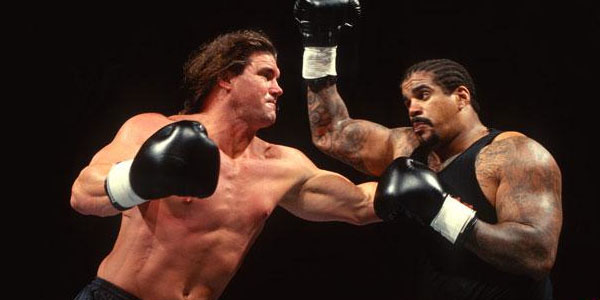
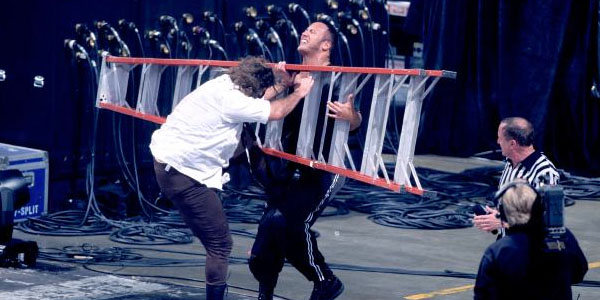
Wildly creative success is a process. Even if it fails, the attainment of success involves being faithful to the process of creation. Do you remember Brawl for All? Of course you do. 1998's worst concept in pro wrestling led to "Dr. Death" Steve Williams tearing his quadriceps muscle and for Bart Gunn to get knocked into irrelevance by super-heavyweight boxer Eric "Butterbean" Esch at Wrestlemania XV. However, it can't be said that Vince McMahon didn't follow through on that concept to the bitter, terrible end. The same goes for the re-launch of ECW, the Dawn Marie/Al Wilson/Torrie Wilson "sugar daddy marriage leads to death by sex" storyline and so much more. However, the same level of devotion to the creative process created the characters of The Undertaker and "Mr. McMahon" and the Tables, Ladders and Chairs Match, too, so while its a messy process, you absolutely must break a few eggs to make a cake.

4. High Turnover, High Return

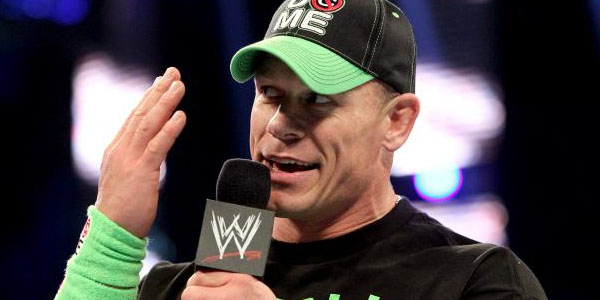
WWE has 700 full-time employees, with its wrestlers (arguably the most important as they create the content that drives the company) all at-will employed independent contractors who can be terminated at any time. The average career of an NFL player (a league where player contracts can also be terminated immediately) is three and one-half years. Comparatively, recently released WWE competitor Mason Ryan was signed in 2009 and released in 2014, giving him a five year run. As well, there's the case of similarly released Mexican lucha star Mistico, who as Sin Cara lasted with the company for three years. WWE careers like The Undertaker's 24-year run and John Cena's 14-year stint are rare. When owning a company that ultimately has to pay its employees a relatively lesser rate overall than other similarly sized entertainment companies (oftentimes due to high employee turnover limiting raises or pay increases), becoming a billionaire is inevitable.

3. To Thine Own Self Be True

Popular culture loves iconic entrepreneurs. America's billionaires have all achieved wealth through means that have always been unique to their own visions of the universe. Tying one's self so intrinsically to one's brand allows for success to feel personally worthwhile and thus highly motivating. While yes, WWE-branded projects like the World Bodybuilding Federation and the Xtreme Football League failed before they could financially succeed, it's these kinds of passion projects that inspire and motivate business owners like Vince McMahon to stay in the business of industry and wealth accrual for the long haul. If looking to make a billion dollars, it's likely not going to happen overnight. Similar to being a bodybuilder, when achieving success, sometimes its okay to pick up a heavier dumbbell. Even if you budge it an inch, it gives you a sense of the miles that are still possible in the journey.

2. Dream Big

Vince Mcmahon Wrestlemania It's a widely quoted story that if Wrestlemania failed that the then-World Wrestling Federation would have closed its doors. They key to success is having the intellectual quotient and intestinal fortitude to pursue the dreams that will define your legacy. Vince McMahon dreamed for Wrestlemania I to sell out Madison Square Garden and do big enough closed-circuit business to elevate the level of success and wealth of his company versus its competition. Wrestlemania II was to do the same thing in three different cities. Wrestlemania III was meant to fill a mega-sized domed football stadium. Wrestlemania IX, to invoke the feel of battling in the shadows of the Roman gladiators, and now Wrestlemania XXX, attempting to re-brand the company from an in-ring and commercial standpoint. In Wrestlemania, Vince McMahon has found the legacy-defining thing that allows him to maintain his wealth while celebrating his company's success. It's an entrepreneurial vision that has oftentimes exceeded itself and demands respect.

1. Have Ruthless Aggression
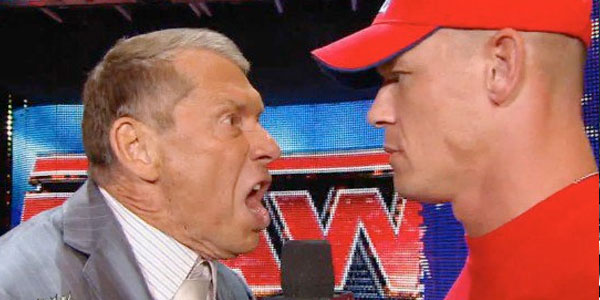
No, this isn't about John Cena pushing Kurt Angle to the limit in 2002. Rather it's about WWE ruthlessly surging into online and digital marketing, branding and media, and perpetually being a big business standard-bearer in a wild, new realm. Since the early 1990s, WWE has been a pioneering brand in online marketing. From having space on America Online to opening WWE.com to expanding that to WWE Shopzone to becoming heavily interactive in social media to the development of the second-screen WWE app experience followed soon thereafter with the WWE Network, WWE has always been a ground-breaker. However, in comparison to every other move WWE has ever made, the Network may be the one that keeps Vince McMahon a billionaire for the rest of his years on Earth. The Network is ultimately a one-stop shop for the entire historical and present-day library of WWE-owned content. Of course, given that WWE has all of the footage from World Championship Wrestling, as well as most territories, this means that the entire catalog of footage of the broadcasted history of mainstreamed professional wrestling will ideally be located in one centralized space. As well, the Network moving forward decentralizes WWE's need for significant push of its pay-per-view and home video/DVD services as the content can be hosted and stored online. The idea that WWE took the disruptive and progressive practices of online content providers like Hulu and Netflix to the next level in a significant manner long before major television networks and film studios did so is impressive. With WWE's broadcast deal with NBC/Universal expired, and broadcast networks staring deeper into a future where first-run broadcasting will be taking place on net-based portals, WWE could be leading the wave of television's future in abandoning traditional network structures for the more easy to access online realm.

Contributor
Contributor

Besides having been an independent professional wrestling manager for a decade, Marcus Dowling is a Washington, DC-based writer who has contributed to a plethora of online and print magazines and newspapers writing about music and popular culture over the past 15 years.