10 Main Event Superstars That Failed In WWE

Who headlined other marquees but failed to deliver when given their chance in WWE?

Failure is not always the most objective of terms. Depending on the subject, it can range from a minor misstep that caused but a momentary hiccup to a gross oversight costing one's career or more. CM Punk, for example, considered his wrestling career a failure because he never achieved his primary goal of main-eventing a WrestleMania. While most people would argue against Punk's opinion (and even Punk himself may feel differently now that more time has passed since he originally made those comments), it doesn't change the fact that failure is something that even the very best have to deal with. Vince McMahon, by all accounts, is the most successful person in the history of professional wrestling, yet even he has failed numerous times, most notably with the XFL and World Bodybuilding Federation (WBF). So to equate failure with losers would be a foolish conclusion. Even the best fail, but they get back up. Throughout the history of WWE, there have been many talented individuals that, while working for Vince McMahon, failed to find the type of success they had experienced in other organizations. Whether the reason for their misfortune was a lack of effort, a greater field of competition, backstage politics, or what have you, the end result of their stay in WWE was disappointing. These superstars main-evented everywhere from NWA to UFC to ECW to WCW to Japan and beyond, but when they got their chance in 'New York' something wasn't right and it just didn't work out.


10. Jeff Jarrett

That's J-E-Double F. J-A-Double R-E-Double T. Upon his 1993 arrival to the World Wrestling Federation, Jarrett was a young, up-and-comer who happened to be the son of famed Memphis promoter, Jerry Jarrett. Jeff was given a grand welcome to the WWF with multiple vignettes hyping his debut leading many fans to expect Jeff to rise high in the New Generation. While Jarrett did capture his first Intercontinental Championship in January of 1995, he would leave the company six months later, putting an end to his most successful stint with the company. Jarrett would be in-and-out of the company for the next several years before a taboo decision cost him his WWE future. Jeff would go on to capture multiple world championships with WCW, and later with TNA as he was the face of the brand (and partial owner) for many years. It's clear that Jeff had enough talent and potential for those in charge to entrust him with carrying their match cards... just not in WWE. The company did consider him for the main event several times, but those discussions didn't last very long. The reason for Jarrett's lack of big-time success in WWE is unclear. Whether it had to do with being the son of another promoter, a perceived disappointment or lack of ability, backstage politics, or personal attitude, Jarrett did find moderate success in New York, but compared to what he would do elsewhere along with the expectations that surrounded him his entire career, it's safe to say that he ultimately failed on the big stage.

9. Barry Windham

Barry Windham has been credited with influencing some of the biggest names in the industry over the years. Scott Hall, for example, talks often about the contributions and abilities that Barry Windham showcased throughout his career, but for whatever reason, his days with WWE were always underwhelming. Son of the legendary Blackjack Mulligan, Windham's greatest achievement for the WWF came as part of the U.S. Express tag-team, capturing the titles twice in 1985. After moving around for the next several years, Windham would capture the NWA World Heavyweight Championship at SuperBrawl III in 1993 before losing it to Ric Flair later that year. Windham had several separate stints working gimmicks for Vince McMahon as The Widowmaker in 1989 and again in 1996 as The Stalker, but neither would match the success he had in WCW/NWA prior.

8. Lex Luger

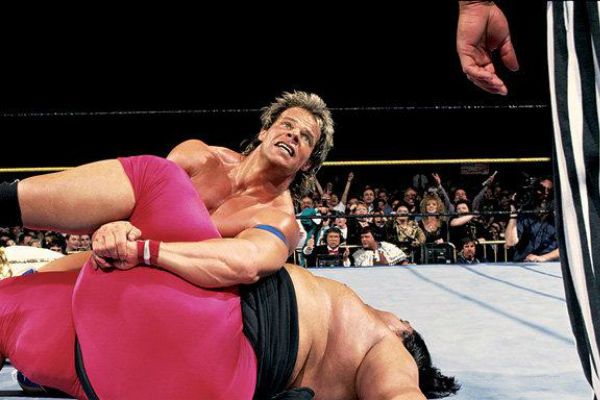
The list of "Main-Eventers Who Failed To Succeed In WWE" would not be complete without Lex Luger's name but, despite eventually failing, Luger was given the greatest chance to succeed. Unlike other names on this list, Luger's WWE run wasn't sabotaged or marred by backstage politics. Vince McMahon actually wanted Luger to not only succeed, but succeed in the biggest way possible, by becoming the company's next flagship performer on the level of Hulk Hogan. Unfortunately for Luger, he had neither the charisma nor the talent of The Hulkster and his forced positioning into the top babyface spot seemingly came out of nowhere. In 1993, just weeks after portraying the heel Narcissist character, Lex was thrust into the top spot as a USA-flag-waving patriot, but the industry had changed and the All-American babyface was passé. McMahon had not yet realized this and continued to force the issue with Luger which only hurt his chances of getting over with the fans. He even had Lex tour the country on the 'Lex Express', shaking hands and kissing babies in an attempt to garner support. By the time WrestleMania X rolled around, the event originally scheduled to be Lex's crowning achievement, plans had changed in order to anoint Bret Hart as the interim face of the company (that is, until Vince could find somebody bigger/better). Luger's stock would only continue to fall after WrestleMania and he would be back in WCW, the place where he made his name as a main-eventer, less than eighteen months later.

7. Goldberg

Similar to Lex Luger, Goldberg was a huge star in WCW and was given the rocket push early in his WWE career but his flame would burn out quickly. When Goldberg signed with Vince McMahon, hopes were that he would bring a boost to viewership and he was immediately given a clean victory over The Rock at Backlash 2003. In what may become a trend for several superstars on this list, his first big moment was also his greatest and his star would slowly fizzle out as time went on. Although he did win the World Heavyweight Championship, his victory and subsequent title reign was lacklustre and lasted only three months. His final match with the company was also his most infamous, as he battled Brock Lesnar at WrestleMania XX. During the match the crowd, who had heard that both men were leaving the company after that night, turned on the competitors. Given his status in WCW as the flagship performer during the hottest period in professional wrestling history, regardless of where the blame is placed, Goldberg's WWE career must be considered a failure.

6. Dan Severn

Prior to joining WWE in 1998, Dan Severn was an accomplished main eventer in the world of MMA, having won the UFC Superfight Championship by defeating Ken Shamrock. When Severn followed 'The World's Most Dangerous Man' over to the WWF, it was natural that the two shoot-fighers be paired with one another as they were working a feud in mid-1998. A match never materialized, despite the near guarantee that it would draw a large audience, especially during the early stages of the Attitude Era. Severn would go on to wrestle Owen Hart and also briefly appeared in the doomed Brawl-For-All, but eventually parted ways with WWE in early 1999. Admittedly, Severn was not a company guy and not the most politically correct. His contract with WWE was also unique in that he wasn't exclusively owned by WWE like many of his fellow wrestlers. All of these factors likely hurt his chances at success in the politically-motivated WWE and he was gone before he was able to really make much of an impact.

5. Vader

There may be no bigger example of misusing talent than what WWE did to the legendary Big Van Vader during his WWE career. Vader was incredibly successful in both Japan and WCW, and had just come off a run against the industry's top superstar (Hulk Hogan) when Vince McMahon acquired the Colorado native's services. Initially, he was built up great by destroying various superstars in the '96 Royal Rumble and even roughed up the previously untouchable Federation president, Gorilla Monsoon. His downfall came at SummerSlam 1996, where he was originally scheduled to take the WWF Championship from Shawn Michaels. Michaels used his political power to get the outcome changed to him retaining after a couple start-and-stop DQ and countout finishes. Vader was still set to take the strap at Survivor Series, but the reactions generated by newly-returned Sycho Sid were far louder than anything Vader was receiving and the call was made to use Sid in The Mastodon's place. This proved to be a death blow to Vader's WWE character. He would stay on with WWE through most of 1998 before finally leaving in October, his stock significantly reduced from what it was before he came in. His days in the WWE will always be remembered for what he didn't accomplish.

4. Shane Douglas

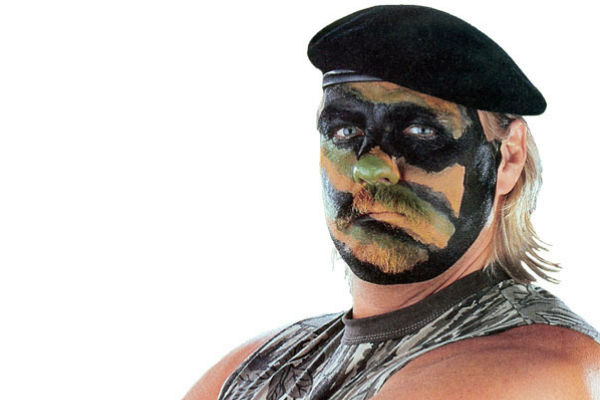
Shane Douglas was nicknamed "The Franchise" due to his importance to the ECW brand. He was smart, edgy, gritty and talented in the ring making him an easy target for the World Wrestling Federation's talent scouts. When Vince McMahon brought Shane in during the Fall of 1995, they took almost everything synonymous with the ECW headliner and threw it away. In fact, the only thing they kept of the character was his last name - everything else was created from scratch for the brand new, intellectually-superior gimmick of Dean Douglas. Between his ridiculous wrestling attire (his entrance gear fit more for a local community college commencement than the squared circle), his goofy glasses and, well, basically his entire character, Dean Douglas was everything Shane Douglas wasn't in ECW and it just screamed 'failure'. It also didn't help that, shortly after arriving in New York, he made enemies out of The Kliq, the infamous group that had significantly more stroke backstage than their fellow, solo counterparts. The Kliq claims that a bad attitude and poor work ethic saw to Dean Douglas having a very short stay in the WWE, but one thing is certain: Douglas left the WWF in late 1995 having achieved nowhere near the level of success he and many others had hoped he would.

3. Diamond Dallas Page

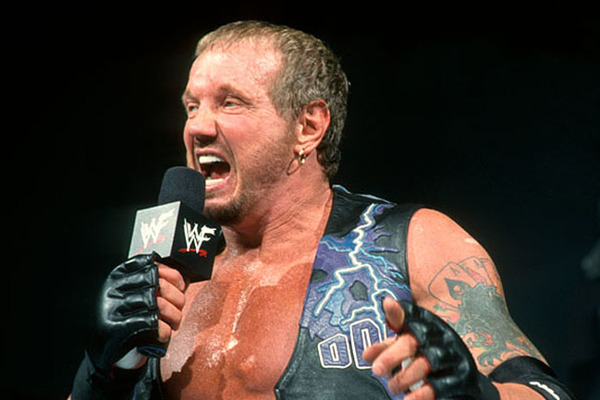
DDP won his first WCW World Championship at age 43 after years of being considered little more than a manager. Dallas also participated in the main events of some of WCW's most publicized pay-per-views ever, shows which involved big-name celebrities like Dennis Rodman, Karl Malone and Jay Leno. Like many of his fellow WCW alumni, DDP eventually joined WWE, but unlike many of his WCW brethren, he opted to forego his guaranteed WCW contract to do so. Financially speaking, the move made little sense but Page's advanced age and strong desire to remain in the spotlight were the reasons he chose to work for WWE immediately following Vince's purchase of WCW in 2001. Unfortunately for DDP, he made barely any impact and was not used properly from his very first moment, where he was revealed as The Undertaker's wife's stalker. In what would become a popular strategy of Vince McMahon, WWE guys squashed all former WCW wrestlers and Page was no different. In fact, he might have been the first victim to experience the "WCW Treatment". At one point, he was arguably the most popular superstar on the WCW roster. After arriving in WWE, he was foolishly demoted to the lower mid-card and weekend shows like Jakked and Heat, before neck issues forced him to temporarily retire.

2. Scott Steiner

Scott Steiner became a legit solo WCW main-eventer around 2000 as his "Big Poppa Pump" character began to take off. He had a prior run in WWE with his brother Rick where they captured the company's Tag Team Titles, but their stay was relatively quick, lasting just a little over one year. He eventually returned to WCW and remained a tag specialist for a few years before embarking on a solo career as a completely different heel character that eventually landed him in the main event. When WCW folded in 2001, Scott Steiner was one of their top stars and so it was only natural that we would find his way back to the WWE before long. In one of the more anticipated returns since WCW closed, Scott Steiner wrestled Triple H for the World Heavyweight Championship at the 2003 Royal Rumble. It was a disaster. Arguably one of the worst matches of all-time - certainly in Royal Rumble history - Steiner and Triple H had a train wreck of a match so bad that it forced the company to alter their WrestleMania XIX plans. Rumors circulated that Steiner was to finally defeat Triple H at 'Mania for the strap, but after poor showings at the Rumble and at No Way Out, the company decided to end the feud, with The Game retaining and moving on to a feud with Booker T. Steiner never recovered.

1. Sting

Sting is generally considered to be the flagship performer for the now-defunct WCW brand, a fact that probably worked against him during his short WWE in-ring career. For years (going back to the late 80s) Vince McMahon made attempts to sign the real-life Steve Borden to a WWE contract but, despite several close calls, Sting always decided against it. The primary reason behind his resistance was the concern that his character would not be used properly, worried that he would be treated like the rest of the WCW icons, as second-rate. In some ways, Sting's WWE career turned out to be Steve Borden's worst fears realized, with WWE giving Sting the "WCW Treatment". Although saying that, Sting didn't exactly bring his 'A' game, either. In fairness to WWE, the company couldn't control Sting's health and any potential lack of motivation, including the amount of preparation Sting decided to put in. Throughout his career, Sting developed a reputation for not always being in prime condition come game day and that seemed to be the case again in his matches against Triple H and Seth Rollins. In Sting's only main event performance for WWE at Night Of Champions 2015, the 56 year-old had to end the contest early after suffering several injuries which were thought to be career-ending. The moment seemed to overcome Sting at WrestleMania and again at Night Of Champions. Considering the decades of anticipation and expectation and his accomplishments everywhere else, The Vigilante was an ultimate disappointment in his time with WWE.

In this post: 
Lex Luger
 
Posted On: 
Contributor
Contributor

A former stuntman for Paramount Pictures, Matt enjoys sports, water skiing, driving fast, the beach, professional wrestling, technology, and scotch. At the same time, whenever possible. Having attended many famous (and infamous) shows including WrestleMania XV, In Your House: Mind Games, and the 1995 King of the Ring, Matt has been a lifelong professional sports and wrestling fan. Matt's been mentioned in numerous wrestling podcasts including the Steve Austin Show: Unleashed, Talk Is Jericho, and Something To Wrestle With Bruce Prichard. As a former countywide performer, Matt has been referred to as Mr. 300 for his amazing accomplishments in the world of amateur bowling. He is also the only man on record to have pitched back-to-back no hitters in the Veterans Stadium Wiffle Ball League of 2003.