10 Non-Wrestlers Who Completely Changed Wrestling History

Would Hulk Hogan have happened without Rocky 3?
We often talk about the wrestlers and promoters who have made a tremendous impact on the business as we know it. If I asked you to throw out some names of people who completely changed the industry, men like Hulk Hogan, Steve Austin, The Rock, Ric Flair, Vince McMahon, Eric Bischoff and Paul Heyman would all receive recognition for their contributions to the industry. But what about the men and women who never made a career out of steeping inside a ring or sitting in on booking meetings? People who approached wrestling as an outsider yet brought something to the table that made a huge impact on the business? We're not talking wrestlers, promoters or writers, but those whose contributions were brief yet substantially impactful. The list would obviously be much smaller, but nevertheless it's an important list. Without the men and women we're about to discuss, the landscape of sports entertainment would probably look quite different.

10. Cyndi Lauper

For anyone who wasn't a fan back in the 1980s, Cyndi Lauper's stardom nor her important to the business of wrestling is probably understated. Her album She's So Unusual was a colossal hit, spawning the hits Time After Time and Girls Just Wanna Have Fun - the latter of which featured wrestling manager Captain Lou Albano in the video. She won the Grammy for Best New Artist along with being nominated for several other awards. Her boyfriend and manager at the time was a man named David Wolfe and he was a huge wrestling fan. Wolfe took it upon himself to engineer what became known as The Rock n' Wrestling Connection with Lauper's involvement garnering the WWE a ton of publicity. Cyndi was involved in several events for the promotion, including appearing at the inaugural WrestleMania as Wendi Richter's manager. For fans who are used to WWE bringing in lower-tier musicians like Machine Gun Kelly and Florida-Georgia Line it may be hard to fathom that they once had the biggest musical act in the world appearing for them multiple times. But it happened, and Cyndi Lauper helped stir up interest in WWE during the genesis of Hulkamania.

9. Andy Kaufman

Long before Brian Pillman was wrestling€™s loose cannon, Andy Kaufman was using that persona to great effect in Hollywood. The Taxi star was a man ahead of his time; someone who loathed the term comedian yet still made people laugh through his elaborate pranks and acts. Although his the prime of his career lasted less than a decade, he left an indelible mark on the industry and influenced many who came in his wake. Kaufman was inspired by the carny business of pro wrestling and had added a bit in his act where he would wrestle women, proclaiming himself the inter-gender champion of the world, even going so far as to offer a $1,000 bounty to any female who could best him in a match. An attempt at bringing his act to the WWE was met with disinterest so Bill Apter introduced Andy to mutual friend and wrestling legend Jerry €œThe King€ Lawler. The angle between the two was one of the most successful to ever hit Lawler€™s home territory of Memphis and brought a level of mainstream attention unseen by any promotion outside of WWE, including a still-discussed appearance on David Letterman where Lawler slapped the fire out of Kaufman. For his part, Andy went out of his way to draw heat and make money for the company, and promoter Jerry Jarrett said he sent main event-level checks to Kaufman for two years and he never cashed any of them. Today we get angles involving Stephen Amell or Snookie quite frequently, but in the early 1980s when this took place, it was huge for the business and especially Lawler€™s career, helping to solidify his legend in Memphis.

8. Sylvester Stallone

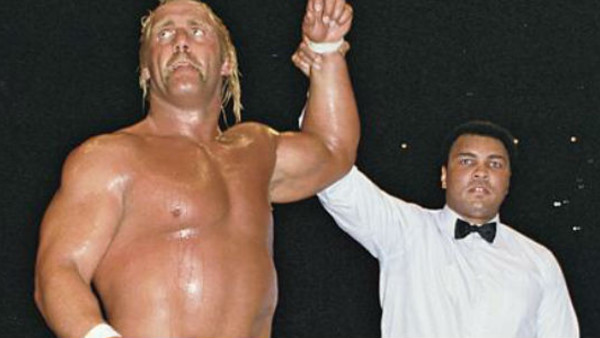
You can thank the man in this entry for helping to facilitate the friendship that led to the Mr. T/WWE relationship. During the 1980s Sylvester Stallone was easily one of Hollywood€™s biggest action stars, serving as the centerpiece of two huge franchises in Rocky and Rambo, plus standalone movies like Cobra and Over The Top. He was on the top of the world when he began work on the third installment in the Rocky series. And that€™s when he called upon Hulk Hogan. Stallone reached out to Hulk Hogan to portray Thunderlips in the 1982 hit. At the time The Hulkster had not yet become a household name €“ as this was prior to his big run in WWE €“ and the exposure was huge for both he and the wrestling business. The visibility the role granted him, giving viewers a taste of his charisma and larger than life personality, also probably went a long way in helping Vince McMahon decide that Hulk would be the man he built his company around and he geared up for his big takeover attempt. Not only did Rocky 3 increase the profile of the mind who would become the biggest star in the business pre-Steve Austin, but it also introduced that man to his co-star Mr. T. As Clubber Lang, T was the main antagonist of the film, and he and Hogan forged a bond that would be used to set up the main event of WrestleMania. Sly giving that pivotal role to Hogan changed the business for the better.

7. Mike Tyson

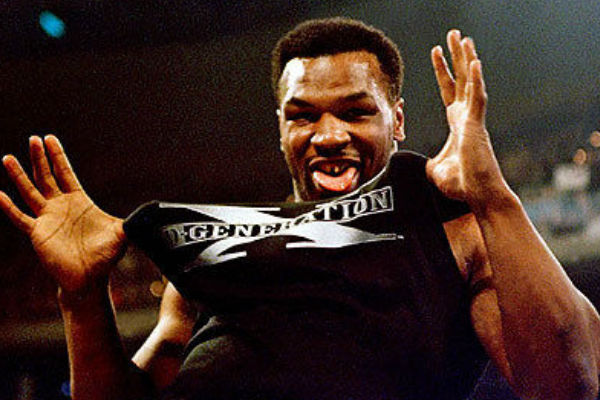
When we talk about the people who were instrumental in ushering in the famed Attitude Era, we€™re always quick to discuss Austin, Rock, DX and their tank-that€™s-actually-a-jeep, but one of the central figures that often gets overlooked is Mike Tyson. He€™s a member of the WWE Hall of Fame and was a large part of helping to launch the career of Austin. At the time that he was brought in to WWE to work the angle with Stone Cold and Shawn Michaels, Tyson was inactive in boxing. His last bout was the second in his series with Evander Holyfied, which ended in controversy when Iron Mike bit a chunk or Real Deal€™s ear off. It was a violent, visceral moment in a sport full of them and arguably made Tyson an even bigger name than he already was. He was unpredictable, violent and surrounded by controversy and he was everything WWE needed to give the wrestling business a boost. For those still willing to suspend disbelief, the thought of Stone Cold squaring off against Iron Mike was a true dream match between two of the baddest S.O.B.€™s in the world. The segment between he two featuring the pull-apart is an all-time great Raw moment. Tyson€™s involvement in the WrestleMania 14 main event did a lot to bolster interest in a bout that was suffering from Shawn Michaels€™ lack of enthusiasm, and his face turn at the end and subsequent decking of HBK to send him off into retirement while endorsing Austin was the best booking possible. Tyson deserves a massive amount of credit for how much he helped business at a time when the wrestling boom of the late 1990s was kicking into high gear.

6. Muhammed Ali

Muhammed Ali is not only one of the greatest boxers who ever lived; he€™s also one of the most influential sports figures of all-time. The mann born as Cassius Clay was the first pugilist to truly understand and embrace the art of self-promotion. Ali was a man who used his mouth to draw your attention and then let his talent in the ring speak volumes. Ali got tangled up in the ropes of the wrestling ring several times, most notably in his infamous match against Antonio Inoki in Japan. The bout was considered a huge spectacle, with two giants of their respective sports clashing. The problem was that Ali was under the impression that Inoki was going to shoot on him rather than work the match like they€™d agreed, so the entire contest consisted of the Japanese wrestler throwing kicks while scooting around on the mat as Ali stood over him looking for the kill shot. The boxing great also famously served as a guest enforcer/special referee for the WrestleMania 1 main event, joining the aforementioned Cyndi Lauper in contributing to that card€™s success. There€™s also a forgotten angle with Jake Roberts in Mid-South where he got involved in a match involving The Snake. Jake wasn€™t willing to sacrifice his drawing power to someone from outside the industry and took a remarkable five punches from Muhammed without ever leaving his feet, a fact that probably infuriated the boxing legend. But more so than his direct contributions, Ali is significant to the business of wrestling as a whole in how he influenced the performers. While he himself has noted he was inspired by Gorgeous George, Muhammed took what George was doing and revolutionized it. You can see influence in him in virtually every wrestler, particularly the first wave of promo-focused workers like Dusty Rhodes and Billy Graham €“ men who had their own share of influence.

5. Donald Trump

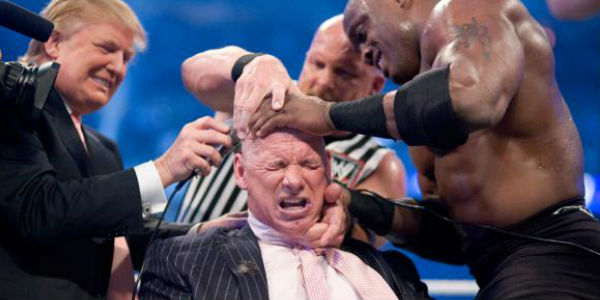
This next person is another of three WWE Hall of Fame entries on this list, and has a litany of accomplishments €“ both good and bad €“ to his name, as well as being the richest the richest and most newsworthy among the men and women we€™re discussing. Donald Trump is currently making waves and polarizing Americans as the Republican nominee for President of the United States, but he€™s dipped his toes in the water of WWE a few times. Prior to WrestleMania 28 featuring The Rock vs. John Cena, the 23rd edition of the supercard was the highest drawing pay-per-view in WWE history, and as surprising as it may be to admit, a lot of the credit for that goes to Donald Trump. The billionaire was heavily involved in an angle pitting him and Vince McMahon as adversaries that culminated in a match dubbed €œThe Battle of the Billionaires.€ Umaga would be standing in for Vince and Bobby Lashley would go to war for The Donald, with the losing billionaire being forced to have his head shaved. Trump was positioned as the face and Lashley got the win, which caused Vince to get his trademark pompadour buzzed off. In an interesting footnote, Steve Austin recently told a story about Trump on his podcast, saying that when Vince asked Donald to take the Stunner, his reps were vehemently opposed to it, but Trump shrugged them off and agreed to it. The event drew over 80,000 in attendance for a gate of $5.38 million €“ surpassing the previous record of $3.9 million - and it pulled in 1.2 million pay-per-view buys. It was an astronomical success that Trump deserves a lot of praise for helping achieve. Whether you like or loathe his personality or his politics, there€™s no denying he was a real shot in the arm for WWE€™s business.

4. Mr. T

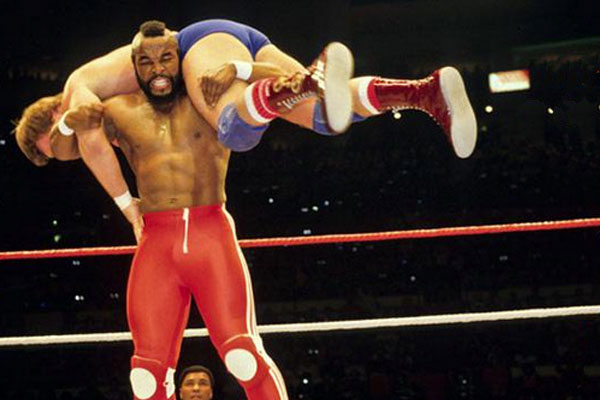
Yet another entry in the group of celebrities who helped make the first WrestleMania a success, Mr. T is inarguably the most vital of those performers. While Cyndi Lauper€™s popularity helped put eyes on the product and Ali added some legitimacy to the big sporting event atmosphere, the A-Team star was the man who helped sell the show. At the time, Mr. T was a big time star in Hollywood and had much of America convinced that he was the baddest man on the planet. Vince McMahon scoring him to be in the main event was a huge acquisition for the business as a whole, and fans were on the edge of their seats to see how B.A. Baracus would do when he came face to face with the villainous Roddy Piper and Paul Orndorff. Despite the potential for the match going sideways due to the very real tension between Piper and T, the WWE star kept it professional and did business, following that up with another clash with the actor at WrestleMania 2, which also had the potential of turning sour once again, and Piper went on record as saying he got disqualified because he refused to do the favor for the actor. Hands down the most important contribution Mr. T ever made to the wrestling business was his epic Hall of Fame speech. No man on Earth has ever loved his mother more than Mr. T, and the world is a better place for having known that. Thanks, Momma T.

3. Jamie Kellner

Without question the most tragic casualty of the Monday Night Wars was WCW. Old school fans viewed the company as the lineage from the NWA and Jim Crockett Promotions and losing it was a rough hit, despite the fact the company went out with a whimper rather than a bang. There have been millions of words written about what caused WCW to finally perish €“ some of them accurate but most of them not €“ with blame being leveled at everyone from Kevin Nash to Vince Russo and Eric Bischoff. The real culprit is someone far less familiar to fans; a man by the name of Jamie Kellner. After Time-Warner merged with AOL, Kellner was the man placed in charge of deciding the fate of WCW programming. Despite the fact the ratings had suffered a considerable decline, Nitro was still one of the highest rated shows on the network. However, Kellner concluded that wrestling didn€™t appeal to a favorable demographic and would not attract the right kind of advertisers, therefore making the decision to axe the promotion from the lineup. Eric Bischoff had assembled a group of financial backers to purchase the company, but because of the lack of TV, the company was close to worthless. This left Vince McMahon as the sole party with any real interest, giving birth to what essentially became a wrestling monopoly.

2. Paul Jay

These next few are going to be a little outside the box, but there can be no denying their involvement fundamentally altered the face of wrestling. When director Paul Jay linked up with Bret Hart about filming a documentary focusing on the end of his WWE career, neither he, nor Hart nor the wrestling fans had any idea what kind of blistering expose it would turn into. Jay was granted an unprecedented amount of access and even had The Hitman €œbugged€ for some of his closed-door negotiations with Vince McMahon. What started out as a simple wrestling documentary ended up being a story of the cutthroat business behind the performances. It was fascinating and at times ugly, but true fans sat riveted throughout the entire film, shocked at the inner workings of WWE. To today€™s audience, this might not seem as big of a deal because WWE has chosen to pull back the curtain much further with their own documentaries and Network specials. But in 1997 such access was unthinkable. Mainly, it fed the public€™s increasing appetite for wrestling related content, especially of a behind-the-scenes nature. The movie was like an issue of Dave Meltzer€™s Wrestling Observer newsletter come to life, and it was enthralling. Wrestling With Shadows gave wrestling fans an intimate view of the entire dispute between Bret Hart and Vince McMahon that led to the events of known as the Montreal Screwjob at Survivor Series 1997. While on first glance that might not seem like that big of a deal, but consider for a moment the impact of the doc itself: Wrestling With Shadows helped Shawn Michaels perpetuate the lie that he wasn€™t in on the screwjob, and it gave fans the story behind Bret slugging his soon-to-be former boss. It also helped make Hart a bit of a sympathetic character through the ordeal €“ a line of thinking most fans have shifted on €“ and increasing his profile for WCW, which, of course they fumbled. But most importantly by showing us the ruthless business acumen of McMahon, it allowed him to parlay that persona into becoming the most successful heel in the history of the business.

1. The Fans - Black Saturday 1984

This entry looks at the people who sometimes don€™t realize the power they hold within the wrestling world: the fans. A recent example of the how the audience can influence the direction of a wrestling company would obviously be Daniel Bryan€™s ascension to the main event of WrestleMania 30 and the WWE world championship. That was a case of a passionate fan base forcing the WWE€™s hand. But let€™s go back a little further, before Vince McMahon had really begun to kick his national expansion into high gear, when WWE wasn€™t the only game in town. It was 1984, and Vince was looking to gobble up all the national television timeslots available for wrestling and approached Ted Turner about purchasing the contract that would grant him the Saturday evening slot for Georgia Championship Wrestling. Billionaire Ted was having none of it and refused the offer, but caused an undeterred McMahon to seek out other options for acquiring the coveted spot on TBS. He offered to buy the promotion outright from owners Jack and Gerry Brisco and Jim Barnett, who took him up on it due to behind the scenes turmoil within the company, primarily caused by difficulties with booker Ole Anderson. WWE replaced the popular GCW and the ratings fell of a cliff. A swarm of fans began calling and writing the station, protesting the change in promotions as well as the loss of beloved announcer Gordon Solie, and the massive amount of dissatisfaction forced Turner€™s hand and he made a switch. Ted brought in both Bill Watts€™ Mid-South promotion as well as a new version of GCW ran by Ole, to counterprogram his own channel€™s programming and both shows buried WWE in the ratings. Losing money and looking for an out, Vince sold his slot to Jim Crockett Promotions, which began airing their own wrestling during the all-important Saturday night spot. That show would go on to become one of the most important two hours of wrestling TV ever, and would eventually evolve into WCW.

Contributor
Contributor

Brad Hamilton is a writer, musician and marketer/social media manager from Atlanta, Georgia. He's an undefeated freestyle rap battle champion, spends too little time being productive and defines himself as the literary version of Brock Lesnar.