Throughout the long and illustrious history of World Wrestling Entertainment, there have been wrestlers that have connected with audiences and enjoyed tremendous popularity as a result. For some, it was their mere presence that captured the imaginations of the fans. For others, it was their ability to talk that struck a chord. Still others rose to popularity thanks to their unmatched skills between the ropes. They capture the fans hearts and etch legacies for themselves, most of the time as members of the midcard. Why? Because, for whatever reason, management and the creative teams that work for them have not followed up their popularity with that one final push to the top. They have been reluctant to put faith in the idea that fans know what they want to see and what they want to pay for. Management and creative refused to see these Superstars as anything but talented midcarders or utility players and wasted their potential on years of treadmill booking. It has been a mistake made by those in power for decades and one that will continue to be made well into the future. Who are these men? Why were they overlooked and ignored by management? One of those questions is about to be answered.
10. Zack Ryder
Zack Ryder garnered a great deal of momentum in 2011 thanks to a YouTube show entitled, "Z! True Long Island Story." The fans bought into his antics on the show and management took notice, especially when fellow Superstars such as Dolph Ziggler, John Morrison and John Cena made cameo appearances. The involvement of Ziggler was most notable as it set up a feud between the two competitors that culminated at the TLC pay-per-view in December of that same year, when Ryder defeated Ziggler for the United States Championship. Had the company realized the potential of Ryder and maintained his push, he never winds up on this list. But they did not. Instead, they had him drop the title a month later to Jack Swagger and set him up to play the role of the "damsel in distress" during Cena's rivalry with Kane. From there, he free-fell down the card before landing back a the bottom with a deafening thud. Despite chants of "we want Ryder" popping up in arenas throughout 2012 and some of 2013, the company did nothing with him, using him as enhancement talent to put over the more prevalent stars, such as Alberto Del Rio and CM Punk. Today, Ryder is as irrelevant as he has ever been. He recently appeared on Travel Channel's "Toy Hunter" program, which matches the amount of times he has appeared on Raw in that same period. Despite being incredibly over just two years ago, selling merchandise by the truckload, one has to wonder what Ryder's shelf life is in WWE at this point.
9. Matt Hardy
No matter how hard Matt Hardy worked or how over he was, he never quite caught the collective eye of management the way his flasher, more marketable brother Jeff did. Matt was a tremendous wrestler who was fundamentally sound and, for the majority of his stint in the company, better than his sibling. Yet, when WWE decided to test the waters of singles competition in 2001 with the Hardys, they put Jeff at the forefront while Matt competed on the little-watched Sunday Night Heat, defending his European Championship. When the team was split for good in 2002, Matt gained more exposure on SmackDown but, despite soaring popularity and an over gimmick, he was still only allowed to advance to a certain point before being shuffled back down the card. While he was injured in 2004, his longtime girlfriend Lita was involved in an affair with Edge, making that period of time the most frustrating and heartbreaking of his career. Matt was fired for making comments about the Edge-Lita affair but fans demanded his rehiring. "Hardy" chants filled any arena Edge and Lita stepped into and a tease at his return elicited a huge ovation. When he finally did return, he received the biggest pops of his career and finally had the support of the fans and the momentum behind him to make a run at the top of the card. He was as popular as any other babyface on the card as he entered SummerSlam in August of 2005 and how did the creative team respond? They booked him to be knocked unconscious by Edge. He rebounded and defeated the Rated R Superstar at Unforgiven before losing a TLC match that sent him packing to SmackDown, where many believed he would thrive. Instead, he got into some political trouble following the Survivor Series pay-per-view and a run-in with Undertaker and was punished accordingly. He never again reached that level of popularity again. Even when he led the ECW brand as its heavyweight champion in 2008.
8. Booker T
A charismatic Superstar acquired during the WCW purchase in 2001, Booker T was the top babyface in Ted Turner's company when it went out of business and its heavyweight and United States champion. He was the franchise of that promotion and one of the few bright spots of the company in 2000. He should have been one of the stars at the forefront of the Invasion. And he was, at least for a little while. Not one of Vince McMahon's pet projects or homegrown performers, Booker was oftentimes beaten by more established stars such as Kurt Angle, Steve Austin and The Rock. He was never quite allowed to look any better than McMahon's stars and as a result, he floundered for the first-half of 2002. Then he was paired with Goldust and the team became incredibly popular. Their backstage skits and vignettes caught the audience's eye. They won the tag titles but by the beginning of 2003, they would be split up in favor of Booker finally earning his main event push. He became the number one contender prior to WrestleMania XIX and was booked in a match against Triple H for the very same World Heavyweight title he, himself, had held numerous times before. To hold it once in WWE, however, would prove that McMahon and the powers-that-be believed in him. When the storyline between he and The Game began to take on racial undertones and Triple H implied that "people like" Booker T did not win titles, it seemingly set the stage for the underdog challenger to leave Seattle's Safeco Field with the championship. Triple H won the match, pinning Booker nearly two minutes after delivering a Pedigree. The match backed up every racist claim The Game made about him. It took Booker over three years and a character change to recover from the loss. Sure, he won the World Heavyweight Championship on SmackDown in 2006 but injuries necessitated it. The manner in which he was treated after dropping the title later in the year only supported the argument that McMahon never saw Booker as one of his marquee stars.
7. Goldust
The Goldust character was a revolutionary one that laid the groundwork for the Attitude Era, something Steve Austin, The Rock, Undertaker, Kane and Mankind get credit for. The bizarre one was ambiguous and struck a chord with teens and young adults while simultaneously infuriating parents. The character had a tendency to go too far with some of his antics but he gave the audience a general idea of what they could expect from the most successful and profitable period in WWE history. When he became a babyface in 1997, a lack of quality good guys led to Goldust becoming one of the most popular stars in the company. With Bret Hart, Shawn Michaels, Steve Austin and Undertaker taking up all of the main event slots, there really was no room for Goldust to emerge at the top of the card. When he returned to the company in 2002 and partnered with Booker T, he proved to be more popular than ever, thanks to a comedic timing that was unmatched by the rest of the roster. Unfortunately, politics and the overabundance of Kliq members at the top of the card on Monday Night Raw left very little opportunity for anyone else to rise up and become a breakout star on the show. Despite receiving some outstanding ovations from the WWE faithful Goldust was utilized as midcard fodder.\ In 2013, he returned to WWE in better shape and as good between the ropes as he had ever been. He and brother Cody Rhodes were incredibly popular, thanks to a strong storyline involving the Shield and the Authority. At first, they were regularly featured in main events and high profile matches. After dropping the tag titles in January of 2014 to the New Age Outlaws, however, they fell off significantly and became largely irrelevant. Only recently have they begun to see a resurgence thanks to Cody's impending heel turn. A multiple-time Intercontinental and Tag Team champion, Goldust was always over and always had a way of keeping the crowd's attention. A highly marketable star with a unique look, he was good enough to compete against the top stars but never considered one by those with power. Why that is and why Goldust never quite got a chance to prove his worth as a marquee star for WWE is a question only those the bookers can answer.
6. Razor Ramon
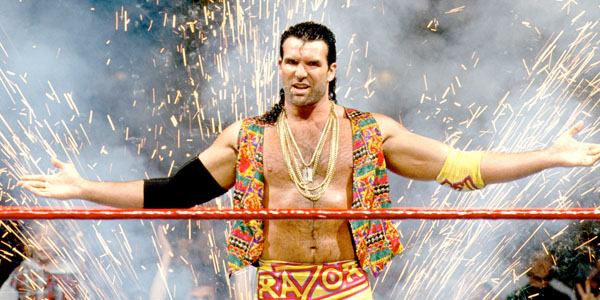
"The Bad Guy" and 2014 Hall of Fame inductee was one of the most recognizable stars of the mid-1990s. A cool, cocky and confident Superstar with the ability to beat anyone on any night, Ramon repeatedly flirted with the main event early in his career, partnering with Ric Flair to take on Randy Savage and Mr. Perfect at the 1992 Survivor Series and challenging Bret Hart for the WWE title at the 1993 Royal Rumble. From there, however, he settled nicely into the midcard and became one of the most popular Intercontinental champions of all-time. At the same time that he was starring in the midcard, his best friends Shawn Michaels and Kevin Nash were headlining shows across. The Kliq was running Vince McMahon's wrestling world under the guise of doing what's best for the business. If that group had as much stroke and as much power as it did, one has to wonder why Ramon, who was significantly more talented than Nash, did not enjoy a sustained run at the top of the company. Throughout 1994 and onward, he was one of the most popular stars in the company and proved his worth between the ropes by having great matches with a variety of different opponents, all of which utilized different styles. He was as likely to drag an above-average performance out of Yokozuna as he was to tear the house down with Owen Hart or the 123 Kid. A highly intelligent performer, Ramon had all of the tools to carry McMahon's promotion through the dark days. Given the political pull that the Kliq had, that clearly was not the reason Ramon did not achieve the level of greatness he was capable of. Unlike most of his peers on this list, Ramon was largely ignored for a top spot in the company thanks to his own personal demons, which made him both a liability and unreliable. It is no secret that the performer has a long, admitted history of alcohol and painkiller abuse. While it did not rear its ugly head in full until his days in the much more unstructured WCW, it was still a problem during his WWE career. Knowing what is known now, it is no surprise McMahon did not feel as comfortable putting Ramon in the top spot in his company. Even if Shawn Michaels, who would win the WWE title and become the franchise player for the company, was affected by the same demons at the same time.
5. Mr. Perfect
Arguably the greatest in-ring competitor to never capture the WWE Championship, Mr. Perfect was charisma personified. He knew how good he was and he backed it up every night. It was not until late-1992, when he turned on Ric Flair and Bobby Heenan, that he became accepted by fans. Entering 1993, only Bret Hart and The Undertaker rivaled Perfect's popularity and many speculated that it may be the year that Perfect finally climbs the ladder to the WWE Championship. That did not happen. Instead, Hulk Hogan returned, the massive Yokozuna rose to prominence and Lex Luger became WWE's next big thing. Perfect was shuffled into the midcard and a feud with Shawn Michaels over a title he had held years earlier. He competed against the likes of Doink the Clown, Rick Martel and Michaels' bodyguard Diesel but he never did get that well-deserved main event run that fans had voiced their desire to see. A back injury ended his run in 1993 and, as a result, his lone babyface run. He would return in 1994 to referee the Lex Luger vs. Yokozuna match at WrestleMania X and in 1995 to become a heel broadcaster. The one chance WWE had to capitalize on his popularity and push him to the title he deserved went ignored.
4. Dolph Ziggler
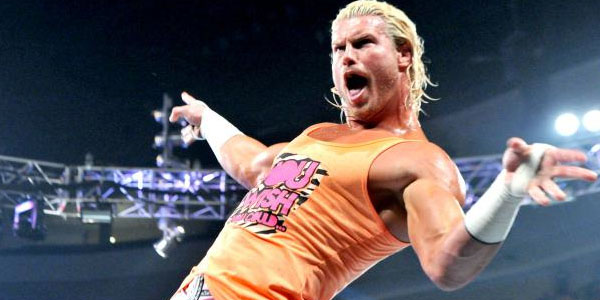
The modern day equivalent to Mr. Perfect, Ziggler has proven himself as one of the best workers in the industry for the better part of six years. A great bumper who makes any opponent he steps in the ring with look like a million bucks, Ziggler even looks like Perfect as he flies through the air and smacks off the canvas. Unfortunately, his career has taken a path similar to that of the 2007 Hall of Famer as he has regularly been held down and kept from achieving any kind of legitimate main event push, despite winning the one prize Perfect was never able to. In 2013, Ziggler cashed in Money in the Bank and became World Heavyweight Champion. It look as though all of his hard work and dedication, not to mention his show-stealing ability, would be rewarded with a sustained main event push that he so passionately chased for nearly a decade. Then Jack Swagger kicked him square in the face and effectively ended his dream. A concussion sidelined Ziggler for nearly two months. In his first match back, he dropped the title to Alberto Del Rio and turned babyface. The turn looked like the perfect opportunity for the company to continue to push a Superstar that fans had been cheering for months anyway. In reality, it was merely a way to appease fans. By SummerSlam, Ziggler would return to the midcard. A month later, he would begin losing matches, a trend that continued throughout the remainder of the year. By January 2014, he was left for dead, doing little of importance while watching lesser-talented performers succeed at a level he should have been at. A series of radio interviews in which Ziggler was open and honest about his feelings on the same crop of guys getting all of the chances to succeed may have proven to be his downfall. In particular, he repeatedly mentioned Randy Orton, who was in the middle of his latest run with the WWE Championship as the "Face of WWE." While his comments were in reference to the current storyline at the time, there was a hint of honest that shone through. That honesty got him in trouble, as he referenced on social media, and he was punished accordingly. Lately, Ziggler has seen his role expanded and has received more television time, mixing it up with Batista on several occasions. Whether the company believes that the former champion has done his penance remains to be seen but it is highly unlikely Ziggler returns to the main event scene anytime soon.
3. Jake "The Snake" Roberts
One of the most recognizable stars of the 1980s, Jake Roberts captivated audiences with his promos, his cerebral approach to the in-ring game and the use of a real snake named Damien. An engaging performer, Roberts did not need to resort to the yelling and screaming that most other wrestlers used in their promos. Instead, it was a mixture of facial expressions and the words he used that got his point across with fans. He spoke softly and backed his words up with the vicious DDT finisher. In 1986, he was suddenly turned babyface because he had become so popular as an antihero that he began to steal some of Hulk Hogan's heat. One of the most merchandised and marketable stars of his era, Roberts became a household name. Rivalries with Andre the Giant, Ted DiBiase and Rick Rude established him as one of the most popular stars in the industry. Whether it was as a hero or a villain, Roberts maintained his popularity because there was something so cool about the way he carried himself. There was an air of mystery surrounding him that intrigued audiences and made them sit up and take notice whenever he walked through the curtain. He was not necessarily a nice guy, even when playing the babyface, but they gravitated towards him anyway. Like Razor Ramon, however, Roberts had very real demons. No one really knew or could predict what shape Roberts would show up in to compete on a nightly basis. That severely limited what could be done with him and just how far he could be pushed as a top star. The last thing Vince McMahon needed was to have his champion or one of his main event attractions turning up intoxicated and injuring one of the his fellow wrestlers. It would have been bad for everyone. In 2014, Roberts was inducted into the Hall of Fame and delivered one of the most emotional speeches the ceremony had ever seen. He may never have enjoyed a lengthy main event run, nor did he ever win a single championship with WWE, but he is in a good place now and has apparently reunited with his family. Something he will take over a gold belt any day.
2. Rob Van Dam
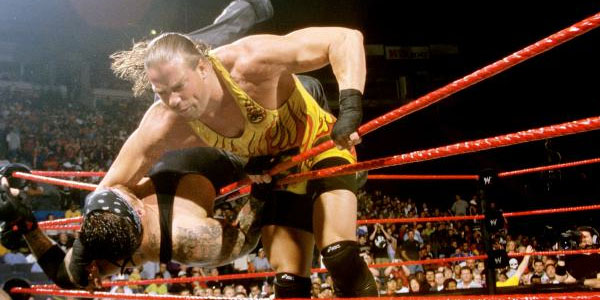
In the summer and fall of 2001, there was no Superstar more popular than the Alliance's Rob Van Dam. That is a loaded statement but all one has to do is go back, re-watch the tape and see for themselves just how over he was with an audience that was practically begging Vince McMahon for a fresh, new main event star. Van Dam's unique moveset coupled with his laid back attitude and charisma made him completely different from anyone else on the roster. Whereas so many of the top stars were overly aggressive or tense, Van Dam was cool and relaxed. His matches with Jeff Hardy in July and August of that year helped convert any doubters. By October, he was being positioned as a man allied only with himself rather than either the Alliance or WWE. At No Mercy, he took on Steve Austin and Kurt Angle in a Triple Threat match that proved to be his first big pay-per-view main event. Unfortunately, claims that he was too stiff or reckless in the ring led to some heat on the high flier. He was bumped down to the midcard as 2002 was underway. But fans refused to lighten their support of RVD. Whether he was fighting William Regal or Kurt Angle, competing in the first match of the night or the last, Van Dam remained one of the most over competitors on the roster. By the time the company decided to split its vast roster in two via Brand Extension, Van Dam was chosen to be the centerpiece of the Raw brand. Already the Intercontinental Champion, he captured both the Hardcore and European titles, absorbing them into one championship that would serve as the top prize on the Monday night program. Then Triple H returned to Raw and plans changed. The World Heavyweight title was reintroduced to the brand and handed over to Triple H. His first challenger would be RVD. It was Van Dam's first real title feud since entering the company in which he was the star. He got over on The Game leading into the Unforgiven pay-per-view in September, which should have been an indication that things would not go his way come show time. And they did not. Van Dam was beaten following interference from Ric Flair and almost immediately fell back down the card. He still appeared in the occasional main event but he was, by and large, stuck in midcard purgatory for the better part of the four years that followed. In 2006, he became WWE and ECW champion following the re-emergence of the extreme brand but that would be short-lived thanks to legal issues. Whether it was his lack of promo ability, his size or the aforementioned legal problem, which was incredibly stupid on Van Dam's behalf, WWE never really got behind Van Dam as one of their top stars, despite incredibly popularity that is still on show each and every week on Raw and SmackDown. A rare and special performer, Van Dam could have helped bridge the gap between the Attitude Era and the eventual rise of John Cena and Batista. Instead, he was a very good hand for a company full of them in the mid-2000s.
1. Roddy Piper
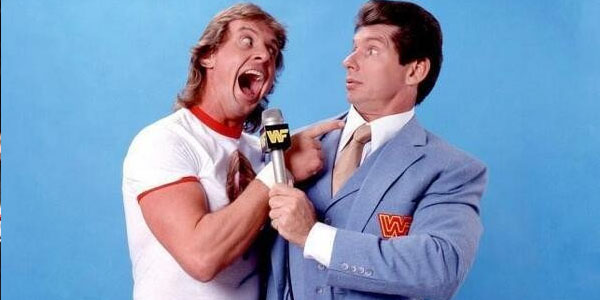
Yes, Roddy Piper was a huge main event attraction for WWE in the mid-1980s, during which he was the most hated villain in the sport. He terrorized everyone from Hulk Hogan to Mr. T to Cyndi Lauper and nearly incited riots while doing so. In 1987, he made a babyface turn and became one of the most beloved stars in the industry. The fans necessitated the turn thanks to their support for the wildly entertaining personality and continued to support him for the remainder of his career. A hiatus that lasted from 1987 until 1989 cooled some of his momentum but when he returned at WrestleMania V, he proved to be as over as ever. Despite having the fans behind him and proving himself as a main event performer years earlier, Piper was largely treated like a midcard star. He engaged in feuds with Bad News Brown, Rick Rude and Ted DiBiase but never tasted the glory of the main event scene. In 1992, Piper enjoyed a career renaissance. He captured the Intercontinental Championship at the 1992 Royal Rumble, the first title of his WWE career, and received a pop that ranks right up there with the loudest of all-time. His entry into the actual Rumble match later in the night drew a big reaction and his elimination was greeted with a great deal of boos from the disappointed crowd. More popular than Hogan at that point, Piper would have been the perfect choice to eventually wrest the WWE title away from Ric Flair. But it was not to be. Piper left WWE in 1992, popped up again in 1994 and 1996, again proving as popular as he ever was. In 2005, he was inducted into the WWE Hall of Fame and to this day, he continues to make the occasional appearance on Raw or SmackDown. While others on this list have legitimate reasons for WWE ignoring them, for not capitalizing on their popularity and giving them that one big push that would have resulted in a main event run, Piper does not. One of the greatest entertainers of his (or any) generation, he deserved far better than what he actually got.
Erik Beaston is a freelance pro wrestling writer who likes long walks in the park, dandelions and has not quite figured out that this introduction is not for Match.com. He resides in Parts Unknown, where he hosts weekly cookouts with Kane, The Ultimate Warrior, Papa Shango and The Boogeyman. Be jealous.