10 Pro Wrestling Scandals You've Probably Never Heard Of
Believe them or not, they are interesting tales.
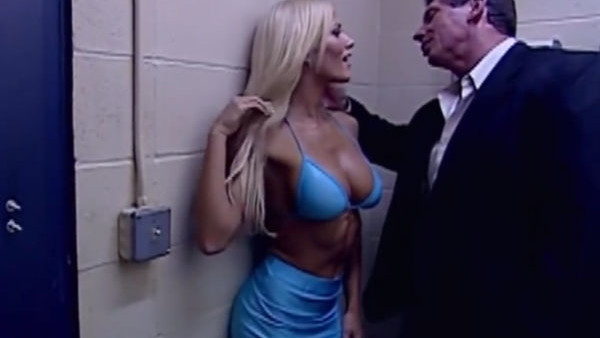
Considering the kind of damage the professional wrestling industry tends to leave in its wake - drug abuse, broken marriages, lost families, and all manner of physical and mental trauma - the pantheon of professional wrestling scandal is surprisingly small.
Pro wrestling is still tied to its carny roots, so you’ll forever have your Montréal Screwjobs, your Black Saturdays, and your steroid investigations. Not only that, but given that this is a medium of stories within stories, there’s your Fingerpokes of Doom, your Streaks (Goldberg and Undertaker versions), and your HLA/Piggy James/making Trish Stratus bark like a dog.
And, of course, the business is synonymous with tales of tragic deaths, as wrestling stars past, present and sometimes future continue to leave us far too young. Others avoided such a dreadful fate, but had their lives irrevocably altered by the business. Bret Hart had his lights kicked out in a WCW ring. ‘Stone Cold’ Steve Austin and many others had their careers and probably their lives shortened by botched movies. At least they’re all better off than Droz, who was crippled for life between the ropes.
Heart attacks, accidents, and suicides; painkillers, recreationals, and PEDs; swerves, shoots, and lawsuits. You all know the big stories inside-out… but what about the lesser known scandals in pro wrestling?
Here’s ten of the best - and as always, if you have a favourite you think should have been on the list, tell us about it in the comments.
10. Right Through The Spanish Announce Table

Long-time WWF/E Spanish announcer Hugo Savinovich (he of the collapsible table and the face like a Mafia capo) used to have such a significant substance abuse issue that WrestleMania 13 was nearly his last.
Scuttlebutt (like gossip in a second language) has given several hypothetical reasons for Savinovich’s issues in the past. There were rumours that he’d done some time after being indicted on charges of messing around with an underage girl, or that his drug habit had spiralled out of control to the extent that social services were looking at taking his kids away.
Whatever the truth in all that, his family and his freedom appear to have been placed at risk as a result. Although accurate information is hard to come by, it’s common knowledge that Savinovich was married to former WWF Women’s Champion Wendi Richter for a number of years, and that the relationship ended in divorce around this time.
Things came to a head for the former wrestler on 22 March 1997 in Rosemont, Illinois - the night before WrestleMania 13.
The Ecuadorian admitted in an interview on Inside The Ropes Radio in late 2012 that, faced with the end of his world, he was close to suicide that evening in his hotel room. Fortunately, he had close friends like Savio Vega, Pat Patterson, and Gerry Brisco on hand to pull him back from the brink. They had no idea how far gone Savinovich was, but their friendship that night stopped him from doing something stupid.
Twenty years later, Hugo Savinovich has turned his life around, and now - with his wife Diane - travels South America as a minister, teaching people how to rise above their circumstances and activate the faith and hope in their lives. Good on him.
9. The Luck Of The Irish

Back in the 1930s, Danno O’Mahony, an imposing physical specimen, was promoted as the world’s strongest man in true pro wrestling style. He’d been earmarked for the top because of his size and his look, not his talent… but he was no match for any of the old school hookers.
Nonetheless, Boston promoted Paul Bowser booked him to run a convincing winning streak angle while building to a title match with Jim Londos, who had a $70,000 bonus waiting for him as the primary incentive to finally drop the strap.
O’Mahony’s streak remained intact when he faced Londos for the heavyweight title in June 1935. Londos, eager for the money he’d been promised, put the inexperienced show pony over in the ring and in press interviews afterwards, telling the world that O’Mahony was strong enough to beat any man in the world.
That, of course, is the hyperbolic, carny language of pro wrestling as we know it today… but not everyone in the 1930s appreciated the art of the work, and every real wrestler knew that size and strength meant nothing at all in a real contest. To make matters worse, as the year wore on, the new champion wasn’t drawing as Bowser and his fellow promoters might have hoped. In point of fact, he was being mercilessly booed in many quarters, and to make matters worse, he was having trouble with his working visa.
With rival promoters looking to double-cross the champion and expose his lack of real skill, Bowser and O’Mahony began to simply leave arenas where they heard rumours that a shoot might take place, forfeiting the booked matches.
Believing that he could control the outcome with two of his boys in the ring, Bowser booked O’Mahony against new client Dick Shikat, and a title match was set for June 1936 at Madison Square Garden. However, Shikat went into business for himself, brutally punishing the champion to win the championship by submission. Within days of winning the heavyweight title, the calculating Shikat put the title up for auction, eventually selling it to Billy Sandow.
Shikat would be punished for his transgression by being booked into matches without his knowledge: failing to show up for fight after fight, he began to be suspended by regional regulatory commissions all over the country, limiting his ability to get work.
In the meantime, Danno O’Mahony simply carried on promoting himself as the champion for as long as he could get away with it, claiming that he’d been screwed out of the the title and was still the ‘legitimate’ champion.
8. Keeping It In The Family

‘Rock N’ Roll’ Buck Zumhofe, a small time wrestler and promoter from the midwest most famous for a short run in the AWA and some jobbing work in the WWF, was sent to prison on 6 May 2014 for a total of twenty-five years on two first-degree and two third-degree charges of criminal sexual conduct. His victim? From all reports, his own daughter.
Over a period of years, beginning when she was fifteen years old, Zumhofe had groomed and molested the girl, who could not be officially named by the court. The abuse carried on for twelve years, and detailed hundreds of acts of sexual misconduct - the crimes were reported by the victim when she finally sought medical attention and therapy in her late twenties.
People at wrestling shows in the early years of this century were often more than a little creeped out by the attention Zumhofe paid to the young girl that usually traveled with him, and witnesses in the case, many of whom had been in the business with Zumhofe, confirmed seeing what they described as a ‘husband and wife relationship’ between the two for many years.
Upon being convicted, Zumhofe actually tried to flee the courthouse, being tackled to the ground by officials. His sentence for attempting to escape custody was set to run concurrently with his more serious crimes. Now in his mid-sixties, the likelihood is strong that Zumhofe will die behind bars. Good.
7. Not The Wright Way To Do Business

Edward ‘Bearcat’ Wright was one of the most important pro wrestlers in history. Most famous during the late fifties and the sixties, he was insanely over in either singles or tag competition due to his legit phenomenal strength, his charisma, and his repertoire of flying kicks and top rope moves.
Hugely popular as a fan favourite or a villain, Bearcat was one of the men who helped to desegregate wrestling back in those days of warring civil rights, announcing to a crowd in Indiana that he would no longer work the territories in the state until the sport was desegregated. He’d become the first African-American world heavyweight champion in 1963 as a consequence.
However, Wright will be remembered as much for his attitude behind the scenes as his more important contributions to sport and race.
In particular, Wright’s issues with ‘Classy’ Freddie Blassie have tainted his legacy. He won the World Wrestling Associates’ top title from Blassie - but upon being booked to drop the title back to him at the end of the year, Bearcat refused. From all reports, his reasoning was fairly sound: he was over like clover, and keeping the title on him was best for business.
Mike LeBell, the promoter behind the newly-renamed WWA, didn’t see it that way. Furious, he hired his real life brother, the legendary Gene LeBell, to act as policeman in the matter, substituting him for Blassie.
Despite his physical prowess, Wright knew full well that LeBell could easily defeat him in a shoot, and saw exactly what the brothers intended. He’d refused to drop the title, so he’d be made to do business, whether he liked it or not.
Faced with certain - and probably humiliating - defeat, Wright simply opted to no-show the fight, and was stripped of the title. However, despite a blackballing from the WWA, Wright’s popularity couldn’t be denied: he continued to be a box office draw across the country well into the 1970s.
6. Going Out With A Bang

A wrestling promoter from the north-east, Herbert Christian Abrams formed the Universal Wrestling Federation in California (this wasn’t the more famous mid-south version run by Bill Watts) in 1990, intending to return pro wrestling back to its roots before Vince McMahon’s WWF had steamrolled the opposition in the 1980s.
A cagey, maverick businessman, Abrams snapped up the valuable UWF trademark precisely because Watts had failed to do so before selling his company to Jim Crockett in 1987. He’d negotiate valuable television deals at home and home video deals overseas for the product, and was committed in his efforts to turn the UWF into something that could theoretically one day challenge the primacy of the WWF and WCW in the US market.
Unfortunately, Abrams was as unstable as he was ambitious, and the wrestling wasn’t the only old school values he was keen to return to: he liked to hoover up cocaine like no one’s business, and as a result his paranoia was through the roof. Convinced that one of his roster was stealing from him and sleeping with his girlfriend, Abrams paid off ‘Dr. Death’ Steve Williams to hurt the man in his own ring as a form of revenge.
But it’s the manner of Abrams’ passing that raised the most eyebrows. Herb Abrams died in July 1996 of a cocaine-motivated heart attack while in police custody. He’d been arrested when police were called to the scene after he began running through his offices, stark naked, screaming and destroying everything in sight with a baseball bat.
To make matters… well, weirder, Abrams had several barely dressed prostitutes in tow at the time, and his body was covered in both cocaine and a waxy vaseline-like substance. Well, if you’re determined to go out with a bang, you might as well make it a big one.
5. The Geriatric Jackhammer

On 11 February 2006, the chairman of what was then styled World Wrestling Entertainment, Vincent Kennedy McMahon, was in the newspapers for something completely unrelated to professional wrestling… and for a change, it wasn’t for one of his many failed business ventures or accusations of dealing in anabolic steroids.
No, the man who would regularly play up his in-ring character’s infidelities for heel heat was accused of sexual harassment in real life, when a twenty-two year old employee of a massage parlour in Boca Raton, Florida that McMahon occasionally frequented called the police to inform them that he had propositioned her while using the facilities at her place of work.
Allegedly, McMahon asked to borrow her phone, which he then used to take pictures of his infamous genetic jackhammer and massive grapefruits to show her later on. Supposedly, after his tanning session was finished, McMahon then tried to kiss her and remove her shirt.
The accusations were an embarrassment, of course - there’s no multi-millionaire legend of his industry who enjoys being painted as a dirty old man in the media. WWE’s attack dog Jerry McDevitt informed Boca Raton police that McMahon hadn’t even been in town that Sunday: Boca Raton was the location of one of the family’s vacation homes, but the workaholic wasn’t there.
However, even taking into account that evidence and his vehement denial, the accusations vanished with suspicious speed. It’s unlikely that McMahon or McDevitt’s notorious pride would have allowed them to simply pay off his accuser… perhaps the predatory lawyer simply ate her for breakfast and went home again.
4. Manners Maketh The Man

English wrestler turned Texan star ‘Gentleman’ Chris Adams, trainer of a young Steve Austin, wasn’t that much of a gentleman in real life.
The man had multiple substance abuse issues for many years, and over time those issues impacted his personal life to the degree that he’d lose his wife and family over the problem after he became violent towards her.
A massive talent in the ring - he invented the superkick - Adams was often a massive a-hole outside of it, regularly being involved in drug-fueled violence. His WCW faction with Steven Regal and Dave Taylor, the Blue Bloods, infamously fell apart in 1997 before it even got going because Regal couldn’t stand Adams - and Regal had his own well-documented drug addictions back in the day.
In 2000, Adams and his girlfriend at the time, Linda Kaphengst, were found at a friends house having overdosed on GHB and booze - Adams would recover, but Kaphengst died half a day later in hospital. A year later, Adams was formally charged with her manslaughter.
On 7 October 2001, while awaiting a trial date which would likely result in his incarceration, Adams - who’d cleaned up precisely none of his act - was involved in a nasty drunken argument with his long time best friend (and the best man at his recent wedding), a fellow wrestler by the name of Brent Parnell, who pulled out a gun and shot him in the chest at point blank range, killing him.
Parnell claimed that some p*ssed-up roughhousing got too personal, and that Adams had lost his temper and refused to let him go: the shooting, he said, was in self-defence. Astonishingly, the court agreed with him, and Parnell was acquitted of all charges. The Gentleman’s reputation clearly preceded him.
3. The Original Screwjob

This is the one that tends to separate the serious fans from the casual fans. Some devotees of the WWE haven’t even heard of Wendi Richter, the former WWF Women’s Champion and star of the inaugural WrestleMania. Despite the fact that, at that time, many considered her as big a star as Hogan himself, her name has dropped right off the radar, and - aside from her WWE Half Of Fame induction in 2010 - very few even recall that she existed.
Part of the reason for her exclusion from the revisionist history put forward by the WWE is due to the manner of her leaving the organisation in 1985. Originally hired on a contract with a minimal downside payment, she was given co-main event status at WrestleMania in April and supported by pop sensation Cyndi Lauper, who’d brought MTV to the table with her. Richter was booked to regain the title from Leilani Kai on the night.
Despite the status of the WWF Women’s Championship bout on this huge - and hugely successful - event, Richter netted five grand for working the first WrestleMania; all four men in the tag team headlining show, including non-wrestler Mr. T, made ten times that. Not only that, but Richter never received a penny of royalties for her name and likeness being used in so many merchandise tie-ins, including a CBS Saturday morning cartoon.
Constantly attempting to assert her position with McMahon and impress upon him the unfairness of her payouts, Richter made herself unwelcome in the boss’ office: when he tried to convince her that he’d ‘made’ her, the star retorted to him that “Cyndi Lauper made me.” Not diplomatic when faced with a man as narcissistic as Vincent Kennedy McMahon.
Faced with a title match with masked wrestler The Spider at Madison Square Garden, Richter allegedly began to smell a rat when she saw her old mentor the Fabulous Moolah backstage. Moolah, a notoriously selfish star of days gone by who Richter had originally beaten for the WWF Women’s Championship the year before, never showed up at events she wasn’t working.
When her opponent came through the curtain, it was obvious to anyone paying attention that this wasn’t The Spider: the real Spider, a woman called Glendine, was a completely different shape to this hunched, potbellied masked woman. Richter claims she knew something was up, but played along with the script of the match because she wasn’t sure what was happening - and as a professional, going into business for herself on a whim was unthinkable.
The Spider’s offence was stiffer than expected, but Richter wasn’t a shrinking violet. Suddenly she was caught in a small package - and although her shoulder came up at the one-count, the referee continued counting, awarding her opponent the win and the title.
Confused and angry, Richter unmasked The Spider after the match to reveal (of course) her old enemy Moolah. Not even bothering to change her clothes, the former champion grabbed her things and walked out of the arena and out of the WWF. She wouldn’t return until her Hall Of Fame Induction, twenty-five years later.
2. He’ll Never Hitchhike Again

In August 2001, William 'The Messiah' Welch, one of Xtreme Pro Wrestling’s biggest stars, was abruptly fired from the promotion. A rising star, he’d held both their Deathmatch and their World title at the same time, and had been considered one of the faces of the company.
The firing didn’t come with an explanation, but rumours at the time had it that XPW’s founder, Rob Black, had sacked one of his top drawing stars because he’d discovered that he’d been sleeping with his wife, the porn star Lizzy Borden.
Although Welch continued to protest his innocence - his version of events was that he was fired because personal issues had caused him to no-show a couple of events - those salacious rumours continued to circulate. It wouldn’t be long before the scandalous gossip reached critical mass, when at an indie show in July 2002, Welch responded to fan chants of “you f*cked Lizzy” with a jeering “and she loved it!”
On 1 August 2002, Welch was the victim of a home invasion, when two men tricked their way past his front door claiming to be friends of his roommate, then proceeded to attack him. Taking him to the floor, one grabbed a chokehold while the other used a pair of gardening shears to cut his right thumb off.
Managing to fend them off, Welch prevented them from going for their next target, which from all appearances was to have been his penis. When they finally fled the scene, they took his severed thumb with them, substantiating the theory that they’d been paid to undertake a maiming hit on Welch in his own home.
Convinced that his two unknown assailants had been paid by Black to exact some form of revenge for the supposed cuckolding he’d received, Welch was fired up. Four weeks after the vicious attack, the Messiah returned to Combat Zone Wrestling in fine style, delighting fans and proving that pro wrestlers are the hardest men and women on earth.
1. The Entrepreneurial Spirit That Made America Great

Over the century or so of professional wrestling’s existence as a worked spectacle, many men and women have taken it upon themselves to change the script: to attack their opponent for real in the ring, and, in some extreme cases, to unilaterally change the outcome of the match. Of all the performers who chose to go into business for themselves, the greatest entrepreneur of all time has to be the legendary Stanislaus Zbyszko.
One of the premier legitimate fighters of the early pro wrestling era, Zbyszko was a feared man on three continents when he was enticed back to the USA by the Gold Dust Trio - Toots Mondt, Ed ‘Strangler’ Lewis, and Billy Sandow. He was booked to defeat Lewis for the world heavyweight title in May 1921, but his reign as a champion didn’t draw as much as expected. The new, gimmicked version of pro wrestling was no place for a master of Greco-Roman grappling.
Dropping the title back to Lewis in March 1922, Zbyszko was embroiled in the dispute between the Trio and their erstwhile ally, megastar wrestler Joe Stecher, aka ‘the Scissors King’. Lacking in fresh faces to take on Lewis, the Trio were intent on pushing six foot six former football star Wayne Munn, a decision that angered many behind the scenes. In a situation that would become commonplace in the decades to come, Munn had no wrestling ability to speak of and had been handpicked because of his size and his look, not his talent.
Lewis agreeably lied down for the new challenger in January 1925, and a new world heavyweight champion was declared. Munn would go on to squash everyone he faced - including Zbyszko - over the coming weeks.
On 15 April 1925, Munn was due to take on Zbyszko yet again at the Philadelphia Arena. What the hapless champion and the Gold Dust Trio didn’t realise was that Zbyszko had been bought. In the pay of Tony Stecher, Joe’s brother and manager, Zbyszko was about to change the plan.
In the two-out-of-three falls title match itself, it became instantly apparent that this was a shoot, not a work. Zbyszko ran rings around the huge man, pinning Munn with ease. During the rest period, Munn fled to the dressing room, while Zbyszko sat in the ring and ignored everyone who tried to talk to him. When Munn ventured back to the ring, Zbyszko took him out almost nonchalantly for the deciding fall.
Stanislaus Zbyszko would be paid fifty grand to drop the title to Joe Stecher on 30 May, the same day that Lewis and Munn tried to pretend that they’d never lost the strap by having their own rematch in which Lewis won the title from the big man. It wasn’t going to work. Stecher’s match was considered the true title fight by anyone that mattered, and Sandow’s loss of control of his top title was considered a serious public humiliation for the Trio. They were never the same again.