10 Reasons WCW Beat WWE 84 Weeks In A Row

How did they do it? The answer lies in a perfect storm of talent, story and a brash, young visionary named Eric Bischoff.

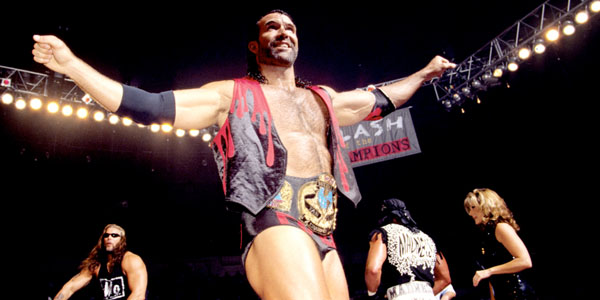
On September 4, 1995, World Championship Wrestling produced the first episode of Monday Nitro live from the Mall of America in Minnesota. With a card featuring Brian Pillman vs. Jushin "Thunder" Liger, Sting vs. Ric Flair and WCW Champion Hulk Hogan vs. Big Bubba Rogers, the show forever changed professional wrestling. It featured matches involving marquee names and relegated enhancement matches, once a staple of televised wrestling, to the company's syndicated shows. More importantly, it forced Vince McMahon's then-World Wrestling Federation to adapt or perish. For months, the WWF and WCW would trade ratings victories. That all changed on May 27, 1996 when Scott Hall made a surprise appearance on Nitro. He indicated that there was an invasion underway and that the war with the company was looming. The debut of Kevin Nash and the shocking heel turn by Hulk Hogan ignited the Monday Night Wars between Raw and Nitro. On June 6, WCW defeated the WWF in the ratings. It would dominate McMahon's company for 84 consecutive weeks, nearly putting the once-mighty Federation out of business. How did they do it? The answer lies in a perfect storm of talent, story and a brash, young visionary named Eric Bischoff.

10. A Deep Roster
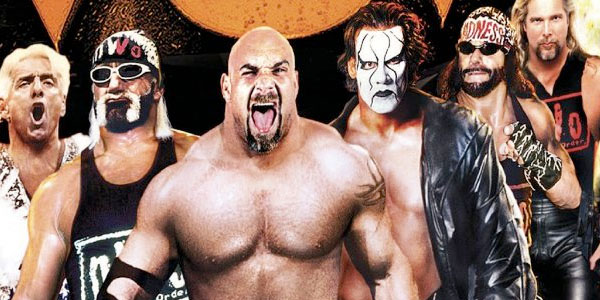
Much is made of the big name talent that Bischoff lured away from the World Wrestling Federation in order to build WCW's main event roster but it was the talent Bischoff signed away from Extreme Championship Wrestling, Mexico and Japan that had as much to do with the ratings dominance the company enjoyed from June 1996 to April 1998 as anything. While fans could tune in to see the latest exploits of the New World Order, Lex Luger, Sting and Diamond Dallas Page and stick around to see Dean Malenko tear the house down with Eddie Guerrero. They could enjoy Rey Mysterio and Psicosis turn in a pay-per-view quality match and then sit in awe as Chris Benoit and Booker T delivered another outstanding entry in their Best-of-Seven Series. With so many talented individuals wrestling so many different styles and accentuating the top of the card, there was something for every fan to enjoy. Regardless of whether the audience enjoyed technical wrestling, lucha libre or '80s style featuring former WWF stars, those people could tune into TNT at 8pm ET every Monday night and have their appetites whetted.

9. "Reality" TV

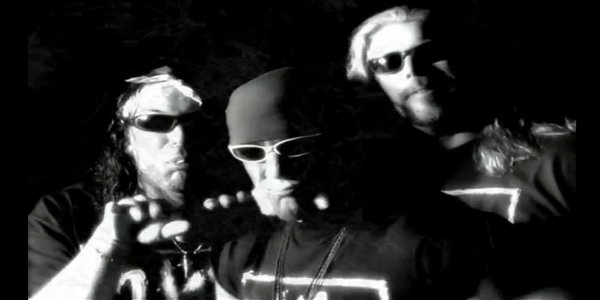
The birth of the New World Order brought a sense of reality to Nitro that the World Wrestling Federation's Monday Night Raw simply did not have. Vince McMahon's show featured ludicrous gimmicks such as The Goon and TL Hopper while Eric Bischoff made sure the characters on his show were based in reality. The New World Order came across as a legitimate gang. Lex Luger really was the Total Package from an athletic standpoint. The competitors WCW spotlighted on its Monday night program were easy to relate to and the show benefited from it. One of the most memorable examples of the reality factor came shortly after the formation of the New World Order and while Nitro was filming at MGM Studios. The faction assaulted Arn Anderson with a baseball bat, leaving the Enforcer of the Four Horsemen lying in a heap. Kevin Nash tossed Rey Mysterio head-first into a production truck. The luchador looked like a dart as he struck the truck and crashed to the ground below. It was a scary scene that was reminiscent of gang warfare. So chaotic was the scene that, as revealed in the 2012 WWE Home Video release "NWO: The Revolution," the police were called by concerned citizens. The NWO's takeover of Nitro, the assaults of WCW stars and the pre-taped black and white promos featuring Nash, Scott Hall and Hulk Hogan all helped protect the realness of the shows. Those elements endeared the show to fans disenfranchised by the product being produced by the World Wrestling Federation at the time.

8. Hollywood Hogan

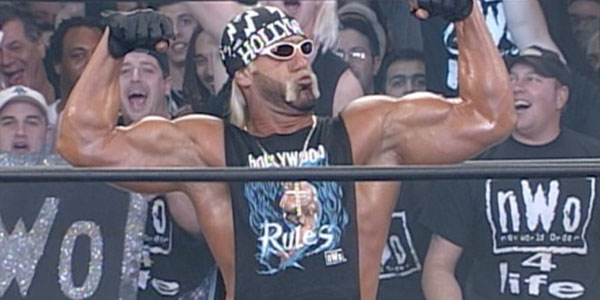
At Bash at the Beach in July 1996, Hulk Hogan stunned the wrestling world by turning heel and joining Kevin Nash and Scott Hall as one of the charter members of the New World Order. As fans pelted him with garbage, Hogan told his Hulkamaniacs to "stick it." That one statement completely shifted the momentum in favor for WCW and brought millions of new eyes to Nitro. Nicknamed "Hollywood," the disgusting and vile villain was cocky, arrogant and never shied away from the spotlight. He touted his success, flaunted his movie deals and referred to himself as the best despite always needing interference from his NWO teammates to secure a win and retain the WCW Championship. Like Honky Tonk Man, Hogan became the heel that fans wanted to pay their hard-earned dollar to see get beat up. One of the 1990s greatest villains, fans hated the loud-mouth braggart but, at the same time, realized and appreciated the coolness factor of the character. Hulk Hogan's "Hollwood" persona was the spark that WCW needed to really make a run at dethroning the World Wrestling Federation as the top promotion in all of wrestling. Fans tuned into Nitro to see what the radically changed Hogan would do or say next. Who would he and the NWO target next? Would anyone end his reign of tyranny? The only way to get answers to those questions was to tune into Nitro on a weekly basis and find out. Hogan, as he had done for Vince McMahon's promotion a decade earlier, made Nitro destination television. Even if his character was one that was extremely easy to hate.

7. The Sting Saga

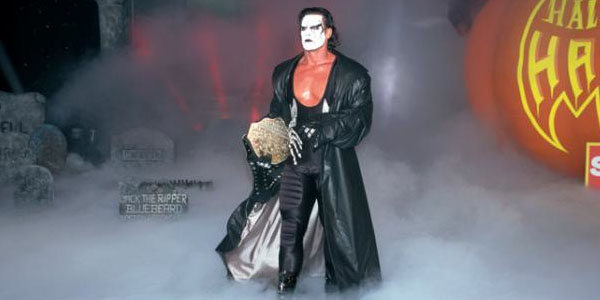
With WCW stars betraying their company and joining the NWO on a weekly basis, all eyes eventually turned to the franchise player of Ted Turner's promotion, Sting. On one memorable episode of Nitro, it appeared as though "The Stinger" had done the unthinkable and joined the invaders. A man nearly identical to him, wearing the same face paint and sporting the same hairdo jumped Sting's best friend Lex Luger. Commentators denounced the actions of "Sting" and questioned his motives. His friends turned their backs on him and doubted his loyalty. As it turned out, it was an fake that attacked Luger and was working with the NWO. That revelation came too late as Sting walked out of WCW, the feeling of disrespect too overwhelming to stick around. He was isolated from everyone, watching from the rafters as WCW waged war with the NWO. Slowly, he began to make his presence felt in other ways. He would come to the ring and lay out Superstars from both sides, retaining the air of mystery that surrounded the character. Eventually, he began focusing exclusively on the men of the New World Order, making it clear that he was WCW's guardian angel, for lack of a better word. His face painted black and white like that of the titular character from "The Crow," a baseball bat his only weapon, he repelled from the rafters and wiped out everyone from Scott Hall to Kevin Nash to The Giant before indicating that the only thing that would bring him back into the WCW fold would be a heavyweight title match against NWO leader Hollywood Hogan. The match was signed for WCW Starrcade and the company suddenly had a legitimate dream match on their hands. In one of the most anticipated matches of all-time, Sting entered Washington, D.C. as the overwhelming favorite and left as the WCW Champion, ending a year-long story on a happy note. Even if the quality of the match failed to live up to expectations.

6. Goldberg's Undefeated Streak

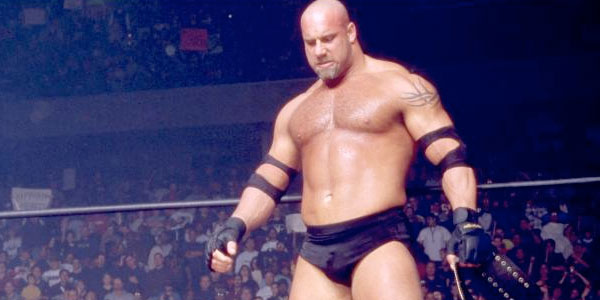
In September 1997, Bill Goldberg made his WCW debut by tearing through veteran competitor Hugh Morris and immediately establishing himself as a dominant force in the wrestling world. That he spoke no words when prompted by "Mean" Gene Okerlund created a mystique for the character that helped get it over with the audience at large. With every passing week, Goldberg gained momentum by destroying a new opponent, looking into the camera and asking, "Who's next?" Goldberg would enter arenas across the country by walking through a wall of pyrotechnics and blowing smoke. It was an awe-inspiring visual that helped tremendously with the overall presentation of the character. Fans migrated to the bald-headed ass-kicker and rabidly cheered him on as he grew his undefeated streak from 1-0 to 100-0 and, finally, 173-0. While the NWO was growing stale and bookers proved unwilling to push any bright young stars to the top spots in the company, Goldberg kept interest in World Championship Wrestling alive. Through all of the disorganization and power struggles, Goldberg was the one invaluable piece of the overall puzzle for the Turner-owned company. Even as WCW was on its deathbed, Goldberg remained its biggest draw.

5. The Rise Of Diamond Dallas Page

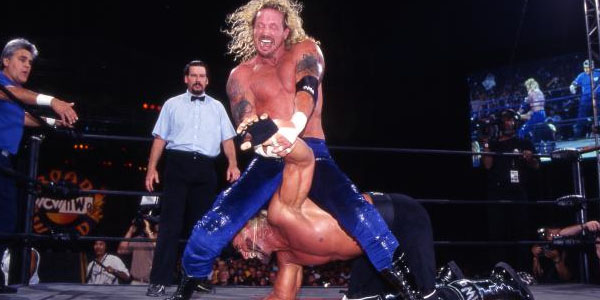
Long before The Rock referred to himself as the People's Champion, Diamond Dallas Page was standing up in the face of a brutal onslaught by the New World Order in the name of the WCW fans. Donning a t-shirt and a pair of blue jeans, Page was of the people, by the people and rapidly became one of the most popular stars in all of professional wrestling as a result. His Diamond Cutter finishing move could be executed from any position in the ring, making the finishes of his match both unexpected and exciting to watch. The people ate up the charismatic New Jersey native and appreciated the hard work he put in to become as good as he eventually did. He may never have had the opportunity to become a fan-favorite had he not become engaged in a story with the NWO's Scott Hall and Kevin Nash in late 1996. The surging star was racking up wins and making a name for himself on the undercard when he was offered a spot in the faction by his longtime friends. Page, loyal to the company that gave him a chance to be a wrestler despite being well into his 30s, dropped Hall with a Diamond Cutter to one of the loudest ovations in WCW history. That moment instantly elevated Page into fan consciousness and his matches with Randy Savage in the spring and summer of 1997 helped secure him a spot as one of the top stars in the company. In one short year, he had gone from being an also-ran to proving that he could deliver in high-pressure situations against the most iconic stars the industry had ever seen. One of the most recognizable stars at a time when WCW's popularity was at its zenith, Page became a household name and one of the most marketable performers in the industry. His diamond symbol became a pop culture phenomenon as rapper Jay Z began using it and Kansas City Chiefs running back Larry Johnson threw it up regularly following big plays and touchdowns. A hard-edged, hard-working babyface from the Jersey shore who had no business making it as late as he did in his career, he was an inspiration for fans everywhere.

4. Coolness Factor

Whether it was the trench coat-wearing Sting, the black and white of NWO: Hollywood or the red and black of NWO: Wolfpac, the Diamond Cutting DDP or the unrivaled intensity of Goldberg, WCW touted some of the coolest acts in wrestling history when it was at its peak of popularity during the Monday Night Wars. While Vince McMahon's WWF may have had a superior wrestler in Shawn Michaels, the Sexy Boy gimmick was far from cool. Bret Hart, as all-time great was he was, did not have teenage boys walking around in malls wearing the pink and black. Fans were not bragging about how awesome The Undertaker was while talking to their non-fan friends. The fact of the matter was, Eric Bischoff, Kevin Nash and Scott Hall understood what the mainstream culture considered cool and used that knowledge to help fuel merchandising and craft a show casual fans could immerse themselves in. Nash, Hall, Konnan and other members of the NWO would wear doo-rags in an attempt to capitalize on the east and west coast rap wars, according to Nash in the 2012 WWE Home Video release "NWO: The Revolution." Sting adopting the look of The Crow, one of the popular independent heroes from comic books and film, created a visceral visual that captured the attention of the fans. Where WWF's Undertaker benefited greatly from lighting and music, the effect Sting had on the audience was born of simplicity. The arenas were darker, the graphics were made up of flames and metal, giving them a harder and edgier appearance. Wrestlers wore darker colors, opting to leave the brighter reds, yellows, greens and blues to McMahon's show. The teenage and young adult fans appreciated a show that played to their demographic and did not treat them like children or simpletons. WWE may have taken credit for the Attitude Era but it was WCW that provided a much more edgy product long before McMahon and his company took Raw in a drastic new direction.

3. Cruiserweights

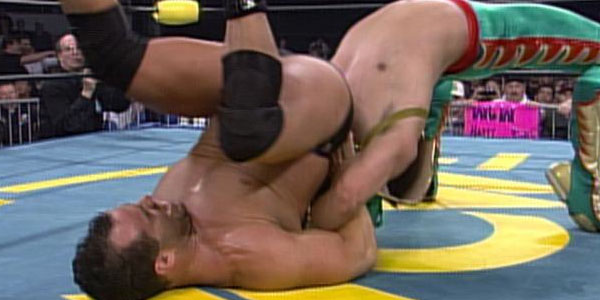
The over-the-hill, past-their-primes stars of WWF's past that had settled into WCW and were populating the main event scene may have grabbed the headlines but it was the smaller, more dynamic and exciting luchadores from Mexico that helped revolutionize wrestling and give WCW that one element that separated it from the World Wrestling Federation. The high-flying style and the breathtaking action made for must-see matches. Rey Mysterio, Juventud Guerrera, Psicosis, Silver King, El Dandy, Eddie Guerrero and Dean Malenko provided workrate on shows that were otherwise focused heavily on the egomaniacs that made up the New World Order. The wrestlers, never having experienced the level of exposure they did from competing in front of a national audience on TNT, made the most of their opportunities and oftentimes had the best match on the card. While the Kevin Nashes, Scott Halls, Hulk Hogans and Randy Savages were getting the credit for fueling business, it was the cruiserweights that were keeping wrestling enthusiasts interested in the product. They single-handedly saved some major pay-per-view events from ranking among the worst of all-time and were far more integral to the success of the company than they were given credit for. At Halloween Havoc 1997, World Championship Wrestling's cruiserweight division had its defining moment when Mysterio and Guerrero wrestled a five-star classic for the WCW Cruiserweight Championship. Never before have two wrestlers hit every one of their marks with such precision and perfection as they did on that night. The story was impeccable, the wrestling phenomenal and the result was one of the greatest matches of any promotion in any corner of the world. The cruiserweight title would be devalued tremendously when Vince Russo entered the company and used it as a prop for low-tier comedy programs featuring Madusa, Oklahoma and Daffney but during the height of the Monday Night Wars, it is incredibly difficult to devalue the importance of the smaller competitors on WCW's product.

2. The New World Order

The NWO may have been a concept whose origin was in Japan but Eric Bischoff built off the foundation laid there to craft a storyline that captured the imagination of fans across the country. Kevin Nash and Scott Hall, fresh off successful stints in WWF, invaded the company and promised that there would be more of them. Eventually Hulk Hogan turned heel and changed wrestling forever. Ted DiBiase, Syxx, Buff Bagwell, Michael Wallstreet, Scott Norton, Vincent and others joined the group as the hostile takeover of WCW continued. When the organization persuaded The Giant to join, it appeared as though they were unstoppable. Then Bischoff joined, giving them an authority figure capable of making business decisions in their best interest. With the cocky, arrogant prick of a boss on their side, the New World Order dominated WCW, all the while carrying the company to heights it had never before seen. Fans tuned in to see what the rebellious group would do next. Who would they beatdown as they continued their question to reign over the wrestling world? Lex Luger, Roddy Piper, the Four Horsemen and the Steiner Brothers were regular victims of the group. Diamond Dallas Page became a huge star simply by standing up to them. No matter who tried to mount an offensive, though, the NWO always came out on top. The group became so popular that it became its own worst enemy. The introduction of too many wrestlers severely watered down the group and a lack of coherency and direction further hampered it. Splitting the NWO into two factions hurt it even more. That the company saw it as a cash cow that it would continue milking until it ran dry did not help matters. Eventually, the NWO became so overexposed that it grew stale and tiresome. Fans stopped caring about the group and the letters that had once revolutionized the industry turned into damning evidence that the company was out of ideas. While it existed and was running at its hottest, however, the New World Order was a faction that led the renaissance of World Championship Wrestling helped all involve achieve success no one could have ever imagined.

1. Eric Bischoff

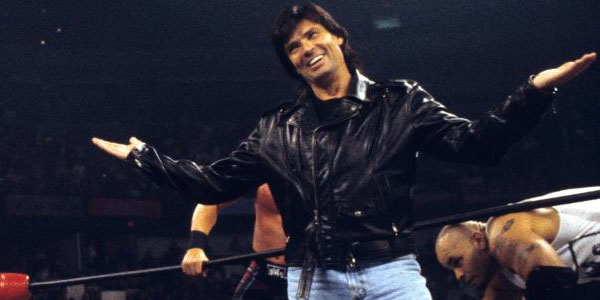
Without Eric Bischoff, World Championship Wrestling would not have survived the 1990s. A young announcer whose roots were in Minnesota with Verne Gagne's American Wrestling Association, Bischoff took the same role with World Championship Wrestling until an opportunity opened up and Bischoff was hired as president of the company. A brash, young and oftentimes arrogant executive, Bischoff took over a company in disarray. It was bleeding money and had never really shaken its old school mentality. Bischoff understood that to make WCW financially successful, he would have to enact some cost-cutting measures and introduce it to mainstream pop culture. While he accomplished the first part by implementing major television taping cycles at MGM Studios, it would take a few years and the creation of WCW Nitro to do the rest. With Nitro, Bischoff created a show that became must-see television thanks to matches that featured stars competing against one another. It was broadcast live every week and thus, fans never knew what they could expect from the show. When Bischoff introduced the NWO, decided to push Diamond Dallas Page and changed Sting's appearance and attitude, the show thrived. Ratings skyrocketed and the confident, cocky and arrogant Bischoff reaped the rewards. "Easy E" most certainly made decisions that contributed to the downfall of the company, thanks largely to hubris. But it was his vision, his leadership and his ability to manage the egos of his talent to the extent that he did that made the rise of WCW possible. He came far closer to putting Vince McMahon and the World Wrestling Federation out of business than WWE history dictates and for that, he deserves to be commended. He did what some of the most brilliant minds in the business could never do and that was provide McMahon with legitimate competition. He gave the WWF a fight unlike any it had ever experienced before. Bischoff lost, as did many before him. But for a two-year stretch, he was the leader of the number one organization in professional wrestling and the guiding force behind WCW's dominance of the WWF.

Contributor
Contributor

Erik Beaston is a freelance pro wrestling writer who likes long walks in the park, dandelions and has not quite figured out that this introduction is not for Match.com. He resides in Parts Unknown, where he hosts weekly cookouts with Kane, The Ultimate Warrior, Papa Shango and The Boogeyman. Be jealous.