10 Reasons WWE Wants You To Forget 2001

2001 was a complete letdown after a red-hot 2000...
wikipedia In 2001, the then-World Wrestling Federation found themselves in a very lonely position. Both of the other top promotions in North America suddenly disappeared, making Vince McMahon the owner of a pro wrestling monopoly in the country. It was an unbelievable time to be a wrestling fan, and many people were curious to see what the WWF could achieve without either WCW or ECW. Sadly, the lack of competition really hurt the company. Even after swallowing up a whole host of talent from both those fractured groups, the WWF struggled with consistency in 2001. The year promised so much after a truly momentous 12 months in 2000. Instead of continuing that momentum, 2001 was an oddly uncertain year. That's what this article is all about, the reasons why the company now known as World Wrestling Entertainment would like to gloss over much of 2001. There were plus points of course, such as the amazing WrestleMania X-Seven card. Considered one of the best in history, 'Mania should have led to bigger and better things. Unfortunately, as this list proves, it was all downhill from there. As some points highlight, there were some problems even before WrestleMania. When 2001 should have been titanic, it faltered, and ended up sinking further into mediocrity. So, just what would WWE management rather people forgot about 2001?

10. Chyna Was Brushed Aside Cruelly

In 2000, Joanie 'Chyna' Laurer was a huge star. Not only was she big in the pro wrestling world, but Chyna had also branched out into acting work. In late-1999, Laurer wrapped up filming for the wildly-popular show, '3rd Rock From The Sun'. The sky seemed to be the limit for the woman, but 2001 would be the year when things started going wrong. Much has been made recently about comments regarding the relationship between Chyna and Triple H. In Chyna's mind, Triple H ensured she was pushed out of the spotlight once their romantic involvement ended and the man started seeing Stephanie McMahon. There's no doubt that Chyna's push suddenly stalled in 2001, and she was cast aside callously by company management. Suddenly, instead of being featured as one of the top characters on programming, Chyna became a bit part player. By the Summer of '01, she was appearing less and less. Come November, Laurer would depart the federation and never be seen again. Chyna did have her own personal problems, but they also involved Triple H and Stephanie. She was clearly the victim of the whole scenario.

9. Jerry Lawler Left The Company On Very Bad Terms

Paul Heyman and Jim Ross worked very well together behind the announce desk in 2001. However, that combination would never have occurred had it not been for the real-life arguments between Jerry 'The King' Lawler and Vince McMahon. Unhappy over the firing of his then-partner, Stacy Carter, Lawler decided to leave the promotion too. Nowadays, Lawler is portrayed as someone who has been pro-WWE forever. That's definitely not the case, because the announcer left on very bad terms in February, 2001. Later, Lawler would admit that he has regrets over that time period, because he was blinded by love. Nonetheless, the WWF didn't exactly cover themselves in glory either, making little attempt to convince Jerry he was needed. Things would work out well in the end, as The King returned later that same year. It would be the end of his natural chemistry with Jim Ross however, something which had become such a staple of programming that it was impossible to imagine shows without the duo. The pair would work together again, but Lawler's awesome heel mannerisms gave way to a much more babyface persona.

8. Two-Man 'Power Trip' Was Failing Before HHH Injury

Triple H deserves a lot of credit for gritting his teeth and working his way through excruciating pain during the May 21st episode of Monday Night Raw in 2001. His quadriceps muscle hanging off the bone, 'The Game' battled through the injury to finish the WWF Tag-Team Title match against Chris Jericho and Chris Benoit as planned. On that night, Triple H's partner was Steve Austin. After Austin had turned heel at WrestleMania X-Seven, he formed the 'Two-Man Power Trip' combination with his former nemesis. Cast as the most powerful unit in company history, the team didn't really seem to be working even before Triple H was forced onto the shelf with injury. That's not something WWE would like to admit. Austin and Triple H were natural enemies, so fans weren't really that enthused by the prospect of them teaming up. The match against Jericho and Benoit was memorable, but the decision had already been made to remove the tag belts from the 'Power Trip'. That's likely because creative realised the story wasn't clicking.

7. Edge Flopped As King Of The Ring

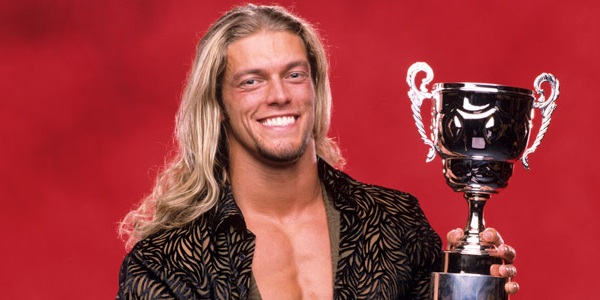
By 2001, the 'King Of The Ring' concept had long since lost a lot of the lustre it had previously held. Duff winners such as Mabel and Billy Gunn had done nothing for the premise, but the tournament had previously helped launch the careers of several others. Names such as Triple H, Steve Austin and Kurt Angle were all aided by their King Of The Ring victories. Unfortunately, Edge can't claim to join that list. The Canadian would eventually go on to become a top star in WWE, but the King Of The Ring wasn't a major reason why. The win was overshadowed by the ongoing 'Invasion' angle dominating screens, so Edge didn't really have much time to crow about his big win. On television, Edge blasted Billy Gunn for his failure as King Of The Ring, but he was arguably just as big a flop with the trophy. As soon as the Pay-Per-View ended, fans were already moving on from the results. This was a shame, because the 'King' gimmick should have meant more, but Edge's win was merely forgettable just weeks after it happened.

6. Raw Nearly Turned Into WCW Monday Nitro

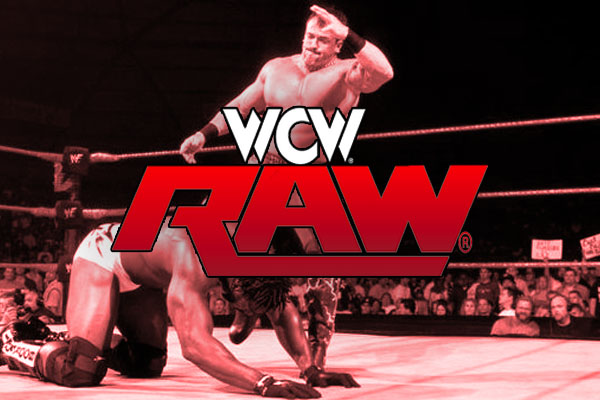
One of the most shocking ideas of 2001 would never happen, but it was considered. When the WWF acquired the rights to WCW trademarks, there were serious discussions over the possibility of turning Monday Night Raw into Monday Nitro. Nowadays, WWE make a big deal over Raw being their flagship show, so it's stunning to think this was even talked about. As time has progressed, this is something WWE have distanced themselves from. However, reading online reports and magazine articles from around that time reveal that the transition was considered. Matches such as Buff Bagwell vs. Booker T on July 9th, 2001 would put the idea to bed, or at least that was used as an excuse. In reality, the then-WWF got cold feet. It's amazing to think that Smackdown would have remained as the WWF show. Meanwhile, Raw - the promotion's main broadcast since 1993 - would have been changed to a WCW program. The big idea was to run both brands separately, joining them for big Pay-Per-Views throughout each year. WWE must be glad they never made the switch, because Monday Night Raw is the most important show they have.

5. The WWF Used The ECW Name Without Permission

Scrambling to try and rescue an incredibly botched storyline, the WWF introduced ECW to partner up with WCW and form 'The Alliance'. The Summer angle was received very well by fans, but there were problems behind the scenes. Even though the McMahon family owned many of the WCW trademarks, the same couldn't be said for Extreme Championship Wrestling. Clearly feeling untouchable, the WWF went ahead and used them anyway. This led to some legal troubles, but the company managed to avoid being hammered for effectively breaking the law. Stephanie McMahon was cast as the new owner of a revived ECW, which was in reality a completely defunct company. The WWF didn't have the rights to anything involving the brand. ECW would eventually be phased out when the whole 'Invasion' angle ended, but it's incredible to think that the WWF took such a legal risk. There were clearly thoughts that the brand was needed to help the story motor along, otherwise it wouldn't have been used and the chance wouldn't have been taken. This proves the desperation surrounding the whole 'Invasion' scenario come July, 2001.

4. The XFL Was A Financial Bust

Generally speaking, Vince McMahon hasn't been too successful when he's tried to promote anything other than wrestling. Over the years, the patriarch of the WWE empire has tried his hand at bodybuilding (the WBF), workout supplements (Ico Pro), movies (No Holds Barred) and even American Football. The latter experiment is an example of how limited WWE's pull is outside the wrestling bubble. Looking to stick it to the NFL, McMahon formed the XFL in 1999. It wasn't until 2001 that games were played however, with the first being between the New York Hitmen and the Las Vegas Outlaws. The ratings for the first game were good, but would drop off substantially with each passing week. The media absolutely blasted the concept, citing the 'tawdry' nature of WWF programming and the clear lack of professional football on offer. In short, the entire experiment was yet another non-wrestling disaster for Vince McMahon. Perhaps he deserves credit for even trying to the idea in the first place, but it was little more than a colossal waste of company time, money and resources. So disastrous was the reaction to the XFL that WWE never mention it today, and would rather everybody forgot about it.

3. The Trish Stratus 'Bark Like A Dog' Segment

Almost immediately after it happened, this particular segment became one of the most controversial in WWF/WWE history. In the Spring of 2001, the company were working towards WrestleMania X-Seven, the biggest show of the year. An ongoing story was between Trish Stratus and Vince McMahon, who had been using the blonde Diva to display his power and influence. Over time, McMahon grew bored of his play thing, and decided to teach her a lesson. Inside the ring, Vince revelled in embarrassing Stratus, forcing her to first strip most of her clothes, then crawl around the ring barking like a dog. Obviously, the skit was purely there to further the idea that McMahon was a chauvinist and a complete pig, but it also raised the ire of many people watching. A lot of folks felt the angle was in poor taste, and it has become infamous. During Linda McMahon's run for senate, the clip was used against her multiple times. It's a divisive segment, but it's definitely one that WWE would rather people ignored today. Sadly for them, that doesn't seem likely, as even Trish herself is routinely asked about it during media appearances.

2. 'Attitude' Had Lost Magic Touch

The 'Attitude Era' is largely considered one of the most creative periods in pro wrestling history. Not only did several of the best characters emerge during that time, WWF programming became must-see television. Something cool was happening each and every week, keeping viewers glued to their screens and making the WWF a hot topic in pop culture. By 2001, a lot of that magic had been lost. The promotion didn't really seem sure what to do next, because they had pushed the envelope so far. Eventually, they'd go even further in 2002, with angles such as 'Hot Lesbian Action', gay weddings and 'Katie Vick' failing to hit the mark. The problems started before then however, which 2001 proves. The previous format of short matches, exciting storylines and unpredictability had grown stale. As a consequence, the product as a whole just didn't seem all that fresh or enticing. Things would worsen the following year, but 2001 was the beginning of the end for the 'Attitude Era'. Whilst 2000 had been crammed with excitement, 2001 was ominously flat creatively.

1. The WCW Invasion Was A Flop

By far the worst aspect of 2001 was the botched 'Invasion' angle. What should have been the hottest story in wrestling history turned into a creative nightmare for the then-WWF, who handled the situation terribly. The idea had money written all over it, because fans had yearned for years to see top WCW stars battle it out with their rivals in the WWF. When the angle should have been simple, it was convoluted, and a lack of real star power hurt it badly. The Invasion Pay-Per-View still pulled a healthy number, drawing in well over 700,000 purchases. Regardless, the company should have gleaned much more money from the WWF vs. WCW concept than it did, but they only have themselves to blame. Top WCW names such as Sting, Ric Flair and Goldberg were unreachable, due to contracts with Time Warner/AOL. More content to sit at home, these men would have been huge for the story. Instead, fans got Booker T and Diamond Dallas Page, with the latter being treated awfully. This led to the WWF booking Steve Austin and Kurt Angle to join The Alliance side, which was a poor substitute. The entire 'Invasion' angle was far from satisfying for fans who had waited years to see it. The entire situation has gone down in history as one of the most poorly-handled messes in promotional history. Do you think WWE have a lot to regret about 2001? Do you agree with the points raised here? Let us know what you think down in the comments section below!

Contributor

Lifelong wrestling, video game, music and sports obsessive who has been writing about his passions since childhood. Jamie started writing for WhatCulture in 2013, and has contributed thousands of articles and YouTube videos since then. He cut his teeth penning published pieces for top UK and European wrestling read Fighting Spirit Magazine (FSM), and also has extensive experience working within the wrestling biz as a manager and commentator for promotions like ICW on WWE Network and WCPW/Defiant since 2010. Further, Jamie also hosted the old Ministry Of Slam podcast, and has interviewed everyone from Steve Austin and Shawn Michaels to Bret Hart and Trish Stratus.