10 Rip Off Wrestling Gimmicks (That Messed Up What They Copied)
Pro wrestling does a fine line in crappy versions of successful gimmicks.

In a world of constant development and creativity, how important is originality? Often cited as vital to the success or failure of a character, it is difficult to shake the feeling that it is somewhat overrated. All stories have been told, of course, and all we're doing is interpreting them in different ways. Originality is overrated because it doesn't really exist.
That doesn't make it okay for Prince Iaukea to become The Artist Formerly Known as Prince Iaukea.
Pro wrestling history is littered with characters and gimmicks that took inspiration from those that came before, of performers who cherry-picked things that worked and ramped them up to 11. Furthermore, the more inventive wrestlers have never been afraid to dip their toes into the wider world of art in search of stimulus. If it works in literature or cinema, there's a good chance that it might work in the squared circle.
This being professional wrestling, there have been as many missteps as there have been success stories, as many head-scratchers as there were triumphs. More often than not the blunders have come from missing what made the original so invigorating and exciting, by taking only the bells and whistles and failing to understand anything about the characters at all. Many lessons have gone unlearnt.
The main one being 'don't have a charisma vacuum portray the most charismatic musician of a generation'.
10. 'Woken' Matt Hardy

Did anyone really expect this to work? Sure, immediately feuding with Bray Wyatt at his least relevant wasn't exactly the hottest start, but you'd have to be a major supporter of WWE to say that there was hope for 'Woken' Matt Hardy. The tentative noise surrounding the character's arrival alone was an indictment of WWE creativity. If ever there was an example of the lack of faith that fans have in the world's largest wrestling promotion, this was it.
Still, there was the faint hope that WWE might get this right. All the company needed to do was allow Matt Hardy to go whole hog on the gimmick, utilising that massive budget in the process, right? Come to think of it, just what was Matt Hardy capable of with a blank cheque?
We never got to find out, because WWE was and is incapable of fathoming the subtlety required to make such gimmicks work. 'Broken' Matt Hardy was fantastic for a number of reasons, not least Hardy's commitment to the wackiness of it all, but it was the unspoken words that spoke the loudest. 'Broken' Matt Hardy didn't need to explain every reference to you, the viewer. 'Woken' Matt Hardy fell into the same trap that all WWE characters tend to; an obsession with WINK WINK NUDGE NUDGE, and a total inability to leave some things left unsaid.
9. Pirate Paul Burchill
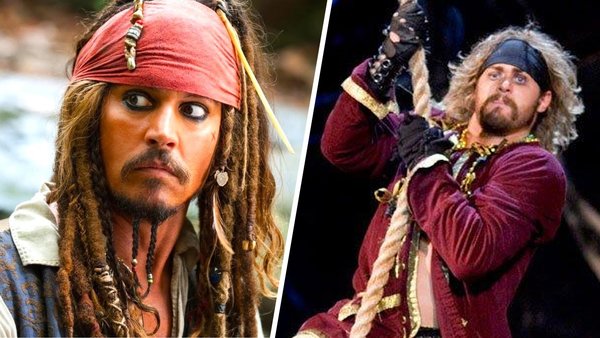
I have fond memories of 'Pirate' Paul Burchill, although they could just so easily be the toxic nostalgia of seeing a British wrestler on WWE TV that wasn't Davey Boy Smith or William Regal. It could also be the novelty of seeing a pirate on WWE TV. Alternatively, it could be because I was young, and young people are stupid.
Brits in WWE may be all the rage these days but that wasn't the case back in 2005. Burchill was something of a novelty, a curiosity accentuated by a then-unique finishing move. Of course, he was immediately placed with countryman Regal (all Brits are friends, after all), before turning babyface in a backstage segment and informing the world about his pirate ancestry. One week later, Burchill was swinging to the ring on a rope and dialling up the twee, like an impressively-athletic Jack Sparrow.
The gimmick didn't last long before it was jettisoned, supposedly because Vince McMahon couldn't get his head around the idea of a babyface pirate. Could it have been a long-term success? It is difficult to tell, but the whole thing wasn't helped by Michael Cole's announcing and the OTT nature of it all. WWE has a wretched track record when it comes to lifting from popular culture, primarily because it only sees the surface and not the intricate layers.
'Pirate' Paul Burchill could have worked, if WWE had approached him like some sort of swashbuckling onion, but fans were instead treated to HE'S A PIRATE over and over again.
Besides, people really need to start reading about how terrifying pirates actually were.
8. RETRIBUTION
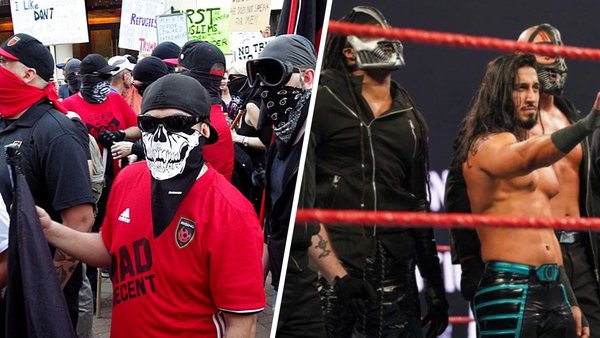
Mustafa Ali is a fantastic professional wrestler, one of the most underrated performers in the industry today. Dominik Dijakovic is a freak of a big man, an athletic monster who can do things that nobody his size has any right to do. Shane Thorne is also wildly underrated, one of the best tag team guys of a generation and just about as reliable as it gets. Mia Yim has all the tools to become a major star in women's wrestling, and Dio Madden is very big.
The individuals that make up RETRIBUTION all have plenty to give, but the DOA-faction they are stuck in is going to follow them for a very, very long time. The group known as RETRIBUTION started appearing in WWE over the summer and were ridiculed from the start, although it is difficult to see how anyone believed that a group of hoody-clad chumps cackling and 'destroying the show' were going to get any other sort of reaction. It was like the hyenas in The Lion King minus the danger element.
The whole thing just screamed 'Vince McMahon saw Antifa on the telly and brought his version into his own universe', and the results were about as positive as that suggests. The group's attempts to bring down the system were clearly a caricature of the worldwide anti-fascist movement, the result of a game of Chinese whispers that has been going on for generations. It started as 'f*ck fascism' and has eventually mutated into 'Shane Thorne wrestles with a paper plate on his face'.
7. Ryback
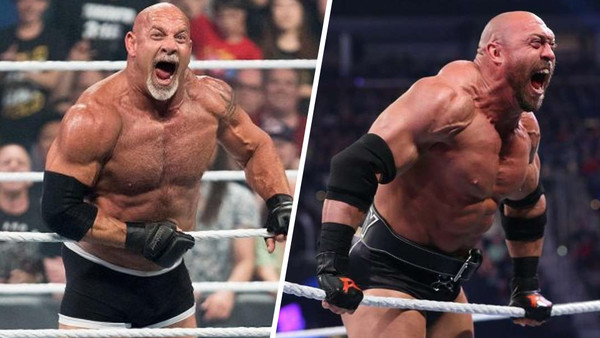
Truth be told, Ryback was actually kinda awesome. Yes, the Big Guy has dabbled in questionable opinions and SHOOT COMMENTS aplenty, but there was always something delightfully magical about a jacked-up dude trucking fools. Throw in the marching and the excellent meathead catchphrases, and you have a very enjoyable pro wrestling gimmick. Not everyone has to be Kazuchika Okada, after all.
Ryback was a lot of fun, but was he Goldberg? Lord no. Sure, nobody wants to see Goldberg on WWE TV in 2021, but that doesn't alter the magic of original Big Bad Bill.
WWE tried to recreate the Goldberg phenomenon in 2012 as a bald dude smashed his way through increasingly-undersized jobbers, missing the point with every passing week. Goldberg didn't get over because the plan was 'have him win loads of matches', quite the opposite. That became the plan once this wrecking ball got over organically. You can't recreate that magic, and you certainly can't do it by beating Rutherford Hayes and Willard Filmore.
In trying to recreate Goldberg, WWE actually got closer to recreating WCW trying to recreate Goldberg. That should tell you all you need to know.
Ryback eventually settled into a character that was entirely his, a meathead bully picking on little guys, and it was all sorts of fun. The former Skip Sheffield never really had the dynamism to become a modern-day Goldberg, forgetting for a moment that a 'modern-day Goldberg' is an impossibility. There can be only one, after all.
Highlander, Goldberg, same thing.
6. Asya
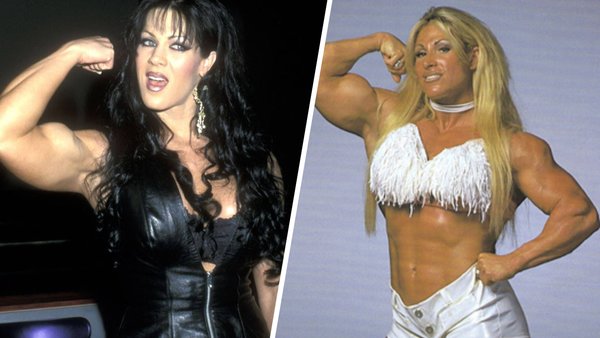
God rest her soul, but Chyna was never the greatest in-ring technician. She was a little clunky and had a tendency to bluster her way through spots, relying heavily on more experienced opponents to drag her through. It mattered little, however, as the Ninth Wonder of the World managed to get over through physical charisma and strong booking, that most magical of combinations. Like her or not, she was a pretty big deal as WWE laid waste to WCW in the Monday Night Wars.
WCW being WCW, it decided that it needed its own version of Chyna, only bigger, better, blonder.
Enter Asya.
The whole thing was an immediate success, except it wasn't, because Asya was abysmal in the ring and the plagiarism was clear for all to see. The whole mess wasn't helped by constant reminders that Asia is bigger than China either, a fact that was supposed to impress fans. No sh*t Asia is bigger than China, what with China being a part of Asia and all that. That's like saying that fruit is bigger than oranges.
Don't miss the point though, Asya was a failure because she had none of the attributes that Chyna possessed, outside of having the physical stuff. She just didn't know how to use any of it. Say what you like about Chyna, but she could deliver a pretty mean DDT when needed. Asya's finishing move was a leg scissors.
5. Waylon Mercy

It doesn't get the same sort of love that other Robert De Niro movies do but sleep on 'Cape Fear' (1991) at your peril. De Niro plays Max Cady, a violent criminal out for revenge on the defence lawyer that he believed was incompetent, and the whole thing unravels in a cascade of sinister anger and psychological terror. It is a seriously good film, albeit a slightly terrifying one, with De Niro shining as the unhinged and vengeful Cady.
Often seen as some sort of ideological ancestor of Bray Wyatt, Waylon Mercy was a mid-'90s WWF gimmick played by Dan Spivey that was based on De Niro's star turn, albeit minus the nuance and restraint needed for such a sinister figure to jump out the screen. Nuance and Cape Fear in the same thought? Absolutely. Max Cady oozed disturbing nihilism. Waylon Mercy oozed 'man trying to play someone oozing disturbing nihilism'.
It didn't help that the gimmick struggled to translate to anything meaningful in the ring. Wrestling history is littered with characters that were gentlemen to begin with only to turn violent once the bell rang, and they have rarely worked well. Mercy's attempts to bring Max Cady into the WWE failed because it was too focused on the surface-level characteristics of the gimmick. Bray Wyatt would have much more success (yes, seriously) by making the gimmick altogether more 'professional wrestling', eschewing the grey areas in favour of giving Jake Roberts-style promos and having a big beard.
4. The Artist Formerly Known As Prince Iaukea

That Prince guy was pretty charismatic, right? The music industry, not unlike professional wrestling, is full of characters that are larger than life, and they didn't come much more bombastic than a purple-clad virtuoso from Minneapolis, Minnesota. Prince stood 5'2", but his infectious magnetism was (at least) 10 feet tall.
Prince Iaukea was just about as anonymous as WCW superstars got. He wasn't a Prince, he had nothing to do with Curtis Iaukea. He was just a dude in tights who happened to be trained by Dean Malenko, a forgettable presence who made his debut delivering papers to the future nWo Sting on behalf of Sgt. Craig Pittman. 1995 WCW wasn't all great. Iaukea did a whole lot of nothing for a while before shocking the world and defeating Steven Regal for the WCW Television Championship, a title he held for a couple of months before dropping it Ultimo Dragon. What a strange, strange period for that belt.
Iaukea fell off the face of the earth shortly after, occasionally resurfacing to lose to illustrious opponents like Norman Smiley, Horace and Vincent before everything changed once again. WCW being WCW, Iaukea was repackaged as TAFKA Prince Iaukea, a not-so-subtle take on the decision made by actual charismatic Prince to move forward as The Artist Formerly Known as Prince. They both wore purple, they both had 'Prince' in their name, surely that was all the similarities required for this to be a raging success?
Alas, it didn't work. Actually, scratch that; it was a total f*cking failure. The main problem was Iaukea's absolute lack of charisma, and there are few things more depressing in wrestling than watching a wet flannel try to act like ACTUAL PRINCE.
Less than a year later, he was gone.
3. Joker Sting

This really doesn't get enough attention. Former California beach hound turned brooding 'Crow'-inspired-loiterer Sting had a brief run as Joker Sting back in 2011, as TNA veered from one creative misstep to another. Stinger has been quoted as saying that he never had more fun than when he was playing this version of his iconic character, and it is clear to see that he was putting everything into the role. It was dumb, but it was vaguely entertaining.
That doesn't change the fact that ripping off The Joker may well be the most overdone thing in all of entertainment today. Is there anything more eye-rolling than another character playing 'crazy' by laughing a lot and having vacant eyes? No, the answer is no. This extends to modern wrestling too, where Alexa Bliss shows her maniacal side by laughing, another indication that whoever writes these characters has never spent a single second anywhere near an actual mental hospital.
But anyway, Sting and The Joker. Sting was super over because Sting is always super over, but the Joker gimmick was a regrettable time for his legacy. It was really quite sad, a still beloved star of yesterday trying to tap into something a little more modern, albeit something that was already three years old, itself a resurrection of a character first created in 1940. Heath Ledger's Joker worked because of its fictional borders, its commitment to nihilistic violence and its villainous core, no matter how beloved the character has become in the world of social media and cynicism.
Joker Sting was just a slightly older Sting with worse face paint.
2. Aces & Eights

A back-to-back winner of the Wrestling Observer Newsletter Worst Gimmick award (2012 and 2013, for the record), Aces & Eights was indicative of everything that TNA got wrong in the post-Monday Night Wars 2.0 era. As a roster full of tremendous talent was left to twiddle its thumbs, Dixie Carter and her charges looked to the past, to ideas that once worked and the stars that once made money. If anything was going to turn the Impact ship around, a bloated heel stable was almost certainly it!
But Aces & Eights wasn't exactly an nWo rip-off. The dastardly villains were a faux-biker gang, an outlaw group of motorcycle enthusiasts loosely based on Sons of Anarchy, although expecting Garrett Bischoff and Wes Brisco to mimic the charisma of Charlie Hunnan was optimistic at best. It didn't work, and it dragged TNA further into the mire as a result.
The list of reasons why Aces & Eights didn't work goes on and on and on. Fans had been watching The Dudleyz for years, how are they to believe that all of a sudden they are leading a biker gang? Was it a mid-life crisis? What about Ken Anderson, D'Lo Brown and Taz? At a push, fans could accept young talent like Bischoff and Brisco getting involved, desperate as they were to get a rub from legendary names, but even that required a mighty pinch of salt.
Throw in a few classic TNA shocks for the sake of shocks, and you've got yourself an all-time shambolic stable.
1. The Renegade
There's a reason that all pro wrestling fancy dress parties feature at least one Ultimate Warrior. The aesthetics are very easy to mimic, from the colourful face paint to the tassels to the none-more-'80s hair. Simply add maniacal energy and a bottle or two of Buckfast, and you're onto a winner.
Easy to mimic but nigh on impossible to replicate, that's for sure, but WCW was sure as heck going to try. When Hulk Hogan was faced with another existential threat in the form of Vader (surely after so many threats to his existence, Hulk must have thought that maybe he was the problem?), he promised WCW fans the 'ultimate surprise', showing a suspiciously-Ultimate Warrior-looking silhouette in the process.
Hogan didn't let fans down with his claim, as his surprise turned out to be none other than a man masquerading as The Ultimate Warrior, with similar hair and mannerisms but approximately 1/32nd the charisma. It was a shambles from the get-go, another pathetic low blow in the battle between WCW and WWE. This was The Renegade, and history does not smile upon his memory.
The Ultimate Warrior wasn't exactly Manami Toyota at the best of times, but he was mega over and an undeniably magnetic persona. The Renegade was essentially a fancy dress version of the guy, missing everything that made Warrior a potential successor to Hulkamania just a few years prior.
It gets worse. Hulk Hogan referred to Renegade as the 'man that's gonna bring Hulkamania into the 21st century', but the character was dumped before 1996 was over. Renegade bumbled along doing a whole lot of nothing before being released in 1998. He sadly took his own life in 1999.
That all got a bit bleak towards the end, didn't it?