10 Rules WWE Must Follow For A New Brand Extension

If they are going to try it again, they best get it right this time.
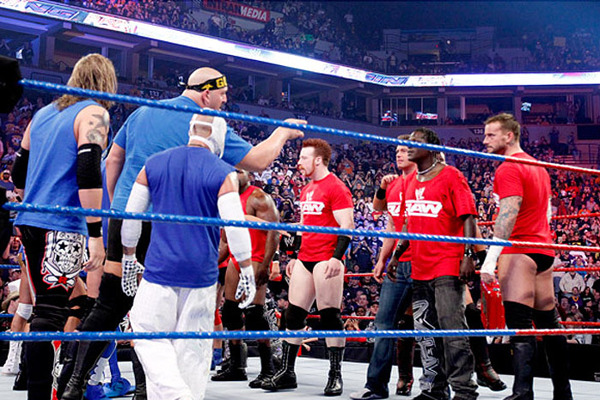
Ever since Shane McMahon returned to WWE TV on Raw and announced that he wanted control of the show, rumors have been swirling that the company is considering reinstituting a brand extension. PWInsider's Mike Johnson is reporting that there have been internal talks in that direction for weeks, and while an event originally scheduled as "Monday Night Raw vs. WWE" on Ticketmaster has since been corrected, speculation is still running rampant. The original brand extension, which ran from 2002 to 2011, was a success in some ways and a failure in others. At its best, the split gave each show a different feel and allowed undercard talent to rise to higher positions on each brand. At its worst, though, it treated Smackdown! as little more than a feeder system for Raw and lowered the importance of championships by introducing so many of them. Even though WWE's roster is much smaller than it was the last time the company attempted to divide it, there's no reason why a new extension can't work. Talent like Tyler Breeze and Neville prove that there are more interesting workers than there are spots for them, and giving the show its own roster would give Smackdown! a much-needed purpose. It has to be done right, though, or it will flop terribly. With that in mind, here are 10 rules WWE would need to follow in order to introduce a successful brand extension.

10. Completely Different Commentary Teams For Each Show

This one might be a bit of a no-brainer, but it bears mentioning. During the last brand split, not only did each show have its own wrestlers, but they had their own staff, as well. Raw and Smackdown! had specially-assigned referees, ring announcers, and of course, commentators. The announce teams - Jim Ross and Jerry Lawler for most of the time Raw was a separate show, and Michael Cole and Tazz for much of Smackdown!'s tenure - were especially effective in making each brand seem like a separate promotion. While Raw can keep the three-man crew of Michael Cole, JBL, and Byron Saxton, Smackdown! can be differentiated by using only two men in the booth - current lead announcer Mauro Ranallo and NXT's Corey Graves. As Ranallo's only been with WWE since the beginning of the year and Graves has yet to call a major TV show, they'd been seen as fresh to longtime WWE viewers. Just like that, the shows would feel different.

9. Cut Raw Down To Two Hours

The last time WWE implemented a brand extension, the roster was huge. The company had purchased the assets of WCW and ECW and picked up the contracts of dozens of wrestlers who were previously employed by those organizations. If The Rock, The Undertaker, and Triple H were going to be on Raw and Smackdown!, undercard workers like Hurricane Helms and Tajiri could potentially be left off TV. Today, things are a bit different - the company has barely 50 full-time active wrestlers on the main roster, and splitting the number in half would make it difficult to fill a two hour show. A three-hour program would be out of the question. WWE has a commitment to the USA Network to keep Raw at three hours. USA gets paid more ad money for Raw than for other shows since it has so many viewers, so they pay WWE more money to produce more content. It's a difficult problem to solve, but perhaps the company could use the 8:00-9:00 hour to broadcast NXT.

8. No Switching

A few months into the original brand extension, WWE owner Vince McMahon decreed that General Managers Eric Bischoff and Stephanie McMahon were able to poach each other's talent. For a few months, there was a flow of wrestlers moving between shows until finally, McMahon declared the rosters frozen. Starting in 2004, though, the company held an annual lottery where talent would be "randomly" shuffled back and forth. For this draft to work, the rosters need to be frozen from the get-go. All of the switching in the early days of the last split undermined its importance, and this time, the lack of star power on the roster would mean that the extension would need all the help that it could get. While it's possible that the lotteries could be brought back (on a smaller scale) in the future, it would be important - at least for a couple of years - for each brand to build its own identity, and for each roster to become associated with the show that hosts it.

7. The Divas' And Tag Team Champions Can Appear On Both Shows

When WWE first divided the roster into two separate brands, the Undisputed WWE Champion and the Women's Champion were the only wrestlers allowed to move back and forth between shows. Before long, though, the Women's Title was made exclusive to Raw, meaning that the division was largely Raw-exclusive. The same happened with the World Tag Team Titles, which were first exclusive to Smackdown!, and then became part of Raw. The decision was made to give each brand its own feel, but it didn't quite work - while the bulk of the Tag Team and Divas' action happened on Raw, there were still teams and women competing on Smackdown! who had nothing to fight over. It left the competition feeling hollow and, sure enough, it wasn't long before Smackdown! introduced its own set of tag titles. Once the cruiserweight division was shuttered in 2007, the blue brand created the Divas' Champion. As a result, there were two of every title, and entirely too many championships. In order to avoid a similar mishap, just keep the Tag Team and Divas' Champions floating between brands. They can pursue programs on shows simultaneously, or even in alternating fashion. Then, when a champion loses his or her title, they go back to the show to which they were initially drafted.

6. The IC And US Championships Become Brand-Exclusive Belts

By contrast to the other titles, the Intercontinental and United States Championships could be made brand exclusive. This was the case in the original brand split - after a brief period in which neither show had a secondary title, the Intercontinental Championship was reintroduced to Raw, and the U.S. Championship to Smackdown! Even when the belts switched shows in draft lotteries, they were still kept apart. In this brand extension, though, the exclusivity would mean even more - the IC and US Championships would be the only titles that were brand-specific, giving them a special purpose on either show. As such, the titleholders could stand as the representative - or the specific "champion" - of each brand. WWE attempted to make both secondary titles more important last year at WrestleMania, when Daniel Bryan won the Intercontinental Championship and John Cena won the U.S. Championship. A year later, they're back where they started. Making each title the face of a brand would give them true meaning.

5. Twenty-One "Pay-Per-View" Events A Year
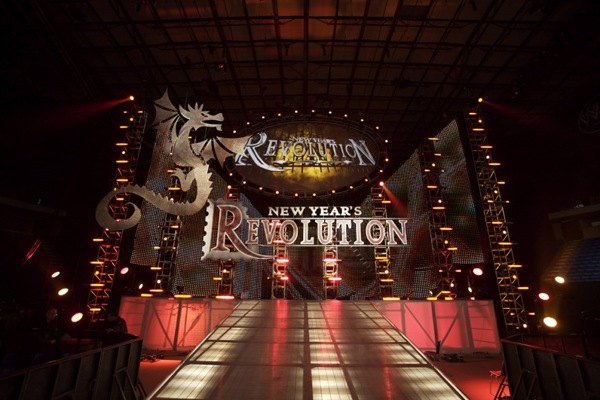
During the peak of the extension, WWE also created brand-exclusive Pay-Per-View events. From 2003 to 2007, the "big four" shows - Royal Rumble, WrestleMania, SummerSlam, and Survivor Series - featured matches from both Raw and Smackdown!, while the rest of the PPVs only hosted bouts from a single brand. With up to two months between Pay-Per-Views on each brand, WWE decided to add more shows to the schedule. They got as high as 16 shows in 2006, but ultimately, the situation proved untenable. Asking fans to spend that much money for only half the company's stars wasn't working, and in 2007, every Pay-Per-View was filled with matches from both brands. With the way the WWE Network is structured today, the company wouldn't have to worry about oversaturating the PPV market - they'd simply have more live wrestling content, which is traditionally the streaming service's most-watched form of programming. They could keep both brands on the big four, and give each show eight "Pay-Per-View" events besides. As for the twenty-first? We'll get to that in a bit...

4. Two Babyface Authority Figures

With the stage set for Shane McMahon to potentially take control of Raw, it seems likely that The Authority will be banished to Smackdown!, which they could then control as General Managers. It would make sense, but it's imperative that it doesn't happen. The Authority has worn out their welcome many times over since the group first formed in 2013, and a jump to Smackdown! wouldn't freshen them up. While Raw would be free of their influence, they'd get the new Smackdown! off to a bad start. It's not just them, either - the heel authority figure trope has been overdone for years. Even though certain talents - like Vickie Guerrero, for instance - were able to put their own spin on it, it's time for a change. Giving Raw to Shane McMahon and putting Smackdown! in the hands of another babyface would ensure that the company doesn't fall back on their tired old methods of storytelling.

3. John Cena On Smackdown!

For the past couple of years, WWE has been desperate to find a new top babyface who'll lead the company into years of prosperity. While Roman Reigns hasn't succeed the way Vince McMahon has hoped, the WWE chairman is still committed to finding someone to replace the nearly 39-year-old John Cena in the long term. Sending John Cena to Smackdown! would force the company to rally around a new star - and if Reigns didn't work, they'd have to find someone else. With Raw seen as WWE's premier program, whoever was featured most prominently on the show would be the face of WWE. Likewise, putting Cena on Smackdown! would help that brand. He's still WWE's top full-time star, and his presence on the "B-show" would help make it must-see for fans. It's imperative that WWE try to make Raw and Smackdown! seem equally important, and sending Cena to the blue brand would do just that.

2. An Annual Showdown

During the early years of the first brand split, there was one night a year when wrestlers from different brands would battle (well, two, including the Royal Rumble match) - WrestleMania. The show of shows hosted interbrand matches that were treated as main events, such as Brock Lesnar versus Goldberg and Shawn Michaels versus Kurt Angle. Years later, the company added the Bragging Rights show, but that simply featured a single multiple-man match with teams from each show competing for a trophy. There was a potential moneymaker being left on the table. If each brand is well-defined and given its own identity, then an annual "Raw versus Smackdown!" Pay-Per-View could be a great addition to WWE's lineup. Once a year - probably late spring or early summer - the company could present a full card of interpromotional matches and hype it as different from anything else on the calendar.

1. One World Title

As mentioned earlier, when the brand split was first implemented, the WWE Champion could travel back and forth between shows. In those early days, first one brand would be able to post a challenger to the title, and for the following Pay-Per-View, the other brand would get the chance. That only lasted about four months. Once Brock Lesnar won the title, he was drafted solely to Smackdown! Raw created the World Heavyweight Championship and gave it to Triple H, and for the next 11 years, the company had a hard-to-explain setup where there were two world champions. Finally, in 2013, the belts were unified, and since then, the WWE Championship has generally felt more important. It's imperative, for the sake of the title as a drawing card, that WWE doesn't split the belt again if they bring back the brand extension. Though each show should feel like a different promotion, having one WWE Champion go back and forth between them will make the title - and the champion - seem like a huge deal. In an era of waning popularity, the company can't sacrifice what could be a very important tool for making money.

In this post: 
WWE Draft
 
Posted On: 
Contributor
Contributor

Scott Fried is a Slammy Award-winning* writer living and working in New York City. He has been following/writing about professional wrestling for many years and is a graduate of Lance Storm's Storm Wrestling Academy. Follow him on Twitter at https://twitter.com/scottfried. *Best Crowd of the Year, 2013