10 Terrible Wrestling PPVs Fans Actually Paid For

Those times we paid for wrestling but were delivered a circus freak show.
The annals of professional wrestling are brimming with extraordinary pay-per-view presentations. World Wrestling Entertainment's WrestleMania X-Seven and Jim Crockett Promotions' Great American Bash 1989 are widely considered the best but other shows, such as WCW Spring Stampede 1999 and WWE Canadian Stampede: In Your House, have helped bolster the companies' reputations as the top two promotions in the sport's history. Exemplary in-ring action, sensible storytelling and logical booking helped fuel those events to greatness. For as great as those events are, there are shows that are every bit as bad. The worst pay-per-views tend to live forever in infamy. Like a turd in the punch bowl, the shows can put a halt to a hot streak and kill any momentum the promotion had built to that point. Oftentimes, those shows result from poor match-making, unmotivated or untalented wrestlers or mind-numbingly bad booking choices. A crowd that chooses to rain down on those elements with jeers can help rescue said shows and make them, at the very least, watchable. Others are so awful the crowd loses interest and simply could not care less about the action or drama unfolding before them. King of the Ring 1995 and Great American Bash 1991 stand out among the worst events either company has ever produced and the advent of the Uncensored show by WCW led to many shows deserving of making any "worst PPV" list. With WWE enjoying a streak of strong pay-per-view offerings lately, take a look back at occasions in which they and their main competition, World Championship Wrestling, were less successful with their major event productions.

10. WWE WrestleMania IX

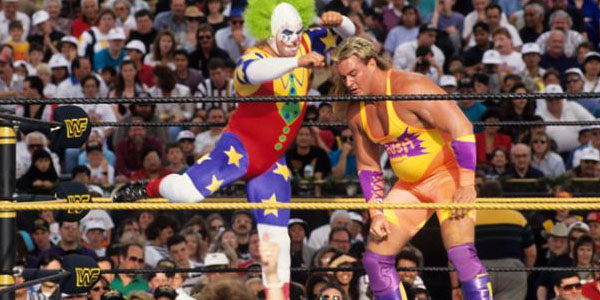
Doink the Clown and Giant Gonzalez were heavily featured in two of WrestleMania IX's marquee matchups while "Macho Man" Randy Savage, one of the greatest wrestlers to ever lace a pair of boots, was relegated to commentator during what was a horribly booked event. The night got kicked off with the best match of the show, an Intercontinental Championship match between champion Shawn Michaels and top contender Tatanka. That match, for as good as it was, kicked off a pattern of awful finishes as the Native American competitor defeated Michaels by countout. Booking that finish to kick off any show is a major blunder but doing so to open WrestleMania is unforgivable. That Hulk Hogan's return to WrestleMania was marred by a disqualification finish, as was Undertaker's bout with the aforementioned, and awful, Giant Gonzalez. Those three matches were heavily hyped and all three featured unsatisfactory conclusions. That is not a way to reward the fans' faith, especially when the audience is dwindling the way it was in 1993. The fact that the remainder of the card failed to produce anything remotely above average did not help endear the show to fans.
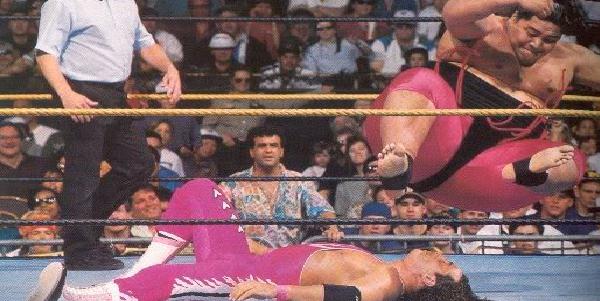
Bret Hart, the saving grace of Vince McMahon's promotion at the time, lost his title to Yokozuna in controversial fashion, then watched Hulk Hogan waltz right back into the main event scene and capture the WWE Championship in an impromptu show capper. It was a disheartening sight to see Hogan celebrating as if he had just wrestled the match of his life, all the while the future of the company was left to slink to the back, his eyes blinded by salt and his will broken by the backstage politics of the red and yellow.

9. WWE Taboo Tuesday 2004

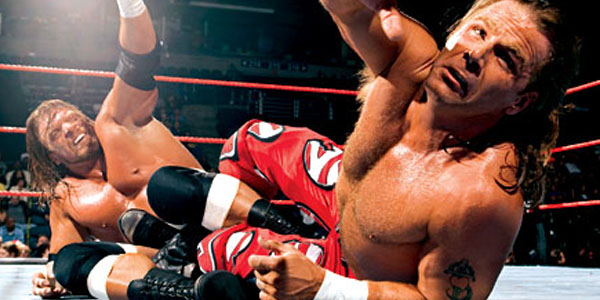
With the business stagnant and the future of WWE best described as "status quo," the company attempted to inject some excitement into its product by introducing the first viewer's choice pay-per-view ever, Taboo Tuesday. Fans would have the opportunity to log onto WWE.com and vote for opponents, match types and special stipulations for the night's top bouts. Whether it was deciding on something as trivial as what outfits the Divas would wear in the Women's Championship Battle Royal or something as vital as the top contender to Triple H's World Heavyweight Championship, the people would have a major impact on the show they paid for. As it turned out, bad idea. The show was packed heavy with matches that lent themselves to stupid gimmicks. Christy Hemme and Carmella DeCesare wrestled an all-time bad Lingerie Pillow fight, Eugene defeated "uncle" Eric Bischoff and shaved his head and Kane and Snitsky wrestled the first of many, many atrocious matches. Shelton Benjamin, Chris Jericho, Triple H, an injured Shawn Michaels, Randy Orton and Ric Flair attempted to save the show with commendable performances but no match stood out as anything past the quality of what one would see on Monday Night Raw.
The Taboo Tuesday event would continue for another year but the impracticality of holding a show in the middle of the work week prevailed and the show became Cyber Sunday in 2006. The stupidity of the gimmick matches and the inability to craft a good show from top to bottom thanks to the sometimes unpredictable nature of the voting results led to the elimination of the show in 2009.

8. WCW Uncensored 1995

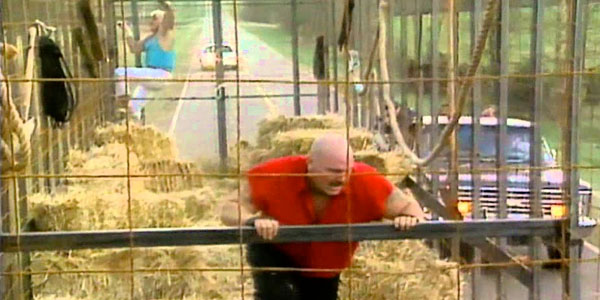
In an attempt to piggyback off the extreme revolution that Paul Heyman's Extreme Championship Wrestling had introduced to the world of professional wrestling in the mid-1990s, Eric Bischoff and WCW created a new March pay-per-view entitled Uncensored. It would be the one night of the year where rules went out the window and the otherwise family-friendly wrestling promotion would get, well, uncensored. Unfortunately, such a concept did not lend itself well to a roster touting Hulk Hogan and his merry band of '80s rejects. All of the special gimmicks in the world could not make up for the fact that Randy Savage vs. Avalanche (Earthquake) and Meng vs. Jim Duggan were no longer appealing matches in the new decade. None of those men were invested in their work the way that Tommy Dreamer, Raven, Sandman and Sabu, all of whom made significantly less money, were in ECW. Hulk Hogan sleepwalked his way through another pay-per-view match, turning in an uninspired performance against the otherwise great Big Van Vader while Dustin Rhodes and Black Top Bully (Barry Darsow) did their best to deliver something watchable while in the back of a big rig.
The show set a precedent for every edition of Uncensored that followed. Bad matches, poor hardcore brawls by guys unfamiliar with the style and truly awful booking soiled the show's reputation right out of the gate. While 1996's production would be significantly worse, the original deserves recognition for being the granddaddy of one of the worst wrestling pay-per-view legacies of all-time.

7. WCW SuperBrawl 2000

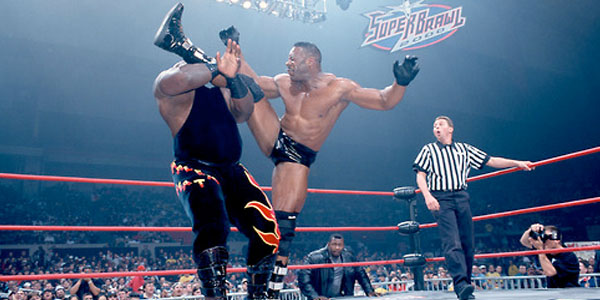
The 2000 edition of SuperBrawl has the distinct dishonor of touting the worst match in the history of professional wrestling. That is quite the loaded statement but all one must do to understand it is log into the WWE Network, fire up the show and watch as Tank Abbott and Big Al completely expose the business in an admittedly hard-hitting though depressingly horrendous "match" that ended mercifully when Abbott retrieved a leather coat from a pole. The pole gimmick doomed the match from the start but the fact that neither man was a trained wrestler may have had something to do with the overall lack of quality and talent in the match as well. It is not as though the rest of the card did the show any favors. Brian Knobs and the late, great Bam Bam Bigelow delivered a plodding and uninteresting garbage brawl. 3 Count defeated Norman Smiley in a three-on-one Handicap match that someone, somewhere thought was a good idea. Big T reminded fans of why his prime came four years earlier in WWE as Ahmed Johnson, Kidman and Vampiro waited until the pay-per-view broadcast to have the worst match of their otherwise solid series and Hulk Hogan and Lex Luger delivered a match that was every bit the quality of a contest involving the over-the-hill stars would be.
When one looks back at why WCW was failing miserably to start the new Millennium and why it had one foot in the grave so shortly after the start of the new year, SuperBrawl is a shining example. Old, untalented and unmotivated stars at the top of the card and terrible booking decisions born out of backstage politics ruined what could have been a very entertaining promotion given the talented young stars that would take over later in the year. Sadly, by the time those stars began making their mark, WCW was dead on arrival.

6. WWE In Your House 4

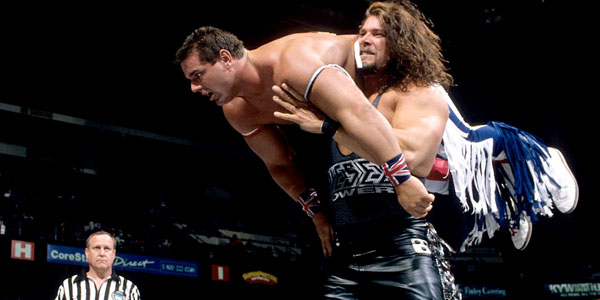
The WWE product could not have possibly been colder than it was in October of 1995. The Diesel experiment failed miserably as house shows, television ratings and pay-per-view buyrates plummeted with the seven-foot-tall champion on top. A lack of viable opponents and overall star power damned the company to mediocrity, at best, and left Vince McMahon scrambling to find one Superstar to help spark business. He thought that man was Shawn Michaels but as he would find out at In Your House 4, the Heartbreak Kid was not the most reliable star under his employment. Michaels had gotten liquored and pilled up at a bar in Syracuse, mouthed off to the wrong servicemen and caught a nasty beating from them as a result. The injuries he suffered left him unable to compete at the In Your House pay-per-view, at which he was slated to defend the Intercontinental Championship against Dean Douglas. With eyes bruised and his face swollen, Michaels made his way to the ring and forfeited his title. Douglas would defend, and lose, the title against Michaels' fellow Kliq buddy Scott "Razor Ramon" Hall. Diesel, on the last legs of his title run, turned in a boring performance against British Bulldog, that ended in disqualification when Bret Hart got involved. Regardless of whether it is the right decision or not, a disqualification ruling in the top-billed match of a show people are paying to see is always a death knell. See: WWE Battleground 2013.
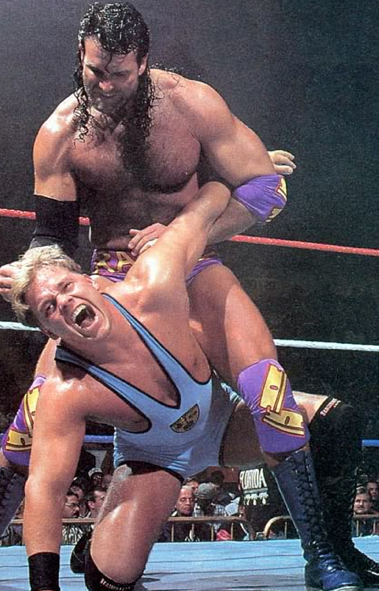
The undercard did feature a fairly entertaining tag bout pitting Razor Ramon (pulling double duty) and 123 Kid against the Smoking Gunns. That, coupled with an OK opener between Hunter Hearst Helmsley and Fatu helped make the undercard of the show better than others ranked below it on this list but the general laziness of the booking and some of the talent on the show leads to In Your House 4 having the dubious distinction of being the worst of those events to that point.

5. WCW Mayhem 1999

Wcw Mayhem Vince Russo's WCW had a habit of loading too many matches onto pay-per-view cards and as a result, what could have been an otherwise promising shows were bogged down with too much filler or too many matches that had no business being on major events. The November 1999 show Mayhem was one such match. For months, the company conducted a huge tournament to fill the WCW Championship vacancy. Heading into the show Chris Benoit, Jeff Jarrett, Bret Hart and Sting were the remaining four stars battling for the title. Given the talent of those men, there was plenty of potential for three strong matches to decide the top prize in the company. Instead, those matches were limited in time thanks to such matches as Lex Luger vs. Meng, Norman Smiley vs. Brian Knobs and the head scratcher between David Flair and Kimberly. Two of those matches were storyline-heavy schlock that could have easily been saved for another crappy edition of WCW Monday Nitro and the other, Smiley and Knobs' battle for the Hardcore title, was pure Thunder material at best. Flair Kimberly2 A card limited to the three tournament matches, Goldberg vs. Sid Vicious in an "I Quit" match, the eight-person elimination match between the Revolution and the Filthy Animals and Scott Hall vs. Booker T could have made for a strong first showing for Russo and writing partner Ed Ferrara. Evan Karagias vs. Disco Inferno and Vampiro vs. Berlyn would have joined the other useless bouts on the scrap heap while fans desperate for a good show from Ted Turner's wrestling promotion would have gone home happy. Instead, what they received was an incoherent mess.

4. WWE D-Generation X: In Your House
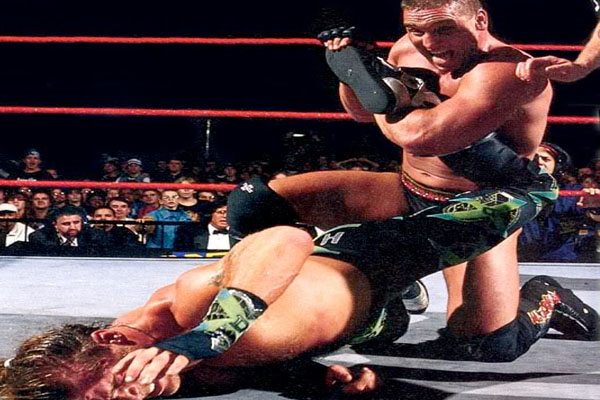
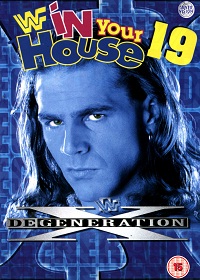
There was plenty to be excited about when it came to WWE's product in 1997. Steve Austin was rolling, D-Generation X was introducing an edginess to the shows that they desperately needed and Sable was catching on as the sexpot of the company. All three acts were tremendously popular and The Rock was gaining steam heading into the new year. As the old saying goes, "the night is always darkest before the dawn" and that proved to be the case as the company delivered one of its worst shows leading into its biggest boom period. Shawn Michaels went out of his way to make Ken Shamrock look bad in the night's main event for the WWE Championship. Three matches in the middle of the show ended in disqualifications, including the poorly conceived boxing match between Marc Mero and Butterbean, and no match really excelled past average status. The Disciples of Apocalypse and Los Boricuas turned in another lethargic match in a long line of them while Taka Michinoku and Brian Christopher highlighted why WWE's attempt to launch a light-heavyweight division failed so miserably. In Your House 192 A poor show overall that was not without its few bright spots. Owen Hart's return and attack of Shawn Michaels felt like the beginning of a major push, Kane's presence during Undertaker's match with Jeff Jarrett furthered the angle between the Brothers of Destruction and the program involving Mero's treatment of Sable added another chapter. Still, the quality of the show was so putrid that it is difficult to look at the overall broadcast was anything other than abysmal.

3. WCW Great American Bash 1991

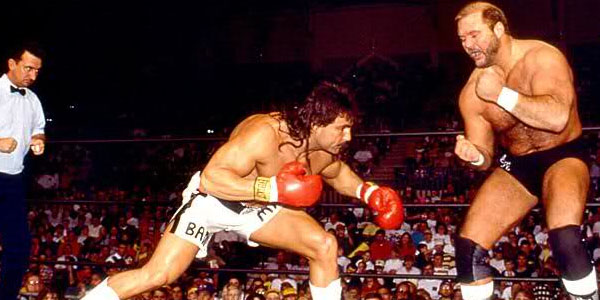
Wcw Bash 1991 The main event of the 1991 Great American Bash was billed as a steel cage match featuring the team of Rick Steiner and Missy Hyatt taking on Arn Anderson and Paul E. Dangerously. No, seriously. The headline bout of one WCW's marquee pay-per-view events featuring a manager, a valet and two midcard stars inside a steel cage while the heavyweight title was up for grabs earlier in the card. If the main event does not stand out as a bad decision, the opening match most certainly should. Not only was the legendarily bad PN News involved, he was involved in a Scaffold match, a legendarily bad gimmick match. Oz was on the card, as was the Diamond Studd, Yellow Dog, Big Josh, Black Blood and El Gigante as WCW flaunted some of the gimmicks that made that period of time a dark one for Ted Turner's promotion. El Gigante, in particular, was horrendous at his job and the match he wrestled against One Man Gang was as abusive to the senses as it sounds. https://www.youtube.com/watch?v=lkwx_O7PRBQ Chants of "We want Flair!" erupted throughout the arena as Lex Luger and Barry Windham wrestled a boring match for the most prestigious title in the sport. With the Nature Boy gone following a dispute with WCW President Jim Herd, the company was no longer the wrestling-first company it had been in the past. It was now a lighter version of WWE, relying on gimmicks and entertainment to bolster ratings and drive in business. As Great American Bash 1991 proved, that would not work without the right person at the helm. That person was coming but it would be a handful of years before Eric Bischoff arrived to save WCW from the doldrums it found itself in early in the decade.

2. WWE King Of The Ring 1995
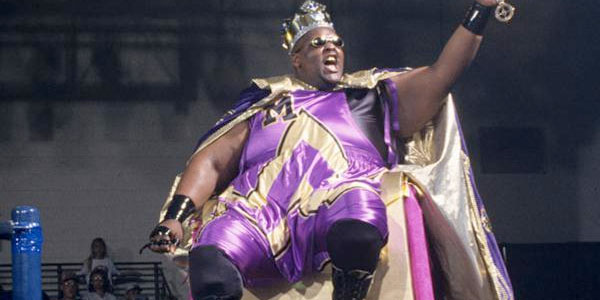
The 1995 King of the Ring was the first time that it became painstakingly obvious that Vince McMahon was no longer in touch with what the fans of his promotion wanted. On a card featuring future Hall of Famers such as Shawn Michaels, Yokozuna, Undertaker and Bret Hart, it put Mabel, Savio Vega, Tatanka and The Roadie at the forefront and suffered for it courtesy of a dissatisfied Philadelphia crowd. Rather than delivering a strong show in which Michaels, Undertaker and Yokozuna battled it out for the right to be named King of the Ring, the company eliminated them all in the first round in order to deliver a semifinal round that saw Vega defeat the Roadie and a final round pitting Vega against Mabel. At what point McMahon thought Mabel was a more marketable star and a bigger draw than any of the men he beat out to win the crowd is a mystery. Why someone did not stand up to him and strongly protest that monumentally bad decision is an even bigger mystery. The uninspired tag team main event pitting Diesel and Bam Bam Bigelow against Tatanka and Sycho Sid was a poor way to cap off a horrid show. Even Bret Hart appeared to approach his Kiss My Foot match against Jerry Lawler lethargically, which was disappointing given that it was the final high-profile match the two would wrestle against one another. Screen Shot 2014 06 10 At 09 59 03 A black mark on the history of WWE pay-per-view, King of the Ring 1995 stands tall among all others as an example of what can go wrong when the promoter becomes out of touch with his audience. The late Mabel would go on to become recognized as the worst King of the Ring of all-time and his championship match against Diesel at SummerSlam only solidified that reputation. As bad as that show proved to be, there would be one 11 years later that trumped it as the worst in company history.

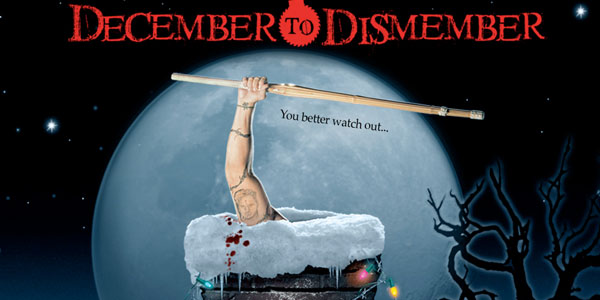
1. ECW December To Dismember 2006

In 2006, Vince McMahon looked to capitalize on the hugely successful ECW: One Night Stand pay-per-views and a wave of nostalgia surrounding the extreme promotion by re-launching under the WWE umbrella. The company secured a television slot on SyFy and employed some of most recognizable names in the history of ECW. Tommy Dreamer returned to television and Rob Van Dam became the face of the brand. Kurt Angle and Big Show were drafted to the brand to help lend credibility to it and Paul Heyman was tapped to work with the creative team. All of the ingredients appeared to be in place to helped resurrect one of the most beloved promotions in wrestling history. The company in had in place plans to bring young talent into the fold in an attempt to fuel the future of the brand. There was a great deal of money to be made if it was success and to guarantee its success, it needed Superstars to carry it into the next decade. To say the re-launch was bumpy, however, would be an understatement. The elements that made ECW a success were almost immediately stripped away. Only certain matches featured the extreme rules and fans were asked to buy someone like Matt Striker as a legitimate threat to the edgy, violent competitors such as Sandman and Sabu. Test, Hardcore Holly and Big Show were regularly put over at the expense of the hardcore originals and the fans quickly became disenfranchised with Vince McMahon's vision of the show. That SyFy had specific elements it wanted in the shows did not help the brand succeed.
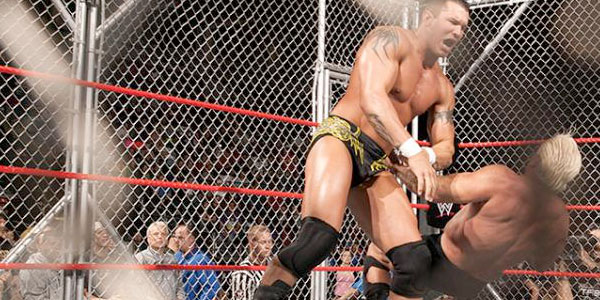
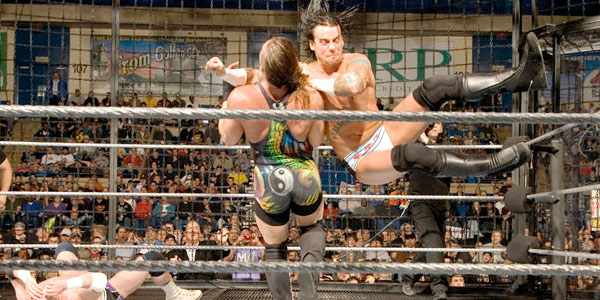
It was against that backdrop that the brand presented its first, and only, exclusive pay-per-view on December 3, 2006. With tensions between Heyman and McMahon boiling over prior to the show, matches were booked at the last minute. Only the Extreme Elimination Chamber match for the ECW Championship and the battle between the Hardy Boyz and MNM were announced prior to the event. Contests between Balls Mahoney and Matt Striker, Daivari and Dreamer and tag bouts pitting Elijah Burke and Sylvester Terkay against the FBI and Kevin Thorn and Ariel against Kelly Kelly and Mike Knox failed miserably to get the fans excited about what they were watching. By the time Bobby Lashley captured the ECW title despite fan favorites Rob Van Dam and CM Punk appearing to be better and more popular options, the crowd in Augusta, Ga. turned on the show. Almost immediately, the event was recognized as one of the worst ever produced by WWE and a major detriment to the new ECW. Heyman would quit the company the following day, his baby a shell of what it once was.

Contributor
Contributor

Erik Beaston is a freelance pro wrestling writer who likes long walks in the park, dandelions and has not quite figured out that this introduction is not for Match.com. He resides in Parts Unknown, where he hosts weekly cookouts with Kane, The Ultimate Warrior, Papa Shango and The Boogeyman. Be jealous.