10 Things From WWE's Attitude Era That Need To Return

You can't recreate it. But how about bringing back a few key elements?

The Attitude Era: It's the most fabled and nostalgia-ridden time period in the history of the WWE. It's the era that made wrestling cool to watch again, especially for teenagers and young twenty-somethings. It's the era of Austin vs. McMahon, of Kane vs. Undertaker, of DX vs. The Nation, and of WWE vs. WCW. In those few short years, the landscape of professional landscape changed from a bunch of gimmicky pseudo-wrestlers running around in clown costumes to a no-holds-barred melee of lifelike anti-heroes and epic slobberknockers. I know that it's easy to view the Attitude Era through rose-colored glasses, misremembering the WWE as a whole by pointing to a few awesome key scenes that remain lodged in the public consciousness. Not everything during that time was as cool as Mike Tyson joining D-Generation X (and subsequently turning on them). I understand that. Hit-and-miss was pretty much the name of the game back then. But even considering the blunders that sometimes took place (Mae Young giving birth to a hand, Darren Drozdov as...Puke?) and the overall lack of actual wrestling, the Attitude Era had more working for it than against it. And it would be nice to see some of what worked back then find its way back onto programming today.


10. Jim Ross

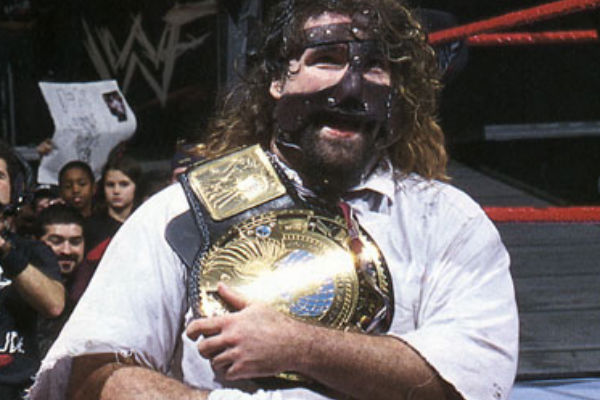
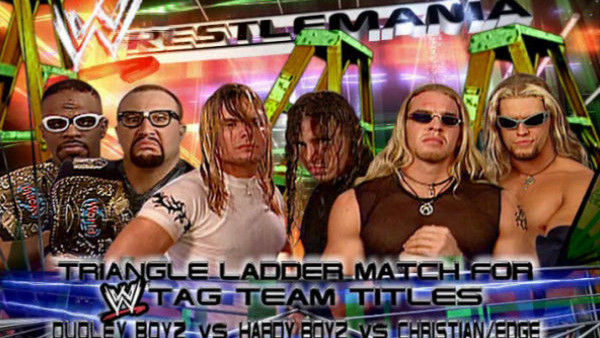
Think of your favorite extreme moment from the Attitude Era. Maybe it was Mankind being thrown off the top of the Hell in the Cell. Maybe it was Edge spearing Jeff Hardy from off a ladder. Maybe it was Kurt Angle (sometimes failing to) suplex Shane McMahon through a glass window. But guess what all of those moments have in common? They had Jim Ross putting the cherry on top from the announce table. "Good God almighty! They've killed him!" That's the kind of line that only good ol' J.R. could deliver and make it feel genuine. He somehow managed to take a moment that was already huge, already awe-inspiring, and make it bigger. All while reminding us that these were real people in the ring, not just crash test dummies with lifelike facial expressions. Whenever an underdog won a championship, it was Jim Ross who made you realize how hard they'd worked leading up to that point. He evoked their entire life's struggle in a few simple lines, pulling at our heartstrings and perfectly emphasizing the emotions we saw in the ring. Not that Michael Cole is a bad commentator. In fact, considering the way he's handled unscripted, real life tragedy (such as the on-air heart attack of fellow commentator Jerry Lawler), one could argue that he's the most professional of all. But Michael Cole commentates matches. J.R. commentated life stories.

9. The Hardcore Title

One of the most unfortunate losses in transitioning out of the Attitude Era was the sudden retirement of the Hardcore Championship belt. The Hardcore division allowed WWE to utilize some of its more, ahem, special talents. It gave Bob Holly a career resurgence. Ditto for Al Snow and Big Boss Man. These were guys who were in No Man's Land, mid card singles talent who were just outside the range of the Intercontinental Championship. But here they were given an opportunity to make interesting television, literally doing anything they wanted in the process. There was complete creativity allowed in the Hardcore division. Its demise can be traced back to the beginning of the 24/7 Rule, a stipulation that forced the current champion to defend the belt at any time, day or night, during an event or while they were sleeping in their hotel room. The initial idea was exciting and it allowed frequent changes in scenery, going away from the traditional and nondescript "backstage" brawls of yore. But then they got too silly with it. The belt changed hands multiple times during a show, sometimes to wrestlers who'd never been involved with the division before. Gerald Brisco and Patterson held the title. Part of the Godfather's Ho Train held the title. What used to be the purview of only the most death-defying, boundless madmen was now home to members of the Mean Street Posse. It was only a matter of time until it became such a big joke that they had to retire it. Now would be the perfect time to relaunch the Hardcore division. Let Bray Wyatt and Bubba Ray Dudley go head to head in a Hardcore match in the back of the arena. Bring in some talent who aren't the best technical wrestlers around but are willing to put their bodies on the line. Give them back their venue.

8. Blood

It's a simple thing, blood. But it's an important thing when your sports entertainment company is striving to even attempt some realism. It also creates a visceral reaction from the audience for certain moments that require more dramatic tension. Think back to Stone Cold Steve Austin's match against Bret Hart, with Austin becoming a babyface and Hart becoming a heel. That iconic scene of Austin trapped in the Sharpshooter, with desperation in his eyes and blood rushing down his face, singlehandedly raised the level of drama to a 10. Take away the blood and, yes, it's still a powerful image, but it doesn't have the same level of impact. Now, I'm not talking about bringing back the crazy amounts of blading that was flowing all over the ECW in its heyday. But there needs to be signs to the fans that wrestling is, in some small way, real. Because save for the occasional accident, the current WWE is spic and span. And that's simply not how you make people believe.

7. Puppies!

Call it sophomoric if you like, but there's no denying that the overt sexualization of the women's roster quickly the most titillating reason for many young viewers to tune in every Monday night. Remember Sable? REMEMBER?? This doesn't mean every female on the roster needs to wear nothing but flesh-colored pasties or compete in a Bra & Panties match just to keep their spot--in fact, I applaud the WWE for letting their "divas" entertain audiences with their in-ring abilities--but wouldn't it be nice to have both a set of gifted, female wrestlers and another Sable? ...If for no other reason than to hear Jerry Lawler lose his sh*t over boobies. ...But we can ditch the Ho Train. Because that was stupid.

6. Shocking Heel/Face Turns

There is perhaps no moment in WWE history that caused fans' heads to explode quite like the night Stone Cold Steve Austin turned heel to join forces with his arch enemy, Vince McMahon. Not only did it come out of nowhere, but it positioned the company's top rivalry on the same side of the battlefield, a move surely no one believed could work. But it did. The Attitude Era had more of these shocking turns than any other time in the company's history. Triple H turning on DX to join The Corporation, The Rock turning from The People's Champion to The Corporate Champion, Stephanie McMahon turning on her father...these were major moments. And they were spread out enough to leave a lasting impact. (Whereas, say, WCW threw another babyface into the heel pool every other episode.) Nowadays, you're either a heel or you're a face. With the exception of CM Punk turning heel (against The Rock, nonetheless), there hasn't been a notable allegiance change in ages. So for the love of God, make John Cena a bad guy already! ...Not that anyone would actually be "surprised" by it anymore. But still.

5. The Importance Of Championships

Remember when a superstar having a championship belt strapped around their waist actually meant something? And not just the big ones, either. During the Attitude Era, viewers even cared who the International Champion was, and winning it was a surefire way for wrestlers to bump themselves up from the mid card. Audiences genuinely cared when new champions were crowned, because it hadn't yet reached the point where titles changed hands more frequently than viewers changed the toilet paper roll. Being the Intercontinental Champion or the Tag Champions meant something to the crowd, and it was an important milestone for the person winning it. The downfall here began with the unification of WCW and WWE (and then ECW). Suddenly there was a major influx of titles, way too many for people to keep track of. So there were unifications of some of those titles, allowing for an overall Undisputed Champion, while other WCW/ECW belts remained in play. Then there was the separation of the rosters, splitting the group down the middle between Raw and Smackdown. This created two brands with their own sets of champions. Except for the WWE Champion, who would appear on both shows. ...Wait, I mean...the World Heavyweight Champion. Or...no. Yes? I don't know. This belt system is a damn mess.

4. Managers/Valets

To be fair, the concept of managers and valets was in no way exclusive to the Attitude Era. It was the 80s that placed a major emphasis on the guys behind "the guys," leaning on the likes of Jimmy Hart, Bobby Heenan, Slick, and Paul Bearer to become the mouthpieces of talent who were good in the ring, but couldn't do much on the mic. But the 90s followed suit, keeping Paul Bearer as the voice of The Undertaker and Kane, and also used veterans like Michael Hayes to help introduce some new talent who needed a little extra work on that whole talking thing. (Jeff...Matt...love ya, but...you know.) Mostly, though, the Attitude Era made a clean swap from male managers to female valets. The general idea remained the same, with a host of lovely ladies escorting wrestlers down to the ring and accompanying them in promos to take the focus off those wrestlers' flaws and make them more palatable to the audience. Enter Sunny, Sable, Terri Runnels, etc. A lot of those valets eventually turned into in-ring talent, as well. Most notably of that group was Chyna, who began as a bodyguard to Triple H, as well as Lita and Trish Stratus, who began as valets for Essa Rios and Test, respectively. Who does the WWE have on payroll for these positions now? Paul Heyman is the manager and Summer Rae is the valet. Considering how many current wrestlers have trouble on the mic, it's surprising that no one has thought to surround them with these valuable roles.

3. A Legitimate Tag Team Division

Perhaps the most underrated achievement from the Attitude Era was the influx of talent that made its way into the tag team division. In the mid-90s, this division was a barren wasteland of no-name talent. It just wasn't a main attraction. There was the Bodydonnas, the Headshrinkers, and the Smoking Gunns. That was basically it. Gone were the highflying duos and tandem tacticians of yesteryear, with the Brian Busters, the Hart Foundation, the Rockers, and the British Bulldogs nothing but a faint memory. But then No Mercy 1999 happened, and a tag team ladder match between The Hardy Boyz and Edge & Christian single-handedly revitalized the dormant division. In the span of a few short years, it blossomed to focus on fan favorites like The Acolytes, the New Age Outlaws, Too Cool, the Dudleys and the aforementioned innovators of the ladder match. People started caring about tag teams again. Flash forward to present day and, yeah, the Dudleys are still hanging around, but the only legitimate teams to watch are Los Matadores and the Lucha Dragons. The division could use another spark.

2. Memorable Stables

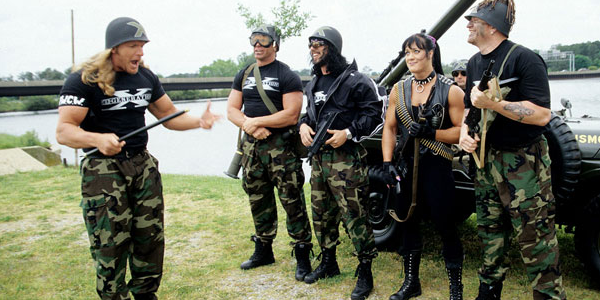
The list of legendary stables from the Attitude Era could fill a book. D-Generation X, Nation of Domination, The Corporation, Ministry of Darkness, The Radicalz...hell, even The Oddities were pretty great. This was at a time when stables could be used as a genuine launching off point for mega superstars, and they were the home of many future champions such as The Rock, Triple H, and Eddie Guerrero. These stables were also different because they were often created (or at least joined) by already prominent superstars, housing the likes of The Undertaker and Stone Cold Steve Austin well after they'd already made their mark on the company. Egos didn't seem to be running wild quite as much, and the top talent didn't have an issue surrounding themselves with mid-carders and relatively unknowns. There have been a couple of noteworthy stables since the end of that era--Evolution was a nice play on the Four Horseman and you can't argue with the spin-off success the members of The Shield have had--but there was a sense of gang warfare happening with the mix-ups between stables back in the day that hasn't been replicated since.

1. The Monday Night Wars

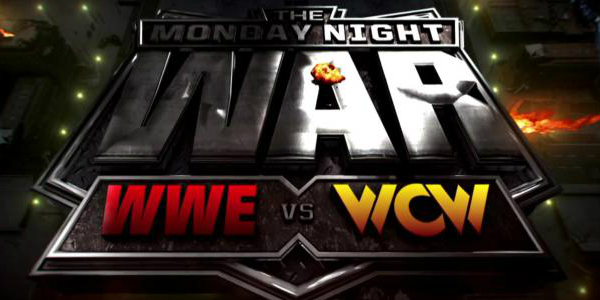
Competition, not monopolies, is what breeds the most creativity and is what ultimately set the Attitude Era in motion. It took two, top-tier wrestling organizations battling for ratings supremacy to force Stone Cold, The Rock, DX, and the genesis of Mr. McMahon into the spotlight. Without that heated competition (and all of the talent poaching that came with it), there's a very real possibility that the WWE fizzled out, rather than enjoying the commercial boom that followed. It would be foolish not to credit Eric Bischoff at least a little for the Attitude Era. When WCW was at its peak, fostering in the nWo and cashing in on the name recognition of former WWE stars, Vince McMahon became more than a little desperate to get a win in the ratings war. Luckily for us, he channeled that desperation into fueling a more in-your-face product. But once WCW ran itself into the ground (and right into Vince's bankroll), the shine started to wear off the WWE product. It slowly diminished because, once you emerge the undisputed victor without any new challengers to keep you on your toes, it's easy to get soft. Yes, TNA is technically a competitor to WWE nowadays, but there's nothing close to resembling a rating's war happening there. TNA tried to compete alongside WWE on Monday nights for a few months, but ultimately ran back to its Thursday night slot once the people in charge realized they simply couldn't compete. We need another major promotion to enter the picture if WWE is ever going to get back to its prime.

Contributor

Jacob is a part-time contributor for WhatCulture, specializing in music, movies, and really, really dumb humor.