10 Things We Learned From Eric Bischoff’s Podcast: New World Order
The Outsider's edge, explained by the insider's mind...

Joining good pals Bruce Prichard and Tony Schiavone, ex-WCW boss Eric Bischoff is the latest big name to be pinned down by podcast mogul Conrad Thompson for a new show. Entitled "83 Weeks", it aims to examine in-depth how Bischoff's Nitro toppled Raw's dominance on the Monday night market during the mid-90s.
The first episode has landed, and it centres on one of Eric's finest creations: the nWo.
It's early days for Thompson and Bischoff, so the same chemistry Conrad enjoys with Bruce and Tony simply isn't there yet. Indeed, Bisch came across a little guarded (almost too guarded at times) throughout, but there's enough detail about the signings of Scott Hall/Kevin Nash and behind-the-scenes talk about the angle to make it enjoyable.
Whether you take anything said about WCW with a pinch of salt or not, it's true that nobody is better-placed than Eric Bischoff to lend insight into the promotion's day-to-day drama. Given time, he'll surely open up in future episodes.
Either that or Thompson, well-known for bringing the best out in his guests, will Powerbomb him through a nearby table. Bischoff might have to rehearse it this time, though...
10. New Japan’s Credibility Planted The Seed

The usual nWo narrative states that Bischoff attended the Battle Formation show in April 1996 and watched in awe as the UWFi invasion of NJPW captured fan attention. According to Bisch on this show though, that's not exactly the truth.
Eric said that it was New Japan that planted the seed of creativity in his brain, but not that specific event. Instead, he admired how respected the product was by mainstream media in Japan and compared that to the cartoony nature of both the WWF and WCW in North America. To Bischoff, an invasion seemed like the perfect way to change that.
Things fell into place once Scott Hall became available to WCW.
With Hall's arrival in the company (soon to be joined by his friend Kevin Nash, who was also leaving the WWF), Bischoff knew he could get people talking by presenting them as ex-WCW stars who had become more famous elsewhere and had returned to right the wrongs of their previous stints.
9. Bischoff Claims Sting Was WCW’s Highest Paid Talent Pre-NWO

It's interesting to listen to Bischoff separate the deal Hulk Hogan had with WCW from virtually everyone else in the company. When Thompson started talking about the kind of money Hall/Nash would be on, Eric said he was mindful not to make them the highest-paid talent right off the bat.
He then insists that neither man earned more than Sting initially. He was WCW's top earner, raking in around $750,000 per year. What about Hogan though? Well, Bischoff claimed he had a different deal that was more in step with Turner as an umbrella company than the WCW division; this suggests Hulk's deal wasn't part of Eric's budget.
Ric Flair was also a concern to Bischoff.
Earning approx $500,000, Flair was the kind of wrestler who typified WCW's Southern roots. To Eric, that meant his contract had to be respected, so Hall and Nash were brought in for around the same. There are some wrestling fans who simply won't buy that, or that Sting was the highest paid in 1996.
8. Hall/Nash Didn’t Know About the NWO Angle Before Signing
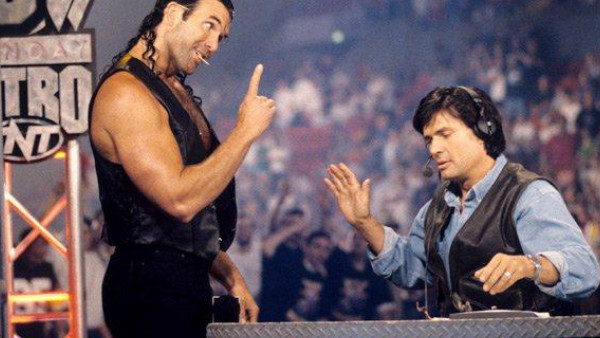
Bischoff asserts that he didn't divulge every little detail of the nWo angle before signing Scott Hall and Kevin Nash. That's partly because he hadn't worked it all out yet (Bisch didn't have a name for the faction, didn't know who a "third man" would be and only had the bare bones of a story to work with).
It was also because he didn't trust people not to flap their gums.
Again, some will find it difficult to believe that Hall and Nash didn't know what was happening before signing on the dotted line with WCW. That's the story Bischoff told on the podcast however. He said they weren't too concerned with what they were doing, and they were more concerned with leaving the WWF for pastures new.
The actual meat of the nWo story wouldn't come to the fore until both men were under contract and Bischoff had managed to establish what direction he wanted to take things. The boss kept his cards very close to his chest on this occasion.
7. Bischoff Wrote Hall’s First Promo An Hour Before It Happened

Looking to give some proof that'd illustrate the borderline patchwork nature of the angle's genesis, Bischoff told Thompson he penned Scott Hall's legendary debut promo "an hour or so" before the 27 May 1996 episode of Nitro went on the air.
With Hall standing behind him giving pointers, Eric punched the wording into a computer and then ran through the bullet points with Scott before he emerged from the crowd to give his introductory speech. It wasn't quite as finely-tuned as fans at the time probably thought.
Bischoff also isn't sure that Larry Zbyszko told Hall (as Scott claimed himself) to come through the crowd, not down the aisle. Whilst Eric did admit it's possible Zbyszko had a hand in it, he also recalled a flurry of activity in the few hours before Nitro and thinks it could have been anyone.
Regardless, Larry is the one Hall credits.
6. The Outsiders Name Happened Spontaneously

One thing was clear: WCW couldn't use the names Diesel and Razor Ramon for Nash and Hall, because they were WWF trademarks. Bischoff said they weren't planning to anyway, if only so new names (nobody had settled on using their birth names yet) would give the situation that credibility Eric sought.
A set of cheesy, prepackaged names didn't appeal to Bischoff at all in the weeks leading up the pair's impending arrival as a unit. Thus, "The Outsiders" were born, not because of clever marketing but because that's what Hall and Nash were to WCW.
It all happened more spontaneously than even Bischoff could believe.
In effect, the WWF's lawsuit against WCW for using their characters on a rival show helped further the realism Eric had spotted in Japan previously. Barred from giving their new stars slick gimmick names, he was forced to embrace who they really were.
5. His Superstitions Stopped Him Rehearsing The Nash Powerbomb

One of the more prevalent views to come out of the first episode is that Bischoff took a ton of inspiration from Verne Gagne's work in the AWA. Having cut his teeth there, Eric admired the way Verne approached television. The wily old veteran liked his announcers to react organically, and he didn't overproduce.
That stuck with Bischoff in WCW, and it's why he chose not to rehearse the Powerbomb spot with Kevin Nash before the Great American Bash.
Admitting to being a superstitious man at times, Eric told Thompson that he'd rather get hurt doing a spot live than end up injured during a run through. Although that does make sense, it was also a massive risk for an untrained commentator to bump through a table live on pay-per-view without any prior preparation.
Bisch trusted Nash explicitly, and knew he'd take care of him. They'd been friends for years, stretching back to Kevin's first turn in WCW, and Eric was confident they could pull the spot off without a hitch. He was right: they did.
4. Bischoff Wished WCW Had Better Lawyers

The name Jerry McDevitt will be a familiar one to anyone who has ever shown interest in WWE court cases or legal dealings. McDevitt was the one tasked by Vince McMahon to convince the judge that WCW were playing foul by presenting Hall and Nash as Razor and Diesel, and he did a pretty good job.
Back then, Eric Bischoff left most (if not all) of the legalities to Ted Turner's lawyers. Now, he wishes they'd been a bit stronger and pushed back at the WWF more than they did.
Eric said he rolled his eyes at the suggestion WCW's use of Nash and Hall was hurting McMahon's promotion. In the '80s, Vince had rolled over the top of his competition, so it felt a bit cheap to cry foul when somebody else even hinted at using his tactics.
To Bischoff, whilst he didn't want to use the cartoonish characters Hall and Nash had played in the WWF, it was important that they retained some of their traits and characteristics so the invasion angle would be a success for WCW.
3. Sting Wasn’t Sold On Being Hogan’s Backup
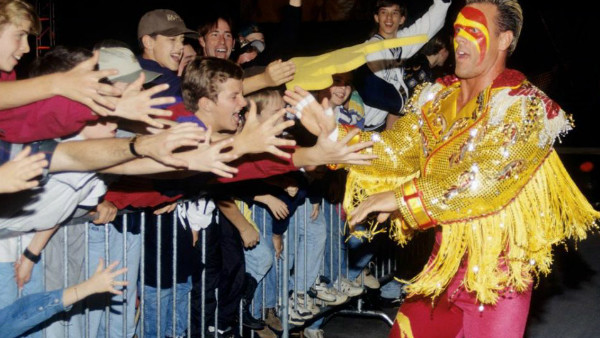
Bischoff stated on the podcast that zero WWF stars were considered for the role of the nWo's third man before Bash At The Beach 1996. If true, that means no Shawn Michaels, no Bret Hart and no Davey Boy Smith deals were discussed.
It's at that point Eric rubbished claims made by Dave Meltzer and Wade Keller that WCW were talking to any WWF stars under contract.
Instead, Bischoff disclosed that Sting was the only backup plan he had for Hulk Hogan should the iconic babyface refuse to turn heel. Going even more in-depth, Eric admitted that Sting wasn't exactly thrilled at the prospect of playing second fiddle, and he wasn't sure himself whether or not a heel turn was for the best.
A career babyface, like Sting had been up to that point, was well within his rights to have reservations. Hogan did too, albeit with the luxury of being Bischoff's first choice for the gig. Sting didn't have that, and the role of substitute if things went wrong irked him a tad.
2. Eric Was A “Little P*ssed”About Bobby Heenan’s Foreshadowing

As Hulk Hogan stormed the ring, seemingly to help Randy Savage and Sting fend off the invading Outsiders, Bischoff watched from high up in the Ocean Center's bleachers. Therefore, he wasn't aware when Bobby Heenan on commentary questioned which side Hogan was there to aid seconds before his heel turn.
When he did hear it back, Eric was a "little p*ssed".
Later, he said he had only been about "2/10" in terms of being annoyed by Heenan's foreshadowing. Perhaps Bischoff calmed down when realising that his own mentality (not to clue the announcers in on what was going to happen before major moments) had come back to bite him.
Bobby wasn't reprimanded for the line backstage after the show, and Bischoff doesn't feel it totally ruined the Hulk turn. Here, he made a good point: few believed Hogan would ever turn rogue, so a heel announcer who had been bashing Hulk on TV for over a decade wasn't going to change that opinion.
1. There Were Two Reasons Why Ric Flair Wasn’t Involved

Ric Flair was only mentioned once or twice throughout the entire podcast, likely because he didn't have much to do with the creation of the nWo. That was by design, and Bischoff said there were two huge reasons why Flair wasn't involved in the story.
Firstly, Eric cited Ric's star power as a major reason. After Hall, Nash and Hogan had formed as the nWo, he'd need a popular WCW star to oppose them other than Sting, Randy Savage or Lex Luger. In his mind, Ric was the natural choice.
Secondly, he wanted to change the popular view that WCW relied on older stars. That falls down a bit when realising that Flair is only five years older than Hogan, who was the man chosen to fill the third man slot. If age had been the primary concern, then Hulk wouldn't have been in the running either.
It seems more logical to agree with the first explanation. The idea that Eric wanted to keep Flair on the back burner for the nWo makes more sense than the age claim.
-
What else did you learn from the debut edition of Bischoff's 83 Weeks podcast? Let us know down in the comments section below!