10 Things You Learn As A Wrestling Commentator
Note to self: "Mamma Mia" and "Slobberknocker" are already taken.

I've been blessed to be a pro wrestling colour commentator for close to two years now.
Before getting the gig, I worked as heel manager James R. Kennedy for approximately seven years in companies like ICW, WCPW and other assorted indy groups. It was a riot, but something deep down always felt like it was missing. Truthfully, I hated bumping, and believed I had more to give beyond cutting promos or tripping the ref's leg.
One day, at a 2017 WCPW show, I'd finished up my promos and was done for the night. Bored, I asked if I could maybe sit in on comms for a match starring my old tag team. Although the promoter wasn't sure at first, he eventually relented to my non-stop whines and put me in. As cliched as it sounds, I really haven't looked back.
I reckon I've found my calling in wrestling. This is something I've longed to do since giggling along with Bobby Heenan's quips or marvelling at the job Jerry Lawler did during the Attitude Era. I've also learned a ton since first sitting down to call a show. It's been a wonderful blend of humbling, exciting and personally fulfilling.
Here's what you learn, both about wrestling and yourself, as a fledgling colour man...
10. It's Not One Long Promo

As a manager, I found it fairly easy to talk non-stop about clients like Joe Hendry, put them over and hype up matches. It's not that I have some God-given ability or anything, it's just that the role makes sense to me. I've been training to do it my entire life; countless hours were spent watching Bobby Heenan, Jim Cornette, Paul Heyman, Jimmy Hart and more.
Young me picked up a thing or two from every single one of them.
Of course, early promos were horrendous and it took time for me to find my feet. The same goes for being on commentary. Ask my Defiant broadcast partner Dave Bradshaw what it was like at first, and he's likely to smile. At first, yours truly did the only thing he really knew. He ended up treating announcing like managing.
That was a big mistake. I learned that commentary is not an extended promo. It's not supposed to be an elongated hype piece that shines the spotlight on you. Nah, it's meant to be an elongated hype piece that shines the light on everyone else.
9. Improvisation Is Important

Things don't always go to plan behind the desk. The sooner you learn that, the better-equipped you'll be to deal with it.
Endless research of the late, great Bobby Heenan prepared me to improvise when the need arises. For example, there might be a production snafu, or someone could get hurt during a match. Those points rely on the commentary team keeping a cool head, remaining professional and doing everything they can to keep momentum going.
Improvisation comes into that. It's actually essential, and it's also important to remember one thing: no matter what happens, always have something to say. It could be a regurgitation of an earlier point or your co-host's words, or it could be a light-hearted joke (obviously depending on the situation). Just say something!
I pride myself on never being lost for words. It's a skill I've honed, and one learned when peers had literally sod all to say during duelling promos as a manager.
8. Know Your History

A popular UK wrestler once told me they think it's embarrassing when others publicly cite influences or nod to the past. To be blunt, they were talking absolute nonsense. Such respect for history shouldn't be treated as "marky" or lame.
In fact, it should be treated as a positive.
There are so many brilliant commentators from the past to glean knowledge from, so why would anyone dismiss such a valuable resource? Some in-built superiority complex, maybe, or perhaps they've lost touch with what it means to be a fan. I haven't, and I hopefully never will. The past is there to plunder.
It doesn't make sense to me that any aspiring announcer could knock back the chance to study Jim Ross, Jerry Lawler, Gorilla Monsoon, Vince McMahon, Bobby Heenan, Michael Cole or any other top pro. That seems arrogant to me, and it's hardly encouraging if someone feels they've got nothing to learn.
7. Analyse Non-Wrestling Commentary Too

As a kid, I used to run around the back garden pretending to be footy great John Motson. I'd score countless goals for Scotland as the sheepskin-wearing voice of many BBC matches offered his approval. I didn't know it then, but I was in love with commentary, and not just the pro wrestling variety.
Football, NFL, NHL, NBA, snooker, the bloody Crufts dog show. Everything is there to scrutinise.
This was particularly useful when announcing the Pro Wrestling World Cup in 2017. I'm the kind of fan who enjoys bombastic, over-the-top personalities and characters. That's because I've grown up watching WWE, WCW and ECW. So, announcing some mat-based matches without story context featuring top Japanese talent was a genuine challenge.
I knew I couldn't go in all guns blazing and play the heel. No, I had to try a different approach, and that's when I thought of snooker's Clive Everton and John Virgo. They, along with the NFL's Joe Buck and Al Michaels, helped me appreciate the more subtle nuances of commentary.
Watch everything.
6. A Great Partner Is Invaluable

Self-confidence led me to believe I'd be a solid colour commentator, but humility let me know that I needed to open my ears and listen to somebody more experienced who knows what he's talking about. That's why I'm grateful to have Dave Bradshaw as a partner behind the desk.
He, just like any switched-on play-by-play man, is invaluable.
I always say I've got the easy job on Defiant shows. I'm there to call what I see, add some analysis (colour) to characters, storylines and matches and give Dave breaks in between his in-depth narration. Initially, I thought the best way to do this was by taking over whenever there was a pause in the action. In short, it wasn't.
Bradshaw wasn't shy in telling me that either. He didn't do this because of ego or anything, but more because he wants the show to be better. He taught me that we're supposed to be a team, not two different cogs trying to pull the machine in different directions.
5. Appreciate This Sh*t Isn't Easy

Pressing the reset button in between each unique segment or match isn't easy on the brain. Here are a few examples of situations I've come up against.
The first was during that aforementioned World Cup. In WCPW, we were taping episodes of the Loaded show in between tournament matches, and so I had to wear two different hats. One was over-the-top heel James R. Kennedy, and the other was less abrasive so Dave Bradshaw could talk about KUSHIDA's brilliance rather than my bullsh*t.
To make things harder, tapings were done out of sync. The first match we saw was from Episode 3, Segment 2. Then, out next was one from Episode 1, Segment 4. This had to be done due to wrestlers working double shots elsewhere or having problems with travel, but it was mentally taxing to remember what plot points you could reference, who'd done what etc.
The second was when I made a short-notice, brief return to ICW at the tail-end of last year. Being honest, I hadn't watched the product since leaving in 2016, and so had to cram in a lot of research quickly. There wasn't enough time, but relying on improvisation and history helped me out.
4. Know Where The Cameras Are

If you're working for a smaller indy promotion, it's unlikely you'll have a monitor. Sometimes, even in the more professional set-ups, you won't have one anyway. It's my job to deal with that, nobody else's.
The monitor makes things easier, of course. It'll show what fans watching at home are seeing, and that creates a more enjoyable synergy between my broadcast partner and myself. I feel more invested when I'm in tune with the viewer, and it's much easier to sell facial expressions or minute details when the camera zooms in.
Again, that's not always possible. One tip I've picked up to ease the worry of being monitor-less is to watch where the cameramen and women are around ringside. If they're sprinting round to catch a shot, it's likely they've had word in their ear to grab it. Thus, there's a fair chance that'll be the main angle for the next few seconds.
This is something that only comes with experience, or by having a partner (cheers, Bradshaw) who points it out.
3. Pick Your Spots To Play Heel

My character is an antagonistic, self-centred, egotistical, vain, horrible d*ck. He's the worst parts of Heenan, Heyman, Hart, Cornette, Slick and J.J Dillon all rolled into one. James R. Kennedy rarely shuts up, and he's prone to cheering on badness as though it's a likeable trait in people.
He's also learned when to shut up about how heelish actions are justifiable.
Watching Paul Heyman's work alongside Jim Ross in 2001 reveals just how good the ex-ECW boss was at playing the wind up. He pushed JR's buttons better than anyone since Jerry Lawler circa 1998, and he'd repeatedly cheerlead for the villains as Ross cried foul. Occasionally though, Heyman wouldn't disagree with his partner.
Instead, he'd press home JR's point and add context to it. He was picking his spots rather than going full pelt for two or three hours as an antagonist. The valuable lesson I learned here is that I shouldn't always side with heels just for the sake of it, but only when it benefits the story.
2. Know Your Value

In my opinion, the actual wrestlers themselves are the single most important part of the show. They work the matches, after all, and they're who fans come to see. Nobody (or very few) ever said, "Gee, I think I'll mosey on down to the next Defiant card and book tickets behind the announce desk so I can hear them talk".
As an announcer, I'm not the event's focal point, but, I am there to help enhance everything that happens on it. There's nothing arrogant about knowing your worth or recognising just how much you can add to the presentation. That's something I enjoy, and I've come to realise how much value there is in what I do.
Just keep it respectful towards those literally putting their necks on the line.
Commentators are there to complement the matches, put over character nuances and further story threads. Knowing that, I'd be doing everyone a disservice if I didn't ask a few wrestlers before the show starts what they want to get over. Put another way, I want to do the best job I can for them as well as make it an entertaining watch/listen for fans.
1. Do Your Homework
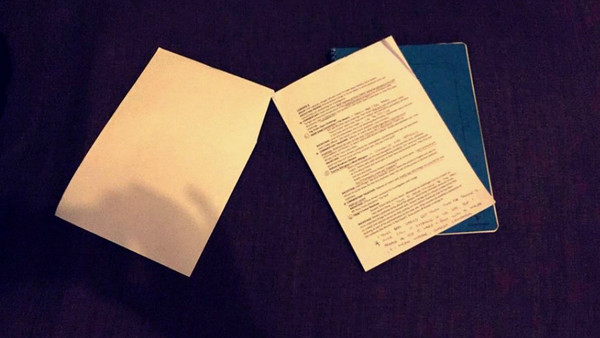
The first few shows I did were real 'fly by the seat of your pants' experiences. I had plenty to say and squeezed by (largely because it was all fresh material to fans), but I wasn't really prepared. Since the Japanese leg of the Pro Wrestling World scared the crap out of me, I've made sure to do my homework before every taping.
This was something that actually surprised a handful of folks in ICW when I filled in on a few shows. Despite being out of the loop for so long, I came armed with my own printouts and handwritten notes. When they handed me the card format for that evening, I took my pen and scribbled down extras on that too.
You can never be over-prepared, basically.
Although I don't read everything word-for-word or anything, and sometimes use very little of the extra notes, I do find having some direction in front of me useful. Physically handwriting it out the night before helps get everything in my head, and I often find I'm raring to go by the first match if I prepare that way.
Who are some of your favourite commentators, and why? Let us know down in the comments section below!